Definitely the moment to be locked-in once again. We ate with NFTs, we ate with memecoins, we ate with Ordinals and we ate with Bitcoin memecoins.
We’ll eat again. I’ve the same feelings as this moment, when $PEPE was below 10M market cap.
I think seeing solana:9cRCn9rGT8V2imeM2BaKs13yhMEais3ruM3rPvTGpump lead the memecoins, and then watching CT igniting again, gave me the ounce of conviction left to know the market was turning bullish.
So I’m buying solana:2oGLxYuNBJRcepT1mEV6KnETaLD7Bf6qq3CM6skasBfe again. That’s a cultural trade, and I love those types of trades. I’m seeing some movement on other prehistoric memes. This is without a doubt one of the most relevant ones of 2024.
The Bitcoin ecosystem has lost the market’s attention many times, only to recover it with even more violence each time.
From the initial Ordinals’ collections, to the BRC-20s, to NodeMonkes, Puppets, OMB, and QCs runs, to the pre-Runes era: each time, the violence of the market’s comeback was even greater.
Patience. Things happened after you’re exhausted.
The history of Ordinals, Inscriptions, Rare Sats, BRC-20s, and Runes.
More than two years ago, Casey Rodarmor, a dev, created something called the Ordinals Theory. This is essentially a numbering scheme where individual satoshis are numbered in the order they were mined. The concept is simple: as you number each sat, you give it an identity, allowing for individual tracking and transfer.
Ordering the sats and giving them an identity allowed us to assign value based on certain characteristics each had (numismatic value). We could know which sat was the first ever mined, which sats are the first sats mined in each block, which sats were used in the famous Pizza transaction, which ones were mined by Satoshi, which ones were mined by Hal Finney, and you get the point. We even got sassy and started giving value to certain sats, not because of their historical value, but because of certain characteristics (e.g., palindromes).
But it didn’t stop there. Having created this sophisticated tracking system for each sat, Ordinals Theory introduced the concept of inscribing sats, linking content inextricably to a specific sat. A new numbering scheme for inscriptions began, starting from 0 and numbering each inscription in the order they were inscribed. That’s why you hear that an inscription is early. With over 70 million inscriptions so far, the earlier ones (sub1k, sub10k, and sub100k) are highly valued. They remind us of the beginning. Naturally, we began by inscribing random JPEGs and information.
After the first era of inscriptions featuring random content, the first PFP collections appeared. With no dedicated marketplace, we relied on trusted individuals like ZK and ChartFu to manage spreadsheets for trading. However, this didn’t last long as marketplaces made their entrance, and we never looked back (except we did for Natcats lol).
And with this, the era of PFP collections began dominating the scene. You must be well aware of this.
Back to the explanation. The first collections were inscribed in the most rough (and yet beautiful way), inscribing the image directly onto the sat. However, as the network kept being used more and more (predominantly by Ordinals), fees began to skyrocket, and inscribing a 10K collection in this ‘rough’ way became financially unaffordable for many projects. That wasn’t a problem, because as an ecosystem, we’ve gone beyond merely inscribing images, innovating to code within the Inscriptions. Concepts like recursive inscriptions and parent-child started to be used for every PFP collection. Now we have high-resolution JPEGs born from this innovation (check the art by OCM or Hashlings, for example).
But we didn’t stop with images. Domo, another dev, brought more excitement by using Ordinals Theory to create a standard (BRC-20) for launching fungible tokens. The name BRC-20 is just a useful play on Ethereum’s ERC-20 token standard. The most basic explanation is that BRC-20 brought fungibility to Ordinals inscriptions. Instead of running a smart contract, the BRC-20 leverages JSON data inscribed in an Ordinal. This script can be used to create, mint, and transfer tokens. All on the base layer, and all through Inscriptions.
BRC-20 brought the craziness of fungible tokens to Bitcoin. The launch of so many tokens practically congested the Bitcoin network. Some have been so successful that they’ve reached 1B market caps ($ORDI and $SATS). Since then, some competing fungible token standards within the Ordinals ecosystem have been released (none of them gaining the traction that BRC-20s achieved).
Like JPEGs, BRC-20s evolved to enable easier trading. The UX isn’t perfect but improved, despite the standard’s inherent limitations. You can still trade them on various platforms, and some popular BRC-20s are even listed on CEXs. It’s quite incredible what our degeneracy can achieve.
Continues👇
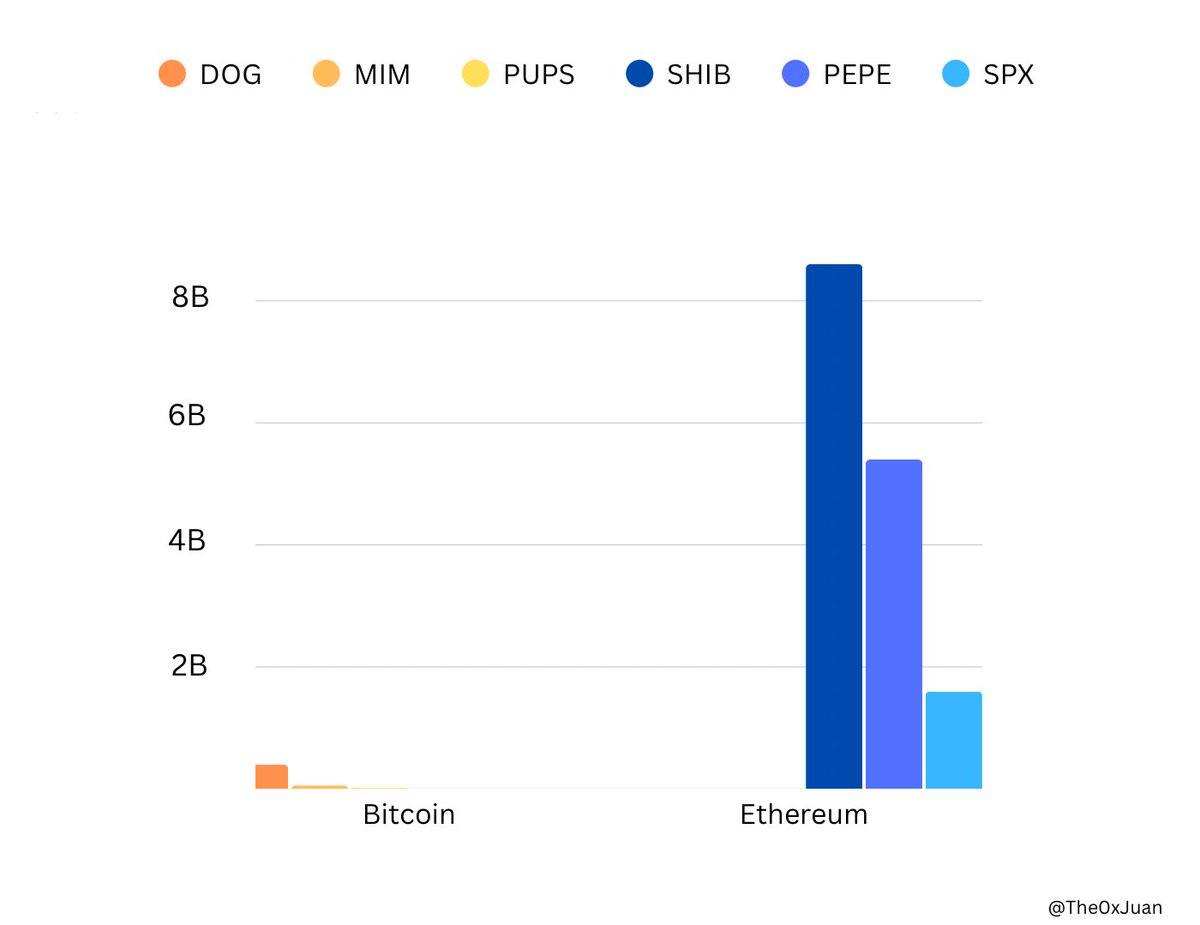
Just some analysis: $DOG is currently at a $404M market cap.
The second-largest rune by market cap is Magic Internet Money ($MIM), at $43M. That means its market cap is 11% of $DOG’s.
On Ethereum, the top memecoin by market cap is $SHIB at $8.5B, followed by $PEPE at $5.7B. That means the second memecoin’s market cap is 67% of the first.
On Solana, it’s a similar story: $BONK sits at $2.8B and $TRUMP at $2B, making the second one worth about 70% of the first. Even if you bring in $PENGU in third place at $1.9B, you get a comparable ratio.
If you bring in $PUPS at $21M, that means it’s worth just 5% of $DOG’s market cap.
So, there are some very clear plays to be made in the Bitcoin ecosystem, just by looking at the data from other ecosystems. But even if you consider historical data within Bitcoin, during the last run in November 2024, $DOG reached a $960M market cap, $MIM hit $205M (under $WZRD), and $PUPS reached $360M.
P.S. $DOG is still heavily undervalued compared to the top memecoins on Ethereum and Solana, for example, it’s 20x below $SHIB’s current market cap.
Now that the bull market has resumed, Bitcoin memecoins infra ecosystem since the last major run:
✅Protection from sniping
✅Only small lots allowed to be listed
✅DEXs and increased LPs
✅Swap aggregation (Xverse)
🔜Slingshot and Vector
🔜CEX
Without having any of these:
>Bitcoin memecoins ran in Nov. to market cap ATHs for $DOG (almost $1B), $BILLY (almost double its June ATH to $150M), and $PUPS reaching its ATH as a Rune to $360M. $MIM wasn’t in its rune form at the moment and reached $200M market cap as $WZRD.
>Bitcoin memecoins ran in the pre-Runes era (Feb.–April) with massive volume in new launches (e.g., RSIC and Runestone) and with $PUPS (on a far inferior protocol as a BRC-20) reaching $600M (not counting the pre-runes inscriptions).
>Bitcoin BRC-20s ran to multi-billion dollar market caps in Nov./Dec. 2023, in the midst of a dry season for every other chain, fueled by the listing of $ORDI on Binance. $ORDI and $SATS went well over $1B, and $RATS hit the $500M range.
Thank you for your attention to this matter.
Odin Fun might be the thing that sends Bitcoin memecoins to billions.
We were thinking a CEX was the one that would make that happen, and seems that a Bitcoin DEX had the keys all the time.
I want to see $PUPS $DOG $BILLY $MIM there @Odin_GodOfRunes@BobBodily
I hate airdrop farming. That’s why I only write about projects with substance that are in the pre-TGE stage, like MegaETH (the first real-time blockchain) and $SKATE (the chain that makes every VM compatible) or Abstract (the blockchain leading the next generation of consumer crypto).
I could go on, and include mentions of Babylon or Red, for example. But I’m not doing it.
You’ll never see me selling myself for anything. That’s why I haven’t been begging for an invitation or waiting for someone to DM me about Ethos.
A Bull Case to Be Presented
When we think of Ethereum and Solana assets, we correctly assume there is maturity in their on-chain markets. The bull case for both ecosystems is to attract more people, particularly those who are not active crypto traders, into their networks. (1/x)
TL;DR
This is what will happen to the funds:
Step 1: Swap any ERC20s (like stETH) into ETH
Step 2: Swap any ETH into BTC
Step 3: Swap BTC into Bitcoin memecoins
Step 4: Swap Bitcoin memecoins into BTC. This can take years.
Step 5: Cash out BTC to cash (Chinese Renminbi) using Asian exchanges
Step 6: Put a Puppet PFP
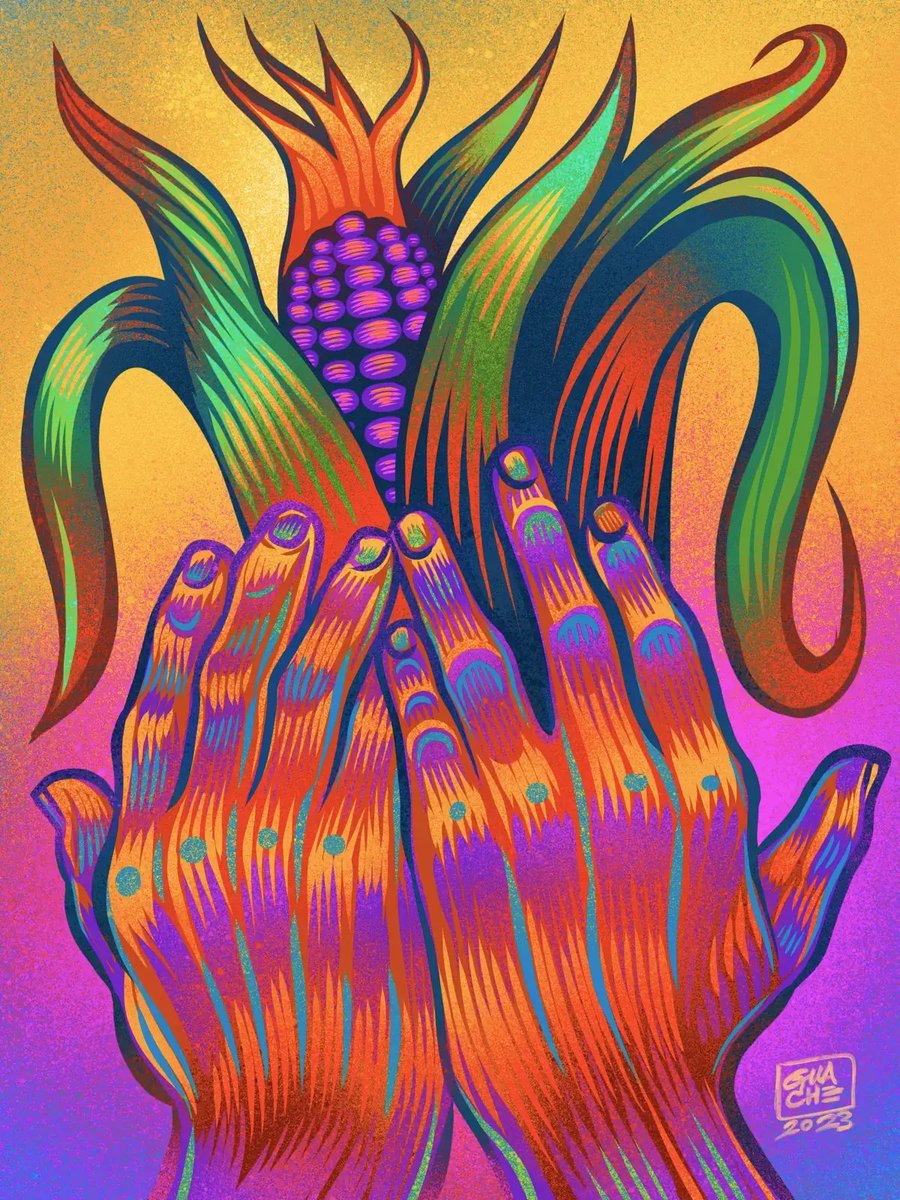
I’ve minted this limited edition to support UNICEF Colombia in their mission to help feed the country’s neediest children.
Each Ordinal collected donates 25 sachets of therapeutic food, supporting UNICEF Colombia’s fight against malnutrition.
Colombia is under the most incompetent left-wing government imaginable, and the burden of its corruption and mismanagement has fallen on the most vulnerable—especially children. Every single fund meant to help them has been siphoned away.
Bitcoin is the best place to hold your assets, the best place to store and buy art, and the best place to support meaningful projects.
The art is awesome. The fact that they’re using Bitcoin is awesome. And knowing that my BTC is going to a good cause makes it even better.
Link to the mint on @trio_xyz in the thread.
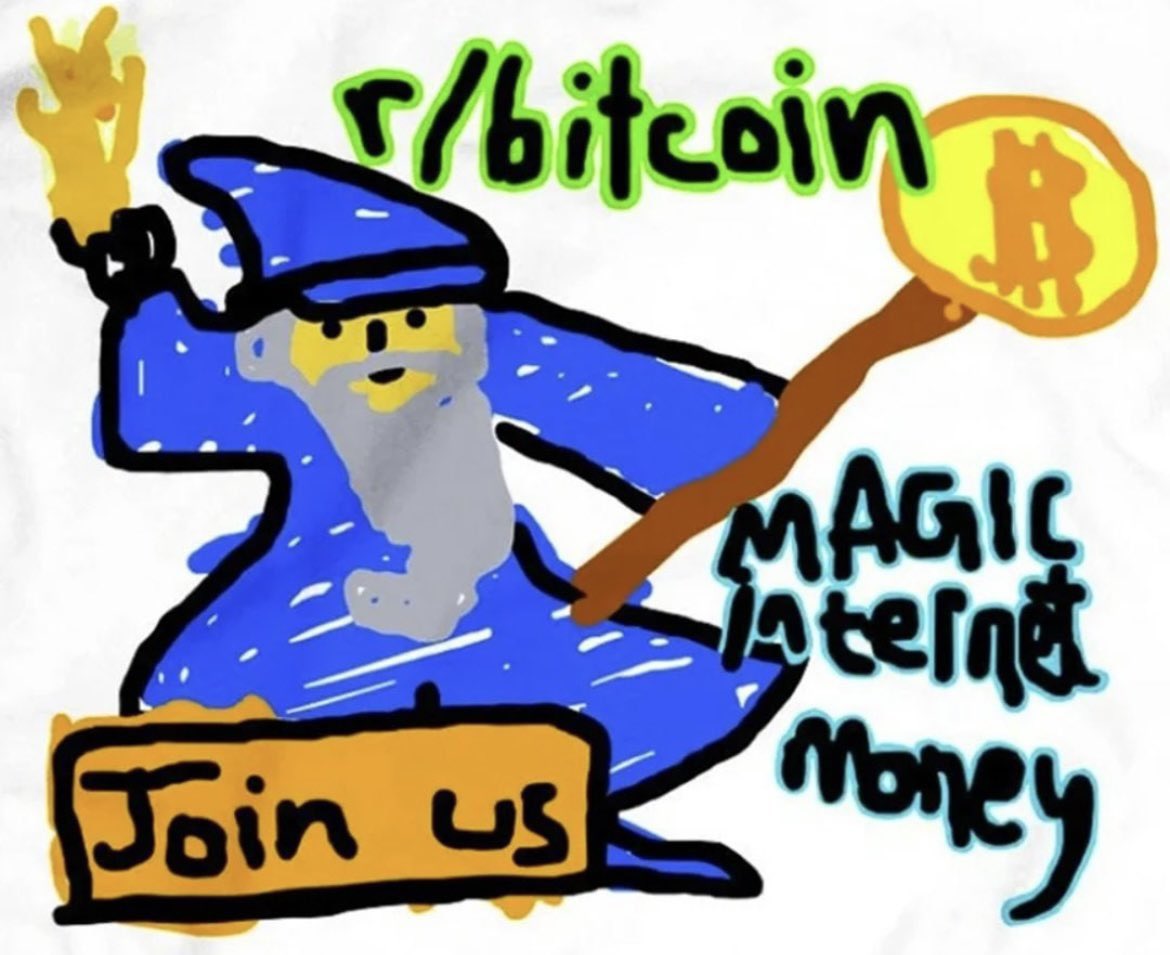
magic internet money goes to 10B and people will write songs about our delusional belief. beeple will carve a statue of us. dogecoin millionaire will delete his account. pepe will evolve into an iguana.
I sincerely think magic internet money may be the spark to ignite attention back to the Bitcoin ecosystem.
I hope it does.
Many good things happening there.
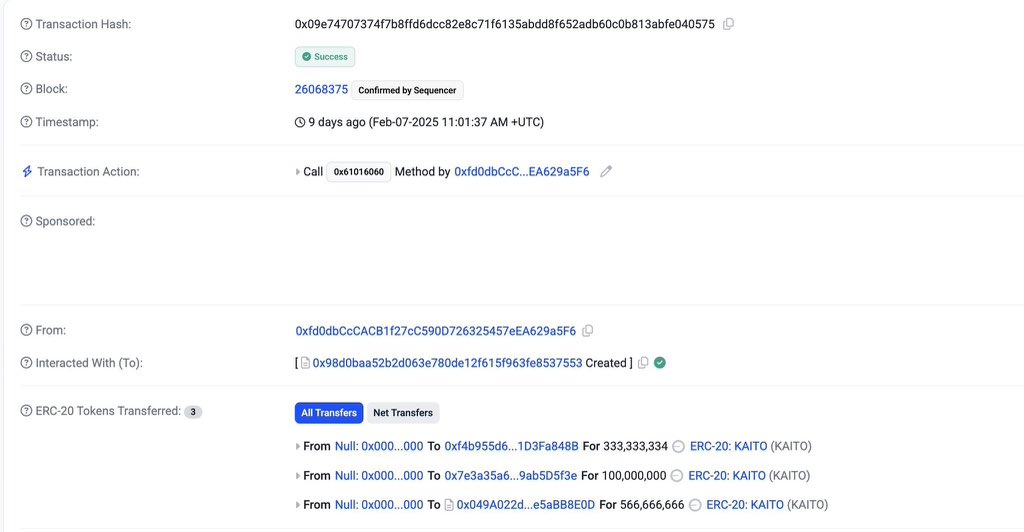
Seems that @KaitoAI has deployed 1B $KAITO on @base and apparently 33.3% is the likely airdrop allocation
Each Yap would get you 166 $KAITO, thinking on a total 2M yaps (feb 28).
h/t @banditxbt for catching this