Augmented Reality is the natural interface for robotics.
Not only for giving commands, but also to visualise hardware data (like LiDAR) natively in 3D.
@specs AR glasses, @UnitreeRobotics Go2 Lite quadruped, @dimensionalos OS for the robot
Nassim Taleb, former derivatives trader and NYU professor of risk engineering:
"The best predictor of a fund's blowup isn't volatile returns. It's steady returns. I traded derivatives for twenty years and watched the smoothest equity curves turn out to be the ones hiding the most risk, not the least."
this is the exact signal every "look how consistent our Sharpe ratio is" pitch quietly gets backwards.
cut through the marketing and the finding is uncomfortable. real markets aren't stable. a fund posting suspiciously flat monthly returns usually isn't operating in a calm environment, it's paying to make an unstable one look calm, and that hidden cost eventually comes due in one lump sum.
the volatility never actually disappeared. it got warehoused, usually through leverage or an unhedged tail position nobody was stress testing, right up until the month it detonates all at once.
zoom out to how allocators actually evaluate track records today. a smooth, low-variance equity curve reads as the safest pitch a fund can make to an LP. taleb's own point is the opposite: unnatural smoothness is one of the strongest tells that a fund is short volatility somewhere off the reported chart.
most allocators looking at a clean, steady performance line assume smoothness means safety, when the smoothing itself is usually the exact thing worth underwriting before wiring capital.
this is exactly what due diligence decks skip. "consistent, low-volatility returns" is the entire pitch on slide one. it's frequently the cost of concealing the one tail risk that will eventually show up all at once, and cost investors everything in a single month.
the flat curve looked like proof of skill. it was often just proof that the risk hadn't been marked yet.
Bookmark this alpha
Andrew Ng just dropped a 3-hour course on how to become an AI Engineer in 2026:
• 00:00 - How to build agentic AI systems
• 04:25 - Future of AI engineering
• 23:38 - AI Prompting full course
• 2:52:17 - Creating an app with AI in 30 minutes
This 3-hour watch could replace 10 AI engineering courses on the internet.
Watch it today, then read how to run a self-improving system in the article below.
Si nunca laburaste en tech pero ahora armás webs y apps con Claude, Cursor o ChatGPT, te puede haber pasado que sabés lo que querés, pero no cómo se llama.
En https://t.co/jwvInb2A7e armaron una galería de componentes con imagen y nombre. Para que puedas pasar de "poneme una alertita chiquita que confirma y se va" a "poné un toast".
Es una pavada pero capaz a alguno le sirve.
This Anthropic lecture on Claude for Finance is the closest thing to a real quant research desk you'll find online.
1 hour. Massive value.
Bookmark it.
Jonathan Gruber, MIT economics professor:
Every quantitative strategy starts with the same problem: what if the person on the other side knows something you don't?
This free MIT lecture explains adverse selection, one of the core ideas behind modern market making and quantitative trading. When information is unevenly distributed, the side with less information pays for it.
The mathematics behind market making has been public for years. The formulas are easy to find.
The hard part is identifying when the flow you're trading against is smarter than you are.
Bookmark this before it gets buried in your feed.
🚨 ÚLTIMA HORA 🚨
Ex ingeniero de Google acaba de soltar GRATIS un curso de 1 hora que está rompiéndolo:
Agentes de IA que se mejoran SOLOS desde cero.
Lo que te enseña:
00:00 – Cómo nace un agente que se construye solo
03:01 – soul.md: el archivo que lo controla todo
30:16 – RAG inteligente (solo 20 mensajes relevantes)
31:48 – El loop que sabe cuándo parar por sí solo
35:14 – Detecta el error y arregla el prompt en el momento
50:22 – Cómo Claude comprime y optimiza tu memoria automáticamente
1 hora de contenido práctico que vale más que la mayoría de cursos de pago.
Guárdalo ya antes de que desaparezca 👇🔥
Citadel Senior Quant Developer just dropped the complete math framework for scaling a pairs trading desk to 200+ concurrent market positions.
54-minutes. free. By Quant Trader.
here's what they cover:
• integration orders (I(0) vs I(1)) for asset pricing
• using the Augmented Dickey-Fuller test over standard graphs
• calculating dynamic rolling betas on log returns
• managing independent bets across 200+ parallel tables
Bookmark it & watch today. Then read the article below.
Te comparto este curso que stanford regalo gratis
Esta clase magistral de menos de 2 horas trata sobre las arquitecturas reales que usan los modelos de IA más avanzados del mundo.
En esta lección aprendes:
- Por qué casi todos los modelos modernos usan prenorm
- Las activaciones que realmente importan hoy
- Cómo reducir el costo de atención sin perder rendimiento
- Trucos de estabilidad y mejores prácticas de hiperparámetros
Es conocimiento de élite que usan los ingenieros que construyen los modelos grandes.
Mira el video completo y guardalo.
Esto es una joya.
De momento me ha funcionado fluido (unos 100fps) con 80M de muestras en pantalla.
Estaba explicando el proceso aquí (WIP):
https://t.co/3EINpUtYui
Github:
https://t.co/u1OF1mWIJ2
FreeCAD Beginner's Handbook is a trojan horse.
It silently gets FreeCAD into the universities, while proprietary CAD software vendors make noise elsewhere. Thats why its not just a FreeCAD documentation book, but a CAD course for 1st semester engineering students.
Stanford computer science professor just revealed how to master Markov Decision Processes.
83-minutes. free. By Stanford.
here's what they cover:
• search problems vs. stochastic environments
• policy evaluation & q-value recurrence math
• value iteration loop engineering
• convergence limits under a cyclic graphs
Bookmark & watch today. Then read the article below.
This 17 page pdf reveals the same technique Hedge Funds like Jim Simons' Renaissance Technologies use to find signal through noise.
Stanford released the complete Hidden Markov Model framework for everyone to use it.
Bookmark it before someone takes it down:
As a computational chemist with no background in cloud engineering, I want to worry about science, not about cloud compute details. I wanted to be able to use GPUs for calculations involving tools like alphafold, boltz2 and long MD simulations with OpenMM.
Using Codex, I was able to set up an Azure cloud backend in a few hours with just a simple initial prompt, an interactive process and no coding knowledge or even terminal use. A critical aspect was being able to set explicit permissions to automatically detect GPU-heavy calculations in a multistep workflow to prevent cost explosions.
https://t.co/RzNDraCi5I
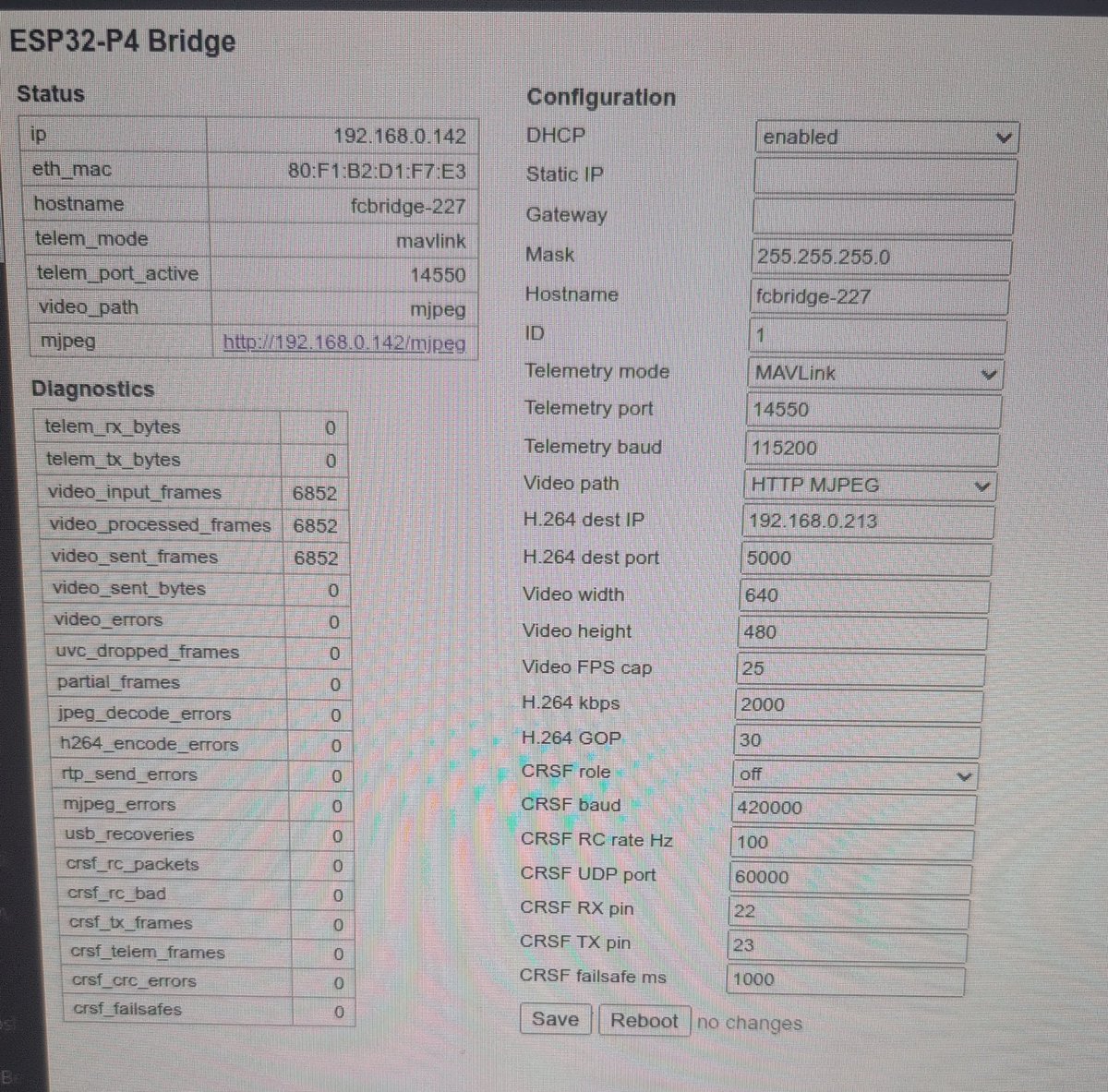
Was on ice for months, i'm no low level embedded dev, but Fable cracked it. ESP32P4-ETH getting UVC FPV video to MJPEG or H264 with hwenc straight to Ethernet, with UDP relaying of RC and telemetry to UARTs. GCS module, airside fiber module, many interesting applications!
Less than 100 miles away, about 50 tons of steel and copper are spinning at exactly 3,600 RPM. A giant rotor slews magnetic fields through copper windings and, per Faraday and Maxwell, induces a synchronized 60 Hz sine wave across an entire grid.
That electromagnetic wave propagates through grain oriented silicon steel, laminated transformer cores, kilometers of aluminum conductor steel reinforced cable, SF₆ insulated switchgear, substations switching hundreds of kilovolts, distribution transformers, oxygen free copper wiring, silicon MOSFETs, ferrites, multilayer ceramic capacitors, and the USB C cable plugged into my phone.
There, power feeds a capacitive touchscreen. A transparent matrix of indium tin oxide is deposited on glass. The controller continuously scans the grid. My finger changes the mutual capacitance by a fraction of a picofarad, perturbing the local electric field just enough for dedicated analog front ends to detect before software reconstructs the touch.
Iron ore. Bauxite. Silica sand. Copper ore. Lithium brines. Rare earths.
Refined. Alloyed. Crystallized. Doped. Implanted. Deposited. Etched. Polished.
We purified sand into nearly perfect single crystal silicon, grew boules, sliced wafers, placed dopant atoms with nanometer precision, fabricated chips containing tens of billions of transistors, synchronized them with clocks billions of times per second, and engineered them to execute matrix multiplications at a scale no human could comprehend.
Somewhere along the way, matmuls started to look like us.
That is an astonishing thought.
The towers of abstraction are staggering. No one person built this. No one person fully understands it. Yet every morning millions of people wake up tired, answer emails, argue over specifications, chase margins, fix defects, make payroll, and try to cover their mortgages. Somehow the whole machine keeps humming.
A planetary Swiss watch assembled from physics, markets, bureaucracy, ambition, error, and human necessity.
And after all of that, I touch a piece of conductive glass and step into the Roman forum of modern thought, where millions of minds test ideas against one another in real time.
Clockwork humanity.
It staggers the mind.
Primera baja en Primer Gabinete de Keiko: el economista Luis Carranza le dijo No a Keiko.
Ve el panorama muy movido y favorable a la opocision, para aplicar el Shock a lo Milei que le pide la Mandataria. O lidiar con la corrección del gasto fiscal con medidas inflacionarias que Keiko autorizó en el Congreso para estimular el voto naranja.
Carranza pasará a ser Asesor Económico de Keiko, pagado por el Banco Mundial $18 mil cocos x mes, según informantes cercanos al gabinete en la sombra de la nueva Presidente.
Una profesora de ciencias de la computación de stanford acaba de revelar cómo dominar los procesos de decisión de markov.
83 minutos. Gratis. Directo de stanford.
Esto es lo que cubren:
• Problemas de búsqueda vs. entornos estocásticos
• Evaluación de políticas y matemáticas de recurrencia de valores Q
• Ingeniería del bucle de iteración de valores
• Límites de convergencia en grafos cíclicos
Guarda y míralo hoy.
Te lo recomiendo.