Tomorrow, 23 April 11:49 CEST follow the launch of #Crew2 live! For the first time in over a decade a European astronaut will be on a US spacecraft! Check @esaspaceflight for more information and updates.
#MissionAlpha#ESA#SpaceX#NASA#launch
https://t.co/xSS2KG7zyQ
Ever wondered how do some giant stars explode when they run out of fuel? Well, it turns out it has something to do with bubbles! Neutrinos from the center of the star drive bubbles filled with titanium and trigger the explosion.
#Stars#physics#explosion
https://t.co/IOzXaHatP0
24/7 Live Views from the International Space Station, Earth is seen from cameras aboard the International Space Station. Watch the Earth roll Captured from the International Space Station.
https://t.co/a03rKl7hqb
A new all-sky map of the outer region of our galaxy has been released by NASA and ESA. Many theories have indicated that the region contains dark matter, so this map will give astronomers a new oppurtunity to explore this physical phenomenon.
#DarkMatter
https://t.co/qhrHIymSLj
With the help of AI, researchers have simulated complex universes in a thousandth of the time it takes with conventional methods.
#ArtificialIntelligence#Physics
https://t.co/OCIlMHez25
Cats always land on they feet, but does it's true in space too?There are have been some tests with cats in zero-gravity conditions, which has helped scientists to learn how astronauts can move themselfes in those conditions.
https://t.co/PXQA0ByVIm
Satellites and space junk cause light pollution that increasingly threatens ground-based telescopes. One of the solutions could be building satellites out of darker materials and collecting space junk. #lightpollution#astronomy#space#satellites
https://t.co/tGDet8atLl
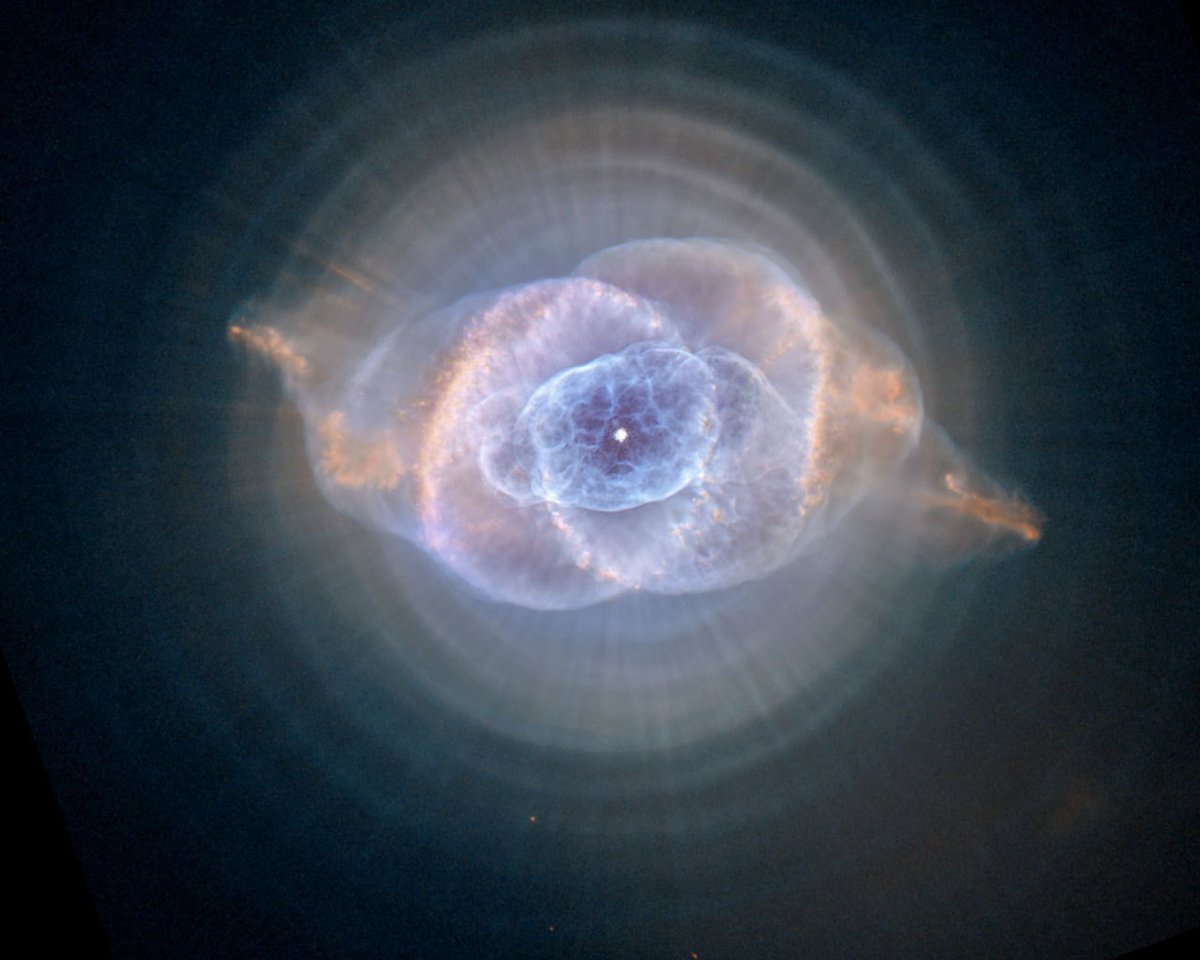
This is Cat's Eye Nebula (NGC6543). It was first observed on February 15, 1786 by William Herschel. Located in Milky Way 3000 light years away.
#Nebula#MilkyWay
20 years ago on this day, April 7, 2001 Mars Odyssey orbiter was launched from Earth with an aim to map and search for water on Mars.
#Astrophysics#Mars
https://t.co/yLsv6inPzb
Check out this interactive app where you can see Earth's air temperature, carbon dioxide, sea level, satellites orbiting and more real time!
https://t.co/KL85KI8V9W
#NASA#Earth#Satellites
Evidence of an ancient meteoritic airburst discovered that could lead to a better understanding of the threats these impacts pose to Earth. But not all scientists agree on this interpretation of the data. #meteor#impact#Antarctica#astrophysics
https://t.co/uK0jcijmIm
Save the date! June 10 there will be an annular (ring) solar eclipse and its path will pass over the North Pole for the first time in the 21st century. #cantwait#SolarEclipse#June10
https://t.co/c0VxDG4pl8
GIF By A.T. Sinclair - https://t.co/G5k9TkdZSv
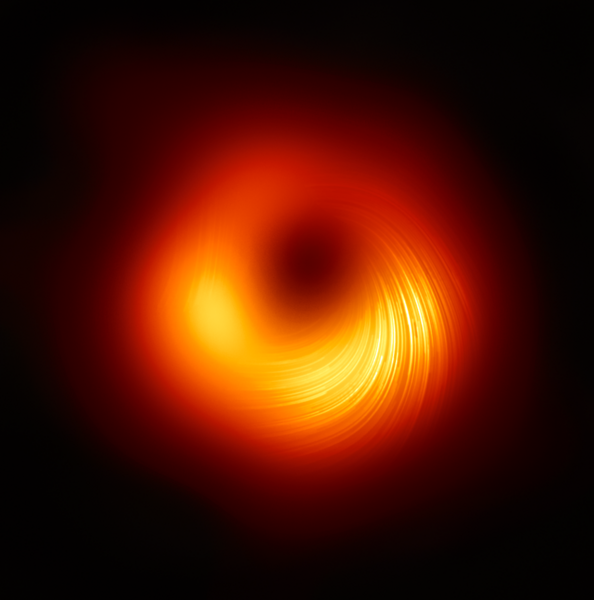
Just 2 years ago the first picture of black hole was taken. Now astronomers have taken another one, but this time we can see magnetic fields around it. More information: https://t.co/cukOyiDdu1
#BlackHole
Vai atceries Saules aptumsumu 2015.gadā?
Šogad daļējs Saules aptumsums Latvijā gaidāms 10.jūnijā.
Vairāk par 2021.gada dabas parādībām:
https://t.co/1Sq22SUxhP
#solareclipse