FSB officers could have been in the concert hall during the terrorist attack in Moscow
We analyzed the footage of the terrorist attack in "Crocus City Hall" and noticed that in the concert hall, where the bloodiest events of the terrorist attack broke out, there are several people similarly dressed in blue sweatshirt and jeans.
If you look at them, you will notice a few atypical actions on their part for such situations.
First of all, their clothing. The blue sweatshirt and jeans is a pretty casual combination, which helps them blend in with the crowd while being quite noticeable to each other. They are clearly visible at the exit, but if you look closely, the "men in blue" can be spotted in other parts of the hall.
Secondly, their behavior. They are all calm, not running anywhere, not panicking. In the video one man in a blue sweater and jeans even pushes back into the aisle between the seats a woman who was heading towards the exit (photo 2). Later this man starts filming on his phone. It can be seen that the "men in blue" look at each other from time to time.
At some point in the video, a male voice from behind, where the alleged "FSB officer" is sitting, suggests closing the doors, and the "men in blue" take turns supporting this idea, creating the illusion of mass support for this idea. Subsequently, this will lead to the fact that many people will not be able to get out of the hall due to closed doors and will die.
Footage of Adolf Hitler at the 1936 olympics where he is thought to be high on drugs.
Author Norman Ohler claims that Hitler relied heavily on a mixture of cocaine and opioids.
“Hitler needed those highs to substitute [for] his natural charisma, which ... he had lost in the course of the war," Ohler said.
Governments Are Creating A Fake Hate Panic To Censor, Interfere In Elections, And Imprison Their Political Enemies
It's alarming what's happening in the US, UK, Canada, Australia, New Zealand, Ireland, Scotland, Brazil, and the EU
The US and other governments around the world are hyping hate in order to weaponize the government against their political enemies.
Ever since the 2019 shooting in New Zealand, governments have been using so-called hate speech, fake news, and misinformation as justifications for censorship.
In Ireland, the government is pushing hate speech legislation that would allow police to invade homes and seize phones and computers.
In Canada, Justin Trudeau is pushing legislation that would allow the government to sentence individuals to life in prison for things they said.
And it was recently revealed that the Biden White House worked with one of the leading groups that hype hate, the Center for Countering Digital Hate, to demand Facebook and other social media platforms to remove content and people they don't like.
The Biden administration also endorsed the "Christchurch Call to Action to Eliminate Terrorist and Violent Extremist Content Online," which governments created in 2019 to justify censorship.
This focus on so-called hatred, harmful content, and extremist content is extremely dangerous. What one person thinks is extreme, another person may view as common sense.
For the government to decide what is extreme is a way of labeling someone as a potential terrorist threat.
We saw this clearly with the Trudeau government's suppression of the Canadian trucker protests in Ottawa, in which people's bank accounts were frozen simply for supporting the anti-vaccine mandate.
The same could happen in the United States.
There is no reliable connection between people's beliefs and violence. Attempting to stop violence by censoring speech is totalitarian and Orwellian. It effectively criminalizes speech and creates a whole new category of pre-crime, like that depicted in the dystopian film, "Minority Report."
So why are governments doing this?
# automating software engineering
In my mind, automating software engineering will look similar to automating driving. E.g. in self-driving the progression of increasing autonomy and higher abstraction looks something like:
1. first the human performs all driving actions manually
2. then the AI helps keep the lane
3. then it slows for the car ahead
4. then it also does lane changes and takes forks
5. then it also stops at signs/lights and takes turns
6. eventually you take a feature complete solution and grind on the quality until you achieve full self-driving.
There is a progression of the AI doing more and the human doing less, but still providing oversight. In Software engineering, the progression is shaping up similar:
1. first the human writes the code manually
2. then GitHub Copilot autocompletes a few lines
3. then ChatGPT writes chunks of code
4. then you move to larger and larger code diffs (e.g. Cursor copilot++ style, nice demo here https://t.co/u8ueY0mGxZ)
5....
Devin is an impressive demo of what perhaps follows next: coordinating a number of tools that a developer needs to string together to write code: a Terminal, a Browser, a Code editor, etc., and human oversight that moves to increasingly higher level of abstraction.
There is a lot of work not just on the AI part but also the UI/UX part. How does a human provide oversight? What are they looking at? How do they nudge the AI down a different path? How do they debug what went wrong? It is very likely that we will have to change up the code editor, substantially.
In any case, software engineering is on track to change substantially. And it will look a lot more like supervising the automation, while pitching in high-level commands, ideas or progression strategies, in English.
Good luck to the team!
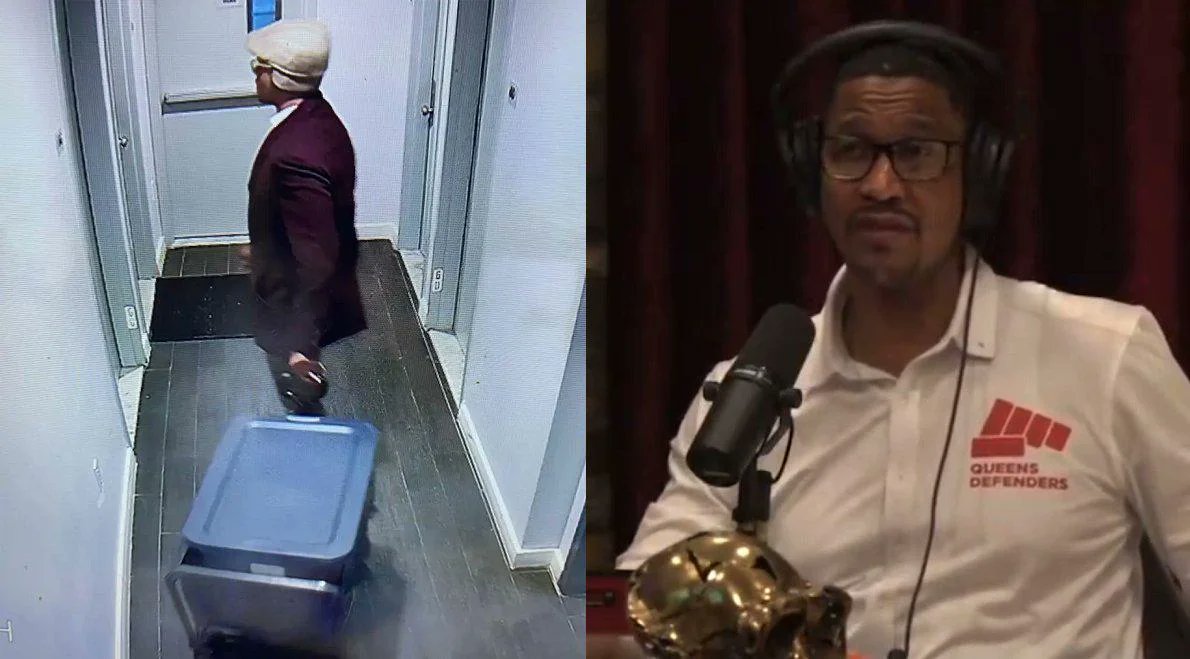
Sheldon Johnson, ex-con who appeared on Joe Rogan advocating for rehabilitative justice, has been arrested after police found a torso in his apartment.