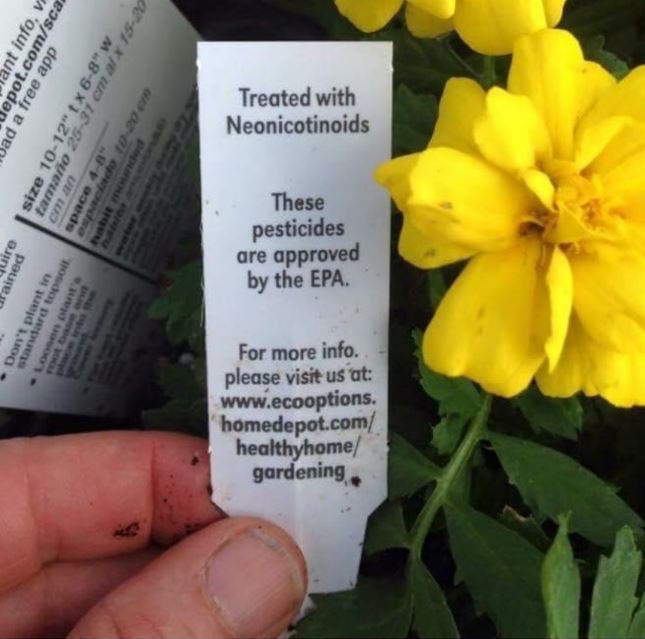
Very Important Message!!
Do NOT, and I repeat do not buy plants treated with Neonicotinoids. Bees take the pollen back to the hive and feed it to the brood.
This is a number one cause of the colony collapse. It's important to NOT buy these plants!
Make sure to share this post!
I introduced HR 8591, the No Capital Gains Tax on Family Farms Act, with @RepMGP yesterday.
The bill preserves family farms by allowing farmers to sell their land to family members without paying capital gains taxes. We are losing too much farmland to data center development.
My PRIME Act pilot program passed the House of Representatives today!
It’s a real game changer for small farmers, and especially for consumers who want wholesome beef, pork, and lamb raised locally. https://t.co/CGinw8Rja7
Huge win for states rights and MAHA!
The special provisions for pesticides (and herbicides like glyphosate) was just stripped from the farm bill by an overwhelming majority!
🔥The Farm Bill that includes my 🥩 PRIME Act pilot just passed the House!
This is a game changer for farmers — and provides access to locally raised beef, pork, and lamb for consumers!
We also stripped the immunity/state labeling ban for pesticides from the Farm Bill. MAHA!
Thank you, @Gatorade, for removing artificial FD&C colors and switching to newly @US_FDA–approved plant-based dyes from fruits and vegetables. I urge every food company to follow your lead and join us to Make America Healthy Again.
Today, we took long-overdue action to restore science, accountability, and the rule of law.
In September 2023, the Biden FDA pushed a number of peptides into Category 2 — “Bulk Drug Substances that Raise Significant Safety Risks” — driving a dangerous black market that puts Americans at risk.
Now, after nominators withdrew 12 peptides, the FDA will remove them from Category 2 and will bring them to PCAC at its next two meetings, beginning in July—where independent experts will rigorously evaluate each substance on its scientific merits using full clinical, pharmacological, and safety evidence.
• BPC-157
• Thymosin beta-4 fragment (LKKTETQ)
• Epitalon
• GHK-Cu (injectable)
• MOTS-c
• DSIP (Emideltide)
• Dihexa Acetate
• Ibutamoren Mesylate
• Melanotan II
• KPV
• Semax (heptapeptide)
• Cathelicidin LL-37
This action begins to restore regulated access and will immediately begin shifting demand away from the black market.
We will follow the science, enforce the law, and deliver the clarity patients, providers, and pharmacies deserve.
Just off a call with an entrepreneur building a 330-home regenerative community on 130 hectares in Portugal's Algarve.
Organic farms, wellness institute, schools, medical centres and all other amenities needed for a multi-generational community seeking purpose, slower pace, and connection to land. Next he wants Italy, with Abruzzo, Tuscany, or Umbria on his radar. Minimum 100 hectares, same model.
Local governments are super supportive since they're not building commercial luxury resorts but transforming depopulated rural areas into actual new communities.
Remember when I said that 2026 is the year of giving Europe's abandoned villages a new life?
If such #patents are granted, natural genetic resources detected in wild or cultivated plants could be reclassified as technical inventions, thus making freedom to operate in traditional breeding impossible.
Jeff Bezos’ Lab Salmon: The Future of Fish or Just a Freaky Science Experiment?
Well folks, it’s finally happened. The FDA has given its royal nod to lab-grown salmon, with the FDA saying that the startup’s cultivated fish is “as safe as comparable foods produced by other methods.”
The company behind this fishy feat? Wildtype. Yes, that’s right, because nothing screams “wild” like salmon cells grown in a petri dish under fluorescent lights.
Apparently, this salmon-like substance is already being served at Kann Restaurant in Portland. But don’t bother checking the menu, it’s not listed. Is it a secret? A surprise? A culinary coup d'etat? We may never know. If you’re in Portland and brave enough to investigate, please report back. Ideally, a scientist equipped to do independent lab tests.
Before getting too ga-ga over this Frankenfish, let’s discuss safety, or the glaring absence of it. This lab-grown wonder has had absolutely no long-term safety testing. But who needs science when billionaire optimism and a slick marketing team are gung-ho.
And for the finishing touch, the growth factor used in production might promote cancer-like cells? Yum! Nothing says “sustainable dining” like a side of cellular mutation.
Of course, defenders argue that open-pen salmon farming is an environmental disaster, and lab-grown alternatives could save the oceans. Fair point. But maybe, just maybe, we could try eating less salmon instead of turning dinner into a biotech buffet? Do we really want their unwanted waste products entering uninvited into our water ways?
So here we are, staring down a future where your *fish* comes with a QR code and a disclaimer. Is it progress? Is it madness? Or is it just another billionaire-backed science project that nobody (except for weirdos) ever asked for?
Bon appetit, biotech bros. May your salmon always be ethically ambiguous and vaguely gelatinous. And remember, if your salmon starts glowing, it’s probably not the omega-3s.
https://t.co/mLD3mmio7p
🚨RED ALERT: GMO Romaine Lettuce seeds are now being sold to home gardeners. Brought to you by billionaire Randal J. Kirk, the same guy trying to force us to eat GMO apples and GMO salmon, and to get GMO mosquitoes into the U.S. market.
There is no safety testing and you won't find a GMO disclosure on the website or package. The GMO lettuce is called "Green Venus". A photo of the packaging can be seen on the photo with this post.
Scientists tell us that the proteins in genetically engineered foods are different from their non-GMO counterparts. The lettuce could be allergenic or contain toxins, but since safety testing is not required there is no way to know.
The variety is called GreenVenus™ Romaine Lettuce. GreenVenus describes its romaine as genetically engineered for “superior flavor, unmatched crispness, and exceptional shelf life” and claims that it resists russet spotting (commonly known as “rust” or “browning”), “ensuring vibrant color and a crisp texture for up to seven days after cutting or shredding.”
It won't be obvious when the nutrients degrade - even if you have shredded the lettuce for a salad and refrigerated it for up to a week after.
We don't need risky GMO lettuce. If you're looking for a romaine lettuce that is slow to brown, non-GMO romaine lettuce varieties that are slow or low browning already exist. Some of those safe varieties are: Little Gem, Coastal Star, Green Towers and Hearts Delight.
Look for seed companies that have taken the Safe Seed Pledge to not sell GMO seeds to be sure to avoid these unnecessary abominations.
Has your favorite seed company taken the Safe Seed Pledge? If not, call or email them and ask them to sign on at https://t.co/dDRj2xONHg
Say NO to GMO lettuce. Happy gardening!
Learn more about GMO lettuce here: https://t.co/ImNNn6oTCW
Remember These Names. Remember These Faces. Tell the White House & Congress: No Immunity For Pesticide Corporations! Sign the Petition: https://t.co/7zn8foMlZp --
These 33 U.S. Representatives of the House Appropriations Committee threw all Americans under the bus by voting to advance Appropriations Bill Fiscal Year 2026 that includes a dangerous provision—Section 453—giving the pesticide industry immunity from pesticide-harm lawsuits.
If Appropriations Bill FY26 passes the full House with this dangerous provision included, farmers, landscapers, or anyone else getting cancer or other diseases from pesticide use will no longer be able to seek justice in court.
The full House of Representatives will likely be vote on Appropriations Bill FY26 when they return from summer break. We must all contact our U.S. Reps and the White House to demand they remove Section 453. READ MORE & TAKE ACTION: https://t.co/7zn8foMlZp
After more than 20 years of delay, I’m proud to finally deliver on a long-overdue promise: protecting our most vulnerable from unnecessary mercury exposure.