How to invest:
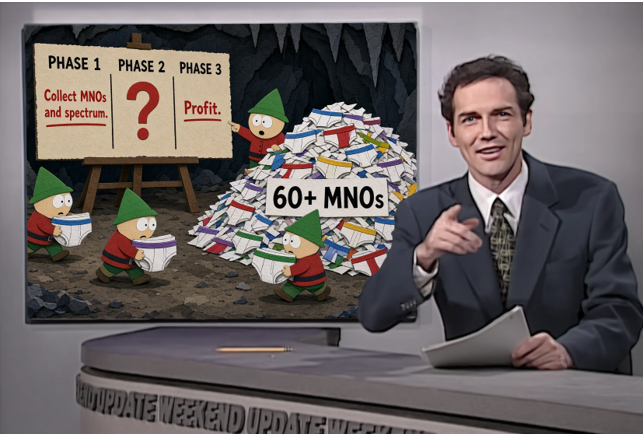
- Find a group of extremely high quality companies
- Wait until they sell off because of a bad narrative:
(ChatGPT will kill Google, Disney+ will kill Netflix, tariffs will kill Amazon, robotaxi will kill Uber, gen AI will kill Adobe, etc)
- Use sound judgment and data to determine if those narratives are true or false
- If you determine the narrative is false, you buy
- profit
This way of investing only works if you're able to detach yourself from the prevailing narratives, if you're not easily impressionable, and if you can employ data in a useful way to determine fact from fiction.
Just wrapped a meeting with OIRA on HHS’s Interim Access Policy for Compounding Using Certain Peptides, and we’re grateful for the opportunity to discuss what regulated access to peptides should look like.
Let’s be clear: Countless Americans are already using peptides right now and the current environment isn’t serving them. Most are buying from unregulated gray markets, unvetted online retailers, or even at corner stores. They’re often getting products labeled ‘for research only’ or ‘for animal use,’ made entirely overseas under conditions no one can verify. These channels provide no real clinical oversight, no quality standards, and no record of what happened to the patient.
Peptide therapies hold meaningful potential to help millions of Americans live healthier lives, but only if they come with responsible, regulated pathways to care. Patients should be able to access peptides through licensed healthcare professionals providing ongoing clinical support, and US-based compounding, with active ingredients sourced from FDA-registered facilities. That’s how we’re building at Hims & Hers. That’s the standard for access we want to help set nationwide.
We appreciate the administration’s leadership in opening this path towards regulated peptide access, and look forward to seeing the interim policy move ahead.
🚨🚨 $ASTS WEEK IN REVIEW🚨🚨
Full panic amid the Fog of War as investors fall over themselves, but for some reason, people with real jobs keep building against ambitious visions. That, and more, on this week's Weekly…
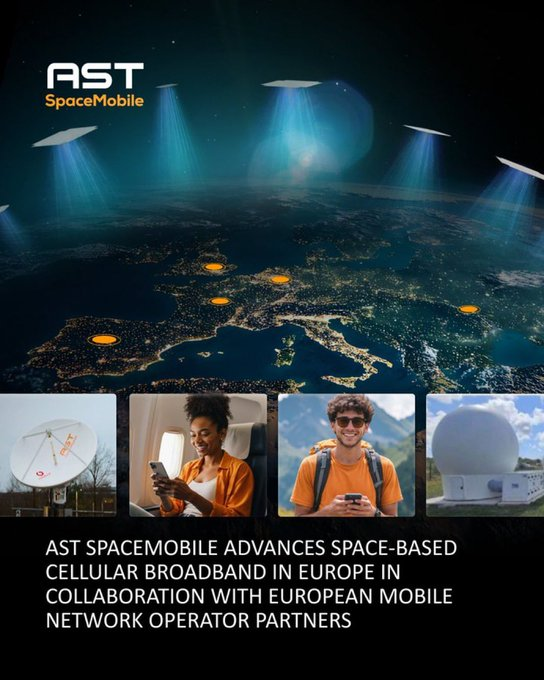
The AST SpaceMobile network is taking shape, in orbit and on the ground.
Today, over 60 gateways are in various stages of completion, installation and planning worldwide.
Initial, intermittent coverage targeted before year-end 2026 in the U.S. and other key markets around the world.
A new layer of connectivity, designed to connect directly to the smartphones people already use.
🇺🇸 📶🌎📱
#ASTSpaceMobile #ConnectingtheUnconnected
$ASTS: @AST_SpaceMobile just edited their latest tweet about 7 hours after posting, scrubbing the reference to starting service in Japan by year end 2026.
First, that was sloppy. No excusing that. Especially as this was definitely not the first time that they edited a tweet several hours after posting. Usually it would be for a silly typo (which is also sloppy as shit). This time, they removed a meaningful piece of information.
In my view, it is one of two likely reasons they made the edit:
+ The timeline is a mistake as in they won’t start service by year end with @Rakuten_Mobile, or
+ AST wasn’t supposed to publish the timeline themselves because they have always deferred timeline announcements to their partners.
Couple of pieces of supporting evidence for the latter theory that the timeline to service is still this year:
1) Only about 7 days ago, Rakuten was handing out brochures promoting a Q4 service start at an industry conference/event. See the quoted post below for the brochure.
2) Only 2 days ago, AST PR’d that they would start service this year. (I think maybe the PR was safe but not the tweet because the PR did not directly say which MNOs they would start service with. Yes they named their MNO strategic partners in the PR somewhere but it wasn’t directly in a statement about service starting in 2026.)
Stay tuned 🤷♂️
Our testosterone offering now includes both injectable and oral TRT options, expanding the tools men have to address a condition that is misunderstood at best, and ignored at worst.
Getting proactive about complex health challenges should be simple.
Our platform is built for exactly that: At-home blood collection. Longitudinal tracking. Provider-guided treatment that adapts over time. Expanded treatment options that reflect the best the industry has to offer.
Today is about @wearehims testosterone customers, but it’s also about what’s possible when you have a care team alongside you for your entire health journey.
https://t.co/oTaQ3JUYUG
$ASTS - As promised, here is my latest report on AST SpaceMobile, specifically in two countries: Chile and Brazil. I will start off with Chile as it's a single update.
On October 15th, Chile's SUBTEL established into a decree ASTs authorization to use specific bands in Chile...
WHY YESTERDAY'S NEWS COULD CHANGE EVERYTHING FOR $ASTS
I think yesterday's news could become one of the most important developments in the AST investment thesis because it suggests Europe's largest telecommunications companies are beginning to recognize that satellite connectivity isn't simply another service they can eventually offer customers, but a critical piece of infrastructure they need to control before someone else does which is why Deutsche Telekom, Orange, Telefónica and Vodafone are exploring a joint bid for dedicated European satellite spectrum to support direct-to-phone connectivity across a combined customer base exceeding 500 million subscribers.
What makes this particularly interesting is that these companies aren't simply looking to purchase satellite capacity individually, but are potentially organizing around a shared infrastructure strategy that would allow them to maintain control of their customers, spectrum and distribution rather than becoming increasingly dependent on $SPCX Starlink.
I've been arguing for a while that one of AST SpaceMobile's biggest competitive advantages is its ability to work alongside traditional mobile operators rather than attempting to replace them, and I think yesterday's development provides another important indication that this partnership model could become increasingly valuable as satellite broadband evolves into a mainstream telecommunications service.
The second part of this story that I think investors are overlooking is how dedicated satellite spectrum could fundamentally improve the economics and capacity of AST's network because spectrum availability is one of the biggest constraints on delivering broadband connectivity directly to ordinary smartphones.
AST has already demonstrated its ability to deliver impressive broadband speeds using its large BlueBird satellites, but expanding commercial service across hundreds of millions of users requires access to sufficient spectrum alongside a constellation capable of delivering consistent coverage.
Today, AST's model largely relies on using frequencies licensed to its mobile network operator partners, whereas access to dedicated satellite spectrum could eventually allow the company to provide additional capacity without depending entirely on those existing terrestrial allocations which becomes particularly important as the company moves beyond providing basic connectivity in remote areas toward supporting increasingly data-intensive applications across much larger customer populations. AST has also already established European ground infrastructure and relationships with major operators, which could position it to benefit if a European-controlled consortium ultimately decides to use BlueBird capacity.
We've seen similar strategic developments in the United States where major carriers are exploring ways to coordinate satellite connectivity and spectrum resources, and I think the broader takeaway is that telecommunications operators increasingly recognize satellite infrastructure as something they need to incorporate into their networks rather than treat as an entirely separate industry.
What makes this even more interesting is the competitive dynamic with SpaceX because I think investors have become so focused on Starlink's spectrum acquisitions and enormous launch advantage that they're overlooking why traditional mobile carriers may have powerful incentives to support an alternative network.
SpaceX is increasingly positioning Starlink Mobile as a more vertically integrated connectivity platform, and while that creates a formidable competitor for AST, it also introduces a strategic problem for carriers that don't necessarily want to surrender control of customer relationships or become dependent on a potential rival. AST's approach is fundamentally different because it provides satellite infrastructure that operators can integrate into their existing services while maintaining their brands, billing relationships and access to subscribers.
That doesn't mean AST will automatically win the proposed European opportunity because the negotiations remain preliminary, European regulators would need to approve the relevant spectrum arrangements, and Vodafone's existing 50/50 European venture with AST could require restructuring to satisfy European ownership requirements. It's also possible the consortium ultimately works with multiple satellite providers rather than selecting AST exclusively, which is why I wouldn't interpret these discussions as guaranteed future revenue.
However, I think the strategic significance is that some of the largest telecommunications companies in the world appear increasingly motivated to develop satellite connectivity arrangements that preserve their independence, and that is precisely the market AST has spent years positioning itself to serve.
Ultimately, I think yesterday's development could change how investors begin thinking about the long term opportunity for AST because the company is increasingly looking less like a speculative satellite operator attempting to create demand for a new service and more like a potential infrastructure partner for an established global telecommunications industry that already serves billions of customers.
That's an important distinction because AST doesn't necessarily need to build its own consumer distribution network if major carriers are willing to provide that distribution in exchange for access to reliable satellite broadband capacity. Of course, none of this eliminates the company's most immediate challenges because AST still needs to accelerate BlueBird production, deploy enough satellites to support meaningful commercial coverage, manage its financing requirements and demonstrate that its technology can generate attractive recurring revenue at scale.
The European spectrum discussions could also take considerable time to become formal agreements, so I wouldn't confuse a major strategic opportunity with an immediate financial catalyst. However, I think the larger picture is becoming increasingly compelling because we're seeing telecommunications operators on both sides of the Atlantic recognize that direct-to-device connectivity could become a fundamental part of their networks, and AST is one of the few companies positioned to provide that capability without requiring them to give up their existing customer relationships.
My thesis has always been that the real opportunity isn't simply launching satellites, but becoming an essential infrastructure layer connecting the world's existing mobile networks to space, and I think yesterday's news brings that possibility another meaningful step closer to reality.
Merlin has a new home for U.S. flight operations: North Central State Airport in Smithfield, Rhode Island.
The move supports our expanding test fleet, including the addition of a Beechcraft King Air, first flown by Merlin Pilot this month, and an L-39 Albatros, our first owned jet aircraft and an important step in extending Merlin Pilot toward tactical mission profiles and high performance military missions.
Read more here. https://t.co/gGIoBjvlKL
🚨Japan, USA and now Europe selects $ASTS 🚨
The mutualistic approach that is mindful of sovereignty concerns is running victory leaps around the world.
Unlocking access to the spectrum of Mobile Network Operators. And jointly aquiring more MSS spectrum.
$ASTS $VOD $VIV $DTEL.NE and Orange. I feel that this LOI is the stage of preparation to be completed in rush before $ASTS launch beta service (in 2026) and officially full service (in 1H 2027).