We have gigantic creatures in the sea which can sing for hours and have arteries so big you can crawl through them. (whales)
We have birds that fly 50,000 miles every year. From the antarctic to the arctic and back again. (arctic tern)
We have living creatures which never get old and never die naturally. (jellyfish)
We have animals which you can force through a sieve, and they can reassemble themselves. (sponges)
We have an ancient line of animals which once had 30 or more successful species, and has gone extinct down to just one single representative, and that representative has conquered the entire world (us).
We have horrors that look just like rocks and if you step on them your whole world becomes agonizing pain. (toadfish)
We have animals who hide inside other animals, and when you eat that animal, they enter your intestines and live there. (tapeworms)
We have plants which live on other plants and never touch the ground.
There's a fruit tree that grows around another tree, and eventually kills and replaces it. (strangler fig)
We have gliding lizards, marsupials, snakes, frogs, and rodents.
What the heck do you need fairies for?
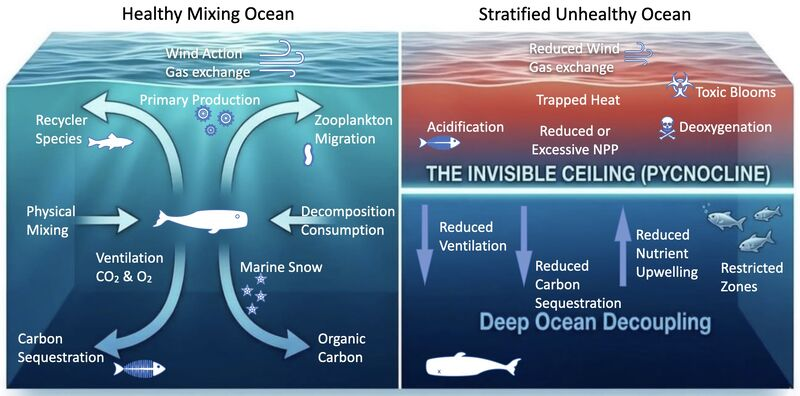
The Oceans are Losing their Breath. They’re no longer just "buffering" climate change; they are reaching a structural breaking point. In this second article in a series on Ocean Stratification (the layering of water that prevents mixing), Jan and I examine a "triple whammy" of environmental failures:
The Deoxygenation Crisis: Warmer surface layers are trapping heat and losing oxygen. Since the mid-20th century, 1%–2% of global ocean oxygen has vanished, creating "dead zones" where marine species literally struggle to breathe.
Chemical & Visual Shifts: We have officially breached the Planetary Boundary for Ocean Acidification, threatening foundational species like coral and shellfish. Simultaneously, the oceans are "darkening" as biomass and particles accumulate in the surface, further trapping heat in a dangerous feedback loop.
A Stalling Carbon Pump: The "biological pump"—the process where marine life moves carbon to the deep ocean—is slowing down. Rising temperatures are creating a "thermal wall" that disrupts the (vertical)migration of carbon-recycling species.
The Bottom Line: The ocean's capacity to absorb our emissions is flattening. As stratification strengthens and marine heatwaves become the "new normal," the transition of our oceans from a stable climate sink to a volatile risk source is one of the most significant challenges of this century.
Links to this new article and the first one covering the physical aspects of Ocean Stratification are in the comments. h/t Tom Harris and Jan Umsonst
The Great Decoupling 2: Changes in Ocean Biochemistry Driven by Strengthening Stratification https://t.co/RRdDtMrMT5
I’ve got a sweet giveaway from my sponsor, @UltimateGuard - all you have to do is RT this and follow them for a chance to win! We will pick three winners at random, each of which can choose three pieces from their new Lorwyn collection 🎉 #sponsored 😛
Francis s’en est allé…
J’ai eu la tristesse d’apprendre le décès de l’immense botaniste Francis Hallé à l’âge de 87 ans.
Sa disparition ne fera malheureusement pas la une des journaux, c'est pourquoi je tenais à lui rendre hommage avec ce fil.
1/10
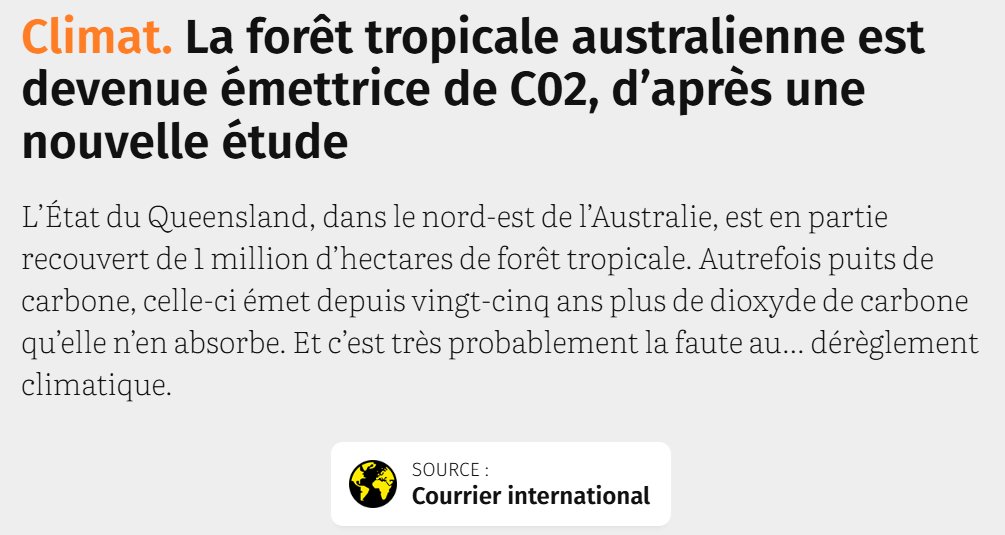
J’attendais le jour où une première grande étude basculerait la ligne rouge : et c’est aujourd’hui. Elle démontre que le changement climatique commence désormais à faire dépérir nos forêts plus vite qu’elles ne se régénèrent. En Australie, leur bilan carbone devient négatif : elles émettent désormais plus de CO₂ (ralentissement de la croissance par chaleur et sécheresse, décomposition accélérée du bois mort par les micro-organismes) qu’elles n’en stockent via la photosynthèse. Le bruit de fond n'est plus : il devient une tendance globale.
Il faut cesser avec ce discours rassurant et trompeur selon lequel « l’augmentation du CO₂ fertilise les forêts et les fait pousser plus vite ». Ce récit simpliste ignore les limites thermiques (mortalité par chaleur) et les limites hydriques (mortalité par sécheresse). Quand les forêts meurent, elles ne sont plus une solution : elles deviennent un problème.
Étude Nature : https://t.co/zVVNwmeCj8
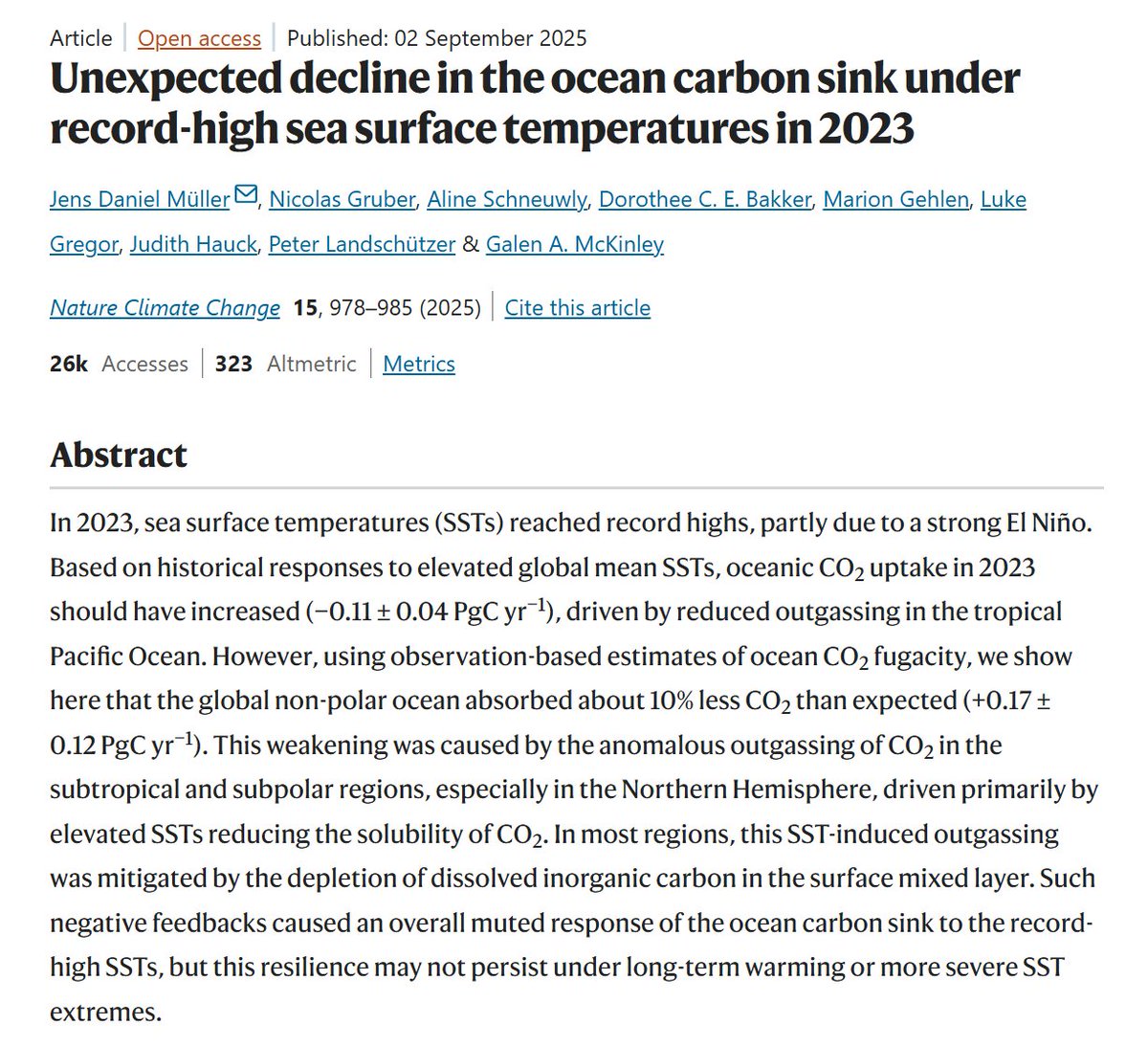
Et ce signal dépasse les forêts. Une autre étude parue dans Nature Climate Change montre que l’océan lui aussi perd de son efficacité à absorber le CO₂. Le réchauffement de l’eau, la stratification accrue et la baisse d’oxygène affaiblissent la pompe biologique et chimique qui piège normalement le carbone dissous. Autrement dit, l’un des deux grands amortisseurs du climat mondial (l’océan) est aussi en train de se gripper.
Étude Nature Climate Change : https://t.co/VSqtbxu6mW
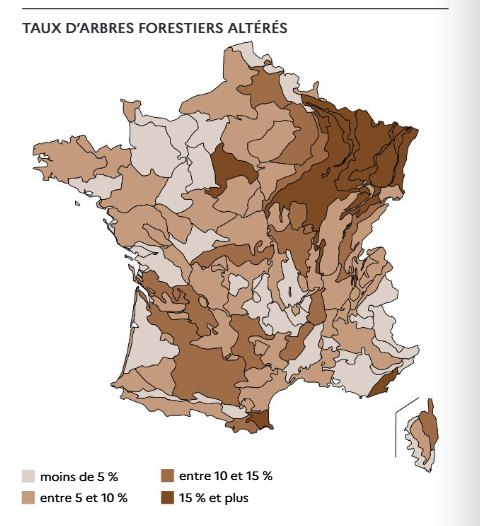
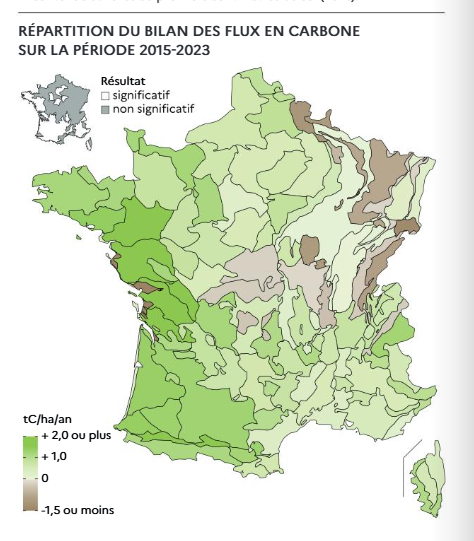
Et la France n’est pas épargnée. Comme le rappelle un rapport récent : si les forêts sont des alliées dans la lutte contre l’augmentation du CO₂ atmosphérique, elles en sont aussi les victimes. Les crises climatiques (sécheresses, canicules) et sanitaires font que certaines forêts françaises (notamment dans le Grand Est) émettent aujourd’hui plus de carbone qu’elles n’en captent. Entre 2015 et 2023, les forêts françaises n'ont piégé que 39 MtCO₂/an, soit 38 % de moins qu’entre 2005 et 2013.
Rapport : https://t.co/yRfaBnbONX
Autrement dit : ce que l’on pensait être un rempart naturel contre nos émissions est en train de se retourner. Le puits s’épuise. Et quand les amortisseurs lâchent, c’est la pente du réchauffement qui s’accélère.
Tiens, puisque j'ai bien énervé les fachotrolls, autant continuer. Voici une historie arrivée sur les réseaux sociaux espagnols, où l'extrême droite sort là aussi du coma, plus tardivement que le reste de l'Europe car là bas il restait pas mal de gens l'ayant connu au pouvoir.
1 mois après tout le monde, nouvelle vidéo sur #Arcane !!
Que raconte vraiment l'épisode 7 de la saison 2 ? Pourquoi cet épisode sorti de nulle part est aussi marquant ?
(lien en dessous)
Mdr. Wikipedia est collaboratif. Il est tout à fait possible de modifier une page. Tout le monde peut le faire, le truc c'est que wikipédia réclame des sources fiables sinon effectivement c'est supprimé.
Si vos mensonges sont basés sur rien, c'est pas la faute de wikipédia hein.