Is El-Sayed's Campaign Funded by Elderly Fake Donors?
ActBlue says an 88-year-old widow has given over $150k to Dems over the past five years, but she says that's not possible
By Charlie LeDuff @Charlieleduff
Milan — Out in the country on a rutted dirt road lined with corn lives an old woman and her dog.
Elizabeth Waffle, 88, was forced to move into a shabby trailer two years ago after her house burned down. She owns an old pickup truck but no computer.
Nevertheless, Waffle, who lives on a modest pension, is a true believer in liberal causes and continues to make small political donations by way of ActBlue—the Democrat online fundraising platform.
But somehow, those few dozen small donations she has made over the past five years have transmogrified into 14,696 donations totaling more than $150,000—the equivalent of eight donations a day, every day for the past five years, averaging $9.18.
“One hundred and fifty thousand?” Waffle said with real surprise. “Hell no. I don’t have that kind of money.”
She says she has contributed to Abdul El-Sayed, the Democratic Socialist running for Michigan’s U.S. Senate seat, but not 47 times spanning the last two years, as federal filings show.
El-Sayed promises to get money out of politics. He makes a great show of refusing corporate PAC money. But that’s just wordplay.
El-Sayed does take special interest money. He takes money from his father-in-law. Most concerning, he takes money from ActBlue.
The subject of multiple investigations, the fundraising platform is accused of “rinsing” foreign money and massive private donations by using the stolen names and addresses of real, often elderly Americans to fabricate hundreds of small-dollar donations. Names like Elizabeth Waffle.
ActBlue CEO Regina Wallace-Jones recently invoked her Fifth Amendment rights 22 times during a congressional hearing regarding foreign contributions.
According to FEC campaign contributions compiled by Bob Cushman, ActBlue shows Waffle donating from her trailer, even though she has no computer and spotty internet access. It also shows her donating from an apartment she rented in town two years ago after her house burned down. Sometimes it shows Waffle donating from both the trailer and the apartment on the same day. It shows her donating to out-of-state candidates she’s never heard of.
“This is very abnormal,” said Waffle, who sat in the trailer threshold looking over the paperwork I had brought. “I think it’s wrong, and I think there’s something in there that’s off.”
El-Sayed’s campaign brags that he’s the top Michigan fundraiser off the ActBlue platform, having raised 10 times the money from small-dollar donors than his primary opponent, Haley Stevens.
Stevens has also taken ActBlue money. As has Slotkin, Whitmer, Nessel, Benson, Gilchrist, and the entire Democrat gang.
But it is Abdul who plays the sanctimony card. If he is really serious about getting corrupt money out of politics, then he ought to get off ActBlue and return the money.
Anything else is elder abuse.
Michigan can’t afford another four years of Lansing lefties draining the coffers.
💸 AG Dana Nessel’s office budget has increased roughly $20-30M per year since she’s been in office, while she’s spent your tax dollars fighting to shutdown Line 5 and increase gas and propane prices
💸 AG Dana Nessel’s office workforce has increased by nearly 30% with 45 lawsuits in one year against the Trump administration
💸 S.O.S. Benson blew $9M on a buggy campaign finance website that forced lawmakers to yank IT control from her office
💸 S.O.S. Benson wasted $4.5M to mail absentee ballot applications to all registered voters before the 2020 election
💸 Governor Whitmer blew through a $9B surplus and bloated the budget by $25B, or about 43%, since she took office
💸 Governor Whitmer spent $2.7B on corporate welfare projects with 20,595 jobs promised and only 602 jobs created (costing taxpayers $3M per job)
💸 Governor Whitmer has spent nearly $5B more per year for the School Aid Fund since she took office, but only 3 out of 5 fourth graders are proficient readers
💸 Governor Whitmer promised to fix the damn roads, and $31B later, 1 in 4 roads are in poor condition
Scotland's Rewilding Failure
2003: Environmental groups celebrate a major victory in the Scottish Highlands. Large tracts of land are designated for "rewilding." The goal is to restore the landscape to "natural" conditions.
Step one: Remove the sheep and cattle that have been grazing there for centuries.
The theory is simple. Livestock are "unnatural." Remove them and nature will recover.
What actually happens next is documented extensively, though rarely discussed outside specialist ecology circles.
Year 1-2: Without grazing, the grass grows tall and rank. Coarse species dominate. The flower diversity that existed under grazing pressure begins declining.
Year 3-5: Bracken invasion. Bracken is toxic to most herbivores, so it faced no natural check once livestock were removed. It spreads aggressively, shading out other plants.
Biodiversity drops.
Year 5-10: Scrub encroachment. Without grazing to control it, woody shrubs spread rapidly. This sounds good - "more trees!" - except it's the wrong kind of succession.
Ground-nesting birds that need open grassland lose their habitat. Species like curlew, lapwing, golden plover - all declining.
The tick population explodes. Without livestock to host on, they wait in vegetation for deer or birds. Lyme disease cases in surrounding areas increase.
Fire risk increases dramatically. Ungrazed vegetation creates massive fuel loads. Summer fires become a serious problem where they were previously rare.
Meanwhile, the soil isn't improving. Plant matter isn't being trampled in. No dung to feed soil microbes. The carbon sequestration that grazing provides isn't happening.
Year 10+: The land is assessed. Biodiversity has decreased. The landscape is dominated by a few aggressive species instead of the diverse grassland that existed under grazing.
The "rewilding" failed to restore what was there before livestock. It created something else - and something worse for most species.
Ecologists quietly start reintroducing grazing.
Sometimes with native breeds of cattle. Sometimes with Highland cattle specifically selected to mimic wild herbivore behavior.
The land begins recovering. The diverse grassland returns. Birds come back. Flowers reappear.
The lesson is clear: The British uplands evolved with large herbivores. Before cattle, there were aurochs. Before aurochs, there were other large grazers for millions of years.
Removing grazing doesn't restore nature. It disrupts the process that built the ecosystem in the first place.
But this story doesn't fit the narrative. So it's not publicized.
Environmental groups continue campaigning to remove livestock from hills while the ecological evidence shows this makes things worse.
"Rewilding" sounds natural. Until you realize the land evolved being grazed and removing that process is the actual disruption.
America's fifth president is the one most people forget. But you have almost certainly seen his face, and you have definitely heard his most famous idea.
His name was James Monroe. And he was the last of the Founding Fathers to lead the country, the final president who actually fought in the Revolution.
He dropped out of college at 18 to enlist. He crossed the Delaware with George Washington on that freezing Christmas night in 1776, and took a musket ball to the shoulder that nearly killed him. In the famous painting of Washington crossing the Delaware, the young officer holding the flag is traditionally said to be Monroe.
He later studied law under Thomas Jefferson, and helped negotiate the Louisiana Purchase, which doubled the size of the United States.
As president from 1817 to 1825, his time was called the Era of Good Feelings. The opposing party had collapsed entirely, and he was so popular he won reelection almost unanimously. He also acquired Florida from Spain.
Then, in 1823, he issued the idea that made him immortal. The Monroe Doctrine. He declared that European powers could no longer colonize or interfere in the Americas. At the time, America barely had the power to enforce it. But it became the backbone of US foreign policy for the next two centuries.
And his ending is genuinely eerie. Monroe died on the 4th of July, 1831. He was the third president in a row to die on Independence Day, after John Adams and Thomas Jefferson both died on July 4th, 1826, exactly 50 years after the Declaration.
Even the capital of Liberia, Monrovia, is named after him. And most Americans still could not pick him out of a lineup.
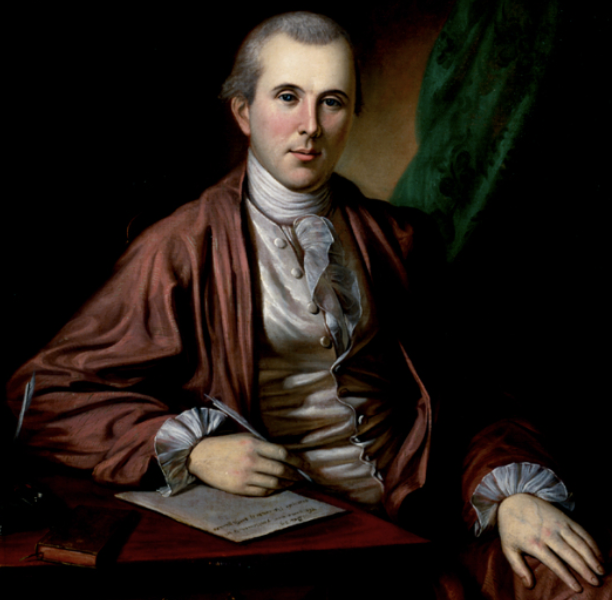
You know the pamphlet "Common Sense," the one that convinced America to break from Britain. You know Thomas Paine wrote it. Here's what you probably don't know. Another man talked Paine into writing it, and gave it that title. Meet Dr. Benjamin Rush.
Rush is arguably the most consequential Founding Father that nobody puts on a t-shirt, and his fingerprints are all over things you'd never guess.
Start with Common Sense. In 1775 Paine was a struggling writer newly arrived from England. Rush, a Philadelphia physician deep in revolutionary circles, urged him to write a pamphlet making the case for independence to ordinary people. Rush even suggested the name: Common Sense. That pamphlet exploded across the colonies, sold in staggering numbers, and did more to turn public opinion toward independence than almost anything else. Rush lit the fuse and handed Paine the match.
Then he signed the Declaration of Independence himself in 1776 and served as a surgeon in the Continental Army, patching up men in the field.
But here's where it gets remarkable. His whole life was spent trying to fix things nobody else would touch.
He's widely called the father of American psychiatry. At a time when mentally ill people were chained in basements and treated as monsters or demons, Rush argued they were sick and deserved actual care and study. He opened the first free medical dispensary in the country so poor people could get treatment. He helped found a college. He argued for educating women. He fought against the death penalty. And he served as president of the Pennsylvania Society for the Abolition of Slavery, pushing against slavery when that was a deeply unpopular position.
Now the moment that defines his courage. In 1793 yellow fever tore through Philadelphia and killed roughly one out of every ten people in the city. Thousands died. Anyone who could afford to flee, fled, including much of the government. Rush stayed. He worked himself to exhaustion treating the sick as the bodies piled up. He caught the fever himself and nearly died from it. He was wrong about a lot of his treatments, his aggressive bloodletting almost certainly killed patients, but he never ran. He stood in the middle of a plague when it would have been easy to leave.
And then there's my favorite thing he ever did. John Adams and Thomas Jefferson, once close friends, had become bitter enemies and hadn't spoken in years. Rush, friends with both, spent years quietly working on them, nudging, prodding, refusing to let it die. In 1812 he finally got them writing to each other again. That reconciliation produced one of the greatest correspondences in American history, two old rivals writing back and forth until they died on the very same day, July 4, 1826.
Rush didn't live to see that ending. He died of a fever in 1813.
A doctor who named the pamphlet that sparked a revolution, defended the mentally ill, fought slavery, ran toward a plague, and healed the greatest broken friendship in American history.
Benjamin Rush. The Founding Father who spent his life fixing what everyone else abandoned.
Jo Nagai was raising swallowtail butterflies at his home in Kobe, Japan, when he noticed something odd. The ones he had looked after as caterpillars seemed to recognize him. Wild butterflies fled. His didn't.
He was in second grade. He wrote a four-page letter to Dr. Martha Weiss, an entomologist at Georgetown University who had studied whether moths could retain memories through metamorphosis. He asked if she could help him design a version of her experiment for butterflies.
She said yes.
Using a muscle therapy device, Jo trained caterpillars to associate the scent of lavender with a mild vibration. When the caterpillars became butterflies, 70 per cent of them still avoided the lavender. Their brains had been completely rebuilt during metamorphosis. The memory survived anyway.
Then he bred them.
The offspring, which had never been trained, also avoided lavender. So did their grandchildren. Without ever experiencing the vibration, two generations of butterflies inherited an aversion to a scent their grandmother had been taught to fear.
Jo documented it all in a 33-page research paper and presented his findings at the International Congress of Entomology in Kobe in 2024. He was 10.
A second grader wrote a letter to a Georgetown professor, and together they found evidence that butterflies can pass memories down through generations.
-Wilderness Whisper
Groundhog Day is one of the most beloved films ever made. And yes, Andie MacDowell is cute and charming. But that is not why it hits a chord thirty years later with people who can’t quite explain why they keep rewatching it.
The reason is Aristotle. And almost nobody knows it.
1. Phil Connors wakes up on February 2nd. Again. And again. Infinitely. No consequences, no memory from others, no tomorrow. He has been given what every hedonist, every utopian, every system that promises liberation through freedom from constraint has always promised: complete freedom from accountability. The result is not paradise. It is the most precise laboratory experiment in the history of cinema – what does a human being actually become when freed from all consequences?
2. He tries pleasure first. Eats everything, seduces women, steals money. It works, briefly, the way soma works. Then it stops working, the way soma always stops working. He tries knowledge — learns piano, French poetry, ice sculpture — not yet for virtue, but for manipulation. Still instrumental. Still empty. Then he tries suicide. Repeatedly. The groundhog always wakes him. The void cannot be escaped. It can only be filled.
3. This is Aristotle’s laboratory. Not theoretical – experimental. Eudaimonia (read below) cannot be purchased, stolen, or stumbled into. It is not a feeling. It is not a peak experience. It is the condition that results from becoming, through practice, the kind of person capable of it. Phil has infinite time and zero character at the start. The loop is not his prison. It is his curriculum.
4. The turn is the most important moment in the film and the easiest to miss. Phil stops trying to escape the loop and starts trying to improve within it. He learns piano not to impress anyone – nobody will remember tomorrow. He helps people not for reward – there is none. He becomes good with no audience, no record, no consequence. This is virtue in its purest Aristotelian form: the action done for its own sake, repeated until it becomes character.
5. Rousseau would say Phil is naturally good and the loop is oppressing him. The film says the opposite: left completely free, with no social pressure, no consequences, no system to blame, Phil reveals everything that needs work before anything worth keeping emerges. The loop doesn’t corrupt him. It shows him to himself. That is the most anti-Rousseau statement in popular cinema – and nobody noticed, because Bill Murray is just very funny.
6. He falls in love with Rita not by manipulating her — he tried that, it failed spectacularly — but by becoming someone worth loving. You cannot love your way to virtue. You can only become virtuous and discover that love becomes possible. The film gets the causality exactly right – which almost no film does.
Virtue gets you true love.
7. The loop ends when Phil has become genuinely good – not performing goodness, not strategically good, but actually virtuous through ten thousand repetitions of the right choice with no reward attached. Aristotle said virtue is a habit formed through practice. Groundhog Day is the proof of concept. The film hits a chord because everyone senses, somewhere beneath the comedy, that this is how it actually works – that there is no shortcut, no hack, no liberation through freedom from consequence. Only the truth of it. Only the practice. Only becoming, slowly and without an audience, the person you were supposed to be.
@SenatorSlotkin@SenGaryPeters Why did you not attend the Committee meeting about all the massive fraud taking place in our Country? Is it okay with you that our tax dollars are being stolen?
🚨 Sec. Marco Rubio just NAILED IT:
"One of the criticisms you sometimes hear of communism is that it 'sounds good in theory, but it never works in practice.'"
"That's actually NOT TRUE. Communism does NOT sound good in theory. The world that envisions for all of us is small, flat, gray, leveled of all exception, drained of all that is good and noble in the human soul."
"The world that envisions is a world without courage, a world without creativity, or ambition, a world without heroes, or glory, or great causes to strive towards, without a world without miracles, without men who rise above the rest to do incredible and extraordinary things."
"And the world communism envisions is a world without God."
"For these architects of revolutionary violence, the towering achievement of our civilization, for them, it's an unbearable humiliation, a reminder of what they cannot do and a reminder of what they cannot be. So they choose instead to destroy." 💯
i think AI is about to set off the biggest wave of historical discoveries ever
and it's already started...
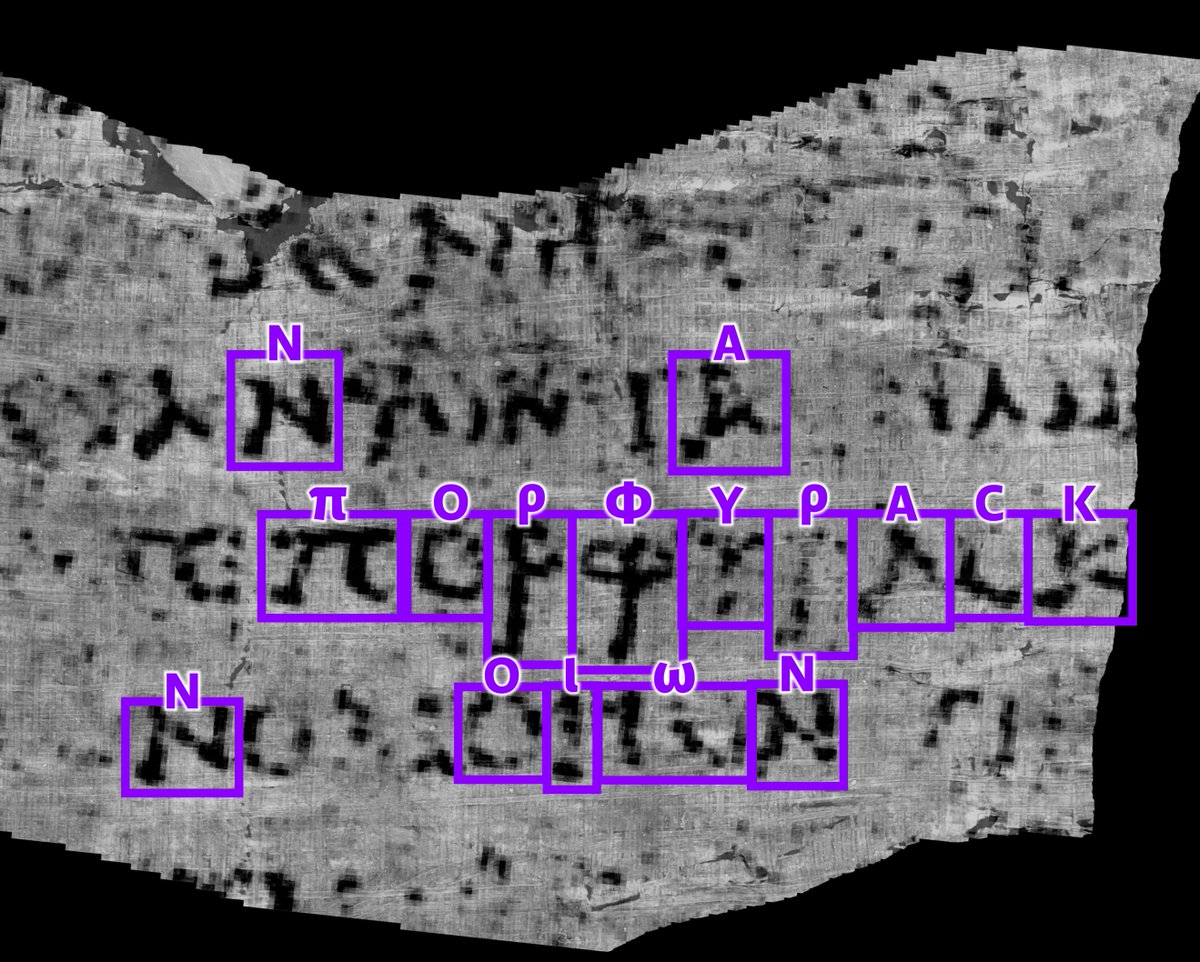
> AI read the full text of a scroll buried by Mount Vesuvius 2,000 years ago, revealing a lost work of Stoic philosophy and a book by the philosopher Philodemus that nobody knew existed
> AI deciphered another scroll from the same library and found Plato's exact burial spot, unknown for 2,000 years. the text even describes his final night, with Plato critiquing a flute player's rhythm from his deathbed
> an AI handwriting model showed some Dead Sea Scrolls are 50 to 100 years older than scholars believed, putting the Book of Daniel within its author's lifetime. we could be looking at something close to an original
> AI recovered a 250-line hymn to Babylon, one of the most copied texts of the ancient world, by matching 30 fragments scattered across museums worldwide. it had been lost for 1,000 years
> AI found 303 new Nazca lines in Peru in six months, nearly doubling one of archaeology's most famous mysteries after a century of human searching had only turned up 430
> AI reconstructed the rules of a 2,000-year-old Roman board game from nothing but the carvings on a limestone slab, simulating thousands of games until it found the ruleset that fit
everyone is excited about what AI will solve in the future
i'm equally excited about what AI will solve from the past
Rain had just passed through as we took off from Keesler on a training mission this morning. The trails off the propeller tips weren’t quite as strong as I expected given the humidity but they still showed up well enough. This is at 960 frames per second… if you shoot for ten seconds it works out to be over five minutes of video.
Right now I am writing this in tears. Thank you @SECNAV@HungCao_VA from the bottom of my heart.
The US Merchant Marine has been defunded, denigrated, and stripped of respect for decades.
The result? The Navy pulled 17 critical logistics ships manned by Merchant Mariners from the active fleet, and only 86 🇺🇸 cargo ships remain in international service against China’s thousands.
Over the last three years, what started as a tiny group with @brentdsadler@Heritage gained traction through @michaelgwaltz and snowballed into countless meetings with Senators, Admirals, and senior White House advisors.
Together with dozens of patriots, and with the personal support of President Trump, we wrote the SHIPS for America Act, the Maritime Executive Order & the Maritime Action Plan. We overturned the UN carbon tax that penalized shipping, fought for new USTR rules, stood up @JerryHendrixII’s White House shipbuilding office and a new Navy shipbuilding plan, won critical support from @SecWar & got an actual USMM Captain, Steve Carmel, nominated as Commandant of the USMM.
It hasn’t all been unicorns and rainbows. We are still fighting to get the SHIPS Act through Congress and to get the bureaucratic state to execute the executive orders.
But my biggest frustration, one I raised at EVERY SINGLE MEETING, was this: we are swinging for grand slams while nobody guards first base.
And the easiest bunt of all is the most basic sign of respect: a service ribbon for US Merchant Mariners who served in combat.
My wife displays a single ribbon from her service in Iraq. Everyone who enters our house asks about it, giving me the chance to be the proud service spouse I am.
But that combat ribbon, one of dozens on the books for Merchant Mariners, is the only one regularly issued to our service & was essentially forgotten during the Obama years.
@PeteButtigieg refused to issue it when the USMM returned to combat in the Red Sea.
That ribbon is what kept me pushing. At every meeting with the top people in DC, I asked for one simple bunt: issue the ribbon to our mariners in combat.
Nobody did. A few tried. A few made phone calls. Most ignored the request, and some rolled their eyes.
One even told me: “This is ridiculous, John. We are budgeting billions for ships and you won’t shut up about a ribbon. Ask any mariner if they’d rather have a new ship or a ribbon and 100% will say a ship.”
They aren’t wrong. The problem is ships take time, we are three years in and they don’t have a ship. A ribbon can be issued in days.
The bigger problem is they don’t understand Colonel John Boyd: “People, then ideas, then platforms & technology. In that order.”
The fact that nobody is asking for a ribbon is exactly what makes it powerful.
A few weeks ago I met with Hung Cao and opened with the same ask I’ve made hundreds of times: “Dust off an @MSCSealift medals & give one to the crews in combat off Iran.”
He said what most have said: “Give me a few weeks, I’ll look into it.”
I’ve heard that before, so I got mad. Madder still when @shesova told me a USMM World War II hero had been overlooked for a medal. I called my Commandant & said, “GD it Steve, we still have a WW2 veteran who’s been overlooked.”
“Give me a few weeks John, I’ll look into it.”
🙄
Well, I woke up today to an email from Sheila inviting me and @SecDuffy to a ceremony awarding Charles Mills, World War II USMM combat veteran the USMM Outstanding Achievement Medal. Wow!
Then @MikeSchuler published this today.
I asked for a simple USMM combat medal nobody would recognize.
Instead President Trump & Hung Cao delivered a Presidential Unit Citation, one of the most prestigious awards in the military.
Yesterday @HungCao_VA said the Navy’s top 3 priorities are people, shipbuilding & the homeland. Senior officers have said that for years.
The difference is Hung Cao means it.
“Acta Non Verba,” deeds not words, is USMM Acadmy’s motto & boy did Secretary Cao deliver!
PEOPLE FIRST 🇺🇸
“Be patient with everyone, but above all with yourself. Do not be disheartened by your imperfections, but always rise up with fresh courage.”
~ St. Francis de Sales
We gave you guys the House in 2010 to stop Obama.
You did nothing.
You had the House during Trump’s first term.
You did nothing.
We gave it to you again in 2022 to stop Biden.
You did nothing.
You’ve had it for almost 2yrs in Trump’s second term. You passed a Communist Housing Bill and are kicking around an amnesty for agriculture workers.
Just. Stop.
Boston Harbor is once again filled with tall ships, many of them sailing here from ports around the world to help celebrate America’s 250th birthday.
For a few days, these historic vessels are more than a breathtaking backdrop. They’re a reminder that our maritime heritage helped shape a nation, and that our story continues to draw friends from across the globe.
History under full sail in one of America’s most historic harbors!