.@USTreasury is calling on talented experts across sectors to help strengthen America’s investment security.
The United States remains a leading destination for global investment, but emerging technologies bring new security challenges—the Investment Security Technology Initiative will help our nation rise to meet them.
Read more from Assistant Secretary Pilkerton in @BarronsOnline: https://t.co/96Gp1VacNm
Assistant Secretary Chris Pilkerton spoke at the @SelectUSA Investment Summit to highlight the positive impact of foreign direct investment and to advance a new OIS initiative – the Strategic Vendor Program. This program seeks to identify and support critical components of our domestic supply chain to further protect the national security of our country.
Yesterday at the U.S. AI Congress, Assistant Secretary Chris Pilkerton highlighted @USTreasury’s Investment Security Technology Initiative, which connects innovators, investors, academics, government practitioners, and technical experts to help evaluate critical and emerging technologies.
As investment in AI and other cutting-edge sectors continues to grow, OIS remains focused on understanding the national security implications of these transactions while supporting U.S. leadership in innovation.
Assistant Secretary Chris Pilkerton joined the @defensecomm National Summit last week for a fireside chat, where he highlighted CFIUS’s mission to safeguard national security while maintaining an open investment environment. He also outlined the interagency risk review process and shared recent program improvements, including stronger community outreach and expanded resources for stakeholders.
Yesterday, Assistant Secretary Chris Pilkerton met with @sudipsparikh and the American Association for the Advancement of Science to discuss multiple ways for OIS and @AAAS to collaborate going forward on our Investment Screening Technology Initiative.
Following the President’s signature on H.R. 7147, deadlines or time limitations imposed on the Committee under subparts D or E of 31 C.F.R. Part 800 and Part 802 are no longer being tolled, pursuant to 31 C.F.R. § 800.604 or 31 C.F.R. § 802.604.
Accordingly, CFIUS is now processing active cases according to their statutory deadlines. CFIUS will begin processing transactions not yet under assessment or review with all deliberate speed and in accordance with law, regulation, and the national security interest of the United States.
There are still funding lapses impacting parts of the Department of Homeland Security, which may impact processing of a limited number of cases.
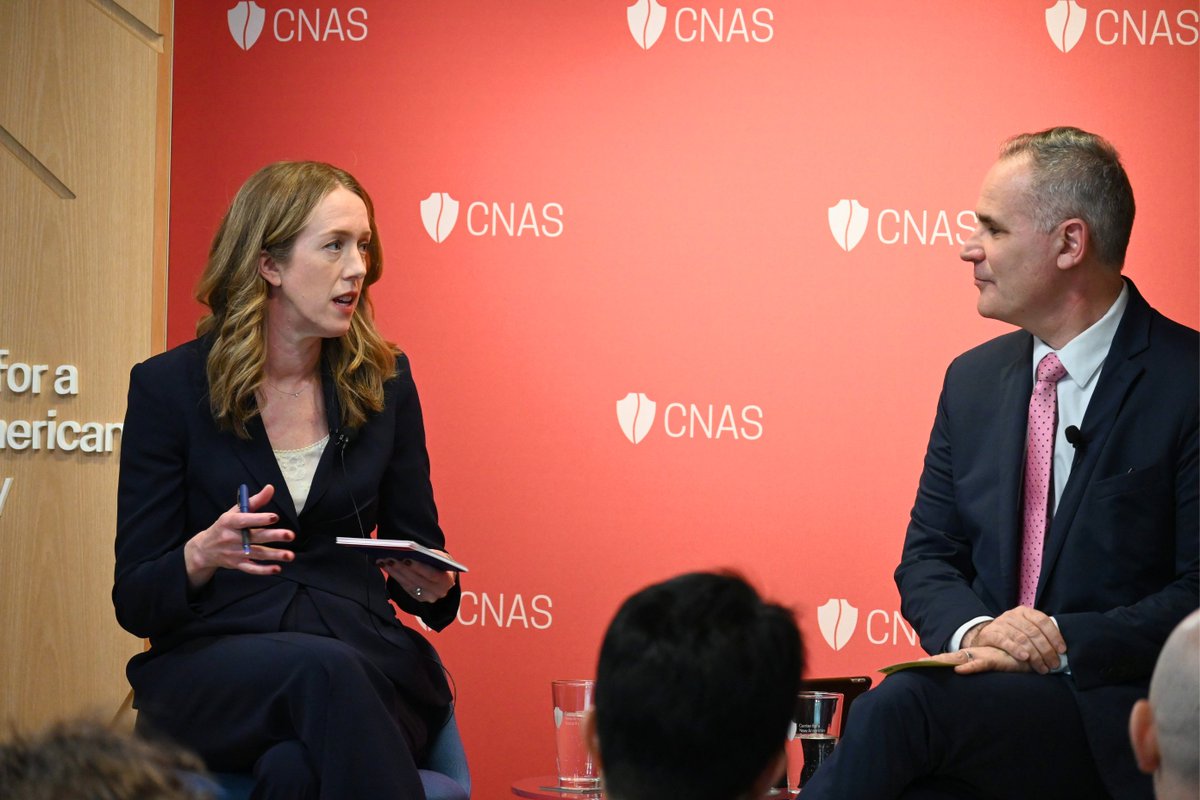
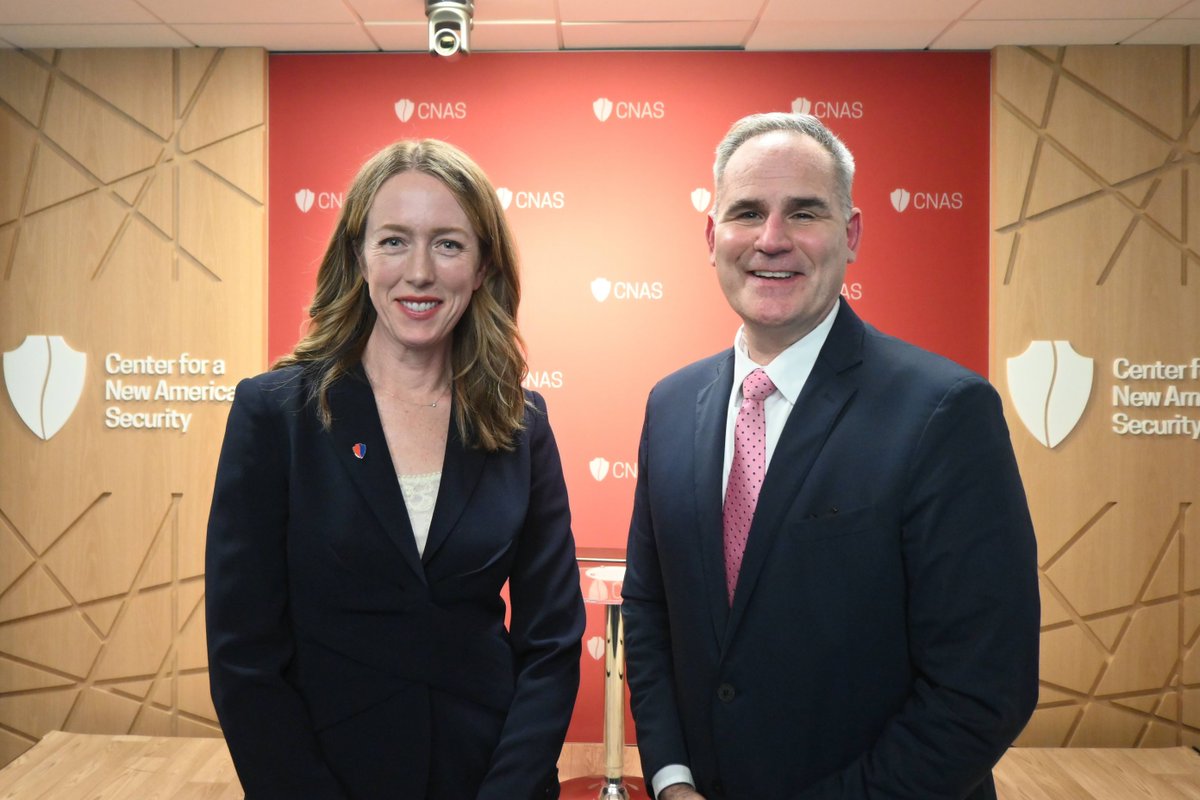
Yesterday, CNAS hosted a conversation with Assistant Secretary @cpilkerton of @OIS. He and @EmilyKilcrease1 dove into how Treasury hopes to strengthen and streamline investment security programs, key CFIUS initiatives, and the program's role in broader trade and foreign policy.
As Assistant Secretary Chris Pilkerton discussed in his fireside chat with @CNASdc, @USTreasury’s Office of Investment Security is advancing the Investment Security Technology Initiative to strengthen how we assess emerging risks.
The effort will formalize interagency technical expertise, deepen engagement with universities and industry, and enhance analysis of dual-use technologies and evolving threat vectors.
Under the leadership of @SecScottBessent, the Office of Investment Security is prioritizing a more transparent, partner-driven CFIUS process that emphasizes early engagement, enhanced guidance, and increased predictability for investors, while facilitating transactions where risks can be effectively mitigated to safeguard national security.
Yesterday, Assistant Secretary Chris Pilkerton joined @CNASdc for a fireside chat on the Administration’s investment security agenda.
The discussion highlighted efforts to modernize the CFIUS processes, strengthen outbound investment oversight, and advance new initiatives including the Known Investor Program and the Investment Security Technology Initiative to better address emerging national security risks.
WATCH @cpilkerton explores the administration’s perspectives on investment security and its ongoing efforts to both strengthen and streamline investment security programs
https://t.co/selQ2QaXuI
.@USTreasury's Office of Investment Security is launching the Investment Security Technology Initiative to convene leading experts and strengthen how we safeguard critical investments and emerging technologies.
As @OIS Assistant Secretary Chris Pilkerton outlines in @barronsonline, this effort is essential to ensuring the United States remains secure and globally competitive.
Op-Ed: A new task force is needed to make sure foreign direct investment is safe, Chris Pilkerton writes in a guest commentary. https://t.co/kCGFPdfq7p
Today, Assistant Secretary Chris Pilkerton joined the 12th Annual ACI CFIUS Conference to discuss how the Office of Investment Security is strengthening CFIUS risk review while making the process more efficient and transparent, deepening engagement with industry and allies, and advancing the Outbound Investment Security Program.
This week, at a discussion with state and local U.S. Chambers of Commerce, @USTreasury@OIS Assistant Secretary Chris Pilkerton highlighted CFIUS’s national security mission that keeps America open for business and secure at home. By collaborating with municipal partners, CFIUS can identify non-notified transactions and better support domestic economic opportunity and investment.
Strengthening investment and investment screening mechanisms – both at home and abroad – featured prominently in meetings between Prime Minister @takaichi_sanae and @POTUS during their March summit, and I was glad to follow up on their discussions with Minister @satsukikatayama.
The U.S.-Japan alliance is vital to global economic security, and @OIS Assistant Secretary Chris Pilkerton shared with NHK, collaboration with America’s allies ensures predictable, transparent, and secure investment environments.
Last week, Assistant Secretary Chris Pilkerton sat down with NHK for a wide-ranging discussion on Japanese investment in the U.S. and Japan’s plans to establish their own investment screening mechanism akin to CFIUS.
He emphasized early engagement, transparency, and U.S.-Japan cooperation to ensure open investment while safeguarding our shared national security interests.