Here's the truth about HIIT and Zone 2 debate:
You can improve your performance or mitochondrial health or whatever metric using either. Both work. About equally well.
We know this. Look at the history of track.
Bannister ran 3:59 on a dirt track 70 years ago doing mostly 5 days a week of 400m repeats.
Harold Norpoth was one of the best 1500 - 5k runners in the world just a few years later with his training being nearly all very slow runs with just very small touches of speed.
So when someone says you HAVE to do HIIT or Zone 2 because it will improve X, Y, Z...the truth is you can get there even doing extremes.
But...
There are tradeoffs. Both in terms of time, but also sustainability.
One of the reasons that 5-7 days of intervals fell out of favor is: it was crazy hard to sustain without getting injured/burned out. Careers were shorter back then.
Second: We learned that interval training was more effective when you build a robust base before hand, then you needed less of the intense stuff to maximize things.
In other words: sequencing mattered.
What we've learned over 100+ years of training history is if you want to optimize, you need both, in the right mixture.
And for the vast majority of runners, that means: a lot of easy with 2 days a week of varied harder workouts. And those workouts are periodized, depending on the training outcome.
So... if you want to do nearly ALL Zone 2...you can get most of the way there if you do enough of it.
If you want to do ALL HIIT, you can get most of the way there if you do enough of it.
But...we've moved past such extreme dicohtomies in the 1950s in training for a reason.
This is one reason why I like looking at historical trends over science when it comes to these debates. Training trends function as a kind of natural selection. You figure out what worked a bit better, and that generally sticks around.
In the scientific debates you just get but X improved Y factor in a contrived isolated 6 week training block better than this contrived training protocol. It doesn't tell us much practically. It's why training methods in elite endurance athletes are a decade or two ahead of the latest scientific recommendation.
It's why no one trains like Roger Bannister or Harold Norpath right now...There are some elements of their training left...but it's refined.
So whenever someone says you don't need X, Y, Z....or you only need A, B, C....there may be a hint of truth technically. That you can get a large % of gains through singular stressors....but it's like turning the clock back to the 1950s in terms of training.
my father always told me: "if you want to go for a run, go for a run, don't look for company. sooner or later, on your fifth run or your twentieth, likeminded people will find you themselves." and only recently have I realized that this principle works everywhere.
In December, Florida’s Parker Valby became the first NCAA woman to break 15:00. Now she’s the first to break 31:00.
Valby’s 30:50.43 at last night’s Bryan Clay Invite smashed Lisa Uhl’s 31:18.07 collegiate record. Missed Olympic standard by 10 secs.
https://t.co/2CpZHtAVmv
10,000M NCAA RECORD FOR PARKER VALBY
30:50.43! In her first-ever 10,000m, @GatorsTF’s
@parker_valby breaks Lisa Uhl’s previous record of 31:18.07 (which stood for 14 years). Valby took 28 seconds off the record! 🐊
No. 11 on the all-time US list! 🇺🇸
So in the span of one month, we’ve seen the first NCAA man under 27:00 and the first NCAA woman under 31:00. And both performances came by athletes making their 10k debuts.
Thanks all who made today and the last 20 years possible. Ron has been there for every year. Sierra for 15. VNTC for 12, Lachie for 8 and Darcy for 4.
I became a Christian at the start of this journey, and I hope I've represented Jesus to the best of my ability.
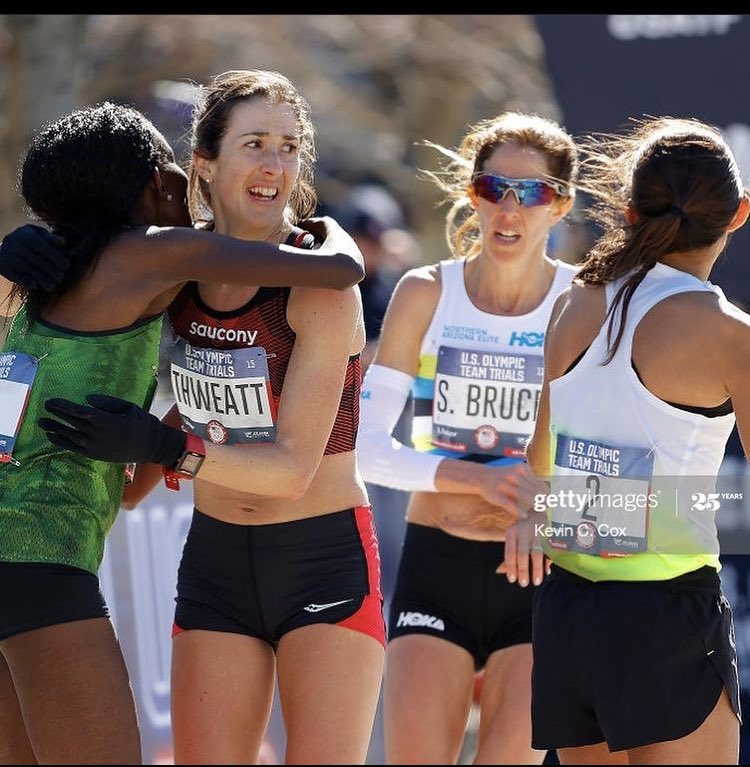
The agony and ecstasy of the sport: 4 women, 19 seconds between them, 1 earned her Olympic spot on the US team, 3 left to fight for another day. All made possible by women bringing out the best in each other. No other arena I’d rather be in. #InternationalWomensDay
When you devote your life to something you’re bound to have it break your heart. It means there’s something to lose and something to gain. You train for it all. And days like last Sunday, are just teachable moments of how to get back up after you’re knocked down.