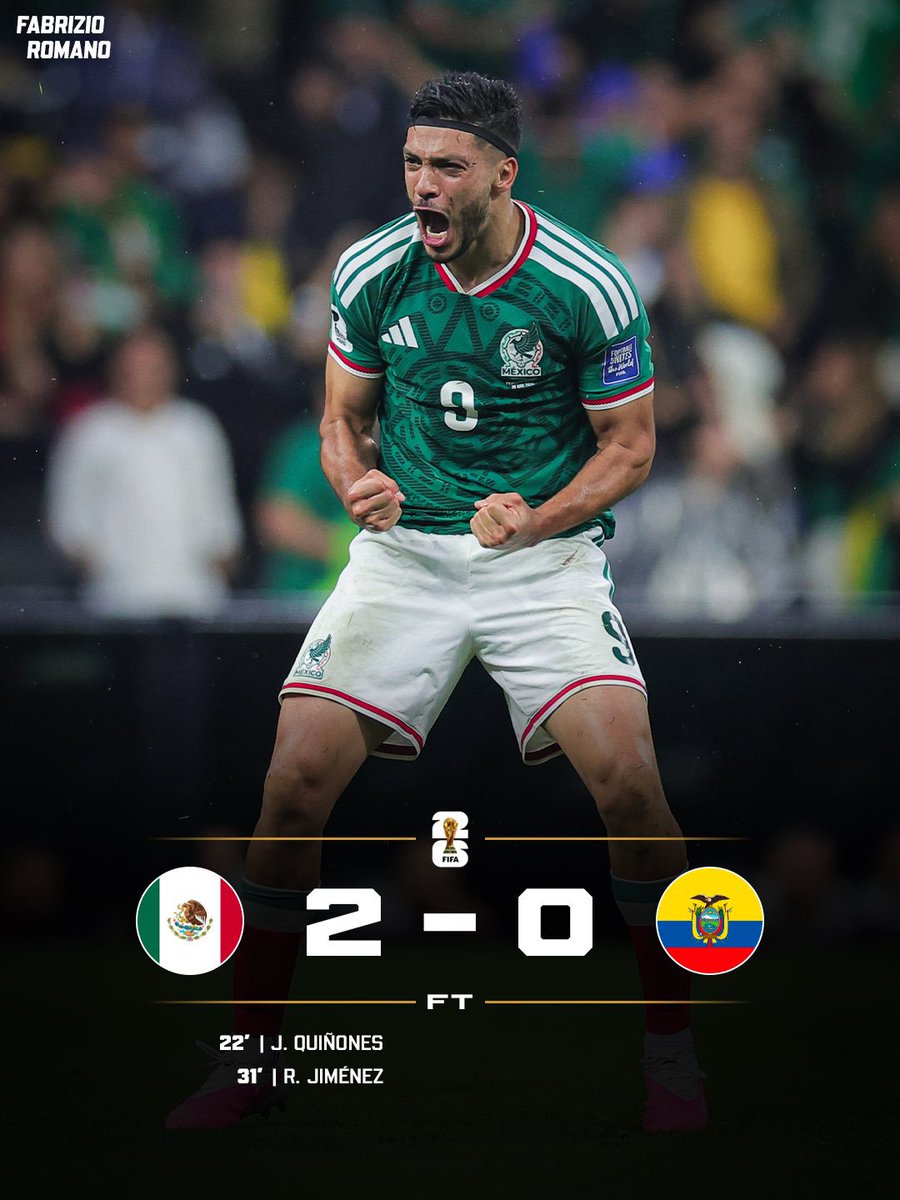
Zlatan Ibrahimović on Mexico eliminating Ecuador to reach the FIFA World Cup Round of 16 with four wins from four:
🗣️ “Four wins from four? Stop calling this a surprise. Mexico aren't surviving this World Cup they're conquering it. They didn't come here to make up the numbers, they came here to shake the entire tournament.”
“People underestimated them before the first whistle. Now look at them. Every opponent they've faced has been forced to respect them the hard way. That's what happens when a team plays with heart, courage and absolute belief.”
“To the Mexican fans... enjoy this moment because you've earned it. You've carried this team with your voices, your passion and your faith. Tonight your players repaid every kilometre travelled and every tear you've shed supporting this badge.”
“Ecuador fought with everything they had, but Mexico wanted history more. That's the difference. In knockout football, talent alone isn't enough you need warriors. Tonight Mexico looked like an army.”
“And to every team still left in this World Cup... be careful. This Mexico side is no longer chasing respect they've already taken it. Now they're chasing the trophy, and if you underestimate them, you'll be the next team going home.”
Hubieran sacado un comunicado cuando Enner Valencia fingió una lesión para escaparse en la ambulancia porque había entrado la policía al campo para detenerlo por no pagar la pensión de manutención a su ex pareja.
Pero ahí se quedaron callados.
don't know who needs to hear this, but start living. the days are flying by, and all you do is work, pay bills, and stress. enjoy what you can - walks, sunsets, music, laughter and nature. joy doesn't have to be expensive. you deserve it.
The Real Game Behind the Juan Hernández Pardon: Power, Pressure, and the New Monroe Doctrine
Juan Orlando Hernández wasn’t pardoned for some technicality or grey zone offense. He was convicted in the U.S. for moving enormous volumes of cocaine toward the United States, taking cartel money, and using the Honduran police and military to protect those routes. Over 400 tons of U.S. bound cocaine moved under his watch. He took millions in bribes from groups like the Sinaloa cartel and Honduran gangs. And he weaponized state institutions to keep that machine running. That’s why he got 45 years. So a pardon like this isn’t small or symbolic, it’s a geopolitical decision.
Why This Could Be Part of a Bigger Strategy
Right now, Honduras is led by Xiomara Castro, who’s aligned herself more closely with Maduro, Cuba, Nicaragua, and has opened doors to China. At the same time, the U.S. is dramatically expanding its military footprint around Venezuela: carriers in the Caribbean, reopened bases in Puerto Rico, and deeper intelligence operations across the region. That’s not random, it’s part of a broader push to reassert influence in a part of the world where China, Russia, and left wing governments are tightening their ties.
In that context, freeing Hernández gives the U.S. a useful piece to move around the board. He still has relationships inside Honduras…political, business, security even if he no longer holds formal power. His presence alone reminds the current Honduran government that Washington still has ways to influence the country’s internal dynamics if it needs to. It doesn’t require overt threats. Just putting him back into play shifts the balance.
What This Pardon Enables Behind the Scenes
Hernández knows the networks…the routes, the brokers, the officials, the financial channels because he built them. In a region where cartels, politics, and foreign influence all blur together, a guy like that is valuable to intelligence agencies. He can help map who’s who, where the vulnerabilities are, and how different factions in Honduras and neighboring countries actually operate beneath the surface.
It also gives the U.S. quiet leverage in negotiations. If Washington wants Honduras to distance itself from Beijing, cooperate more on counter narcotics, or soften its ties with Maduro, the ability to empower or sideline people connected to Hernández’s old political network becomes another tool. Not overt coercion, just a reminder that the U.S. still has reach.
The Larger Picture
If you zoom out, the pardon looks less like an act of forgiveness and more like a move in a regional realignment. The United States is positioning itself for a more aggressive posture in Latin America, and it wants influence inside countries that are drifting away. Hernández, flawed as he is, gives them another pressure point.
So the real story isn’t the pardon itself. It’s what the pardon allows…a channel, a signal, and a piece of leverage at a moment when geopolitical fault lines in the Americas are shifting.