The Ocean Thematic Centre exists to help the ICOS Ocean Observing Community deliver the data we need to quantify the oceans role in planetary C cycling
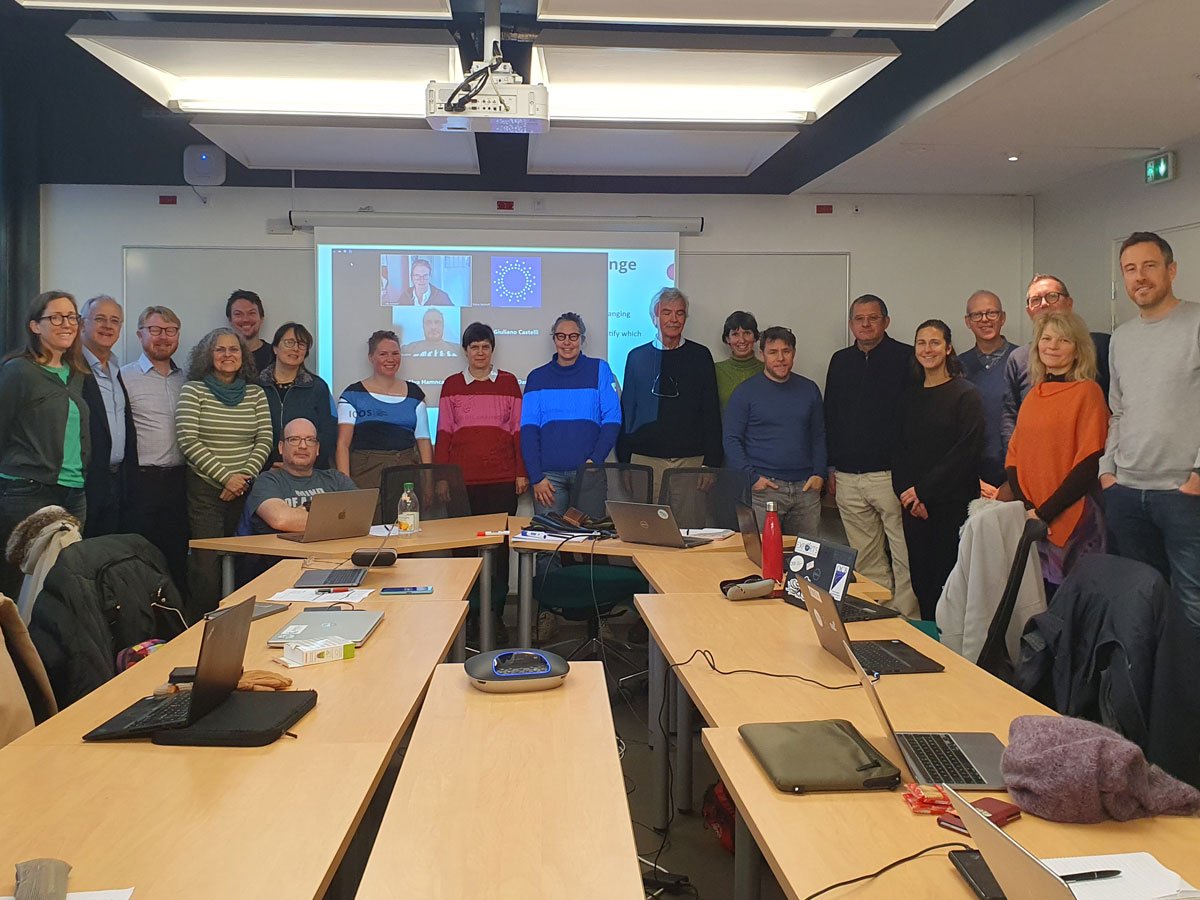
The final day of the 'Workshops on surface pCO₂ observations' is underway. Discussions on @SOCAT_CO2 data submission, quality control, Metadata and enhancements. @NOAA#SOCONET#surfCO2oostende#vliz#NOAA
Day 3 of the 'Workshops on surface pCO₂ observations' is underway. Yesterday was a wonderful day here @ VLIZ. Today our discussions commence on @SOCAT_CO2@Dorothee_Bakker#surfCO2oostende
The ICOS February newsletter is out! This month, we bring you news about two new projects, KADI and GEORGE, and introduce QuinCe, a new tool developed by @OTCCO2 that helps researchers detect anomalies in their data.
Read the newsletter here: https://t.co/Eefaq7KDre
QuinCe (not the fruit) is a data quality control tool developed by ICOS Ocean Thematic Centre @OTCCO2 that helps accelerate near real-time data availability.
Get more insights and return of experience from the last Quince workshop helped in Paris https://t.co/nFuSqSjIND
Members of our team were in Geneva for the
@WMO Greenhouse Gas Monitoring Symposium this week. Well done to all from @ICOS_RI who played a part to bring together diverse communities, to support an information stream, in support of managing climate change.
Day 2 of the @WMO#ghg symposium and we are getting more operational; how can we implement a global planetary C cycle observing system. Here's Andy Watson from @ExeterMarine, @TosteTanhua from @GOOSocean and Maciej Telszewski from @ioccp_org discussing this issue in the Ocean
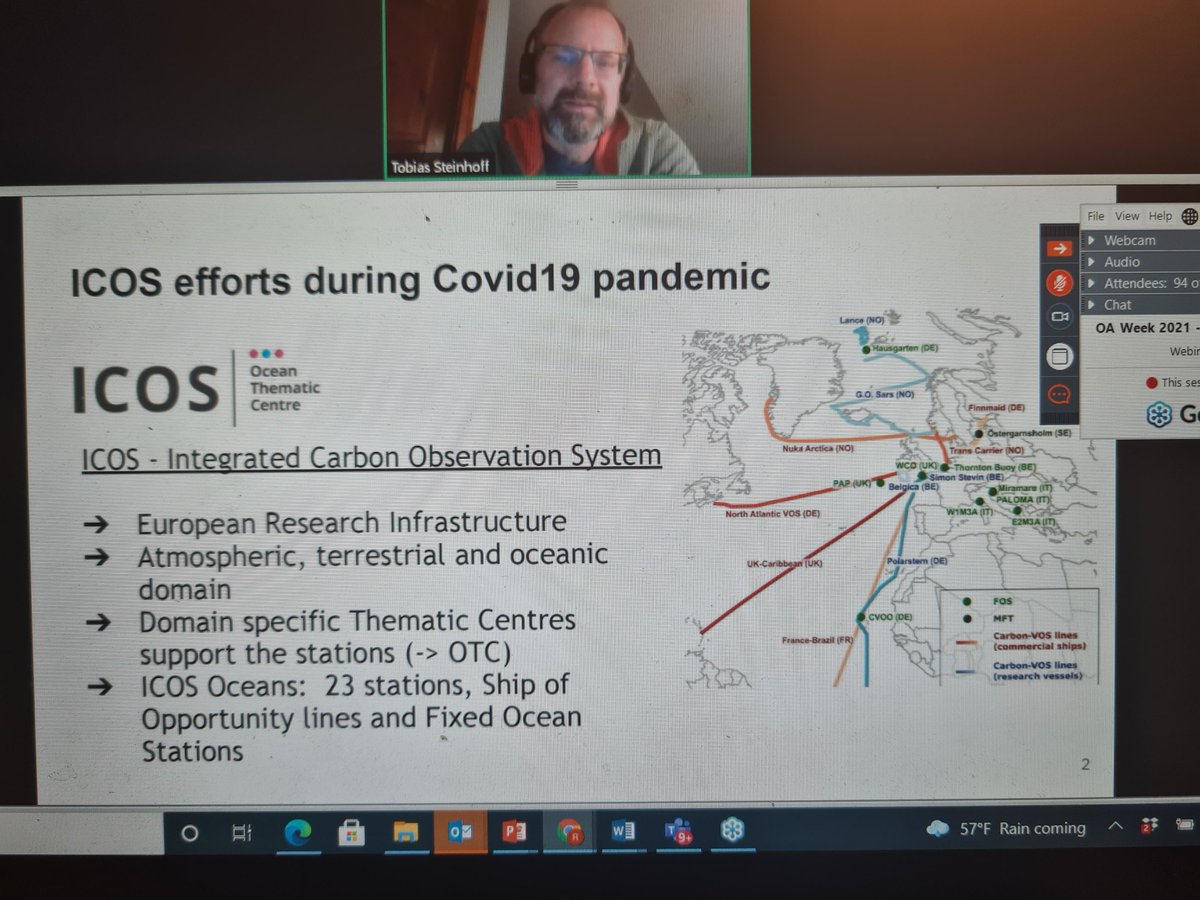
Certified reference materials (CRMs) for seawater CO2 measurements are crucial for Ocean Carbon uptake and and OA research. Ensuring global security of supply is a key priority for our community. Heres @toebki from @ICOS_RI discussing ways forward at #OAWeek2021
If you haven’t registered for this yet then it’s not too late. The Global Biogeochemical-Argo Fleet: Knowledge to Action Workshop | GO-BGC https://t.co/NZDoZg2wnw
Less than 50 days to go: on June, 28 we start the first @OTCCO2 pCO2 inter-comparison at MSO @jmesvliz. For 2 weeks we will compare 18 different pCO2 instruments under controlled conditions: https://t.co/veKYGs3F3L. Follow #pco2compare for more updates.
Interested in Ocean C uptake? Running a station in European Waters and need help with standards, data or training? We may be able to help - come to our townhall at 11 am at @EGU #EGU2021 to find out how twe support the @ICOS_RI Marine network
A couple of weeks ago I had the pleasure of presenting our programme to the Ferrybox community at this event: https://t.co/Euf4pZ8iiu…. You should be ale to catch the talk and slides on the website soon.
This week we have the Monitoring Station Assembly - looking forward to meeting the @ICOS_RI marine stations and talking through the 2021 work programme with them
We are delighted to announce that our proposal for a townhall at @EuroGeosciences this year has been accepted. Do attend to find details of the services we offer and our plans for this year
We have a good supply of bottles and are also buying regulators. All you pay for is the freight.
If you are using a membrane sensor and don't require these standards then our membrane sensor support scheme could be for you
Contact us for further details
There is a flowchart linked from https://t.co/Zpeveo9c4Q which explains the process. There are 4 basic steps
1. Contact the CAL lab
2. Provide list of concentrations you need
3, Bottles are send to you
4. You send the empty bottles back
We are excited to announce that @ICOS_RI Gas Standards are now available for the Ocean Network. This will ensure compatibility of of the ICOS observations with other global monitoring networks, Calibration is done using a set of WMO laboratory standards https://t.co/jtc2NvCfFC