STRONTIUM POWER: Although this series follows the octet rule, only neutral Ph3N is stable. Ph3B is very resistant to double reduction. Only Ar3B.- radical anions are known. However, it had to surrender to strontium. @angew_chem https://t.co/9SZ2Fap58D
Matt’s (@EvansInorganic) joint Monash/Flinders crossover work on super-bulky [NNN]3- ligands, and Al complexes thereof, is out @ChemEurJ. It is open access, so check it out.
#ozchem@AFOSR@arc_gov_au
https://t.co/CWjM1KnYBL
💬 Behind the Scince Interview: Congqing Zhu, Nanjing Univ., discusses the first trinuclear complex to show cumulative quintuple bonding, challenging textbook notions of bonding capacity and hinting at new directions in actinide–transition‑metal chemistry
https://t.co/BlMMG4z3vi
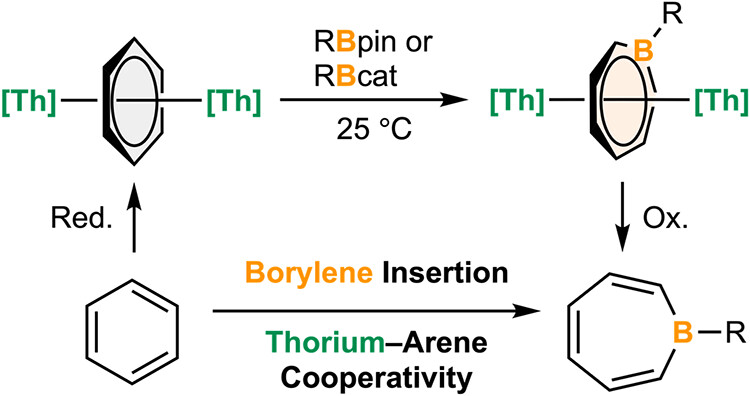
Congratulations to Huaiyuan on his latest paper in @angew_chem describing the facile ring expansion of cyclopentadienide by imino(metallophosphino)silylenes.
Congratulations to everyone involved!
https://t.co/mixVCnt8BP
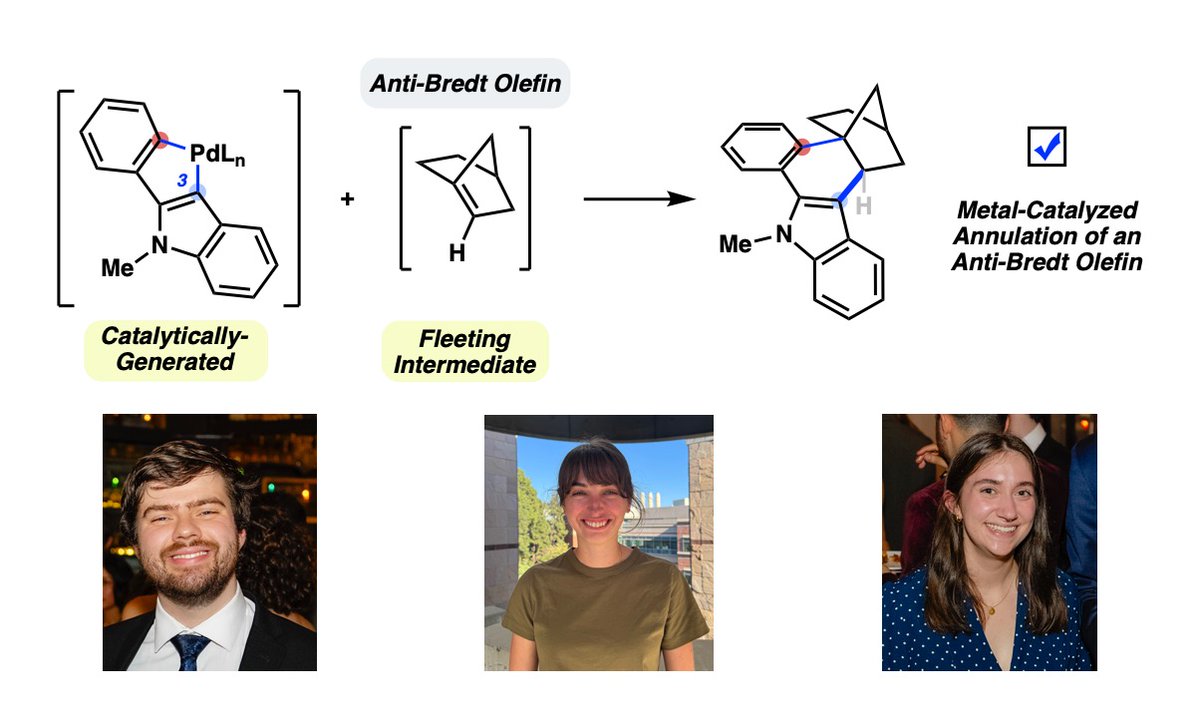
We’re excited to share our latest study now out in @angew_chem describing Pd-catalyzed annulations of an anti-Bredt olefin. Congrats to @ZachWaltersChem, Marie, and Aimee!
Read it here: https://t.co/x1FQIeRLzC
@UCLA@uclachem
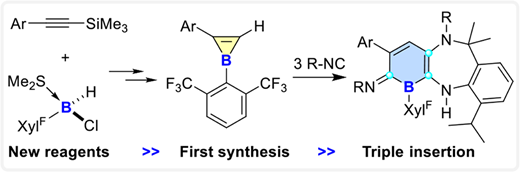
Modulating multicenter bonding through facile addition of diradical precursors to a bipyridine-stabilized borane ( @ChemicalScience ): https://t.co/YxDD9VnJ4W.
Unraveling N–O Cleavage and N–H Bond Formation for NO Reduction to NH3 at a Bimetallic Fe–Mo Site | Journal of the American Chemical Society https://t.co/2EjSm78BS6






![Jones_Research's tweet photo. Matt’s (@EvansInorganic) joint Monash/Flinders crossover work on super-bulky [NNN]3- ligands, and Al complexes thereof, is out @ChemEurJ. It is open access, so check it out.
#ozchem @AFOSR @arc_gov_au
https://t.co/CWjM1KnYBL https://t.co/M0CfFfgqj0](https://pbs.twimg.com/media/HQRrVntbIAIRIfZ.jpg)