Accidental Investor. I like to read, trade ,invest , speculate. Not Sebi Registered. On X to share my thesis and connect with similar minds. Ex Product Manager.
A long Thread on new addition to portfolio.
Stock Name : E2E Networks
Sector - AI/ML Cloud
Potential 10x candidate
Current Valuation is 300 cr approx.
Fy 23 Revenue is 65 Cr.
OPM is 50 percent
Operating Profit 33 Cr
FY 23 PAT is approx 10 cr.
BUT
FY 23 Cash profits are 30+ cr.
How I read a Annual Report (or a DRHP) without wasting 10 hours. ( Mostly Microcaps and Smallcap )
Most investors read annual reports like novels.
I read them like an investigator.
I'm not trying to confirm my bias.
I'm trying to answer one question:
"What is changing
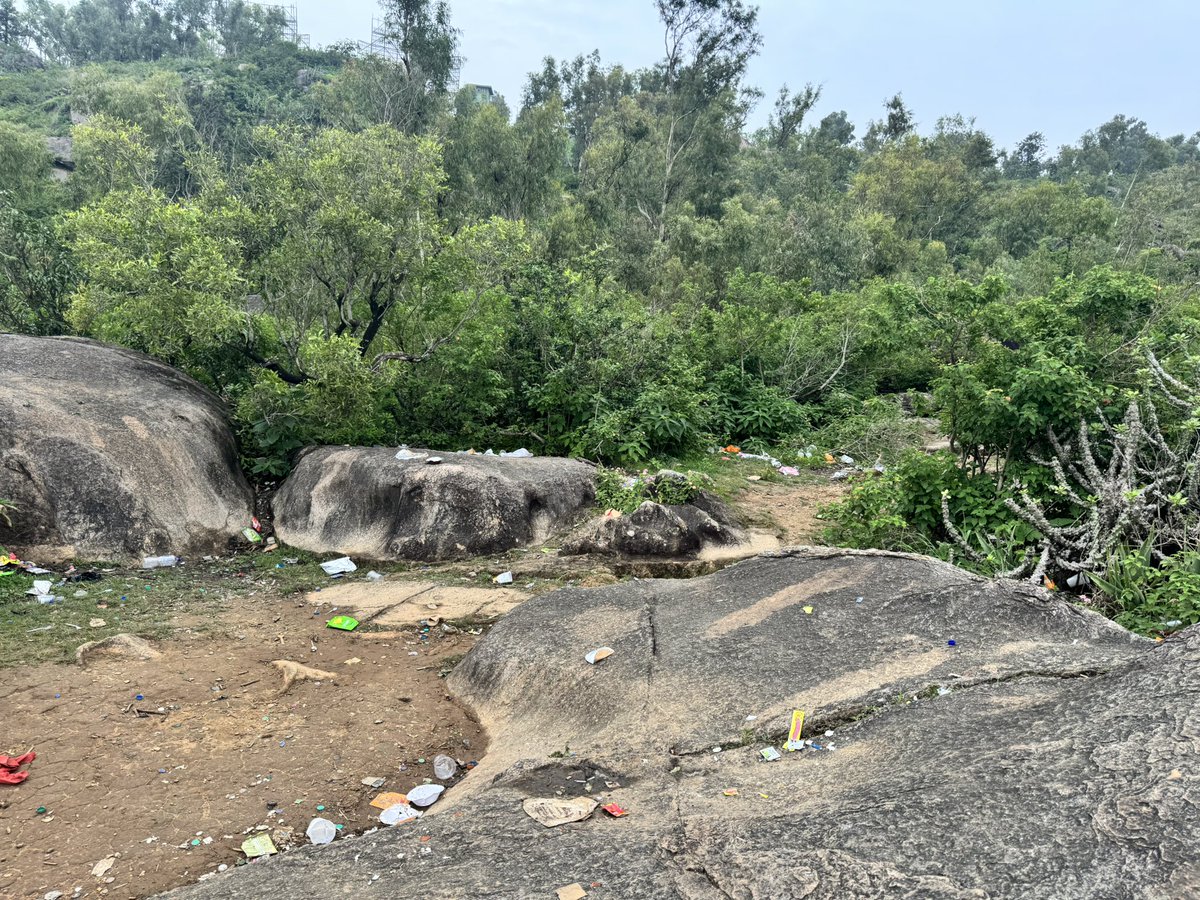
The story of 2 Indias…the spectacular and the squalor.
This is the main reason why we are not a tourism super destination of the world.
We need to install 10 million waste bins in each and every corner of India and a QR code based system to empty them daily
@PMOIndia@RajGovOfficial@tourismgoi
What are some stocks in your portfolio which are trading below 5x PE multiple FY27 or FY8 earning? I am holding 3 such stocks. As earnings pick up, if the pe re rating happens atleast 2 of them can be 5-10x from here.
Stupidest Piece of Report I have seen lately. Aequs story being sold as an amazing aerospace company. But the margins say a different story. Selling stories to people at insane valuations promising strategic Pivot and making fun of DCF😂 for a loss making company.
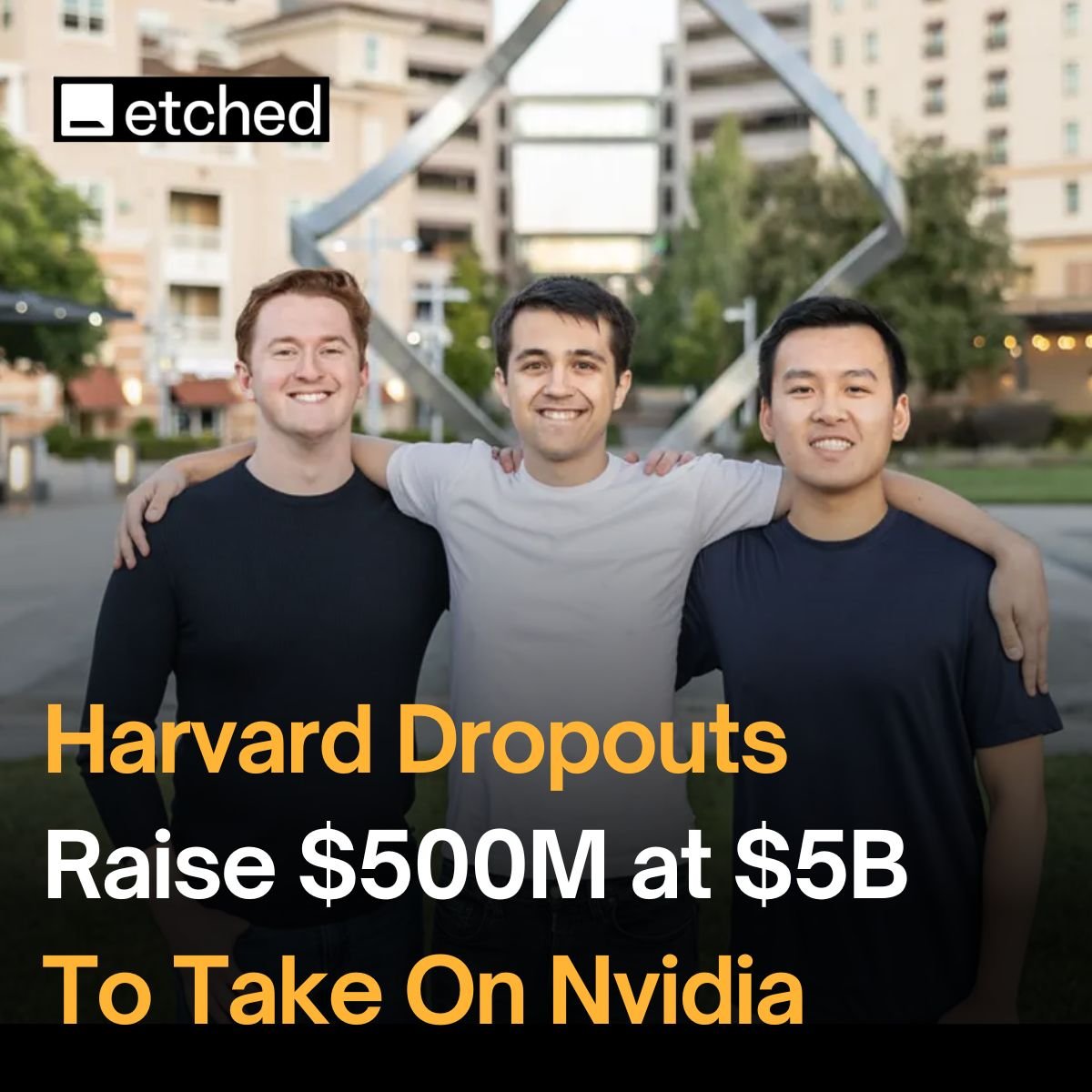
The Etched story is incredible, as shared by Elana Gold of Two Roads 👉
In 2023, three Harvard dropouts were pitching a 30-page memo arguing that AI would eventually need specialized chips, not just GPUs.
Most investors passed.
The company was running month-to-month.
Close to out of cash.
Today, Etched just came out of stealth with $800 million raised, $1 billion in customer contracts, and a $5 billion valuation.
It started at Harvard in 2022.
Gavin Uberti was on a gap year, writing compilers at OctoML. He kept running into the same problem: the chips weren't built for the workloads that mattered. He started Zoom calling Chris Zhu, who was still on campus studying math and computer science. Robert W., who had been running a nonprofit baking birthday cakes for underprivileged kids while launching startups, joined them.
What began as a dorm room project became a conviction.
Transformers would dominate AI. Whoever built chips specifically for transformers would win.
By spring 2023, all three dropped out, became Thiel Fellows, and moved to the Bay Area.
They raised a $5 million seed round. Then hit a wall.
Most VCs didn't buy the thesis. Specialized chips for one architecture? Too risky. They were burning through runway with no clear path to the next round.
Then inference became the bottleneck.
Training happens once. Inference happens every time a model runs. As AI shifted from chatbots to agents running 24/7, inference costs started eating companies alive.
Suddenly the thesis made sense.
The investor list now reads like a who's who: Peter Thiel. Geoffrey Hinton. Andrej Karpathy. Fei-Fei Li. Stanley Druckenmiller. Jane Street. Two Sigma.
They brought in Mark Ross, former CTO of Cypress Semiconductor. Built a team of 400+ engineers from NVIDIA, Google TPU, Broadcom, and SK Hynix. Partnered with TSMC on 4nm manufacturing. Set up a San Jose data center with a path to gigawatt-scale production by 2027.
Their chip is called Sohu. It hard-codes transformer architecture directly into silicon.
The performance claim: a single 8-chip Sohu server can process over 500,000 tokens per second on Llama 70B. A comparable 8-GPU H100 setup runs around 23,000.
That's not incremental. That's 20x.
The catch: Sohu only runs transformers. If AI moves on, the chips are worthless.
Two years ago, they couldn't close a round.
Today: $800 million raised, $1 billion in contracts, and their just getting started.
Advit Jewels - a company attempting a high stakes transformation: moving from a centennial family legacy of silent manufacturing to becoming a high-visibility, premium retail brand.🪙
I see this not just as a jewelry company, but as a capital-intensive play on the premiumisation of the Indian wedding market.
The Investment Thesis: Art as a Moat
At its core, Advit Jewels specializes in Kundan, Polki, and Jadau jewelry that is 100% handcrafted.
and they centre it in a premium b2b clients.
What is Polki? These are uncut, natural diamonds. Unlike machine-cut diamonds that look identical, no two Polki stones are the same. This makes every piece a limited edition by default.
Interesting piece : While giants like Bluestone or Tanishq dominate the mass-market gold and machine-cut diamond space,
Advit operates in a niche where artisanal skill cannot be replaced by a factory line. everything is hand crafted
The Financial Engine: Why the IPO Matters
This is a Working Capital-heavy business.
they buy massive amounts of gold and diamonds in cash up-front, and than make up inventory for long as each design is different on its own and lastly waiting 40–45 days to get paid by B2B retail clients.
The Growth Correlation:
Historical Context: In FY25, the company generated ₹125cr in revenue.
and 124 cr in 9 months of fy26 maintaining 20% pat each year.
anticipating heavy q4 here.
The Projection: Management estimates their working capital needs will surge from ₹145crs in FY26 to ₹347crs inFY28.
Historically, their revenue is almost 1:1 with their working capital.
If they are prepping for ₹347 crores in working capital, they are effectively signaling a doubling of revenue within the next 24 months.
and if margins remain the same it looks
they would be having nearly 70cr pat by fy28 or maybe more because interest cost will be lower as they would be clearing 60cr loans from ipo proceeds
keeping in mind they had 25cr pat in fy25
lets see if all this falls one the place.
The Strategic Shift: The B2C Leap
Currently, 82.4% of revenue comes from B2B wholesale selling to other jewelry stores.
While this provides scale, it keeps margins lower than they could be and traps cash in credit cycles.
The shift: The company is building a seven-storey, 30,000 sq. ft. Experience Center in Jaipur.
Goal: Pivot to B2C . Direct retail allows them to capture the retailer's markup and get paid immediately in cash.
Scale: They plan to roll out 30 franchise stores across India over the next 3-4 years.
Margins: Best-in-Class, But are they Sustainable?
Advit’s profitability is significantly higher than its listed peers:
EBITDA Margin: 29.73%.
PAT Margin: 20.30%.
And this doesn't look like dressing for ipo, they are commanding such margins from fy19
Peer Comparison: For context, RBZ Jewellers and Radhika Jeweltech operate at roughly half these net profit levels.
Management attributes this to their 100% focus on high-markup, design-centric Polki art.
The Reality Check: Risks and Red Flags.
The Rambhajo Brand Paradox: While Advit owns the trademark, several other family-run entities operate under similar names in the same niche. While non-compete agreements exist for some, market confusion remains a risk.
Gold Price Volatility: Gold and stones make up over 99% of their raw material cost. A sudden crash in gold prices could devalue their massive inventory (which is 80% of their revenue).
Artisan Scarcity: Handcrafted jewelry depends on human hands. A shortage of skilled karigars would act as a ceiling on how much they can grow.
HOW I'M LOOKING AT IT
They aren't trying to build something from scratch; they are professionalizing a 100-year-old craft.
and the art has its value if they continue to maintain such margins, I think they would be getting decent valuations in coming time.
Secondly launching the Jaipur flagship store in next 3-4 months and looking for franchises seems good.
but the concern for me is that company remains a
working capital beast, where all growth is eaten up by the need to buy more gold, leaving the company vulnerable to debt if sales cycles slow down.
lets see overall. I'm positive on this.
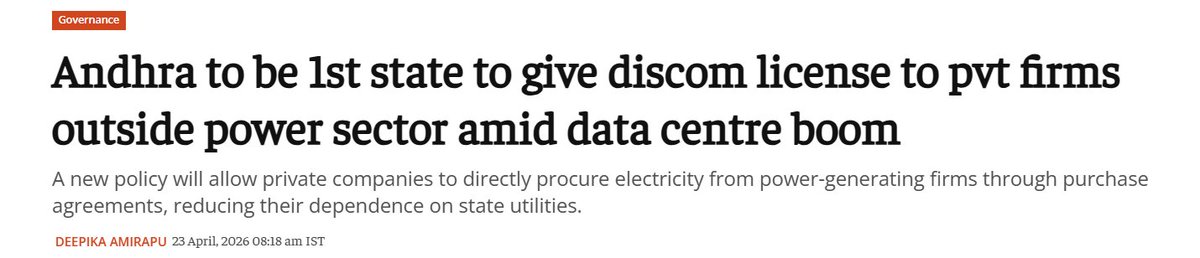
This is one of the most Important structural changes in Indian power policy in years
Andhra Pradesh became the first Indian state to allow big private companies (not power companies) to get their own electricity distribution licence if they need more than 300 MW of power.
Google already quietly got this licence two weeks earlier for its $15 billion, 1 GW data centre in Vizag (with Adani). Groundbreaking is 28 April.
Power is 40-60% of a data centre's running cost. That is the single biggest expense. AI data centres need perfect, non-stop power - even a few minutes of bad supply can crash operations worth crores.
State DISCOMs in India are unreliable, debt-loaded (₹7.5 lakh crore total debt), and charge industrial users about 50% above actual cost of supply. That extra charge funds cheap power for farmers and households.
Big companies have always wanted out of this system but had no legal way. Now Andhra gave them one.
What this licence actually lets companies do?
The company can buy power directly from any generator through its own PPA (power purchase agreement). It uses the state existing transmission lines (APTRANSCO) by paying open access charges.
It does not build new wires. It manages its own supply, mixing solar/wind/thermal as it wants. At least 51% must come from renewable sources. The company basically becomes its own mini-DISCOM sitting inside the state grid.
Google, Brookfield-Reliance, Meta-Sify, RMZ Corp - all planning massive data centres in Andhra - benefit directly. They get cheaper power, better reliability, and full control over their energy mix.
Andhra gets massive investment, jobs, and tax revenue. India gets local AI infrastructure instead of depending on foreign data centres.
When these giant consumers leave the state DISCOM customer pool, the cross-subsidy math breaks. Today, industrial users overpay so farmers and households can underpay.
If the biggest industrial users walk out with their own licence, either the state government pays more from its budget to cover the gap, or electricity prices for normal households slowly go up.
State DISCOMs, already drowning in debt, lose their most profitable customers. This is the core tension - growth vs. subsidy protection.
India's data centre capacity is going from roughly 2 GW now to 5-9 GW by 2030. Almost all new demand is AI workloads. Andhra just told every hyperscaler - come here, run your own power.
Telangana, Tamil Nadu, Maharashtra - the other states competing for data centres - now face a direct question - match Andhra's rule or lose the next $15 billion campus to Vizag.
Competitive pressure will force other states to copy this fast. The Electricity Amendment Bill 2025 already made the legal framework easier at the central level.
Andhra broke a decades-old government monopoly on power distribution for large industrial users. It is using this as a weapon to attract the biggest AI investments in the country.
The reform is already working - Google got its licence before the policy was even officially announced. The risk is that pulling big payers out of the DISCOM system puts more financial stress on an already broken state power model.
But the bet is that the investment, jobs, and growth will more than compensate. Other states will follow within months Perhaps. This is one of the most important structural changes in Indian power policy in years.
Well, Data Centre will come to India in big way & Energy Investment will continue :)
We just have few Chokepoint, & Feel it will done in next 5 year from transmission line to BESS
https://t.co/e6abJ4u2TF
Research Notes On Aeron Composites.
Potential 3-5x multibagger from CMP 80Rs.
Market Cap - 140 cr
PE- 10x
Aeron Composites manufactures and supplies Fiber Glass Reinforced Polymer (FRP) products which includes Pultruded Products, Moulded Gratings, and Rods.
It has 5 major
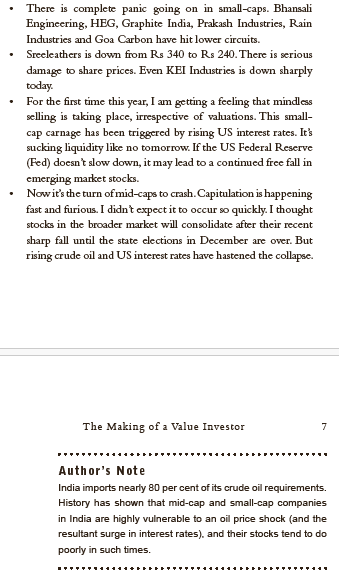
Indian smallcap & midcap stocks always get hammered during an oil price shock.
Largecap quality stocks also eventually crash, but at the very last. That's when the bear market finally comes to an end.
And a new bull market is born. Amid complete despair. When all hope is lost.
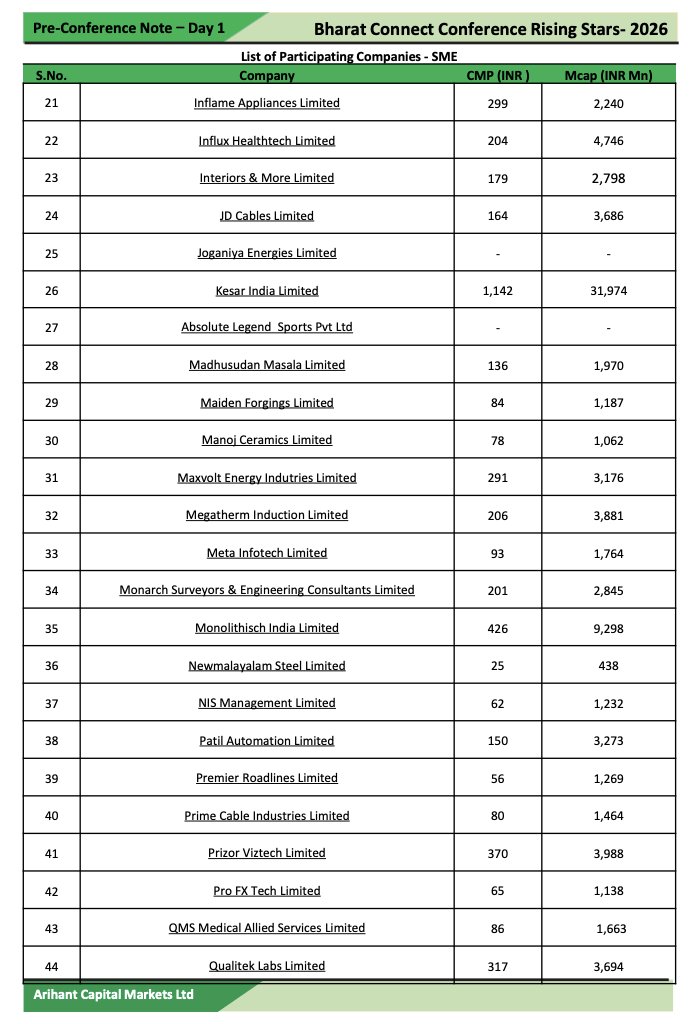
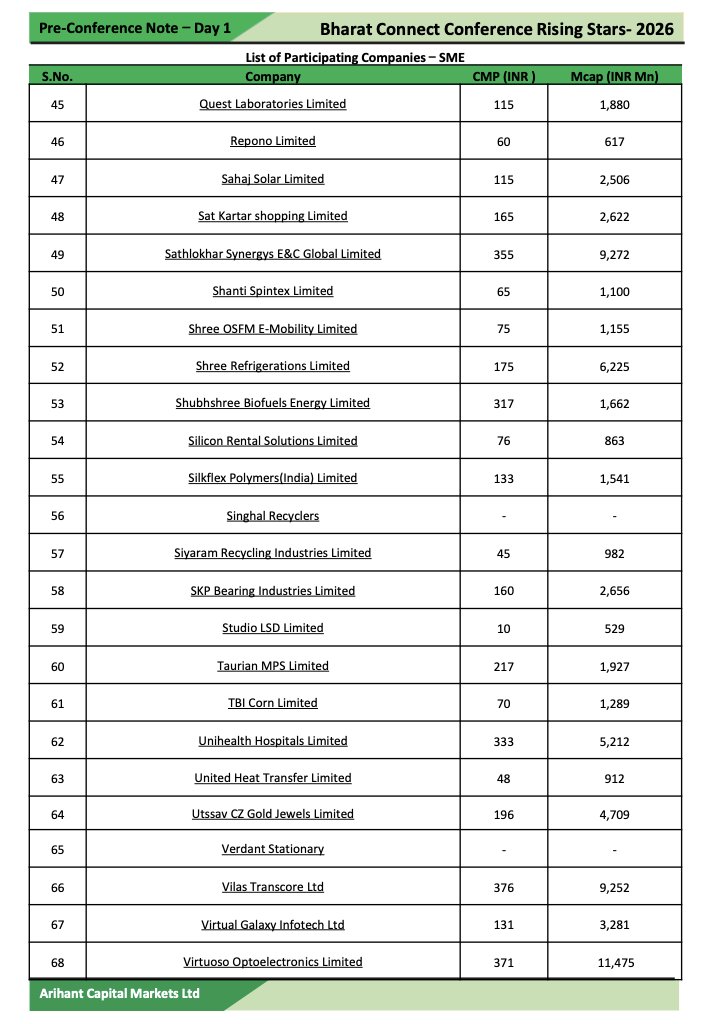
Kudos to Arihant Team & @abhishekcjain for hosting Bharat Conference
Why?
1. Available to everyone without cost
2. Covers almost all companies
3. Conference Notes available for free
4. The timing - at the bottom of market, every management sound very honest and generous which plays huge role in analyzing the company
Next 12-18 months should be very very good in small and microcaps.
Many portfolio stocks down 40-70%.
The selling has been brutal , but real value has started to emerge.
Many stocks now available at 5-10x PE. Some stocks have come at good valuations.
Stocks in Capital Goods ,
We've also created plugins across HR, design, engineering, ops, financial analysis, investment banking, equity research, private equity, and wealth management to help users see what's possible and start building their own.
"This company grows 20% a year, zero debt, clean books, trades at 10x PE. Why is nobody buying it?"
We've been asked this more than any other question this year.
The answer has nothing to do with the business and everything to do with how small cap markets actually work
Link: https://t.co/EdYqE2iR12