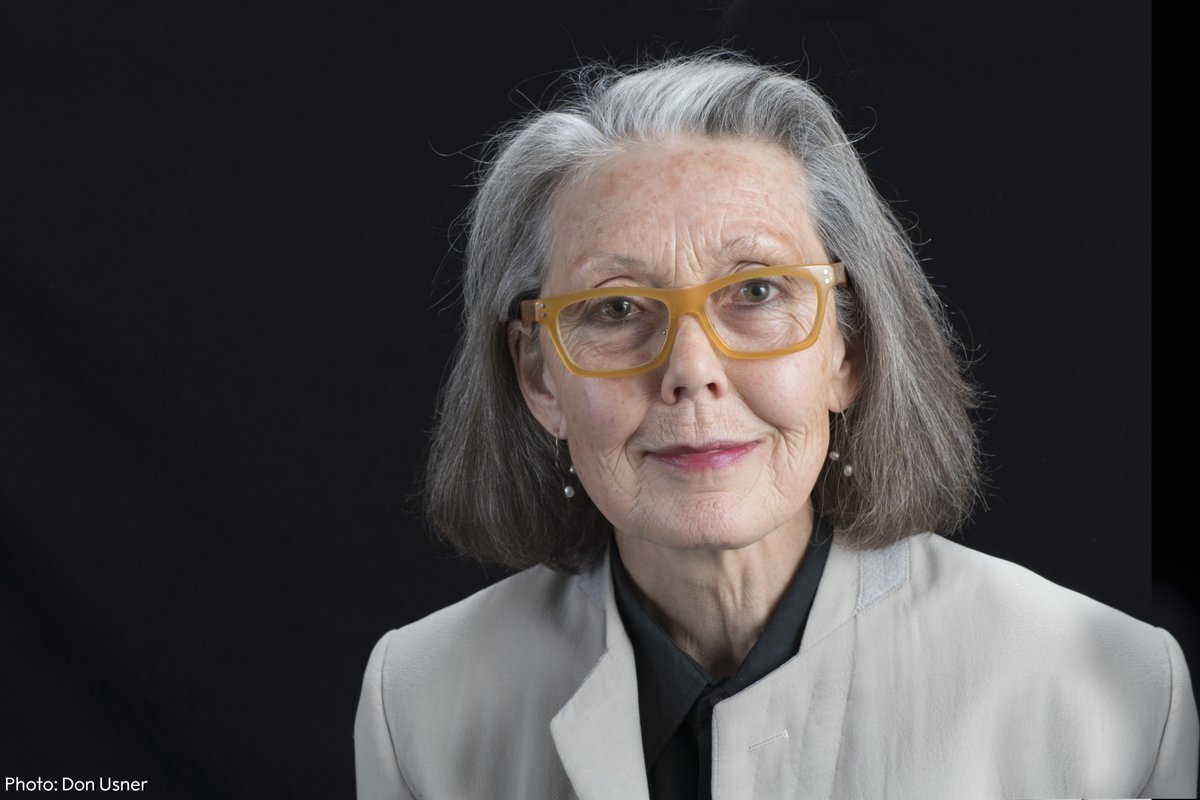
The 2026 Nobel Prize in Literature was awarded to Anne Carson. Since the mid-1980s she has published a wide range of literature: poetry, essays, translations and collaborative artwork.
When reading Carson one thing strikes you as a reader: she sounds like nobody else. With playful intellectual precision, she addresses painful subjects without sentimentality. Her literary voice is charged with an intensity that makes her books impossible to put down. Since Carson’s books offer multiple and ambiguous meanings they can be re-read in different situations in life.
A good place to start as a reader is 'The Beauty of the Husband: A Fictional Essay in 29 Tangos' (2001). It’s a relatable portrait of jealousy and an autofictional account of a break-up. Structured as a series of tangos, the chapters oscillate between desire and anger. The verse captures the swirling movement and passion of the dance itself.
Carson’s first book, 'Eros the Bittersweet: an essay' (1986) is a reworking of her doctoral thesis, exploring the classical Greek concept of eros. In the book, Carson shows how desire is fundamentally bound up with absence. The tension generated by absence is a recurring theme and a defining feature of her writing.
'Nox' is one of many collaborations that Carson has made with her husband, the artist Robert Currie. Nox is a folded text presented in a box. Part elegy, part tribute, it reflects on the disappearance of Carson’s brother in the form of a collage of memories and images.
As Anne Carson said, when being asked where readers should start if they want to get to know her work: start in the middle! So pick up a book and step into the universe of our newest literature laureate.
Did you know literature laureate Grazia Deledda’s writing career began when an Italian fashion magazine published the 13-year-old’s story called ‘Sangue sardo’ (Sardinian Blood)?
Learn more: https://t.co/5XoP72vhpw
This year's Nobel Prize Concert has an outstanding line-up of international stars. On 8 December, audiences will enjoy music by Hannah Kendall, Beethoven and Tchaikovsky.
Antonio Pappano will conduct, with Igor Levit (@igorpianist) as the piano soloist and Fleur Barron, Mezzo Soprano as the vocal soloist. Together with the Royal Stockholm Philharmonic Orchestra, they will perform at Konserthuset Stockholm.
Read more here: https://t.co/IkvJrdO2cF
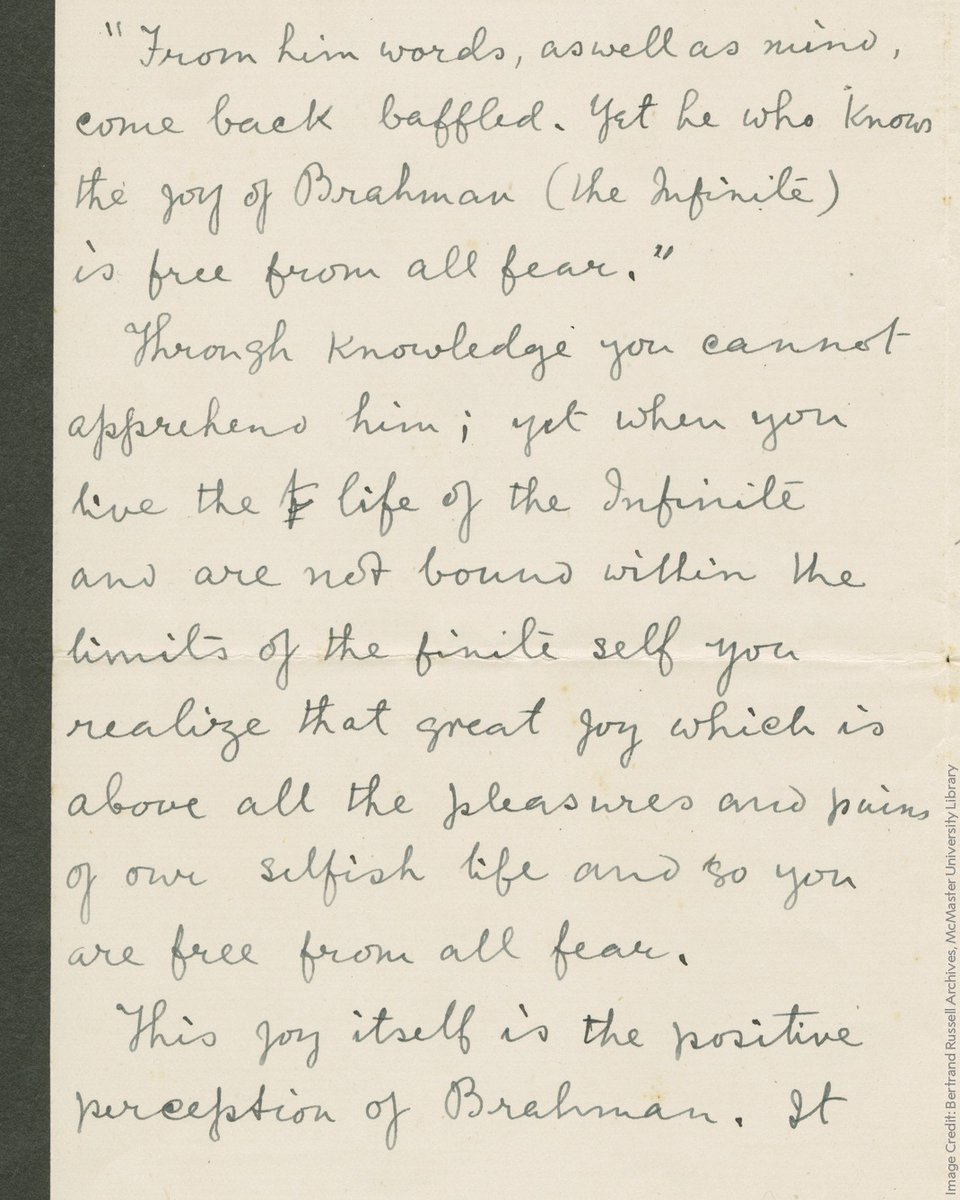
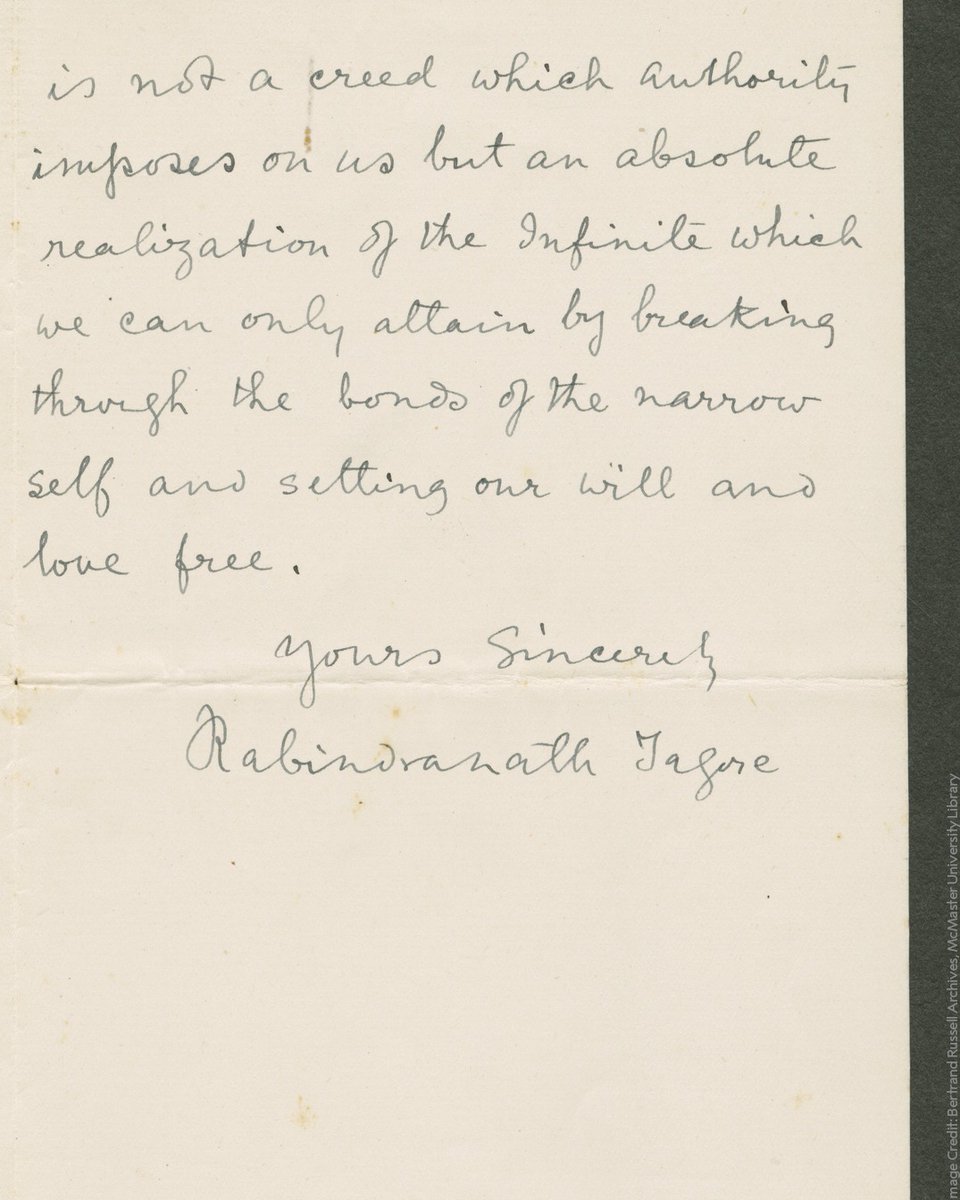
Take a look at this 114-year-old correspondence between literature laureates Bertrand Russell and Rabindranath Tagore.
Almost a year later, Tagore would receive the 1913 literature prize for his poetry. Russell would receive the literature prize 37 years later in 1950.
Images: Bertrand Russell Archives, @mcmasteru Library
This year’s prize in economic sciences uses microfoundations to deliver macro insights.
Traditional Keynesian models built upon statistical and historical relationships between macroeconomic variables. The New Keynesian models are based on microfoundations, decisions that are made by individuals and businesses.
The 2026 Sveriges Riksbank Prize in Economic Sciences in Memory of Alfred Nobel has been awarded to Robert E. Hall and Michael Woodford “for microeconomic foundations of macroeconomic stabilisation.”
#NobelPrize
2026 economic sciences laureate Michael Woodford’s economic model has made it possible to respond to supply shocks more effectively.
Various types of shocks can disrupt the balance between supply and demand. A negative supply shock could be a commodity shortage, while a positive supply shock could be a technological breakthrough that makes the production of large volumes cheaper and easier. A positive demand shock could be good news about the future that increases households’ consumption, and a negative one the opposite news. If the balance is disrupted, it can be reset using a stabilisation policy that reduces demand (to the left) or increases it (to the right).
#NobelPrize
An Israeli settler was filmed abusing and reportedly poisoning livestock in the village of Al-Mughayyir in the occupied West Bank.
The animals reportedly belonged to Israelis and were poisoned in an attempt to frame Palestinians for killing them.
2026 economic sciences laureates Robert E. Hall’s and Michael Woodford’s research has made us better equipped to manage economic downturns.
They laid the foundation of the New Keynesian paradigm, in which models are built upon microfoundations, which means from the bottom up. Economic outcomes are the result of millions of decisions made at the microlevel by households and businesses. Using models based upon this approach, rather than simply studying the economy from a macro perspective, like a bird’s eye view, Hall’s and Woodford’s research has generated a paradigm shift in the theory of stabilisation policy.
#NobelPrize
2026 economic sciences laureate Robert E. Hall’s hypothesis was that changes in consumption could not be predicted because they depend on new – and thus unpredictable – information.
Hall presented his results in an article in 1978, which was something of a eureka moment for research. His work became key to the development of modern research on consumption.
#NobelPrize
BREAKING NEWS
The Royal Swedish Academy of Sciences has decided to award the 2026 Sveriges Riksbank Prize in Economic Sciences in Memory of Alfred Nobel to Robert E. Hall and Michael Woodford “for microeconomic foundations of macroeconomic stabilisation.”
#NobelPrize
A basic accounting rule in physics says whenever a particle collision creates a baryon—something like a proton or neutron that consists of three particles called quarks—it must simultaneously create a similar antibaryon.
Such “baryon number conservation” implies the amount of nuclear matter in the universe is fixed. However, physicists have never determined where within a baryon the conserved number resides.
For decades, the textbook answer has been simple. Each quark carries a baryon number of 1/3 and each antiquark carries a baryon number of –1/3. Because a collision can only ever make quark-antiquark pairs, the total baryon number cannot change.
However, a recently published study suggests the baryon number is not carried by the quarks, but instead resides in an agglomeration of particles called gluons that bind the quarks together and is called a baryon junction.
Learn more: https://t.co/spgQKYtACp
A Sociedade Brasileira de Física (SBF) vem a público expressar sua inteira solidariedade e apoio à comunidade da Universidade Federal de Pernambuco (UFPE) diante do incêndio que atingiu instalações no campus.
Leia: https://t.co/KHzLxUYg0v
#sbfísica#UFPE
2026 Nobel Peace Prize laureate Navi Pillay’s commitment to universal legal principles and her firm moral compass are constants in a long career. Born into a family of Indian Tamil origin under apartheid in Durban, South Africa, Pillay became a lawyer and legal pioneer, confronting deep structural discrimination, segregation and exclusion. A common thread runs from her early work defending Nelson Mandela and others who stood up against apartheid to her service as a judge in some of the key international court cases of our time.
This year’s laureate has significantly enlarged the scope and impact of international law. She has served as a judge on the High Court in South Africa, the International Criminal Tribunal for Rwanda and the International Criminal Court. She was the United Nations High Commissioner for Human Rights and, until recently, she chaired the UN Independent International Commission of Inquiry on the Occupied Palestinian Territory. Today Navi Pillay is a judge on the International Court of Justice in the case where Myanmar stands accused of genocide.
In historic international court cases, she has shown that legal measures can help prevent acts of war and violence. Navi Pillay has also contributed to strengthen the institutions of international law. Her independence, expertise and steadfastness have made her one of the most respected international jurists of our time.
Learn more about the 2026 #NobelPeacePrize: https://t.co/JMjpp1jPKc
#NobelPeacePrize #NobelPrize
BREAKING NEWS
The Norwegian Nobel Committee has decided to award the 2026 #NobelPeacePrize to Navanethem “Navi” Pillay for her efforts to promote peace and international law.
#NobelPrize
BREAKING NEWS
The 2026 #NobelPrize in Literature is awarded to the Canadian author Anne Carson, “for her bold and inventive oeuvre that, in playful dialogue with the classical tradition, has created new forms for contemporary literature.”
2026 #NobelPrize laureate Henri Kagan discovered a new way of manipulating chemical reactions, allowing a greater excess of one of the mirror images to be created than was previously assumed possible. His discovery has been revolutionary for chemists who develop reactions for the manufacture of pharmaceuticals, flavours, scents and new materials.
The #NobelPrize in Chemistry 2026 recognises discoveries that have enabled chemists to drive chemical reactions that lead to homochirality.
Life’s chemistry is what chemists call homochiral, after the Greek words for “same” and “hand”. Like hands, all amino acids exist as two mirrored variants, but only one of them is found in the proteins in your cells. The other is rarely found in nature.
For a long time, chemists wondered how homochirality can emerge. When they began to experiment with chemical reactions that can form two mirrored molecules, they always obtained equal proportions of both in their test tubes. However, chemists strived to produce only one of these mirror images, because in the development of molecules that will interact with living beings – such as in pharmaceuticals – only one mirror image will have the desired effect.
Thanks to laureates Henri Kagan and Kenso Soai, we now know how homochirality can emerge. Their discoveries have been decisive for chemists who design reactions for the manufacture of pharmaceuticals.
Congratulations to @NobelPrize in #Physics winner Francis Halzen “for decisive contributions to @uw_icecube and the discovery of high-energy neutrinos of astrophysical origin." Read the prize-winning research from our journal:
https://t.co/YeYQs3yr4o
https://t.co/tFbN5iboLF