This guide reveals the top 5 red flags I look for when testing properties.
You’ll learn the simple actions and tools that help you:
-Avoid the most common EMF mistakes buyers make
-Learn which detection meters are accurate for measuring EMF
-How to make sense of the measurements- are they a problem or not?
-How to search for common external sources before you ever see the home in person
-Make a more informed, future-proof home choice
-Ways to bring in my professional evaluation and guidance for final, deeper testing of homes that meet the criteria in the guide (if you want).
This guide includes direct links to the tools, testing resources, and strategies I use every day as a professional EMF consultant.
Whether you’re EMF-sensitive, health-conscious, or just don’t want to spend $20k fixing a hidden problem when someone in your house gets sick, this is the guide I wish every homebuyer had before they called me in.
This guide costs less than a bag of coffee ☕️
…and can help you avoid a $20,000 mistake.
Grab your copy ⬇️
https://t.co/NhxoTuWjij
#RealEstate #healthylifestyle #EMF
Sauna remediation project update:
how much EMF exposure is this unit putting out?
Keep in mind for an area of extended use like a bedroom, the ideal level as identified by the Building Biology Institute is 0.3 v/m
Although not as much time is spent in a sauna, and your body is not doing the same internal work as when sleeping, it is still a therapeutic space, so taking action to reduce EMF exposure is a worthy goal to maximize the benefits.
thanks jiggy. You can significantly reduce EMF in vehicles, including vans, but you can't completely eliminate them. Given the tighter quarters than a home, this can be very problematic for electro-sensitive people. However, the advantage of being able to drive out into the forest to get away from infrastructure and the grid can be a huge benefit. If you need to get away from high population density areas, a van or vehicle can be useful, but you will have to keep it extremely basic inside in terms of appliances and gadgets. Here's a link to my videos on van remediations https://t.co/14IL4lrVCa
Europe has around 2-3x the amount of cellular towers deployed vs USA (across roughly same total area)
Reflects smaller EU countries, higher overall population density and more fragmented networks
Might explain why EMF sensitivity is a larger issue in Europe vs USA
Brain scans are revealing early dementia-like changes in kids and teens from heavy screen use.
60 Minutes Australia reported toddlers spending just 2–3 hours daily on devices already show abnormal white matter development. Teens averaging 6–8 hours display widened brain ridges and thinning in key areas — patterns that mirror early Alzheimer’s.
Excessive screens appear to weaken neural pathways that normally strengthen through real-world movement, play, and face-to-face interaction.
We’re also seeing the first IQ drops in recorded history, plus a nearly 400% rise in early-onset dementia signs among 35–44 year olds. Correlation, not proven causation — but devices are the major new variable.
This is one of those reports that makes you rethink default habits. The convenience of screens is undeniable, but the potential long-term brain impacts on developing kids are hard to ignore.
We may be unintentionally running a massive experiment on the next generation’s cognitive health.
Are we underestimating the risks of heavy screen time, or is this concern overblown?
@mattbnelson@Melchizedek1972@MaryBowdenMD@BasedHatRabbit@Tesla@DrJackKruse internal combustion, and electric vehicles do present significant RF exposure, yes. BUT the magnetic field profile from EVs is significantly worse and should give anyone considering an EV purchase pause.
https://t.co/5QCTyki9h4
🚨Germany’s Radiation Authority just dropped a bombshell🚨
The Biggest survey ever on Magnetic fields (nnEMF) from electric & hybrid cars.
Almost a Million measurements. Thirteen Cars.
What they found should make anyone think twice🧵
What do you guys make of this?
“Does anyone else have EMF burns on their fingers and hands from holding their mobile phones...Also the lump in my thumb which appeared about 9 months ago?”
- Contributed -
I welcome innovation in lighting, so I'm paying attention. I'm also skeptical of any "human-friendly LED" claims.
The IR gap is the obvious problem.
Even the best LEDs don't deliver enough infrared our mitochondria expect from sunlight or thermal-based lighting (blackbody radiators). The ones that do deliver IR, deliver only NIR, and are completely missing mid/far IR. It's not just a technological problem — the lumens-per-watt regulatory standard means only so much non-visible light can be added before the light bulb can't be sold. Phosphor technology can convert blue light into NIR without increasing wattage — but even then, mid and far IR remain entirely absent.
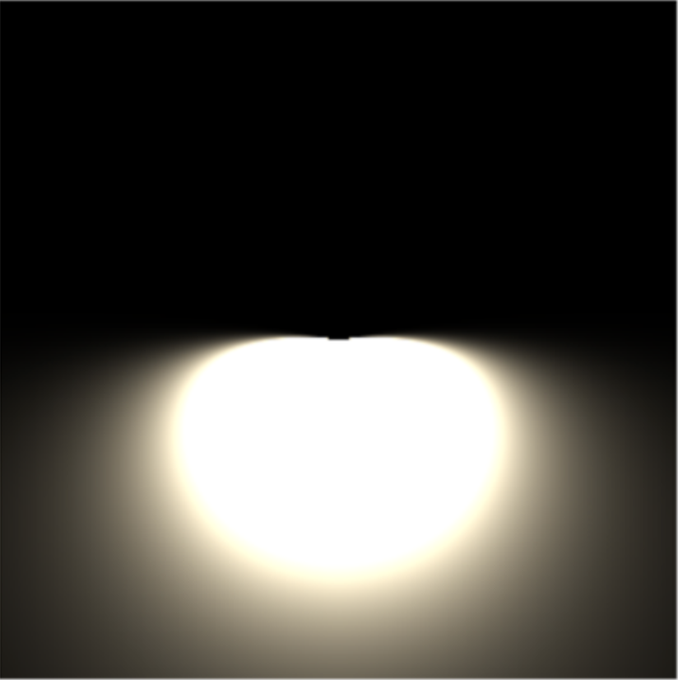
The geometry of the emission is the harder problem. LEDs emit from the surface of a semiconductor junction. The inverse square law doesn't apply cleanly and the spatial geometry gets strange. This is called Lambertian distribution, and is brightest straight ahead, with a steep falloff at the edges.
Our cells evolved under omnidirectional light from blackbody radiators and even though LED light may appear the same superficially, the Lambertian distribution just feels wrong. I don't think this is incidental. It has an undeniable psychological effect.
I'm looking forward to seeing what Ra Optics delivers. If they gets the spectrum right but not the spatial geometry, it's still a win. I just wouldn't call it "human-friendly" yet.
28 New Papers on Electromagnetic Fields and Biology or Health
Electromagnetic Radiation Safety, Apr 7, 2026
To see abstracts for the most recent papers or to download volumes 1 to 3 of this collection go to:
https://t.co/OCGoqeqQXC
If I could, this post Is dangerously wrong on numerous counts:
Claim 1: “8-hour sleep was invented in 1938 by Simmons Beautyrest”
False. “Eight hours’ rest” dates to Welsh reformer Robert Owen in 1817 and became the 19th-century labour movement’s rallying cry. Simmons launched its Sleep Research Foundation in 1946, focused on mattress comfort, not sleep duration norms.
The 7–9 hour recommendation comes from an AASM/Sleep Research Society panel that reviewed 5,314 scientific articles across nine health domains (Watson et al., Sleep, 2015). No mattress company involved. Sorry.
Claim 2: Biphasic “4+2+4” sleep was universal for 200,000 years = distorted. Historian Roger Ekirch documented pre-industrial “first/second sleep” — but the waking interval was roughly one hour, not two, and blocks were ~3–4 hours, not 4+4. This was documented primarily in higher-latitude, long-winter-night Europe — not universally across all human populations or time periods.
Claim 3: Shakespeare wrote 1–3 AM; Mozart used “The God Hours”
Both invented. No historical record documents Shakespeare’s writing hours. Mozart never used the phrase “The God Hours.” A famous letter portraying divine inspiration is now widely considered a 19th-century forgery by Friedrich Rochlitz.
Claim 4: Kleitman faked studies, funded by the mattress industry = defamatory fabrication. Nathaniel Kleitman is the universally recognised “father of modern sleep research” — he established the first sleep laboratory. His archived funding sources: National Research Council, University of Chicago, Ovaltine’s manufacturer. Zero mention of mattress companies.
What the epidemiology actually says re: how much sleep you need to survive and thrive…the evidence is overwhelming and drawn from millions of participants:
∙Cappuccio et al. (Sleep, 2010) — 1.38 million participants: sleeping under 6 hours raises all-cause mortality risk by 12%; the lowest mortality is consistently observed at 7–8 hours
∙Itani et al. (Sleep Medicine, 2017) — 5.1 million participants: short sleep raises diabetes risk 37%, cardiovascular disease 16%, hypertension 17%, obesity 38%
∙Shen et al. (Scientific Reports, 2016) — 1.5 million participants: mortality follows a U-shaped curve, lowest at exactly 7 hours, rising sharply below 6 and above 9
∙Van Dongen et al. (Sleep, 2003): after 14 days at 6 hours/night, subjects performed as poorly as those totally sleep-deprived for 48 hours — and were unaware of their own impairment
∙Spiegel et al. (The Lancet, 1999): 4 hours/night for 6 nights reduced glucose tolerance by 30–40%, producing a pre-diabetic metabolic profile
∙IARC/WHO: night shift work — which chronically disrupts sleep — is classified a Group 2A probable carcinogen
The optimal window is 7–9 hours of consolidated sleep, supported by the largest population studies ever conducted.
Why waking at 2 AM is the opposite of creative:
Sleep inertia is worst when waking from slow-wave sleep, which dominates the early night (Tassi & Muzet, Sleep Medicine Reviews, 2000). Waking at 2 AM places you at the circadian temperature nadir — prefrontal blood flow takes up to 30 minutes to recover, meaning executive function and creativity are maximally **impaired**, not enhanced.
Fragmented sleep is also metabolically harmful even when total duration is preserved: Stamatakis & Punjabi (Chest, 2010) showed it drops insulin sensitivity by 20–25%. Calling insomnia a superpower ignores that it doubles depression risk (Baglioni et al., Journal of Affective Disorders, 2011), raises hypertension risk by 350–500% (Vgontzas et al., Sleep, 2009), and involves chronically elevated cortisol. CBT-I — not embracing 2 AM waking — is the evidence-based treatment, recommended by AASM, the American College of Physicians, and the European Sleep Research Society across 50+ RCTs.
Bottom line: This post takes a real historical curiosity and wraps it in fabricated quotes, a defamed scientist, and medically dangerous advice. 🤷♂️
i used to work for Texas Instruments selling chips into the automotive industry.
i can confirm that fully autonomous EVs are both the economy's & semiconductor company's wet dream.
a new ICE vehicle has 2-4x the chip content vs 2010.
a new EV has 2-3x the chip content of a new ICE vehicle.
a fully autonomous EV (2030) will have 2-3x chip content of EVs today.
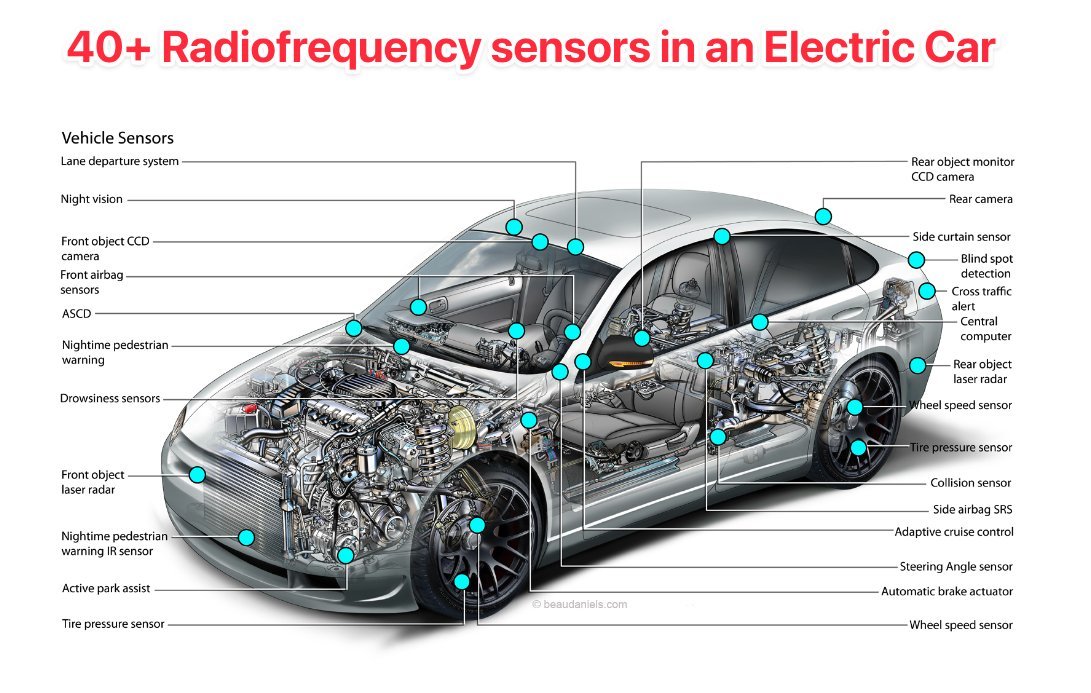
more chips = more sensors = more EMFs
and most of the frequencies can't be measured with handheld meters.
sensing everything for "safety" will be the guise for further economic proliferation to stand up the insatiable need for growth.
yes sensing can save lives, but there is a fine line on what needs to be monitored constantly...most consumers won't have the slightest clue.
below is a slide I made for an EMF course two years ago on the matter. we are just getting started. welcome to the age of monitoring everything for the greater good.
the de-sensitization of humanity will continue to worsen in the ever growing electromagnetic stress filled environment induced upon us by each new generation of technology.
buy a 2010 Toyota 4runner/Land Cruiser/etc while you can. don't live in downtown areas.
keep up the work @ze_rusty
Your Tesla has a 60 GHz RADAR pointed at your face.
Not for driving or autopilot.
For "cabin monitoring"
Texas Instruments IWR6843AOP chip.
60-64 GHz millimeter wave. mounted above the rearview mirror. beaming down into the cabin.
Detecting your breathing, your heart rate, whether a child is in the back seat.
Sounds helpful until you understand what 60 GHz millimeter waves actually do to biology.
60 GHz penetrates roughly 0.4 mm into skin.
shallow enough for the industry to call "safe"
But your skin is the largest organ in your body. packed with Nerve endings, Merkel cells, melanocytes.
Soviet-era research documented non-thermal biological effects of mmWaves at low power densities.. effects the FCC has never evaluated.
and nobody has studied what happens when this signal runs continuously for 10-hour drives, week after week, year after year.
This cabin RADAR was installed in late 2021 but never activated.
Left dormant for over 3 years.
February 2025, software update 2025.2.6 quietly turned it on.
no opt-out or announcement.
just switched on.
and it doesn't turn off.
it runs while you drive. while you're parked. while you're charging. while your kids sit in the back seat on a 10-hour road trip. continuous millimeter wave exposure at close range.. 0.4 to 2 meters from your body.
That's not a cell tower 200 meters away. that's a RADAR transmitter inside a sealed metal box with you.
a Faraday cage works both ways. the metal body of the car that blocks outside signals also TRAPS the ones generated inside. every RF source in that cabin bounces off the roof, the doors, the floor.. back into you.
and the cabin RADAR is just one layer.
a Tesla Model S Plaid has 46 antennas.
— LTE cellular: 700-2600 MHz, 2x2 MIMO, always on
— WiFi: 2.4 + 5 GHz, dual band
— Bluetooth: 2.4 GHz, always scanning for your phone key
— UWB ultra-wideband: 6-8 GHz, phone-as-key
— GPS: 1.2-1.6 GHz
— Satellite radio: 2.3 GHz
— Cabin RADAR: 60-64 GHz
LTE, Bluetooth and cabin RADAR are essentially ALWAYS transmitting.
A 2025 study on the Tesla Model Y took 952 EMF measurements across SuperCharging, standard charging, high-speed driving, urban and idle states.
They found:
1/ Peak ELF emissions during SuperCharging, especially near center console and rear seats
2/RF hotspots from LTE, WiFi, Bluetooth in the sub-6 GHz range
3/ Body voltage INCREASED during SuperCharging and high-speed driving
4/ EMF varied dramatically depending on where you sit in the cabin
FCC safety limits are from 1996.
Based on animal studies measuring only THERMAL effects for less than 1 hour. no non-thermal biological effects considered. no study has EVER examined chronic simultaneous exposure to ELF + LTE + WiFi + Bluetooth + 60 GHz mmWave + UWB in a sealed metal cabin.
NOT ONCE.
In 2021, a U.S. Court of Appeals ruled the FCC's refusal to update these limits was "arbitrary and capricious." they still haven't changed them.
Martin Pall's model calculates that VGCCs amplify EMF forces by 7.2 million times at the cellular level. that calcium flooding triggers peroxynitrite formation, PARP activation, NAD+ depletion.. your repair machinery eating itself.
You're sitting in a metal box with 40+ antennas, a millimeter-wave RADAR pointed at your chest and AC magnetic fields from a battery pack under your seat pulling hundreds of kilowatts during charging.
and the safety standard says it's fine because your skin didn't get warm.
Diabolical.
That's right. It's a matter of if the client is sensitive, or an office/bedroom is on the other side of the wall from the dryer etc... and the larger point is to educate people to learn how to test their home for exposure, especially when they get a new appliance or gadget, even if it supposedly doesn't have wireless connectivity
Here I've removed the control panel from the top of the dryer to verify where the RFI is coming from. You can see where the meter gets loudest, the components on the board are definitely not intentional antennas.
When bringing tech into your home, trust but verify with a quality EMF meter like the @SafeLivingEMF Safe and Sound Pro II
https://t.co/9KLfQyYUeG
I have a lot of room for Dr. Jack Kruse. You know why? Because he's been the only doctor so far that has made sense for me, regarding some really important problems we have in the so-called healing arts. Why we can have all of the intelligence that we have on this earth and yet still can't figure out basic things like how to heal a thyroid. I first started taking his teachings and using them on myself. My chronic disease has disappeared. There is a lot to learn here. But it's well worth taking the time. Even for me with a bachelors degree in physics, it's taken me a year to only slightly begin to get my head around these deeper concepts of light, water , and magnetism in our bodies. But the basic concepts are always clear and easy to take, and to use to get yourself on a path to recovery. Teaching it is a whole other story. This is an amazing podcast and it cuts out in some very untimely places which may be no accident. But in the end, you'll get the big picture.