My research center specializes in health promotion & disease prevention. We also cover wireless radiation health effects & policy. Check out my web site:
WHO Radio-Frequency Radiation Cancer Study is "Seriously Flawed." Scientists conclude the review does not assure wireless safety, and should not be used to set public policy. https://t.co/qDiGsSTXf9
@rfsafe I expect that there's a backlog to check and approve many last-minute submissions - including mine.
Btw, did you see that Oleg Grigoriev, Chair of the Russian National Committee on Non-Ionizing Radiation Protection, had made a submission?
https://t.co/fhzZTEqD8O
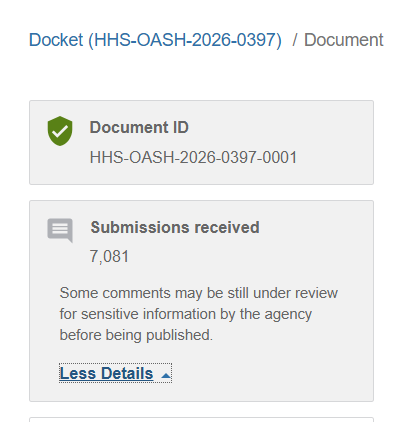
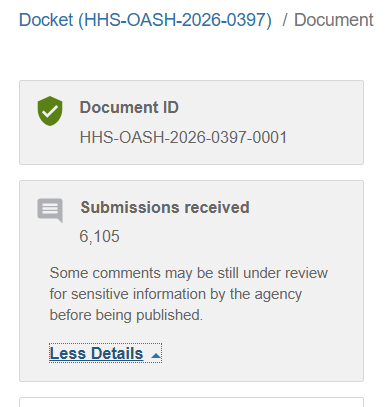
Six thousand one hundred and five public comments on an HHS request for information about radiofrequency radiation. Filed before the clock ran out tonight.
For decades, EMF safety was treated as a fringe concern — a handful of engineers, a few parents, a doctor or two raising questions that regulators waved off. The field was so small it barely registered as a field.
Then an HHS docket opened, and the public showed up. Not a trickle. Not a campaign artifact.
Over six thousand individual submissions from families, clinicians, researchers, and people who lived the exposure and are done being told their symptoms are coincidence. That's not a niche anymore. That's a constituency.
https://t.co/CeaaGyVL0a
The deadline is 11:59 PM Eastern. If you haven't filed, the docket is HHS-OASH-2026-0397. Six thousand people already did. The question now isn't whether the public cares — it's what HHS does with what it heard.
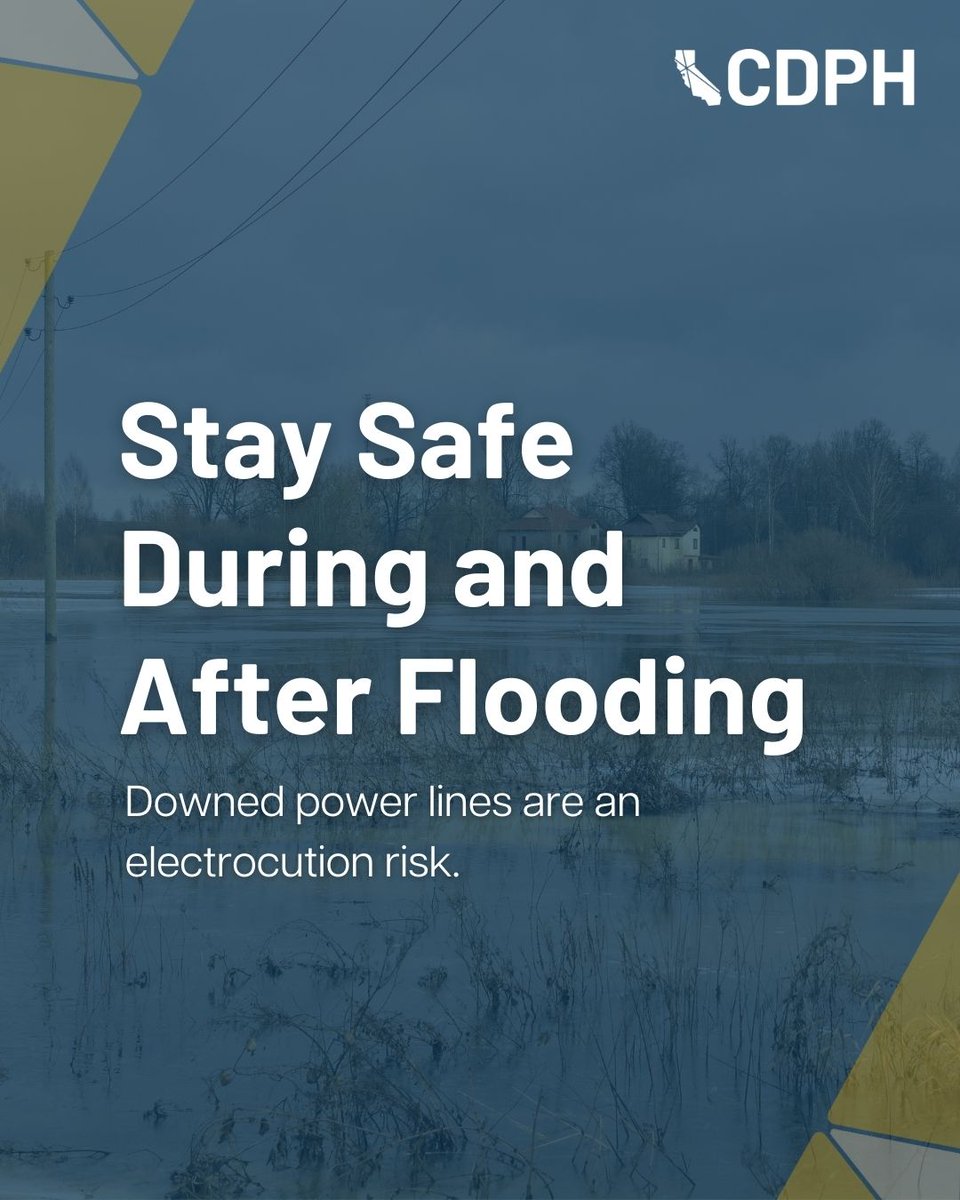
Never drive around downed power lines as they can be an electrocution risk. Report downed power lines to 9-1-1 and your utility. Safety tips and more at https://t.co/WQr2ETYbpV
Last week two different chatbot companies were in the news. First, Character. ai filed for bankruptcy, in an effort to avoid accountability. New reporting suggests Disney asked the company to file for bankruptcy as part of their deal to acquire the technology. They didn’t want to buy the company outright because of the legal liability. Kids were harmed. That debt does not disappear in bankruptcy court.
Then eight state AGs filed coordinated lawsuits against OpenAI this week. First coordinated state action against an AI company. The allegations: deceiving parents about safety, designing products that create emotional dependency in children, and failing to protect young users from self-harm content. Nebraska’s suit is the one to watch. It’s the first enforcement action brought under a state design code law. That’s a milestone worth marking.
While CharacterAI seeks to use the bankruptcy process as a get out of jail free card, OpenAI’s defense? Parental controls. We’ve heard that before. You cannot parental-control your way out of dangerous design. The burden of proof belongs on these companies.
These stories show the AI chatbot industry is running the same playbook social media ran. Race to scale. Worry about safety later. We know how that story ends.
https://t.co/OGt50KFFg2
🔬 The Collegium Ramazzini, 180 physicians and scientists from 45 countries, asks IARC to re-evaluate radiofrequency fields as a cancer hazard. The classification dates from 2011.
Source: Environmental Health Sciences
via @emfsignal_com https://t.co/nMtKw8PgLJ
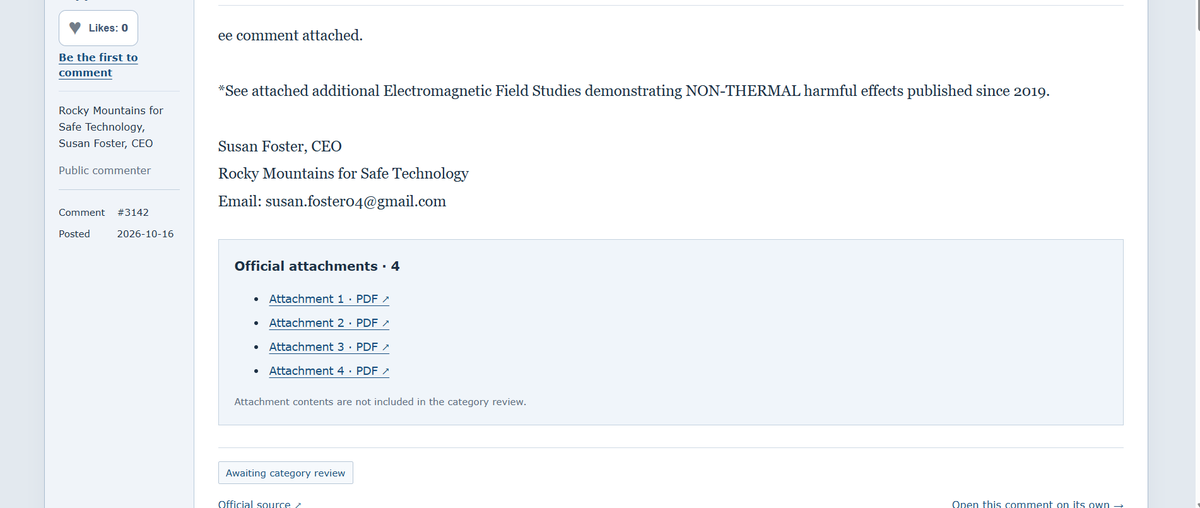
Every attachment from the HHS cell phone radiation comments is now previewable in your browser at https://t.co/L0OceXrYfj. No downloads, no installers, no friction. You can read what the public actually submitted, side by side, threaded by topic. This is what transparency looks like when it's built for the reader instead of the bureaucracy. https://t.co/uaoJjOC1gY
Google has another banger 🤯
It’s called PaperBanana.
It turns your methodology text into academic illustrations, helping you explain your research visually.
100% free.
🧠 A new simulation study models whether pulsed microwaves can build thermoacoustic pressure waves inside the human head, and predicts pressure at the centre of the intracranial region.
Source: Biomedical Physics & Engineering Express
via @emfsignal_com https://t.co/21NcJqnXc4
@CFroh@TheNHF@RobertKennedyJr@Call4SafeTech The 1971 Navy research was updated in 72. Here is the full list of that research in a searchable format instead of the PDF format, which is hard to read in online archives https://t.co/ql6q84EYwu
It's done! https://t.co/EGpeiBvwvU
You can now read any HHS comment attachment without downloading it. If you open the link marked original, that opens the attachment on the HHS server, which requires downloading. But the viewer works perfectly for a first-try attempt. Now that I have them locally, I might try a few different things to synthesize them
📱 ETAIN study across six European countries and Australia: Smartphone indicators can estimate parts of environmental mobile-network RF exposure, but 5G relationships are weaker.
Source: Bioelectromagnetics
via @emfsignal_com
https://t.co/scf7BcGdvQ
The study examined prolonged exposure to these 5G frequencies and found measurable changes in testicular tissue and sperm quality. This points to cumulative biological effects from the radiofrequency radiation used in modern wireless networks.
Male fertility is declining globally, and a new study adds a troubling piece to the puzzle. Rats exposed to 3.5 GHz and 24 GHz RF-EMF (the frequencies used in 5G) showed altered testicular immune balance and reduced sperm function. 🧵
RF Safe • HHS Public Comment #3078
A retired British doctor reports personal adverse effects, cites animal and epidemiological research, and argues that increased EMR exposure may contribute to cancer, dementia and mental-health burdens. The full attached evidence is unread.
Read the full comment:
https://t.co/EGpeiBvwvU
I find it a bit frustrating that, even on the HHS site, you have to physically download each attachment to view it. I'm fixing a little bug where I don't have the full title in the URL of each attachment. But on top of that, I'm actually going to download each attachment, store it locally on my server, and then have it so that you can literally just preview it in a browser without actually having to download each and every attachment to see what the attachment is. I'm working on it now, and we'll see how far I get with it, and hopefully I'll have it done this evening. Check the forum here; when you see descriptive attachment links, it should be working. https://t.co/uaoJjOC1gY Until then, you have to download them the same way as the HHS site