We are Odds Against. An anti-gambling movement. We are a free service open 24 hours a day, 7 days a week for people struggling with gambling addiction🎗️
Free, confidential support for gambling addiction (and for people affected by someone else’s gambling) is available across the UK. You do not have to wait until things get worse.
Immediate 24/7 help
England and Scotland
National Gambling Helpline (run by GamCare)
Call 0808 8020 133 (free)
Live chat and WhatsApp also available on https://t.co/usYKtMJxw2
Wales
NHS Wales Gambling Helpline
Call 0808 2819 265 (free, 24/7)
Treatment self-referral: 0300 0859 464
Northern Ireland
Call 08000 886 725
These services are confidential. You can stay anonymous. Advisers can talk through what you’re going through, explain treatment options, and help you take the next step.
Treatment and counselling
• NHS specialist gambling clinics exist in several regions of England. Many accept self-referral. Search “NHS gambling clinic” plus your area, or start via the National Gambling Helpline.
There is also a National Gambling Clinic for young people (13–18) across England and for adults in Greater London.
• GamCare and the wider National Gambling Support Network offer free one-to-one counselling, group support, and local services.
• Use the service finder on https://t.co/4yytZBp0i7 to see what is available near you.
Your GP can also refer you or discuss other mental-health support.
Peer support
• Gamblers Anonymous – free meetings (in-person and online). Helpline: 0330 094 0322. Website: https://t.co/WPVi2HvsJO
• Gam-Anon – support for family and friends affected by someone else’s gambling.
Practical tools that can help right away
• GAMSTOP – free service that blocks you from most UK-licensed online gambling sites and apps.
• Multi-Operator Self-Exclusion (MOSES) for high-street betting shops.
• SENSE for casinos.
• Gambling blocking software (GamCare and GambleAware list options).
If you are in crisis
If you are having thoughts of suicide or feel unable to keep yourself safe, contact:
• Samaritans: 116 123 (24/7, free)
• Emergency services: 999
Reaching out is the first step. Many people recover with the right support. Start with the helpline if you’re not sure where to begin — they exist specifically to help you find the right next option.
@StanCollymore Hi mate. Hope you’re well. Just messaging to ask if you would be able to RT our pinned post or share our page please. Gambling addiction is the most overlooked addiction with so many people suffering and not knowing there is help and support available. Thanks
Remember, we’re here for you every day of the year, 7 days a week.
No matter what you’re facing, a message or email is just a click away.
Messages and social media are available from 06:30 to 23:00.
📧 [email protected]
💻 https://t.co/ogEnFRmcKn
#ItsOkayToNotBeOkay 💜
Free, confidential support for gambling addiction (and for people affected by someone else’s gambling) is available across the UK. You do not have to wait until things get worse.
Immediate 24/7 help
England and Scotland
National Gambling Helpline (run by GamCare)
Call 0808 8020 133 (free)
Live chat and WhatsApp also available on https://t.co/usYKtMJxw2
Wales
NHS Wales Gambling Helpline
Call 0808 2819 265 (free, 24/7)
Treatment self-referral: 0300 0859 464
Northern Ireland
Call 08000 886 725
These services are confidential. You can stay anonymous. Advisers can talk through what you’re going through, explain treatment options, and help you take the next step.
Treatment and counselling
• NHS specialist gambling clinics exist in several regions of England. Many accept self-referral. Search “NHS gambling clinic” plus your area, or start via the National Gambling Helpline.
There is also a National Gambling Clinic for young people (13–18) across England and for adults in Greater London.
• GamCare and the wider National Gambling Support Network offer free one-to-one counselling, group support, and local services.
• Use the service finder on https://t.co/4yytZBp0i7 to see what is available near you.
Your GP can also refer you or discuss other mental-health support.
Peer support
• Gamblers Anonymous – free meetings (in-person and online). Helpline: 0330 094 0322. Website: https://t.co/WPVi2HvsJO
• Gam-Anon – support for family and friends affected by someone else’s gambling.
Practical tools that can help right away
• GAMSTOP – free service that blocks you from most UK-licensed online gambling sites and apps.
• Multi-Operator Self-Exclusion (MOSES) for high-street betting shops.
• SENSE for casinos.
• Gambling blocking software (GamCare and GambleAware list options).
If you are in crisis
If you are having thoughts of suicide or feel unable to keep yourself safe, contact:
• Samaritans: 116 123 (24/7, free)
• Emergency services: 999
Reaching out is the first step. Many people recover with the right support. Start with the helpline if you’re not sure where to begin — they exist specifically to help you find the right next option.
Gambling addiction is a recognized behavioral addiction. It is a persistent pattern of betting that continues even when it causes serious harm to finances, relationships, work, or mental health. Gambling can activate the brain’s reward system in ways similar to substances, which is why it was moved into the same DSM-5 category as substance use disorders.
Free, confidential support for gambling addiction (and for people affected by someone else’s gambling) is available across the UK. You do not have to wait until things get worse.
Immediate 24/7 help
England and Scotland
National Gambling Helpline (run by GamCare)
Call 0808 8020 133 (free)
Live chat and WhatsApp also available on https://t.co/usYKtMJxw2
Wales
NHS Wales Gambling Helpline
Call 0808 2819 265 (free, 24/7)
Treatment self-referral: 0300 0859 464
Northern Ireland
Call 08000 886 725
These services are confidential. You can stay anonymous. Advisers can talk through what you’re going through, explain treatment options, and help you take the next step.
Treatment and counselling
• NHS specialist gambling clinics exist in several regions of England. Many accept self-referral. Search “NHS gambling clinic” plus your area, or start via the National Gambling Helpline.
There is also a National Gambling Clinic for young people (13–18) across England and for adults in Greater London.
• GamCare and the wider National Gambling Support Network offer free one-to-one counselling, group support, and local services.
• Use the service finder on https://t.co/4yytZBp0i7 to see what is available near you.
Your GP can also refer you or discuss other mental-health support.
Peer support
• Gamblers Anonymous – free meetings (in-person and online). Helpline: 0330 094 0322. Website: https://t.co/WPVi2HvsJO
• Gam-Anon – support for family and friends affected by someone else’s gambling.
Practical tools that can help right away
• GAMSTOP – free service that blocks you from most UK-licensed online gambling sites and apps.
• Multi-Operator Self-Exclusion (MOSES) for high-street betting shops.
• SENSE for casinos.
• Gambling blocking software (GamCare and GambleAware list options).
If you are in crisis
If you are having thoughts of suicide or feel unable to keep yourself safe, contact:
• Samaritans: 116 123 (24/7, free)
• Emergency services: 999
Reaching out is the first step. Many people recover with the right support. Start with the helpline if you’re not sure where to begin — they exist specifically to help you find the right next option.
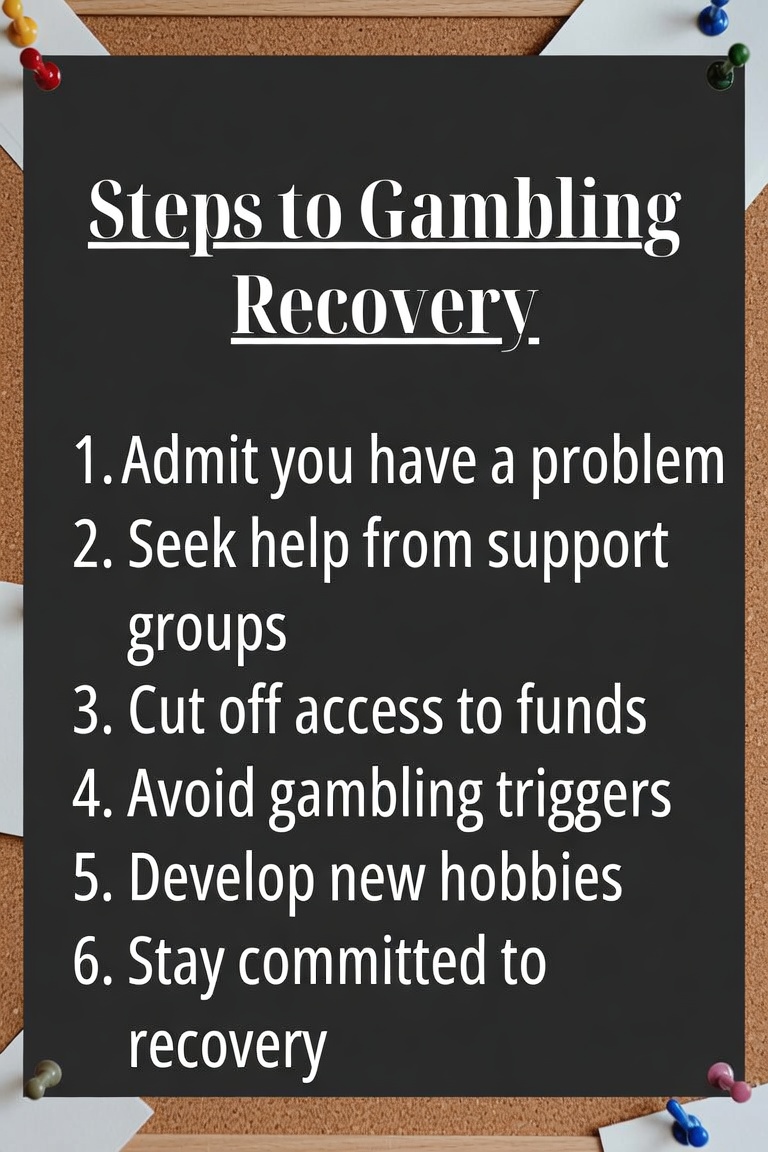
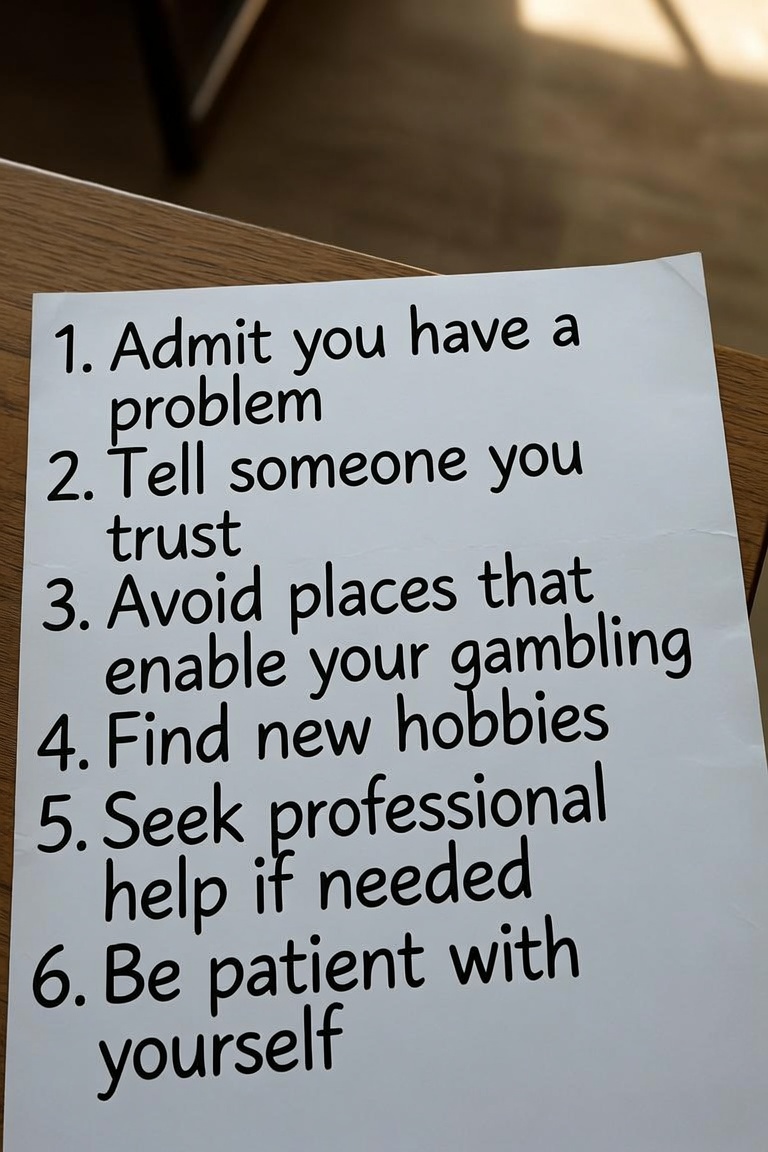
Stopping gambling is possible, but it is rarely a matter of willpower alone. Gambling disorder changes how the brain responds to risk, reward, and loss. The most reliable approach is to remove access first, then get structured support, then rebuild daily life so the old habit has nowhere to live.
1. Cut off access immediately
Do this today, before motivation fades.
• Delete gambling apps and saved payment methods.
• Install device-level blocking software such as BetBlocker (free) or Gamban. These block thousands of sites and apps across phone, tablet, and computer.
• Turn on your bank’s gambling block so cards cannot be used for betting.
• Self-exclude from licensed operators in your country (GamStop in the UK, state/national registries in the US and Australia, venue self-exclusion for casinos and betting shops).
• Give a trusted person control of extra cash, credit cards, or account passwords for a while.
Layering several of these is more effective than any single tool. Determined people can still find workarounds, which is why the next steps matter. https://t.co/PrmytfYIeF
2. Get professional help
Cognitive behavioral therapy (CBT) has the strongest evidence. It reduces gambling frequency, money spent, and symptom severity for most people who complete it. Group CBT is often recommended first; individual CBT is a good alternative. Treatment usually lasts 6–10 sessions and includes relapse prevention. https://t.co/5NGgU4FYtx
Motivational interviewing can help if you feel ambivalent. Some people later benefit from medication such as naltrexone when therapy alone is not enough; that decision belongs with a doctor.
Support groups:
• Gamblers Anonymous (12-step, widely available in person and online)
• SMART Recovery (skills-based, secular)
Call a helpline even if you are not sure you “qualify.” They can connect you to local treatment, self-exclusion help, and financial counseling.
Helplines (24/7, confidential):
• United States: 1-800-GAMBLER (1-800-426-2537) or 1-800-522-4700
• United Kingdom: 0808 8020 133 (National Gambling Helpline / GamCare)
• Many other countries have national problem-gambling lines; search “[your country] gambling helpline”
If you are having thoughts of suicide or cannot see a way out, contact emergency services or the 988 Suicide & Crisis Lifeline (US) immediately.
3. Handle the first days and weeks
Urges often peak early as the brain readjusts.
• Write down your triggers (payday, sports events, boredom, arguments, alcohol, specific apps or routes).
• Have a short “urge plan”: leave the situation, call someone, delay 15–30 minutes, do something physical.
• Structure the hours gambling used to occupy. Exercise, walking, and social contact help restore dopamine more safely than another bet.
• Tell at least one person. Secrecy feeds the cycle; support reduces shame, which is a common relapse driver.
Expect cravings. They usually rise and fall. Riding them out without betting weakens them over time.
4. Fix money and replace the function gambling served
Gambling often fills a need: excitement, escape, social contact, or a sense of control. Recovery works better when that need is met another way.
• Get a clear picture of debts and a realistic budget. Credit counseling can help.
• Limit cash on hand.
• Find substitutes that give some of the same charge (sport, a challenging hobby, volunteering, time with people who do not gamble).
Family or couples therapy can help repair trust if relationships have been damaged.
5. Plan for relapse without treating it as failure
Many people slip. A slip is information: which trigger, which gap in the plan. Return to the blockers, the meetings, and the therapist rather than deciding the whole effort is ruined.