🚨| WATCH: Serena Williams gave Speed a 6-0 HEAD START, meaning he only needed 2 more points to win but she went on to score 8 STRAIGHT POINTS without letting him score once 🤯😭🔥
THE MAN WHO REFUSED TO BOW
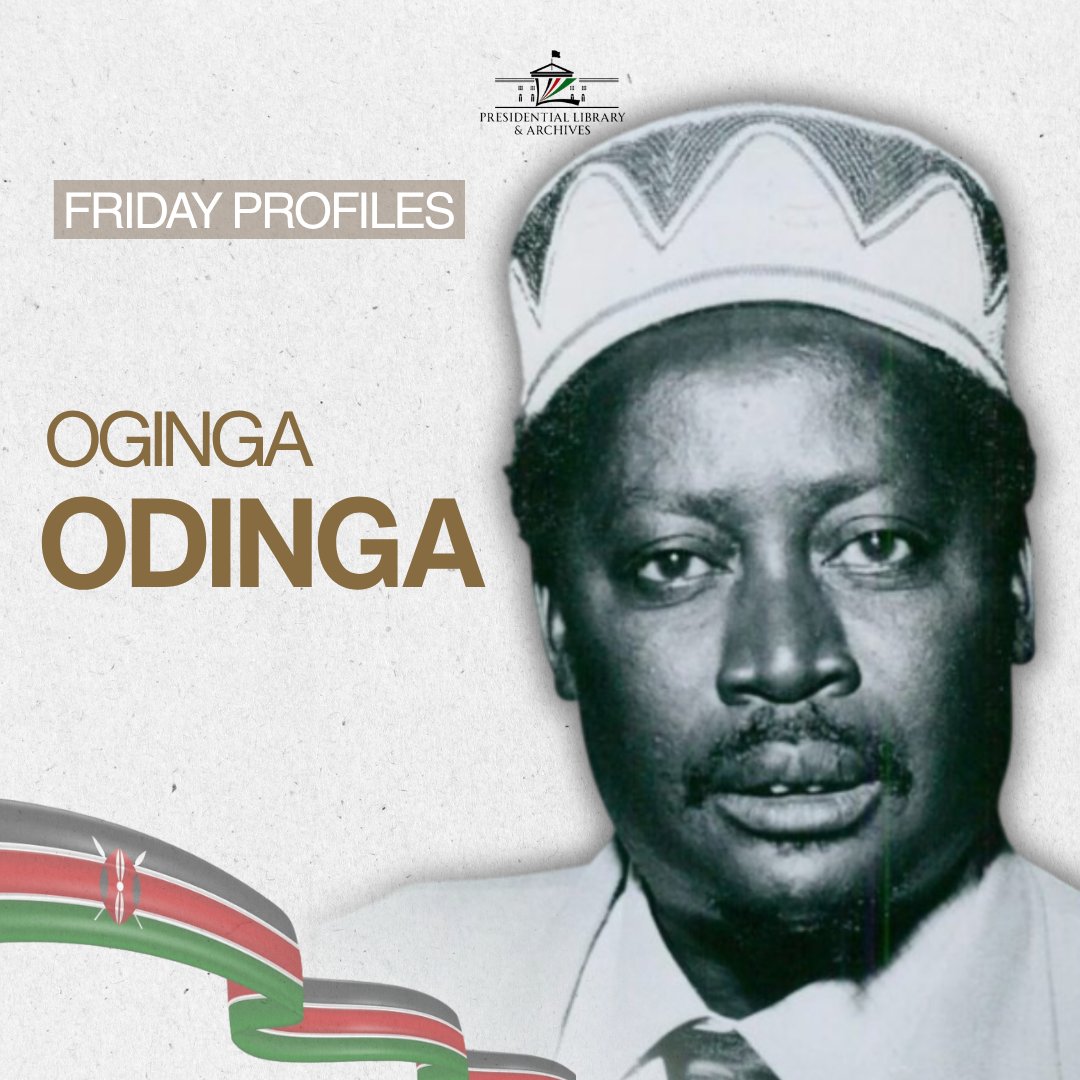
Before Raila Odinga became one of Kenya’s most formidable opposition leaders, his father had already spent decades challenging the political establishment. Jaramogi Oginga Odinga was a man who helped deliver independence, became Kenya’s first Vice-President, then fell out with the very government he had helped create.
His story is one of conviction, political sacrifice and an uneasy relationship with power. For Oginga, independence was not the destination. It was the beginning of another struggle over what freedom should mean.
Born in 1911, Oginga was an intellectual long before he became a politician. He attended Maseno before proceeding to Makerere College, where he trained as a teacher. At Maseno, he earned a reputation as a gifted mathematics teacher, becoming known as the “Master of Mathematics”.
But the classroom could not contain his ambitions for long. He abandoned his biblical name, Adonijah, in favour of Ajuma and insisted on being identified as Oginga, son of Odinga. His former principal, Carey Francis, eventually complained that his once-promising student was perpetually dissatisfied and inclined to grumble at everything. It was an early glimpse of the independent streak that would define his political life.
After teaching, Oginga ventured into business through the Luo Thrift and Trading Corporation and helped establish the Luo Union to unite members of his community across East Africa. He subsequently entered politics through local advisory councils before becoming involved in the independence movement.
Achieng’ Oneko introduced Oginga to Jomo Kenyatta. During the State of Emergency declared in October 1952, Oginga became one of the voices demanding the release of Kenyatta and other detained freedom fighters.
In 1957, he entered the Legislative Council as one of eight African representatives, later chairing the African Elected Members Organisation, with Tom Mboya as secretary.
When KANU was formed in 1960, Oginga became its vice-president. A committed socialist, he believed independence meant little without economic fairness. He described socialism as the equalisation of opportunities and argued that the privileged had a responsibility to help the poor.
Independence came in December 1963, and Oginga joined Kenyatta's first Cabinet as Minister for Home Affairs. When Kenya became a republic in 1964, he became Vice-President.
But the partnership was already under strain. The two men differed over the direction of the new nation, its economic policies and foreign relationships. In 1966, after KANU restructured its leadership, replacing the single national vice-president with eight provincial vice-presidents, Oginga resigned, quit the party and formed the Kenya People's Union (KPU).
The man who had helped build the ruling party was now leading its opposition.
During the opening of the New Nyanza General Hospital in Kisumu on 25 October 1969, tensions between President Jomo Kenyatta and Oginga Odinga’s reached a bloody climax. KPU supporters heckled Kenyatta and hurled stones at his entourage. His security detail opened fire, killing at least 11 people in what became known as the Kisumu Massacre. Within days the KPU was banned, and Odinga and other opposition leaders were detained.
Released in 1971, he returned to KANU, but his political troubles were far from over.
Under President Daniel arap Moi, Oginga briefly returned to official favour when appointed chairman of the Cotton Lint and Seed Marketing Board in 1980. The reprieve was short-lived as Oginga ran into trouble for speaking his mind at a public rally in Mombasa, where he referred to Kenyatta as “a land grabber”.
The controversial remark came at a time when Moi was consolidating his power and needed full support of Kenyatta’s supporters. Oginga was dismissed from the board and expelled from KANU.
In 1982, as he and outspoken politician George Anyona explored forming another opposition party, the constitutional amendment establishing a one-party state effectively shut down their plans. Oginga was placed under house arrest, while his son Raila and Anyona were detained without trial.
Yet the veteran nationalist was not finished.
In 1990, Oginga announced plans to form an opposition party. His efforts helped energise the campaign for political pluralism, culminating in the restoration of multiparty politics in 1991. The Forum for the Restoration of Democracy (FORD) emerged as a powerful opposition movement, with Oginga as interim chairman.
But FORD split in 1992, producing FORD-Kenya, led by Oginga, and FORD-Asili, led by Kenneth Matiba. In the subsequent General Election, Oginga finished fourth in the presidential race behind Daniel arap Moi, Matiba and Mwai Kibaki. However, he reclaimed the Bondo parliamentary seat, ending a 23-year absence from Parliament.
Even in his later years, Oginga remained an interesting study in political conviction and democratic competition. He believed in contesting elections and could disagree with allies as readily as opponents. In 1993, when Raila opposed KANU's decision to field a candidate against FORD-Kenya in a Mombasa by-election, his father reportedly reminded him that politics was like football: the best team should win.
On December 9, 1993, Oginga delivered what would be his farewell address to Parliament. He urged MPs across the political divide to act responsibly, reminding them that they all belonged to Kenya and should not abuse the country.
He died in January 1994 and was buried at his rural home in Bondo.
More than three decades later, his legacy remains complex. He was a nationalist who challenged colonial rule, a Vice-President who broke with his President, a socialist who questioned inequality and an opposition leader who repeatedly paid a price for refusing to keep quiet.
His son Raila would go on to become a defining figure in Kenya's democratic struggle before his death in October 2025. But long before the son became a political institution in his own right, the father had established a family tradition of challenging power.
Jaramogi Oginga Odinga's life leaves us with a question that remains relevant to Kenya's politics today: When conviction and political power collide, how much should a leader be willing to sacrifice rather than surrender what he believes?
I want to ship my stuff home, but air freight will finish all my money, especially because books are quite heavy.
Any recommendations for reliable sea freight forwarding services from the UK to Kenya? Sitaki vitabu vyangu vipotelee baharini plis😭😂
RT please. Thanks very much!
History made.
Glory claimed.
A nation inspired! Kenya’s Rising Lionesses roared their way into the history books, stunning Australia 17-12 in a thrilling gold-medal showdown to be crowned champions at the 2026 Youth Olympic Games in Dakar, Senegal, on Tuesday, 3 November.
The future is here.
The Lionesses have arrived.
And the world has been put on notice!
#Two5FourSports #RisingLionesses
The conversation is getting tired. Stop wasting time drafting contracts and make 15s rugby as financially rewarding and commercially attractive as 7s.
Not everyone is playing purely for the love of the game, and there’s nothing wrong with that. If you love the game so much, build structures that make it sustainable for the people playing it. As things stand, rugby in Kenya is a foundational stepping stone to whatever path players eventually choose to take. We need to make it a destination, not just a stepping stone.
For a contract to have that much autonomy over a sportsman’s life is to dictate his destination. If you’re going to tie someone down and take away their freedom to choose their own path, then you have a responsibility to compensate them for the journey you’re demanding they take. You cannot demand someone’s future without investing in it.
Nothing breaks my heart like seeing a primary school without a field, mtoto anatoka home 8th floor anaenda Shule fifth floor and can only play kwa balcony, I think the government should be able to regulate that,but corruption…