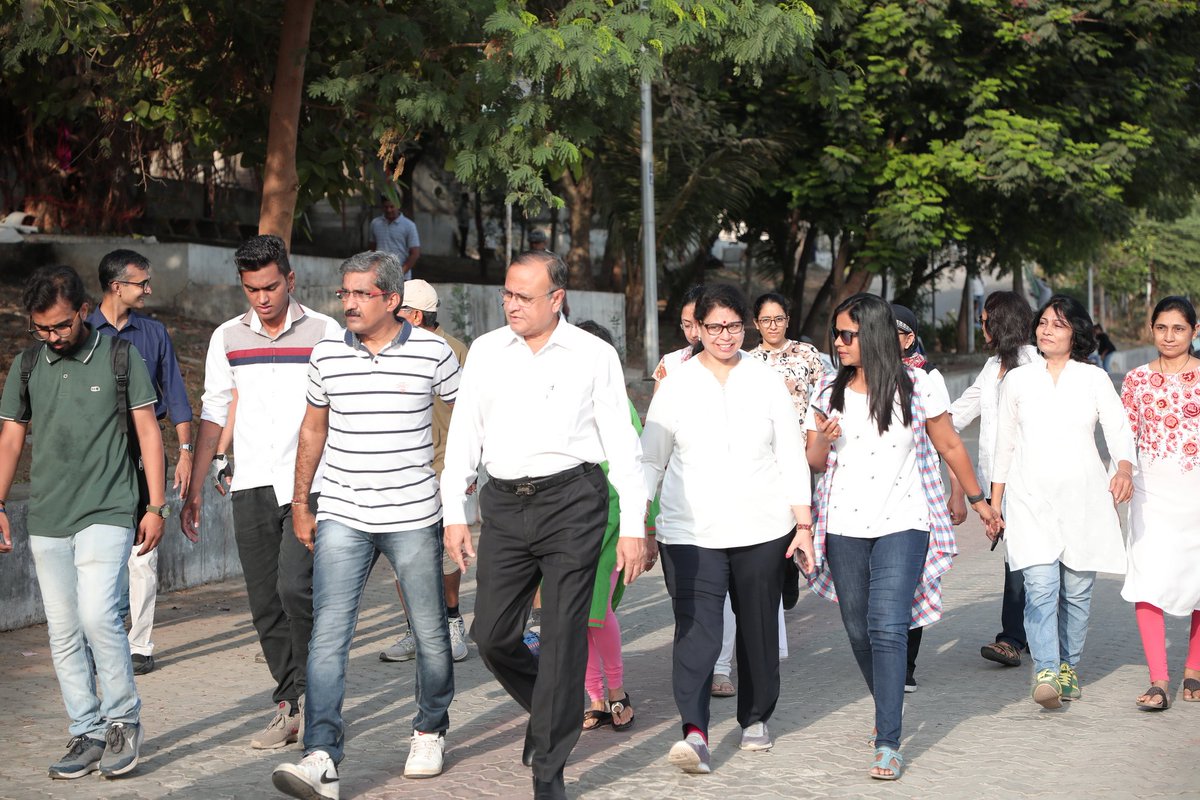
Today volunteering at vaccine center |
Write sometimes |
Electrical Engineering |
Spends time as social worker |
Nani (& few more elderly) says I'm a technocrat
On World Environment Day planted 100 saplings w/ cooperation of city Mayor Shri @DrJagdishSurat & discussed further plans for healthy river and green ovara belt.
Team #LoveTapiCareTapi
Lined up a plan to care all the tender plants until they become independent.
#EnvironmentDay
Since a large number of illiterate people are asking this, I will answer it for all my bois.
Humans are born with a relatively fixed number of muscle fibers. If protein is restricted during the mid-to-late fetal stages, myogenesis is stunted, and the baby is born with fewer total muscle fibers. After birth, muscles grow by increasing the size of existing fibers (hypertrophy), not by generating new ones (hyperplasia). A child born with a significantly lower baseline of muscle fibers will generally have less overall muscle mass and a lower upper limit for muscular growth throughout their life, regardless of their diet after birth.
In the long run, this leads to lower muscle mass, insulin resistance and metabolic syndrome.
In short, how muscular you will end up is mostly determined while you are in womb. Nothing much you can do about it, sadly
So if you are an Indian woman reading this, please eat some protein. Perhaps your babies might end up muscular
The people in this photo aren't friendlier than you. Their apartments are just smaller. So small that Parisians basically gave up on living indoors and moved their living rooms onto the sidewalk. And that was the whole plan.
In the 1850s, a city planner named Baron Haussmann tore apart medieval Paris and rebuilt it. He widened streets into boulevards, capped every building at five stories, and added one rule that explains this entire photo: the ground floor of every building had to be a café, a bakery, or a shop. The apartments above were intentionally tiny. Some were single rooms carved out of old mansions. No garden. Barely any sunlight. A private balcony was something most Parisians would never have.
So the café became home. You ate breakfast there. Held meetings there. Received your mail there. By the late 1700s, Paris already had close to 2,000 of them. In 2002, there were still 1,907. Even now, after years of closures brought that number to about 1,410, the coverage is absurd: a 2020 city study found 94% of Parisians live within a five-minute walk of a bakery. When COVID shut indoor dining in 2020, Paris ripped out parking spaces, turned them into outdoor terraces, and let 9,800 cafés and restaurants keep them permanently.
An American sociologist named Ray Oldenburg wrote a book in 1989 called The Great Good Place. He had a name for spots like the Parisian café: "third places." Not your home, not your office, but the casual in-between spots where you actually get to know people. Cafés, pubs, barbershops, the corner store where the owner knows your name. His whole argument was that American suburbs were built with only two zones, your house and your job, connected by a car. No sidewalk café, no place to bump into a neighbor by accident.
The U.S. Surgeon General declared loneliness a national health epidemic in 2023. Being alone all the time is as bad for your body as smoking 15 cigarettes a day. Half of American adults say they feel lonely. Weekly socializing dropped from 5.5 hours in 2003 to just 4 hours in 2023, and it never bounced back after COVID. Americans between 15 and 29 now spend 45% more time alone than they did in 2010.
The scene in this tweet looks like a personality trait. It is a 170-year-old engineering project that works exactly as designed.
Those wheels you’re looking at are 0.75 millimeters thick. That’s half the thickness of a US dime. Each one was carved from a single block of aluminum, and NASA sent six of them to Mars knowing they’d eventually shred.
Curiosity was built for a 2-year mission. It landed in August 2012, and by December that year NASA had already extended the mission indefinitely. Thirteen years and 35.5 kilometers later, the rover is still going, but the wheels started cracking just 14 months in. The damage came faster than anyone at JPL predicted. Sharp embedded rocks were punching straight through the skin between the treads.
So NASA assembled a Wheel Wear Tiger Team (a crisis problem-solving tradition that goes back to Apollo 13) and got to work. In 2017, they uploaded a traction control algorithm from Earth that adjusts each wheel’s speed in real time based on the terrain, reducing force on the front wheels by 20%. They rerouted the rover to softer ground and started driving backward when possible, because pulling wheels over rocks produces less force than pushing them into rocks.
The wildest part: if enough treads snap off, Curiosity is designed to find a sharp rock on Mars and use it to deliberately rip out the damaged inner section of its own wheel. JPL tested this on a replica rover and found Curiosity can keep driving on just the outer third. They predict this won’t be needed until around 2034.
Every 1,000 meters, the rover pulls over and uses the camera on its robotic arm to photograph its own wheels so engineers on Earth can count every crack. Each wheel also has tiny holes that spell “JPL” in Morse code, which Curiosity uses to measure distance by photographing its own tracks in the dirt.
These photos directly changed the next rover. When NASA built Perseverance, engineers 3D-printed about 70 different tread designs before landing on 48 curved treads instead of Curiosity’s 24, with thicker skin. They tested the new wheels over 60 kilometers and got zero damage by Curiosity’s original failure definition. “A boring graph with no data on it,” as one JPL engineer put it.
A $2.5 billion machine doing self-surgery with rocks on another planet because the mission outlasted its design by 6x.
Robert Kiyosaki again .. on Reliance's 300B $ deal with America.
President Trump Announced America's FIRST NEW OIL REFINERY In 50 Years!
Brownsville, Texas. $300 billion deal. Backed by India's Reliance Industries — the same company that runs the largest oil refinery on the planet in Jamnagar, India.
That's the headline everyone's reading.
Here's what nobody's talking about.
TWO deals are happening at the same time. And most people only see one.
Deal #1 — Brownsville.
This refinery is built specifically for American light shale oil from the Permian Basin.
1.2 billion barrels processed over 20 years. 50 billion gallons of refined products.
Reduces America's dependence on foreign crude. Reliance signed a binding 20-year agreement to buy the output.
My poor dad would say: "Great. American jobs. American energy. Good news."
My rich dad would say: "Correct. Now what does Reliance get out of this?"
A guaranteed 20-year customer. A foothold in the US energy market. And a front-row seat to the most important energy shift happening on earth right now.
Which brings us to Deal #2.
Deal #2 — Venezuela.
While everyone was watching Iran, Trump quietly seized control of Venezuela's oil sector.
303 billion barrels of crude. The largest proven oil reserves on the planet. Roughly one-fifth of all global reserves.
But here's the catch.
Venezuelan oil is heavy. Thick. High sulfur. What they call "sour" crude. The kind of oil that requires extremely specialized refining equipment to process.
Most American refineries aren't built for it.
But Reliance's Jamnagar refinery? Built for exactly this.
It is one of the most sophisticated heavy crude processing facilities in the world.
My rich dad taught me something about chess.
He said: "Poor people watch one move. Rich people try to analyze the whole board."
And the way you do it is by asking one simple question:
"WHAT'S IN IT FOR THEM?"
You will almost never find the direct answer until later, but the rich actually try to analyze it & make their best guess.
So, here's the board right now.
America took Venezuela's oil. But America can't fully refine it yet.
India — specifically Reliance — was already importing Venezuelan crude before US sanctions shut it down. They know the oil.
They have the equipment. They have the expertise.
And now they just signed a 20-year partnership with the United States.
That is not a coincidence.
.
.
China used to be Venezuela's biggest buyer of heavy crude. Hundreds of thousands of barrels a day. Billions in oil-backed loans.
That pipeline just got cut off.
India stepped in.
Reliance stepped in.
And they did it while simultaneously locking in a 20-year deal on the American side.
This is not one country getting lucky.
This is a calculated positioning move.
From #FB
A Labour politician, a BBC TV reporter and a British SAS soldier were captured by ISIS...
They were, as usual, sentenced to death by beheading.
Unexpectedly, the ISIS leader said they could have one last request before their sentence was carried out.
The Labour politician asked to hear a rendering of "Keep the Red Flag Flying Here".
The BBC TV reporter asked that the beheading be televised so that even when she was dead, her face was still on TV.
The British SAS soldier asked to be kicked three times in the arse hard.
As the SAS soldiers' request was unusual, ISIS decided to carry out the request first.
As the first kick landed, the SAS soldier pulled a hidden 9mm Glock pistol out of his smock and shot three terrorists dead.
He then grabbed one of the fallen terrorists' AK-47s and shot the rest of the terrorists.
The other two prisoners were amazed and asked why he requested to be kicked three times before he drew his weapon.
"Because", said the soldier ", when we get back to the UK, I don't want you pair of woke wankered, politically correct clowns saying it was an 'unprovoked attack'
🚨🇺🇸🇮🇷 Iran's firing $20,000 drones. America's shooting them down with $4 million interceptor missiles.
That math only works for so long.
Since the war started, Iran's launched 500+ ballistic missiles and 2,000+ drones.
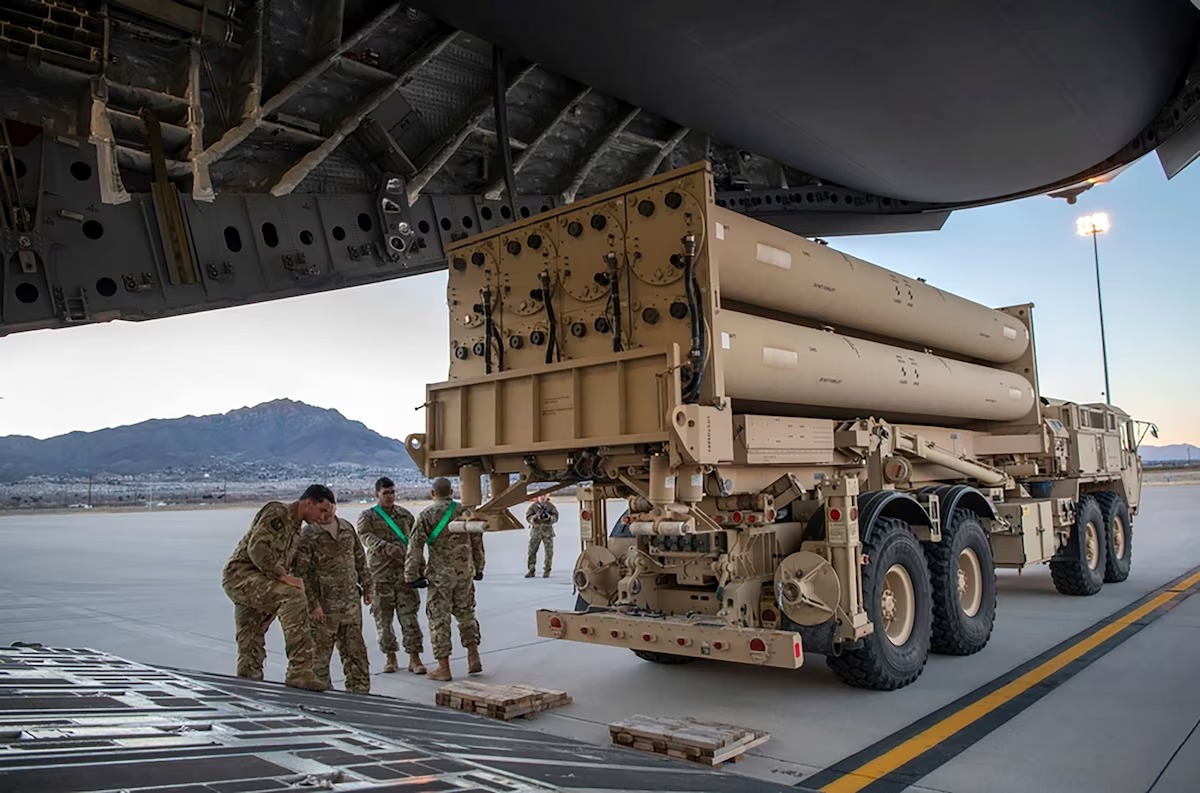
The U.S. has intercepted hundreds. Burning through THAAD, Patriot PAC-3, and SM-3 interceptors at unsustainable rates.
During last year's 12-day conflict, the U.S. consumed 25% of its THAAD stocks. This war's already potentially fired more in under a week.
America produces roughly 600 Patriot missiles per year. Iran just made us use nearly a year's worth of production in days.
Iran knows this. Their Defense Ministry said March 3 they've "prepared for a prolonged confrontation." They're not trying to win the missile exchange. They're trying to drain the magazine.
Trump's right about having unlimited munitions... for JDAMs and basic bombs. Production's strong there.
The problem? Interceptors defending U.S. bases from Iranian retaliation. Those are running critically low. And they can't be restocked in days; production timelines are 1-3 years.
This is economic warfare. Iran spends $20k. America spends $4 million. Every interception is a win for Iran's budget and a loss for America's stockpile.
The side that runs out of interceptors first has to start letting missiles land.
That's the clock nobody's talking about publicly. And it's ticking faster than anyone wants to admit.
WaPo, Bloomberg
The most important sentence from the Gulf this weekend was not the UAE Defense Ministry announcing it had intercepted 132 of 137 Iranian ballistic missiles and 195 of 209 drones. It was not the confirmation of three dead and 58 injured. It was a single line buried in the UAE Foreign Ministry statement: the UAE voices its firm rejection of the use of the territories of countries in the region as arenas for settling scores or expanding the scope of conflict.
Read that again. That sentence is not addressed to Iran. It is addressed to everyone. It is addressed to the United States.
The grand bargain of the Gulf has operated on a simple formula for decades. Host American military bases. Receive a security umbrella. Prosper under the perception of invulnerability. Build the tallest buildings, the busiest airports, the most expensive hotels, on the understanding that the American presence deters anyone from attacking you. That bargain just failed in real time on the most expensive real estate on earth.
Iran did not fire 137 ballistic missiles at the UAE because it has a dispute with the UAE. It fired them because the UAE hosts Al Dhafra Air Base, where the US Air Force’s 380th Expeditionary Wing operates reconnaissance, refueling, and combat support aircraft. Because the THAAD missile defense system deployed on Emirati soil exists to protect American force projection, not Emirati shopping malls. Because when the United States launched Operation Epic Fury from bases scattered across the Gulf, every host nation became a co-belligerent whether it consented or not.
The proof of concept is sitting right there in the data. Al Jazeera confirmed that the only GCC country Iran did not strike was Oman. Oman has no American bases. Oman served as mediator between Iran and the United States. Oman’s foreign minister said on Friday that peace was within reach. Oman was spared. Every country that hosted US military infrastructure was hit. The correlation is perfect and the lesson is devastating.
The UAE’s air defense performed extraordinarily. A 96 percent intercept rate against ballistic missiles is among the highest ever recorded in live combat. But the Defense Ministry’s own numbers reveal the problem. Fourteen drones landed within the country. Debris fell across Saadiyat Island, Khalifa City, Bani Yas, and Mohamed bin Zayed City. A Pakistani worker died in Abu Dhabi. Fires broke out at Jebel Ali Port and on the facade of the Burj Al Arab. The world’s busiest international airport shut down. When your economic model depends on absolute safety, 96 percent is not enough.
The UAE Foreign Ministry added that it retains its full and legitimate right to respond. But the response that matters most is not military. It is strategic. The question the UAE is now asking itself, and that every Gulf capital is asking alongside it, is whether the grand bargain still holds. Whether hosting American bases provides net security or net risk. Whether the umbrella protects you or paints a target on you. Iran just demonstrated that the answer depends on which end of the missile you are standing on.
Dubai did not build itself into the crossroads of global commerce by taking sides. It built itself by being the place where all sides could do business. That positioning is now incompatible with hosting the infrastructure of someone else’s war. The UAE knows this. That single sentence about rejecting the use of Gulf territories as arenas for settling scores is not a complaint. It is the beginning of a renegotiation. And if the Gulf states conclude that American bases create more risk than they prevent, the security architecture of the Middle East that has held since 1991 will have to be rebuilt from scratch.
https://t.co/BrzGRrU3VW
Dubai intercepted an Iranian drone near the Burj Khalifa.
Read that sentence again and understand what almost happened.
The Burj Khalifa is 828 meters tall. It is the tallest structure ever built by human civilization. It contains 900 residences, a hotel, corporate offices, observation decks, and on any given day thousands of people from dozens of countries inside its walls. It is the architectural thesis statement of the entire Gulf development model: that human ambition can overcome geography, gravity, and the geopolitics of the neighborhood. Iran sent a drone toward it.
The UAE intercepted it. No injuries. No damage. No impact. The system worked. But the Burj Khalifa was evacuated. Thousands of residents and guests walked down emergency stairwells from the tallest building on earth because an Iranian suicide drone was flying toward their tower and nobody could guarantee the interception would succeed until it did.
One failure. One drone getting through. One Shahed-136 carrying a 40-kilogram warhead striking the glass facade of the tallest building on earth. The footage alone would have been the most consequential thirty seconds of video since September 11, 2001. Every government on earth knows this. Iran knows this. And Iran launched the drone anyway.
The interception succeeded by whatever margin interceptions succeed by. Meters. Seconds. The distance between the drone’s trajectory and the point where the defensive missile reached it. That margin is the distance between a contained geopolitical crisis and the single most devastating symbolic attack on civilian infrastructure since the Twin Towers fell. Iran gambled that margin against the most recognizable building on the planet.
It does not matter that the system worked. What matters is that it had to work. What matters is that 12,000 people who live and work inside that building now know that an Iranian drone was inbound toward their tower and their survival depended on a missile defense system performing flawlessly at the last possible second. That knowledge does not go away when the all-clear sounds. That knowledge follows them into every decision about whether to renew a lease, whether to keep an office, whether to raise children in a building that has now been a confirmed drone target.
The Burj Khalifa was built to be the tallest. Tonight it became the largest target. The tallest structure on earth is also the most visible object on radar for a thousand kilometers in every direction. It cannot hide. It cannot move. It cannot be hardened. It can only be defended. And tonight defense meant intercepting a 50,000 dollar drone seconds before it reached a building worth 1.5 billion dollars containing thousands of human lives.
Iran did not hit the Burj Khalifa. Iran did something that no amount of successful interceptions can undo.
Iran made the world picture it.
https://t.co/BrzGRrU3VW
@peterrhague hence, medical tourism in India! even with your flight to and fro India, complete dental treatment, stay and maybe visiting a few places around - it could cost you around £1500 - whereas two root canal itself in the private UK costs about 1800 quid. Just a suggestion sir.
@NalinisKitchen@RajanSathya24@fssaiindia tho butter and spread both can be used differently, they're ultimately of same category - so obviously they're gonna be kept in same aisle next to each other!! and there's nowhere on Delicious it says it's a butter!! it clearly says Fat Spread!! I don't see what's wrong w it!
@jsaideepak agreeing with you or not politically has no stance here, we don't practice violence in a civilized and cultured country - we're not some western country! jai hind❤️
If Sonia Gandhi had attended #RamMandirPranPratishtha, she would have lost 90-96% (existing) Muslim votes.
After rejecting the invitation she won't lose any single (existing) Hindu votes.
This difference is the reason why a few foreigners managed to rule on Bharat for centuries. Secular Hindus are more responsible for the bad condition of Hindus than outsiders.
The rare event when the Gujarati New Year falls on the same day as World Diabetes Day is here.
As a mark of respect to our food choices for the day, we shall defer the Diabetes gyaan to another day.
Saal Mubarak to everyone celebrating today!
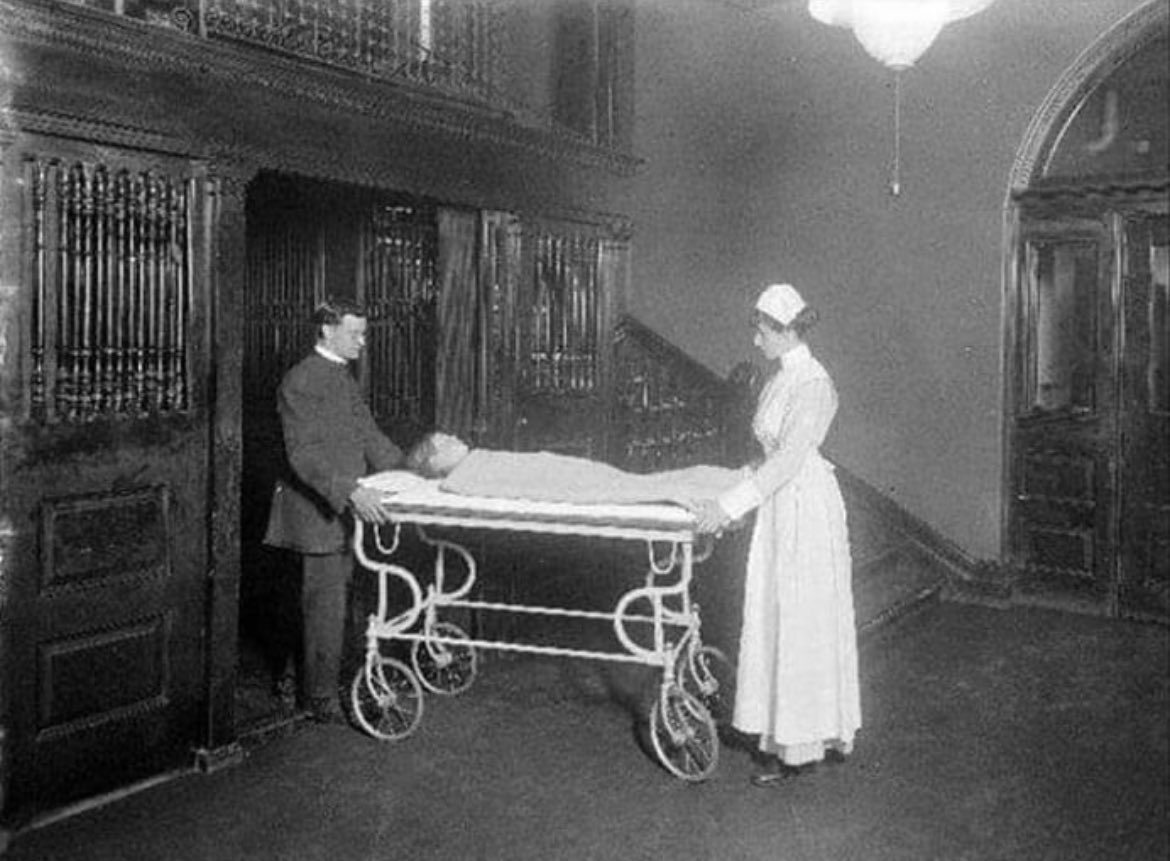
In 1922, a group of scientists went to the Toronto General Hospital where diabetic children were kept in wards, often 50 or more at a time. Most of them were comatose and dying from diabetic ketoacidosis.
These children were essentially in their death beds, awaiting what was at that time, certain death. The scientists moved swiftly and proceeded to inject the children with a new purified extract of insulin.
As they began to inject the last comatose child, the first one to be injected began to wake up. Then one by one, all the children awoke from their diabetic comas. A room that was full of death and gloom suddenly became a place of joy and hope.
In the early 1920s, Frederick Banting and Charles Best discovered insulin under John Macleod at the University of Toronto. With the help of James Collip, insulin was purified, making it available to successfully treat diabetes. Both Banting and Macleod earned Nobel Prizes for their work in 1923.
Banting was 32 when he received the Nobel Prize, and he chose to share half the prize money with Best, who was his assistant and just 24 years old at the time. Banting refused to put his name on the patent and instead sold it to the University of Toronto for $1. He thought it was unethical to profit from a discovery that would save millions of lives. "Insulin belongs to the world, not to me," he said.
The beauty of “Jai Sri Ram” is that it is perceptional.
If you are good, it sounds like a beautiful greeting. If you are evil, it sounds like a battle cry.
It depends on who you are.