@AngelicaOung Very well written and very accurate a summary. Another layer of sophistication are the tibes and their clans, and ex-sultanates, who have tremendous influence on political parties. Yemenis glorify their past and use them as political power.
@mynewshub Gunung Pondok (or Bukit Pondok), Padang Rengas, Perak, Malaysia.This limestone hill is part of the northern extension of the Kinta Valley karst landscape. The quarry and its associated cement plant are operated by YTL Cement Berhad (formerly Perak Hanjoong Cement).
Bad news again
Tragic death on Everest:
Phura Gyaljen Sherpa, 20 years old, grandson of the legendary Ang Rita Sherpa (the “Snow Leopard”), died on Monday night during summit preparations.
Phura Gyaljen, son of Phura Nuru Sherpa (Ang Rita’s youngest son), was working as a guide for the Kaitu Expedition. He left Camp 2 at 7:00 pm on May 11 carrying heavy loads. Four hours later, around 11:20 pm, he slipped and fell from a ridge below Camp 3 (approx. 7,000 m) on the Lhotse Face. He was found about 400m lower in a crevasse. His companions rescued him, but he had severe head and body injuries. He was pronounced dead after examination. His body was flown by helicopter to Lukla.
Phura Gyaljen was the grandson of Ang Rita Sherpa, the only man to summit Everest 10 times without supplemental oxygen and the only person to have climbed it without oxygen in winter.
The young Sherpa is the third worker to die this season in relation to Everest (previously: Lakpa Dendi Sherpa and Bijay Ghimire).
R.I.P.
https://t.co/oDH0FupUZS
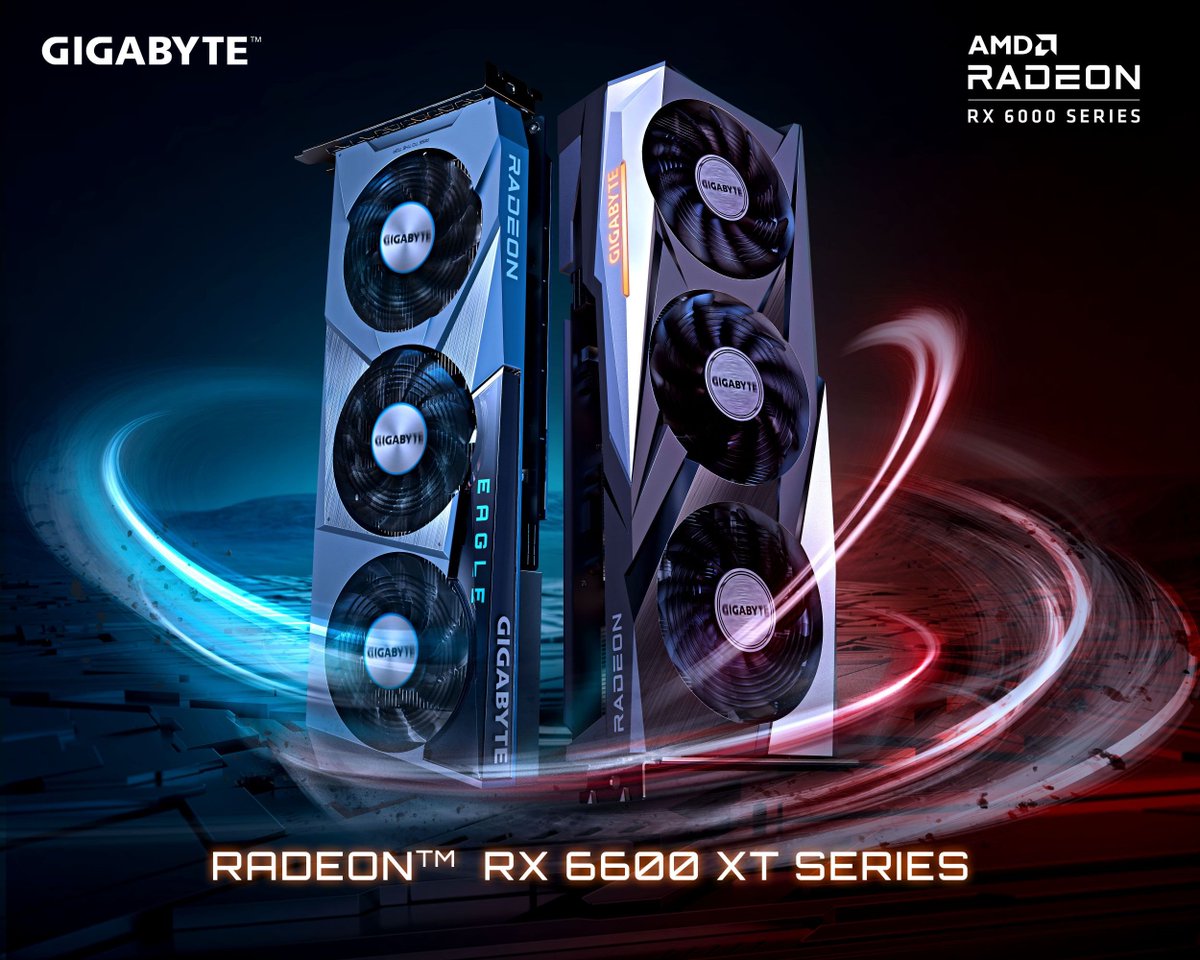
$AMD and $NVDA are expected to raise graphics card prices in Q1 2026, with potential increases of 10–20%
$AMD has already notified partners of a $10 price increase per 8GB of VRAM
$SSNLF Samsung, $000660 SK Hynix, and $MU Micron have allocated roughly 18–28% of DRAM capacity to HBM, tightening supply for conventional memory
As a result, DRAM contract prices are up ~170% year over year.
$NVDA is also reportedly planning to cut discrete gaming GPU production by 30–40% in 1H 2026
Jensen just told you DRAM is a national security risk and nobody’s repricing Nvidia’s supply chain exposure.
Here’s what most people think happened: Nvidia bought Groq for $20B to expand into inference. Cool acqui-hire, good tech, moving on.
That’s wrong.
Look at what’s actually happening in DRAM markets right now. DDR5 chip prices went from $6.84 to $27.20 in Q4 2025. That’s a 4x increase in three months. Samsung just raised contract prices by 100%. Kingston implementing double-digit hikes weekly. PC vendors are now shipping desktops without RAM because they literally cannot source it.
Why? HBM for AI datacenters. Samsung, SK Hynix, and Micron have reallocated wafer capacity to HBM at 3x the rate of standard DRAM. The AI supply chain is cannibalizing consumer memory, and there’s no relief until 2027 at the earliest because new fabs take 4-5 years to build.
Nvidia GPUs are HBM-heavy. Every H100 packs 80GB of HBM3. Every B200 system requires even more. And HBM consists of multiple DRAM dies stacked together with extremely complex manufacturing. DRAM prices tripling doesn’t just affect PC builders. It feeds directly into Nvidia’s GPU costs and production capacity.
Groq’s LPUs use zero HBM. Zero.
They run entirely on 230MB of on-chip SRAM per processor. SRAM bandwidth hits 80 TB/s versus HBM’s 8 TB/s. The chips don’t need external memory at all. Every weight sits directly on the silicon.
This architecture seemed like a constraint when DRAM was cheap. You need hundreds of Groq chips networked together to run a 70B parameter model because each chip holds so little memory. Rack-scale computing. Complex interconnects. Capital intensive.
But when DRAM goes 4x in a quarter and HBM supply becomes the binding constraint on the entire AI buildout, that “limitation” inverts into an advantage.
Groq’s LPU is manufactured on 14nm silicon. Ancient by semiconductor standards. No dependency on TSMC’s cutting-edge nodes. No dependency on the three companies that control 90%+ of DRAM production.
Jensen spent $20B to hedge Nvidia’s most dangerous supply chain exposure. If HBM stays scarce and expensive, he now owns an inference architecture that sidesteps the constraint entirely. If HBM normalizes, he’s out $20B on a company that was valued at $6.9B three months ago.
The price premium tells you Jensen’s probability estimate. He paid nearly 3x last round valuation for an escape hatch.
And for what it’s worth, TrendForce projects memory shortages extending through Q1 2026 and beyond. Samsung, SK Hynix, and Micron are all enjoying 40-60% operating margins and have zero incentive to flood the market. The oligopoly is behaving exactly like an oligopoly.
The question nobody’s asking: if the guy who sells the most AI chips just spent $20B to acquire an architecture that doesn’t use DRAM, what does he know about HBM supply that we don’t?
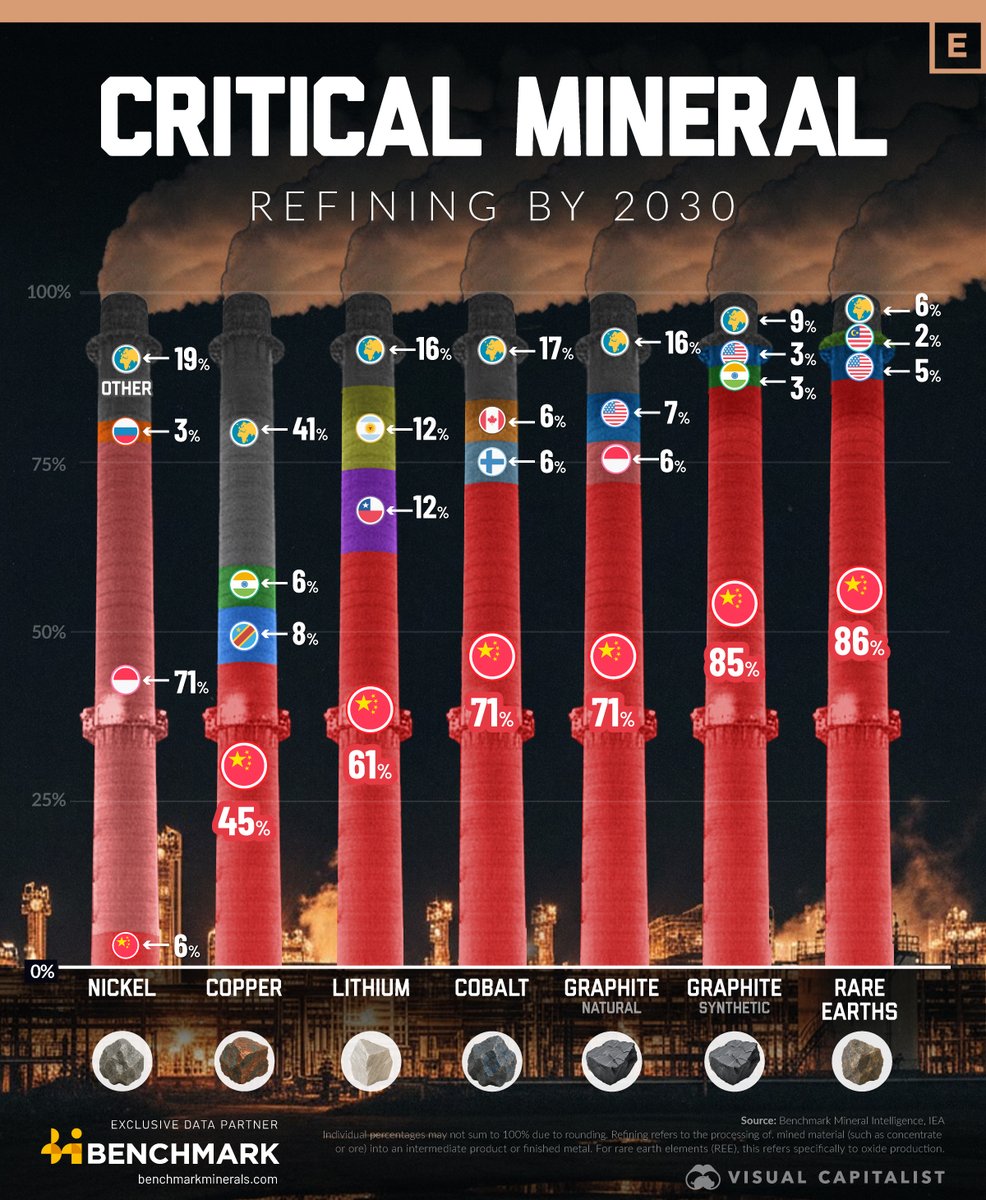
China Still Dominates Critical Mineral Refining in 2030 ⛏️
Using exclusive data from our partner, @benchmarkmin, we visualize the projected refining shares by 2030.
https://t.co/mxnLFQZYMZ
The more we think about the $NVDA / Groq acquisition, the more we see how it fits Jensen’s core theme: decouple workloads onto the most optimized engines, then recombine them into one seamless system for customers.
CPU = orchestration
GPU = training + flexible inference
DPU = networking/storage I/O + isolation
XPU (Groq) = real-time inference for consistent low-latency token streaming
All stitched together with NVIDIA fabric + software + systems. Jensen is turning NVDA into a true platform monster that’s incredibly hard to compete with
Google will never sell TPUs. The moment Google sells TPUs at scale, they transform their architectural advantage into a commodity.
Google's internal teams have first-order claims on TPU capacity because those workloads directly generate revenue and strategic moats. Any TPU sold externally is a TPU not used to defend Google's primary profit engines.
Right now, TPUs are Google's proprietary edge, vertical integration that lets them operate AI infrastructure at costs competitors can't match. DeepMind can burn through compute budgets that would bankrupt OpenAI because Google doesn't pay retail GPU prices, they pay internal TPU marginal cost.
If Google starts selling TPUs externally:
- They have to price competitively vs Nvidia GPUs, which means revealing their cost structure. Suddenly, everyone knows Google's true AI compute costs aren't magic.
- Selling bare metal TPUs means publishing detailed specs, performance benchmarks, and programming interfaces. This is handing competitors a blueprint for "how Google actually does AI at scale." Right now, that's proprietary. The moment it's a product, it becomes studied, reverse-engineered, and eventually replicated.
- Google Cloud already sells TPU access via GCP at premium prices. If they start selling bare TPUs, they're competing with their own higher-margin cloud offering. No sophisticated buyer would pay GCP markup when they could buy TPUs directly and run them cheaper.
GCP TPU pricing is not aggressive compared to GPU alternatives, but it is premium. This isn't incompetence, it's intentionally priced to discourage massive external adoption. Google makes TPUs available enough to avoid antitrust "hoarding infrastructure" accusations and to capture some high-margin cloud revenue, but they don't actually want external customers consuming capacity at scale.
Compare this to AWS, which sells every chip they can manufacture (Graviton, Trainium, Inferentia) because AWS is a commodity infrastructure business. Google's core business is ads and consumer products that depend on AI infrastructure. Selling the infrastructure is like McDonald's selling their supply chain to Burger King, even if it generates revenue, you're strengthening competitors and weakening your primary business.
You can't simultaneously be a commodity chip vendor AND maintain proprietary infrastructure advantage. The moment you sell, you commoditize. The moment you commoditize, your advantage evaporates.
Given that selling TPUs appears strategically unsound, why is there speculation that Google pursue it anyway? I think because cloud divisions at every hyperscaler have perpetual "we need differentiation" anxiety, and custom chips look like differentiation. But differentiation only matters if it protects margins or captures share without destroying your core business. Google selling TPUs would be differentiation that destroys more value than it creates.
@GeopoliticsDH@MarioNawfal Well said. This is not a question of military power. This is a question of long term repercussions to global economony, alliances and the dwindling status of Uncle Sam.
Insane video of stars orbiting the supermassive black hole that lies at the heart of the Milky Way over a period of nearly 20 years.
This time-lapse video is from the NACO instrument on ESO's Very Large Telescope in Chile.