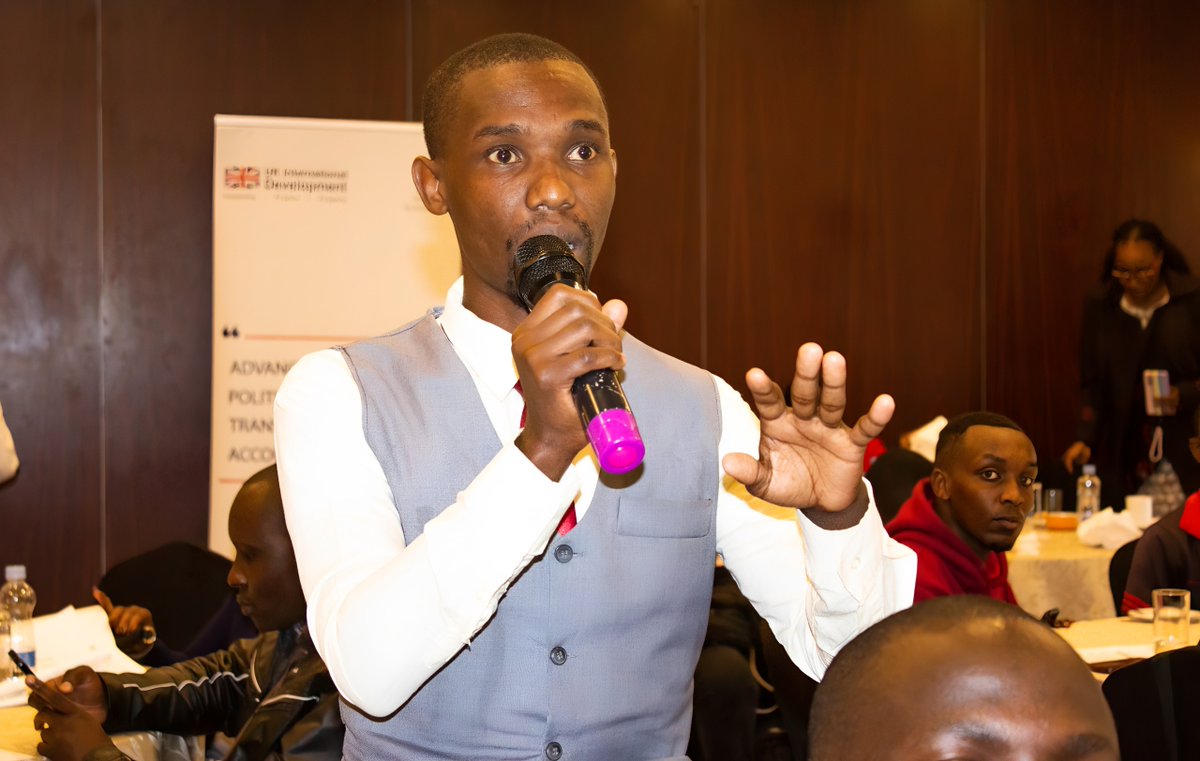
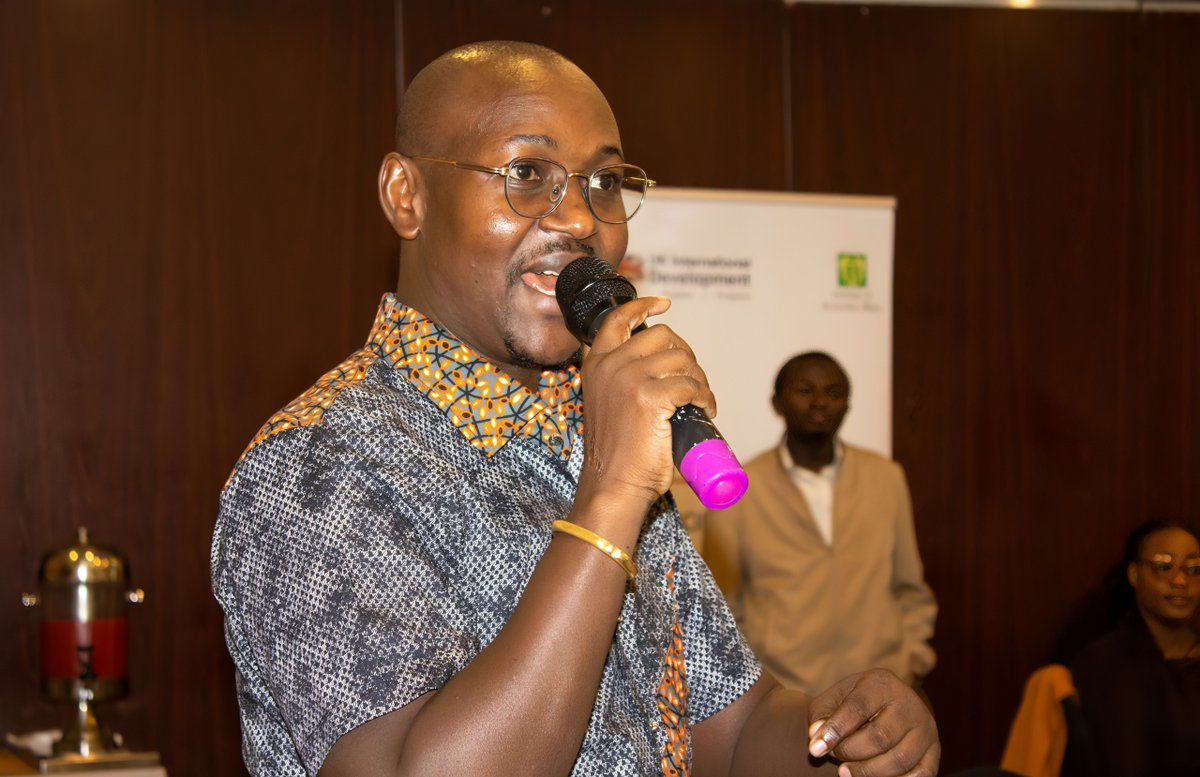
Happy to see our [@_acepis] year-long research on Police Abuse of Power and response of Criminal Justice System Institutions in Kenya launched by @IJMKenya.
We hope the evidence & policy RECs nudge government further towards more police accountability.
This study,conducted by Acepis on behalf of @IJMKenya , titled ‘Baseline Report: Justice System Response to Police Accountability 2025,’ covers nine regions and over 5,700 participants.
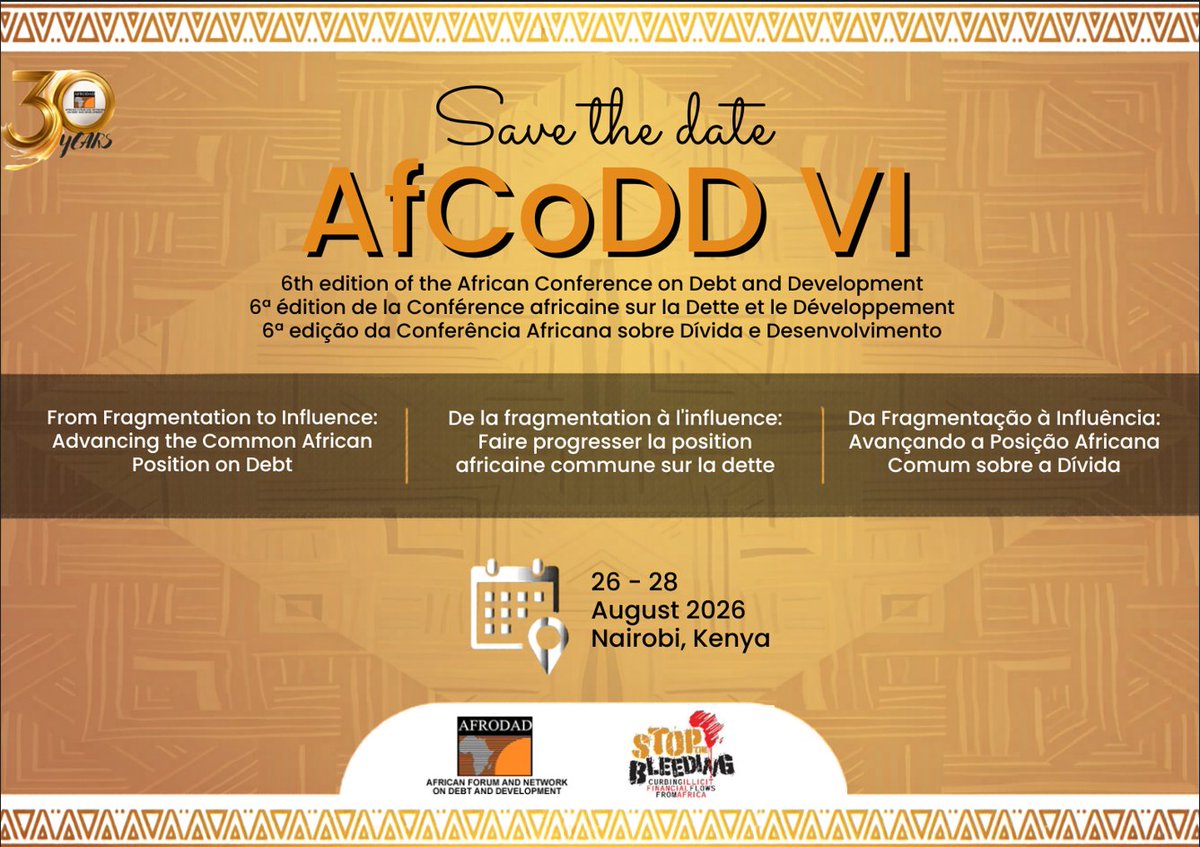
Save the date! 🗓️
The 6th edition of the African Conference on Debt and Development (#AfCoDDVI) is officially on the
horizon!📢
Theme: From Fragmentation to Influence: Advancing the Common African Position on Debt.
📍 Location: Nairobi, Kenya
🗓️ Date: 26-28, August 2026
we’re intensifying the fight for economic justice and African-led alternatives. We are shaping the Africa we want! Registration coming soon!
#AfCoDDVI #AfricaRuleMaker #AfricaEconomicJustice #StopTheBleeding
African Democracy Faces A Three Way War
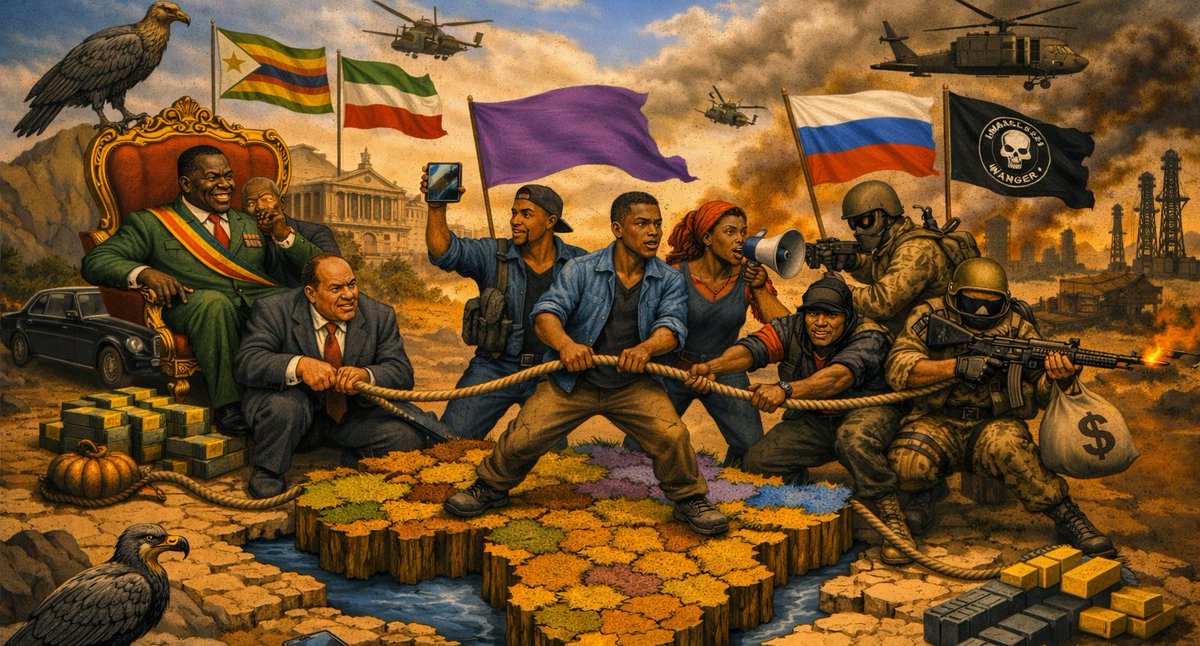
African politics in 2026 is a three-way war for the continent’s soul.
First we have the “regressive restoration” trend, now unfolding in Zimbabwe. President Mnangagwa is waging legal warfare to resurrect Robert Mugabe’s ghost.
By stretching presidential and parliamentary terms from five to seven years, and handing MPs – not citizens– the power to choose the president, Zimbabwe’s political class is turning the state back into a private club for elites. Uganda, Equatorial Guinea, and Congo-Brazzaville may soon follow this path.
Second is the “progressive insurgency”. This is a fast, youth-driven disruption. From Kenya to Senegal, leaderless movements armed with digital tools are bypassing creaky political parties. They reject the cult of the strongman. What they demand is simple: a state that delivers services.
The third is the “extractive securitisation” tendency. In Mali and the Central African Republic, regimes have abandoned the public altogether. They trade gold and lithium for foreign mercenary protection. Unable to win the street or the parliament, they outsource violence to paramilitaries. The result: a privatised state, hollowed out and sold off.
Earlier today, we launched the Citizen’s Alternative Budget to boost public participation, accountability & inclusive budgeting aligned to MTEF, BPS 2026/27 & BETA covering health, education, agriculture. @UKinKenya@IEAKwame@MzalendoWatch
Wrote an OpEd on Business Daily today.
I urge that Kenyans leverage the passing of Raila Odinga's to demand that Parliament ends the Constituency Development Fund (CDF) as he so fervently argued. @Fromagehomme@_acepis
https://t.co/PQ8x8Ra9y5
When Morgan Tsvangirai died on 14 February 2018, a Congolese businessman who owned mines in Zimbabwe and who was friends with President Emmerson Mnangagwa and Vice President Constantino Chiwenga asked me what sort of advice I would give the President and his deputy on how to handle the death of the former Prime Minister.
I told the businessman that President Mnangagwa and Vice President Chiwenga should send an Air Zimbabwe plane to South Africa to bring back Tsvangirai’s remains. I also said that they should send a delegation comprising senior ministers, family members, and opposition representatives on that plane to accompany the body back home.
I advised that when the plane landed at Robert Gabriel Mugabe International Airport, fire engines should line up and give a water cannon salute as a mark of respect, and that the president and his deputy should be there too.
I said that the government should not just give Morgan Tsvangirai a state funeral, but should go further and declare him a national hero, but allow him to be buried at his village as per his wish. My reasoning was simple, that would have been the most powerful way to unite Zimbabweans, a people long divided by partisan politics and hate.
I never knew whether the businessman conveyed my advice to Mnangagwa and Chiwenga, but it did not happen.
I mention this today because everything I suggested then is exactly what the Kenyan government has done for opposition leader Raila Odinga — honouring him in ways that transcend political lines and affirm national unity.
That conversation happened in February 2018. Six months later, the same businessman took me to meet Vice President Chiwenga. On the same day, we met with the EU and British ambassadors in the VP’s office where we talked about the need to heal Zimbabwe and reach out to the international community.
On the same day, I was introduced to President Mnangagwa in his office, where we once again discussed the need for him and his team to unite Zimbabweans.
After those meetings, I realised that nothing was going to change in Zimbabwe.
It pains me deeply when I look at our politics because what needs to be done to unite Zimbabweans is neither complicated nor costly. These are simple, symbolic gestures that demonstrate respect, humility, and leadership.
If the government had sent a plane to fetch the remains of the former Prime Minister, it would have cost almost nothing, yet the unity and goodwill it would have generated would have been priceless.
If the government had declared Morgan Tsvangirai a national hero, it would not have cost a cent more than a few words and a sense of statesmanship — but it would have healed wounds and inspired hope in a nation desperate for both.
I do not know how politicians think or what drives their decisions, but too often they miss historic opportunities because they are consumed by petty rivalries, egos, and ideological emptiness. Sometimes, it is not what you spend that builds a nation, but what you choose to honour.
I salute Kenya for seeing beyond its political differences. When the Kenyan Airways plane carrying Raila Odinga’s remains entered Kenyan airspace, its call sign was changed from KQ203 to RAO001 — “RAO” representing Raila Amolo Odinga’s initials, and “001” symbolising a presidential-style designation reserved for a man who dedicated his life to public service and democracy.
President William Ruto declared seven days of national mourning and made today a public holiday in honour of Raila Odinga. That is what true leadership looks like — the ability to rise above partisanship and honour a compatriot whose contribution shaped the nation’s story.
I hope the ZANUPF leadership will one day understand that it is the small gestures that define great nations, that there is a time for political contests and a time for unity, healing, and respect.
Sometimes it is the advisors around leaders who make them look great, and sometimes it is the same advisors who make them look terrible. True leadership requires the wisdom to discern between those who serve the nation’s interests and those who serve only their own. The legacy of any leader is often shaped not just by their intentions, but by the quality of counsel they choose to listen to.
Well done, Kenya, you have shown the world what can be achieved when a nation chooses unity over division and sets aside pettiness.👏🏿👏🏿👏🏿👏🏿👏🏿👏🏿
You have proved that greatness is not found in the size of a nation or the wealth of its leaders, but in the humility to honour those who helped shape its democracy — even when they once stood on the other side of politics.
Kenneth Okwaroh- Jalony tudruok pinje ma oko: Sirkal oket maino e neno ni mwandu miloso pachoka olos e rang’iny ma malo nono to jomoko biro kawo mwanduwa to loso maber kendo chak usonwa | #RamogiTV@Okwaroh
Kenneth Okwaroh- Jalony tudruok pinje ma oko: Midhiero manitie e chich Afrika en ni wadwani waus mwandu machal; nyaka waket kembe mabiro medonwa ndhadhu e mwandu | #RamogiTV@Okwaroh
@VincentChahale said: In a year where scores of young Kenyans have already lost their lives to police brutality, this report is yet another sobering wake-up call. Police abuse - especially at this scale - cannot be allowed to continue. But the report's findings also offer hope.
There is a strong public willingness to engage with reformed justice institutions, presenting a real opportunity for change. We must hold abusive officers accountable, carry out a radical overhaul of the police system #PoliceReforms
In 2023, Kenya ranked 114 out of 125 in the World Internal Security & Police Index, reflecting a decline in public trust in law enforcement.#endpoliceabuse
The findings also show that highly educated individuals and those in urban areas are more likely to experience police abuse. Youth and marginalized communities are disproportionately affected. #SocialJustice
Key findings include:
43% reported police abuse of power
70% witnessed police misconduct
56% faced corruption/extortion
63% of victims did not report incidents due to fear and mistrust. #PoliceAbuseofpower
This study,conducted by Acepis on behalf of @IJMKenya , titled ‘Baseline Report: Justice System Response to Police Accountability 2025,’ covers nine regions and over 5,700 participants.


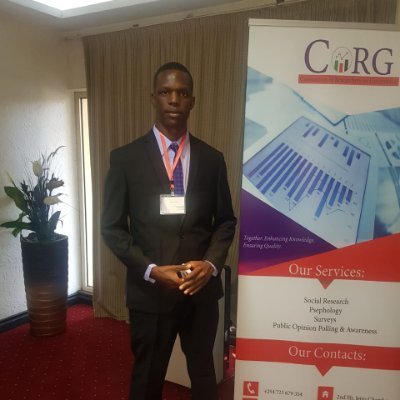





![Okwaroh's tweet photo. Happy to see our [@_acepis] year-long research on Police Abuse of Power and response of Criminal Justice System Institutions in Kenya launched by @IJMKenya.
We hope the evidence & policy RECs nudge government further towards more police accountability. https://t.co/8gz1eQFnGE](https://pbs.twimg.com/media/G0jwkwqWkAAKAkI.jpg)