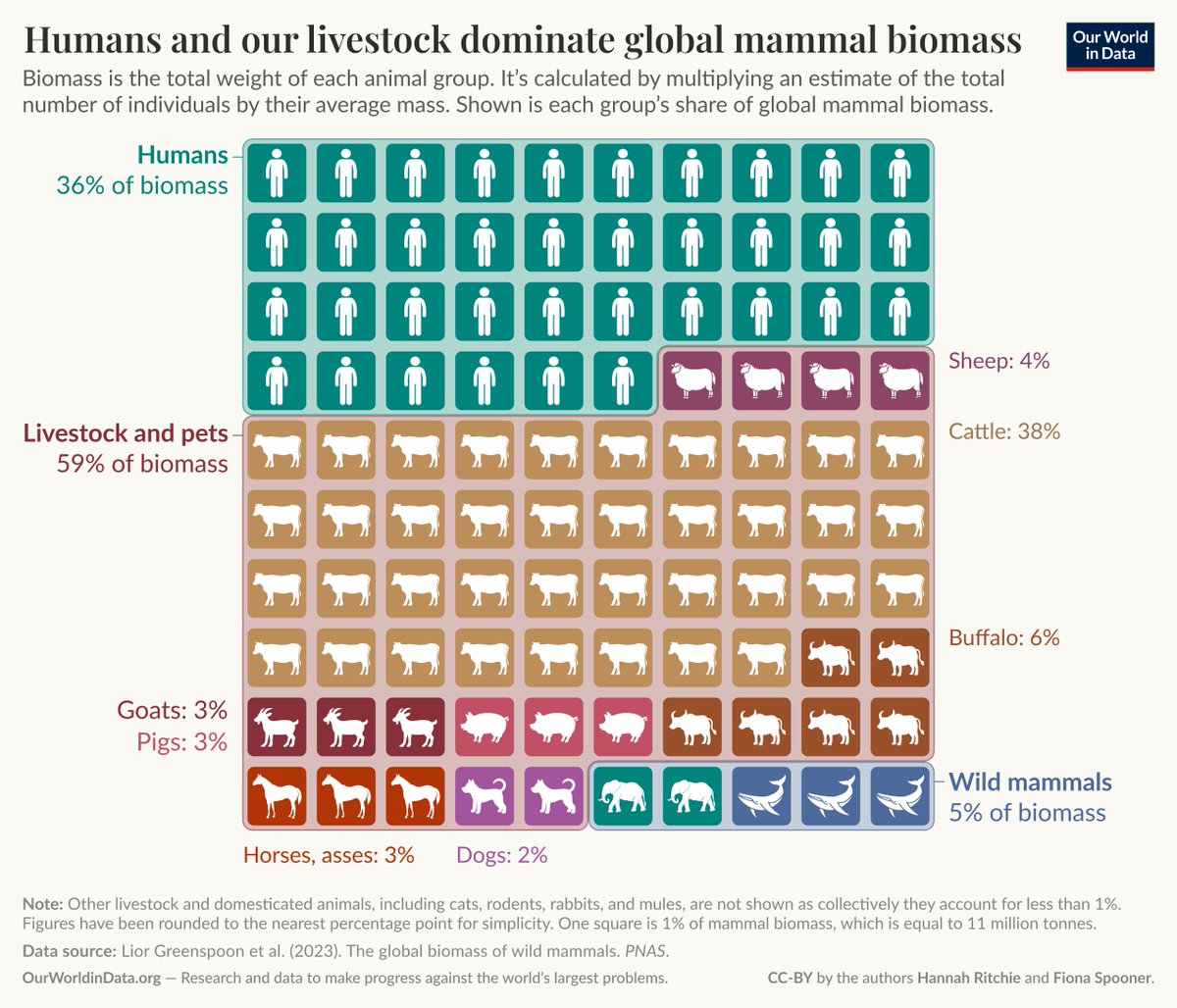
@Jesse_Wilson_@katrinatl@NickKristof They won't be bred by the same massive numbers. As a result, we will stop destroying the ecosystems via massive land, water & resource use & deforestation, and GHG emissions. We can allow nature to bounce back. The ecological imbalance is the status quo, not the solution.
@Grok1378885@frutanol Everything u said is true except abt B12; both cyano- & methylcobalamin can be sublingual, artificial cyano form=simply more stable (often more effective as a result), amount of cyanide is 1000s x lower than toxic dose (& lower than almonds & flaxseeds). Dose makes the poison.
@MrFrickhead@smilysmilybally@frutanol Exactly, capsules & pills aren't made of plastic, but microplastic contamination is a genuine source of plastic in the diet &, apart from bottled water, it mostly comes from fish/sea animals, & secondarily land animals. If genuinely concerned about plastic, you'd be plantbased
@MrFrickhead@frutanol You are consuming supplements or fortified food either way, either via animals given those or directly, question is whether to involve innocent animals & unnecessary amounts of environmental destruction along the way or to just cut out the middle animals, go straight to source
@MrFrickhead@frutanol We don't consume supplements for taste (nor are they given to animals you eat for taste), we get tasty plant based food elsewhere, which is also nutritious & can be fortified (often precluding need for supplementation). Pleasure doesnt justify cruelty & killing of sentient beings
@MrFrickhead@smilysmilybally@frutanol Plastic bioaccumulation (& other contaminants)=far higher in animals vs plants due trophic pyramid.Supplements/fortified feed arent plastic & are given mostly to factory/farmed animals VS humans, & nonvegans VS vegans.Natural ≠ better, but animal industries arent natural anyway.
@ExtremeBoyheat@frutanol Most fish eaten are now farmed globally rather than wild caught, and they are indeed given fortified feed often with artificial B12, same for farmed land animals
@DanielR00191707@hskenncutter And these Japanese Buddhist monks are the ones that brought tofu to Japan from China. The modern, largely Westernised world is not at all a reflection of ancient traditions. Eastern cultures have always eaten the most plants and had many elements of ethical concern for animals.
@DanielR00191707@hskenncutter And yes, Chinese, Japanese & Indian cultures are heavily connected & had strong influences on each other, regardless of where tofu was invented (China). Japanese Buddhist monks traditionally practised strict vegetarianism, especially from 6th century through the mid-19th century
@winiboy@Stockerw5@hskenncutter Ahimsa principle of nonviolence has strong roots in Indian cultures like Buddhism, Jainism, Sikkhism and Hinduism. Not everyone extended this to not eating animals or animal products, but many did. In a modern supply & demand system, the principles apply even more strongly.
@winiboy@Stockerw5@hskenncutter More historical revisionism. Not all Buddhists were veg, but many were & did associate it w Buddhism. Buddha famously refused animal flesh unless wasn't specifically killed for him, which he accepted due to taking a vow of poverty. https://t.co/f6W5P7jMVB https://t.co/1pCsbCAfPp
@winiboy@hskenncutter I never said it was. However it did become associated with vegetarianism and cultures like Buddhism, Hinduism and Jainism in the East a long time before the West. And there is a lot of overlap between those based around the ahimsa principle of nonviolence.
@hskenncutter@justinmanningv Thousands of years of vegetarian and vegan culture in those countries for the sake of living in peace with animals - which you erase and cherrypick only elements of animal use - also disagree with your anti-vegan nonsense
@hskenncutter Veganism does not come from America, the ideas behind it stem from Eastern, Asian & Indian peaceful philosophies like Buddhism and Jainism. Tofu is not inherently made to eat with animals. Its often paired with plant based foods and spices, theres no need to use animals with it.