Interested in a career in the Pre-hospital Emergency Medical Care Field?
Netcare Education Faculty of Emergency and Critical Care FECC Midrand campus invites you to an Open Day.
Brilliant! 11 unforgettable #ECG patterns suggestive of coronary occlusion. #FOAMed RT @EM_RESUS: #ECG reading is all about pattern recognition. If you rely on #STEMI Criteria, you'l miss many Coronary Occlusions. Be able to recognize ECG PATTERNS & I promise you will save lives
Approach to shock
Is it a low SVR/ distributive shock/sepsis?
Vasopressors (norepi, epi)
Is it a cardiac output problem?
Inotropes (dobutamine, epi, norepi)
Is it both?
Pressors with B1/ a1 activity (norepi, epi)
+/- Volume in any patient w/ shock
#Foamcc#Foamed@UVM_EM
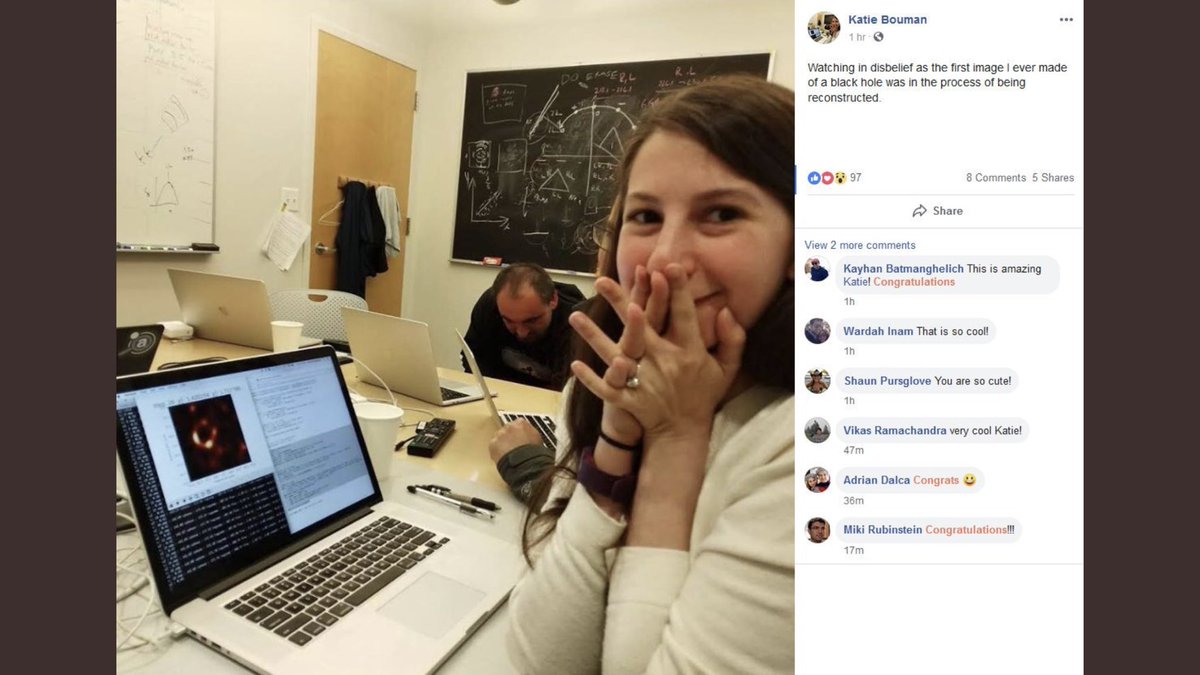
Congratulations to Katie Bouman to whom we owe the first photograph of a black hole ever. Not seeing her name circulate nearly enough in the press.
Amazing work. And here’s to more women in science (getting their credit and being remembered in history) 💥🔥☄️
Helicopter Emergency Medical Services: Today Netcare 5, a specialised helicopter ambulance based at Virginia Airport in Durban KZN was activated for a boating incident in Sodwana Bay making this flight the 100th mission for the coastal region HEMS which includes Netcare 6.
I was today years old when I learned that critically ill adult patients with hypoxemic respiratory failure (60%) who are low risk for aspiration (50% fasted>6hrs) become hypoxemic during RSI and should be mask ventilated 😉
https://t.co/nyftgXBzcN
#VisualAbstract: Among critically ill adults undergoing tracheal intubation, patients receiving bag-mask ventilation had higher oxygen saturations and a lower incidence of severe hypoxemia than those receiving no ventilation. Read the full text abstract:
There are two main reasons for running BP low in bleeding trauma patients: A. Dilutional coagulopathy. B. Worsening bleeding ("don't pop the clot")
(B) is important but (A) is really important.
Conceptually, If you pour 1L crystalloid into 4L (remaining) blood volume, you've diluted that patient's clotting factors by 20%. If they bleed another litre and you add another litre of crystalloid, then they're running close to 50% of starting clotting factors already.
Maintaining a patient at 60mmHg will lead to some degree of later organ dysfunction. This is not the same as dying in the next few minutes/hours from exsanguination.
In trauma, early deaths from exsanguination >>> deaths from organ dysfunction.
The lower the BP, the longer the shock, the more severe the organ dysfunction.
Any discussion of permissive hypotension is really talking about minutes, maybe an hour or so.
The shorter the timeframe, the lower the transient tolerable BP.
The fact that the trauma patient is pregnant frequently distracts us from our normal practice:
Give tranexamic acid, tetanus, antibiotics (if indicated)
Try to insert venous access above the diaphragm
If she needs a CT scan, do a CT scan.
#anes18
A simple dispatch algorithm for #HEMS in South Africa; the South African HEMS Activation Screen. MUCH more research needed, but here is a first step. #FOAMEMS@AfJEM https://t.co/dc1gXykZ2x