@LivingForever8 Live Forever!
Ultimate goal is to put our destiny in our hands, not in metaphorical hands of fate, to live as long as we wish
Singularity is possible when merge with AI
Compelling reasons, rationally explained
Roadmap for researchers
Foster partnerships for pooling resources
@elonmusk, dear, because I greatly respect you, let me say this. Cozying up to the likes of @RahulGandhi will not escalate a Starlink license. But further delay it.
Companies all over the world successfully do business with India. As you know, foreign partnership starts with respect for the country and its leadership. Rahul lacks respect for both his own country and PM Modi. He is bad company.
And “the other guy” is one of the greatest and most powerful leaders in the world today and will be governing India a long time. You want a license? I suggest shifting your public messages to the attention of PM @narendramodi and not wannabees like Rahul.
Congrats on your award today, BTW. Thank you for all your contributions to our great country. 🇺🇸
Pfizer had tried something similar to what @elonmusk is doing now, during the COVID era when they tried to muscle in their vaccines without proper testing in India and roping in Indian opposition. India cannot ok Starlink unless they are fully satisfied on the security front.
Okay so this is basically US suspending the green card processing for TCS, Infosys, Wipro, HCL, Cognizant, Capgemini and Microsoft, Adobe.
So what?
The bad?
- Remittance. India leads the world with ~$125B in annual remittances coming into thr country. The US is ~25% ($30B+). This suspension eventually means lesser high-earning Indians in the US.
- Fewer Indians across the top jobs in the US also probably means less soft power and reduced angel capital into domestic startups.
The good?
- If US companies can’t bring talent to the US, they probably will bring the work to India. I expect Global Capability Centers (GCCs) to further expand. India already hosts 2,100+ GCCs employing 2.4M people.
- Top engineering talent stays back to build domestic companies and AI startups here rather than working on visa uncertainty.
What else am I missing?
Just wrapped my first day as CEO of Boston Dynamics. This company has pioneered the modern robotics industry and fascinated people all over the world. Super excited to be joining at a pivotal moment for Physical AI, when there's a massive opportunity to deliver real-world impact.
This is a deep human tragedy, a Lee Sedol moment for an entire profession. Please don't gloat, for soon the models will also be coming for *you*.
(Oh, you think your output is difficult to verify? Your work requires interaction with the physical world? You're convinced that there's some context to what you do that the machines can't reach? These are fig leaves, my friend; you have maybe a few years left at most.)
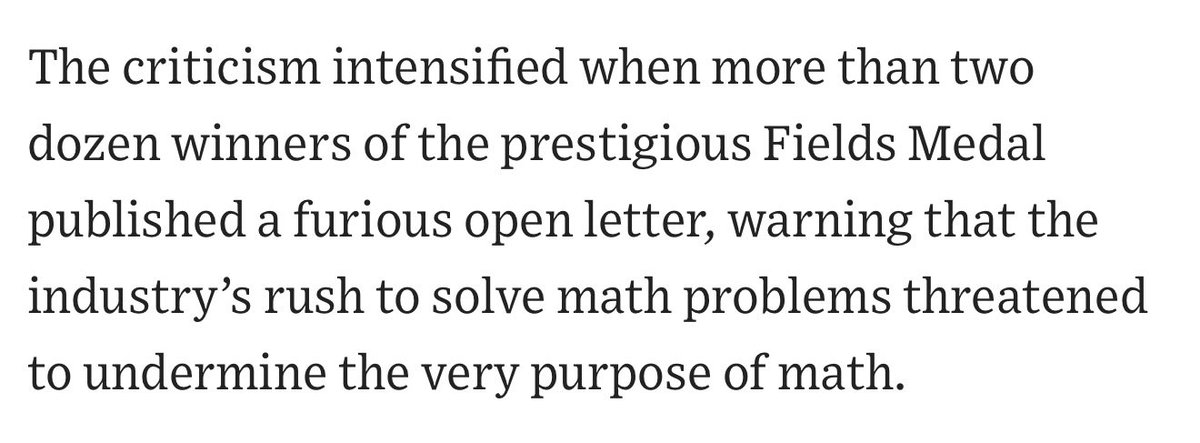
The rage against OpenAI is pointless, of course. In a year or two, these kinds of mathematical results will be obtainable in 15 minutes by anyone with a $20/month subscription or access to an open-source model. You can't hide from it. Superintelligence is here.
Everyone who does knowledge work (and I should have probably just said "everyone" - it's cleaner) should now be engaging in deep personal ruminations on the meaning of his/her life. It can't come from "being the best at what you do" anymore. For many of us, there's still time to pivot.
PSA:
Being alive and able to experience the world is the whole reason anything else matters.
AI surpassing our abilities doesn’t diminish that.
Being the smartest thing on the planet was never a prerequisite for a life worth living.
For years, I had a certain image of scientists in my mind. Brilliant, driven, deeply immersed in their work—but often somewhat removed from the ordinary rhythms of family life. I imagined the stereotypical scientist as someone who was absent from the mundane responsibilities of raising children: missing school events, family dinners, birthdays, and sometimes even the moments that mattered most. Professionally, I held enormous respect for them. Personally, however, I always wondered whether the pursuit of extraordinary professional achievement came at the cost of an ordinary, happy family life.
I remember an incident from my postgraduate years at Yale. I attended the wedding of a fellow student whose mother was a highly accomplished scientist. She couldn’t attend her own daughter’s wedding because she was caught up in an important project. She simply sent her daughter a message saying, “Sorry, honey, I couldn’t make it.” I remember being genuinely struck by it. I couldn’t help thinking: how important must a project be for you to miss your daughter’s wedding?
That experience stayed with me and became part of the lens through which I viewed the scientific world.
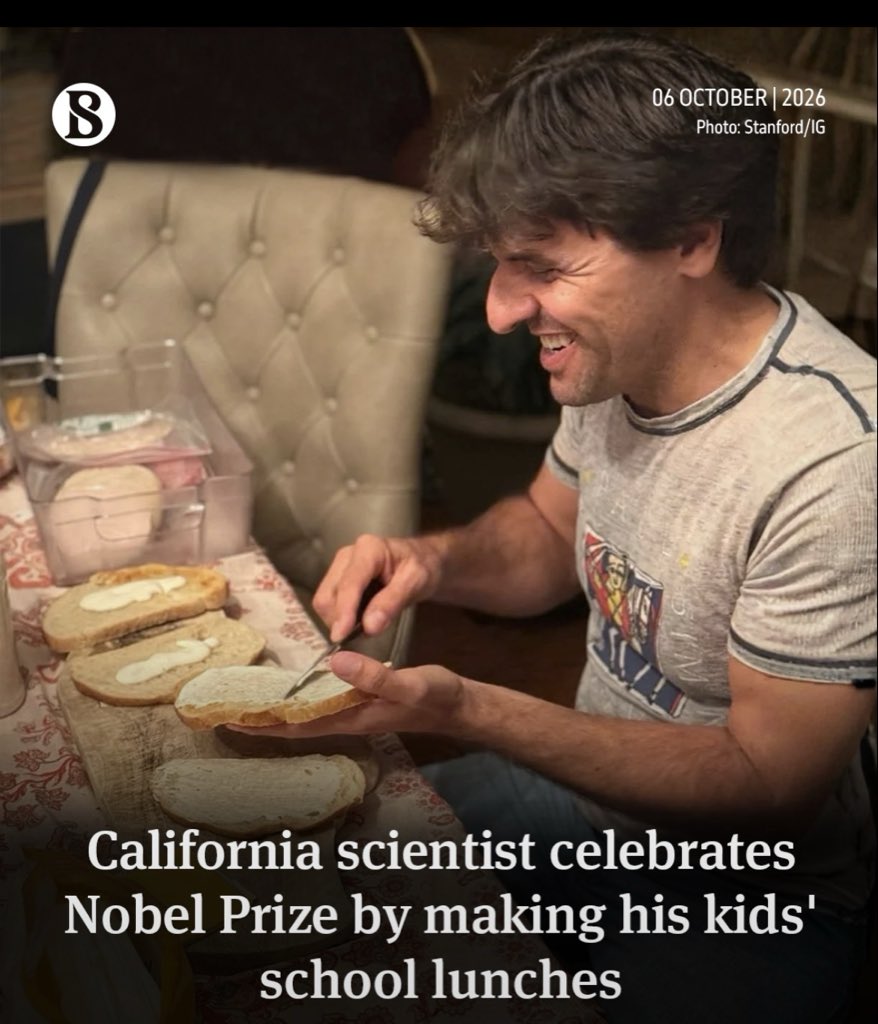
And then I saw Karl Deisseroth making sandwiches for school lunch.
Watching Karl completely changed that perception. Here was an exceptionally accomplished scientist, yet I saw him doing the most ordinary—and perhaps most extraordinary—things for his children: making their school lunches, preparing their meals, dropping them off, hugging them, being present in the everyday chaos of family life. His wife, too, an accomplished scientist in her own right. And yet, when you look at their family, what comes through isn’t a life sacrificed at the altar of achievement. It is warmth. Partnership. Happiness. Presence.
Karl challenged a very deep assumption I had carried for years.
Perhaps you don’t have to choose.
You can be extraordinarily successful in your profession and still be there for the people you love. You can pursue the frontiers of science and still pack your child’s lunch. You can change the world professionally and still come home to your family.
And perhaps that is what makes Karl’s story so compelling for me—not just that he wins professionally, but that he wins personally too.
Because at the end of the day, success isn’t only about how much you achieve when you’re away from home. It is also about who is waiting for you when you come back—and whether you were present for the moments that mattered along the way.
@Stanford@NobelPrize
India is still colonised.
Okay… maybe not politically.
But technologically.
We use American social platforms, operating systems, search engines.
If tomorrow they decided to use that technological dependence against us, they could (in a way, they already are).
They already hold our bank details, private photos, conversations, location history and search history.
They know what we buy, what we watch, where we go.
And probably more about us than we realise.
That is what technological dependence looks like.
It's no longer about our "privacy".
It’s about our nation’s future.
Our technological sovereignty.
It’s high time we start building our own digital infrastructure.
@PMOIndia
Reality check for mathematicians and doctors:
The purpose of 'math' is not to keep mathematicians employed, it's to solve problems and advance humankind's quality of life and understanding of reality.
The purpose of medicine is not to keep doctors employed. It's to prevent and relieve suffering caused by disease.
Yes, it's important that humans understand all the math and all the medicine.
But if AI can figure it out first, holding it back to protect the egos, prestige and income of the mathematicians and doctors is literally the opposite of the purpose of each field.
It doesn't matter who (or what) figured it out.
Just that it works.
Anne Carson – awarded the 2026 #NobelPrize in Literature – once described boredom as her arch-enemy. It is a state she confronts with drastic humour and wit.
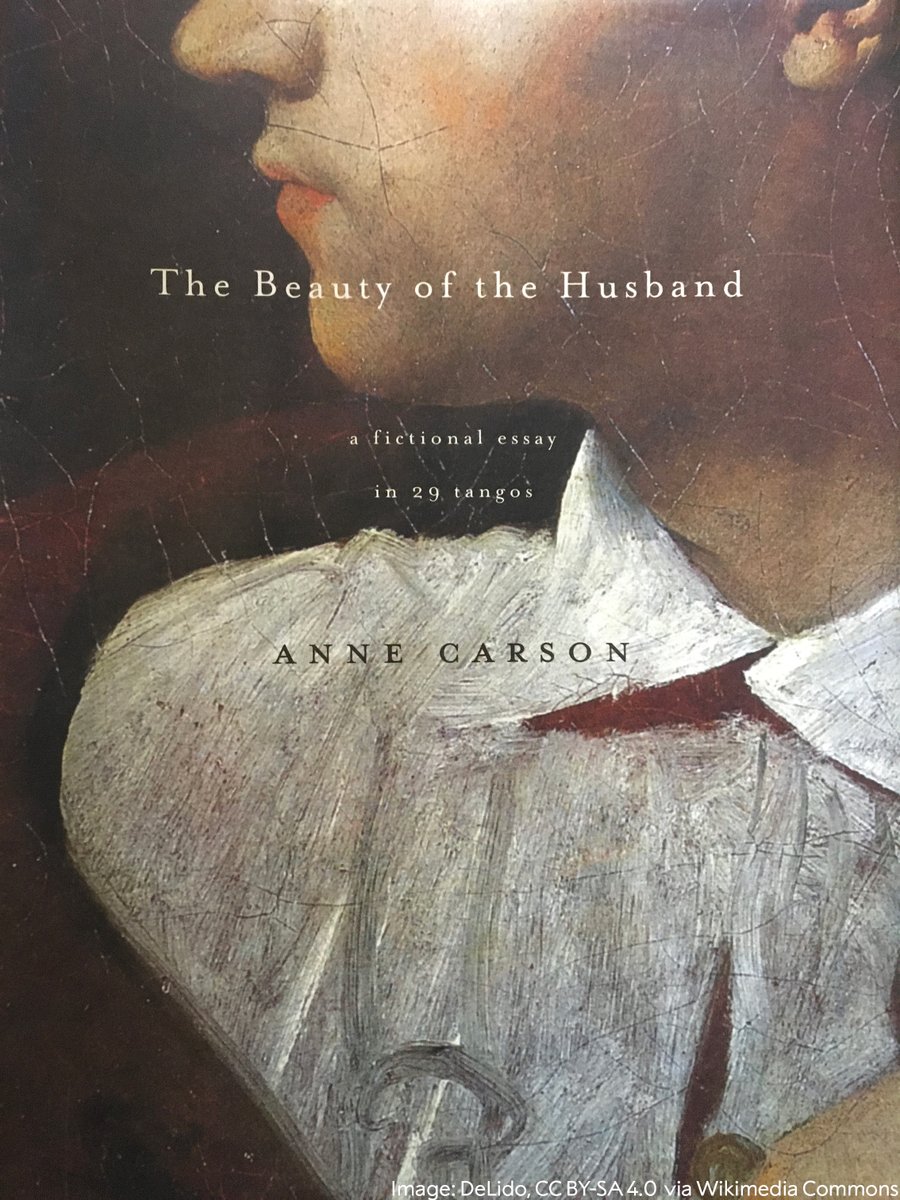
‘The Beauty of the Husband: A Fictional Essay in 29 Tangos’, published in 2001, tells of a cutting and sardonic row with a deceitful husband, its twenty-nine episodes each opening with lines of verse by the romantic poet John Keats. Keats’s sublime words about beauty being truth are, in brutal yet playful fashion, juxtaposed with this exhausting relationship drama.
Most pills come in two mirror-image forms, like left and right hands. For small-molecule drugs the FDA approved over two decades, nearly two in three had a twin form, and about 9 in 10 of those were sold in just one version.
This year's Chemistry Nobel went to two chemists who showed how a slight edge can snowball. Henri Kagan found that a helper molecule with a small bias toward one form can steer a reaction much further in that direction. Kenso Soai found a reaction that copies its own handedness.
Nexium is the classic example. It is the single-hand version of Prilosec, approved in 2001 just as Prilosec's main patent was set to expire. In pooled head-to-head trials at the same dose, about 30 people had to take Nexium for one extra person to heal after eight weeks.
Sadly, the single-hand version was marketed as a cleaner, more targeted drug, but at the same dose, it offered little real advantage over the original.
IISER Mohali currently invites applications for 21 vacant Assistant Professor positions through direct recruitment in the areas of Physics, Chemistry, Mathematics, Biology, Earth & Environmental Sciences, Humanities & Social Sciences, Data Science, Science Education, and Artificial Intelligence.
We seek exceptionally motivated scientists with a strong and innovative research program, a proven commitment to academic excellence, and a passion for teaching, particularly at the undergraduate level.
For more information, please see the link given below:
https://t.co/zyx4Bf7eoH
For submitting an online application for a faculty position, please refer to the link below.
https://t.co/Pci8dhk4xu
If you’re building/operating/investing in robotics and you haven’t spoke to Pallavi yet — that’s a darn shame!
She’s one of the finest women robotics founders in India and a complete badass who has deployed more robots than I can count 🦾
This her making her X debut! We are honored to have her here ❤️
@itchdoctor Adaptability, problem-solving, and a strong work ethic
While technical skills open the door, we stand out through pleasant personal attributes and professional behaviors
2026 #NobelPrize laureate Henri Kagan discovered a new way of manipulating chemical reactions, allowing a greater excess of one of the mirror images to be created than was previously assumed possible. His discovery has been revolutionary for chemists who develop reactions for the manufacture of pharmaceuticals, flavours, scents and new materials.
Some molecules, such as amino acids, exist as two variants that are each other’s mirror image. However, living organisms only contain one of these mirror images. How chemical asymmetry such as this could have emerged was long a mystery to chemists. Henri B. Kagan and Kenso Soai have been awarded the #NobelPrize in Chemistry 2026 for discovering a solution to this puzzle.
The era of computational biology is accelerating.
Zuckerberg-backed Biohub, Google DeepMind, Isomorphic Labs, NIH and the U.S. DOE are joining forces in a nearly $2 billion effort to generate the biological data needed to build predictive AI models of cells.
Their goal is to build a 'virtual cell' capable of predicting how cells respond to genes, drugs and other interventions.👀
And eventually, billions and trillions of cellular observations could become training data for these models.
Instead of testing every biological hypothesis in the lab, scientists could increasingly test them digitally first, then experimentally validate the most promising predictions.
That could accelerate drug discovery, disease research and our understanding of human biology.
On Tuesday, the entire Stanford Bioengineering community gathered at the Shriram Center to celebrate Karl Deisseroth, winner of the 2026 Nobel Prize in physiology or medicine, before he headed off to teach his undergraduate class: "Principles and Practice of Optogenetics for Optical Control of Biological Tissues."
“We love you. We love your work,” said fellow faculty member Russ Altman, who’s known the laureate since 1992.
“Wisdom, devotion to your work, seriousness of purpose, sense of humor, and then your status as a father, husband, physician. What a model.”
Your organs do not all age at the same speed, and now a blood test can tell them apart.
@wysscoray's Stanford lab built protein clocks for each organ and tested them in 44,498 UK Biobank volunteers followed for up to 17 years. The signal was striking: people whose brains read oldest had a 4.6% Alzheimer’s rate, versus 0.35% for those whose brains read youngest. People with 8 or more old-reading organs had about 8 times the risk of dying.
Eric Topol calls organ clocks "a breakthrough in their own right." The big question now is whether lowering an organ's age can change longevity outcomes.
It’s a bit surreal to see myself on a billboard in San Francisco!🫣
My deepest gratitude to @OpenAI for choosing me to represent one of the millions of creative ways people use Codex.
What an incredible honor to be part of this small moment in the history of the age of AI!