Another lap around the Sun without posting AI slop and opportunistic ragebait. Visuals of the Ancients is your page for History and Art with zero drama. If you see an interesting piece in these 13 collages, I have already posted about it and its historical context.
Happy 2026!
You have certainly wondered how the Roman Empire fell, but have you asked how it fed itself? This episode is about the state-sponsored program of free food distribution, the Cura Annonae: its origins, some numbers to put in perspective the colossal effort it represented, how it expanded over time to more than just grain and the city of Rome, and finally, how it all ended.
If you enjoy this episode, find it well-researched and entertaining, all I ask in return is for you to share it with friends, colleagues, and here. All links to Spotify, Apple Podcasts, YouTube, and other platforms are below!
Netflix bought Warner, and subscriptions will now cost more. Social media is inundated with AI slop.
But you know what's real and free, The Cobra Effect Podcast. Available on all platforms. See link in bio.
Below is a soundbite from "Episode 04 – The death of the ancient Sumerian gods and their revival… in Iceland?" How? Because of taxes.
Five episodes are now released, and more are coming. Tune in to listen to some history and economics through stories of unintended consequences, such as this one.
📸 by me at the ISAC Museum (formerly the Oriental Institute of Chicago). The Assyrian ruler Sargon II (721 – 705 BC) is on his way to a royal hunting expedition. Bas-relief from the palace of Dur-Sharrukin, "the Fortress of Sargon" (modern Khorsabad).
🚨 ANNOUNCEMENT 🚨
A new episode is out: Episode 05 – Luxury taxes... on the working class?
In this episode, we first travel 2,000 years to the Roman Empire. Then, to the US of the 1990s, to see how the Luxury Tax approved by Congress in 1990 backfired. After that,
Last week, I shared a 🧵 of 📸 of cats in Italy. This time, seagulls take over!
📸 by me.
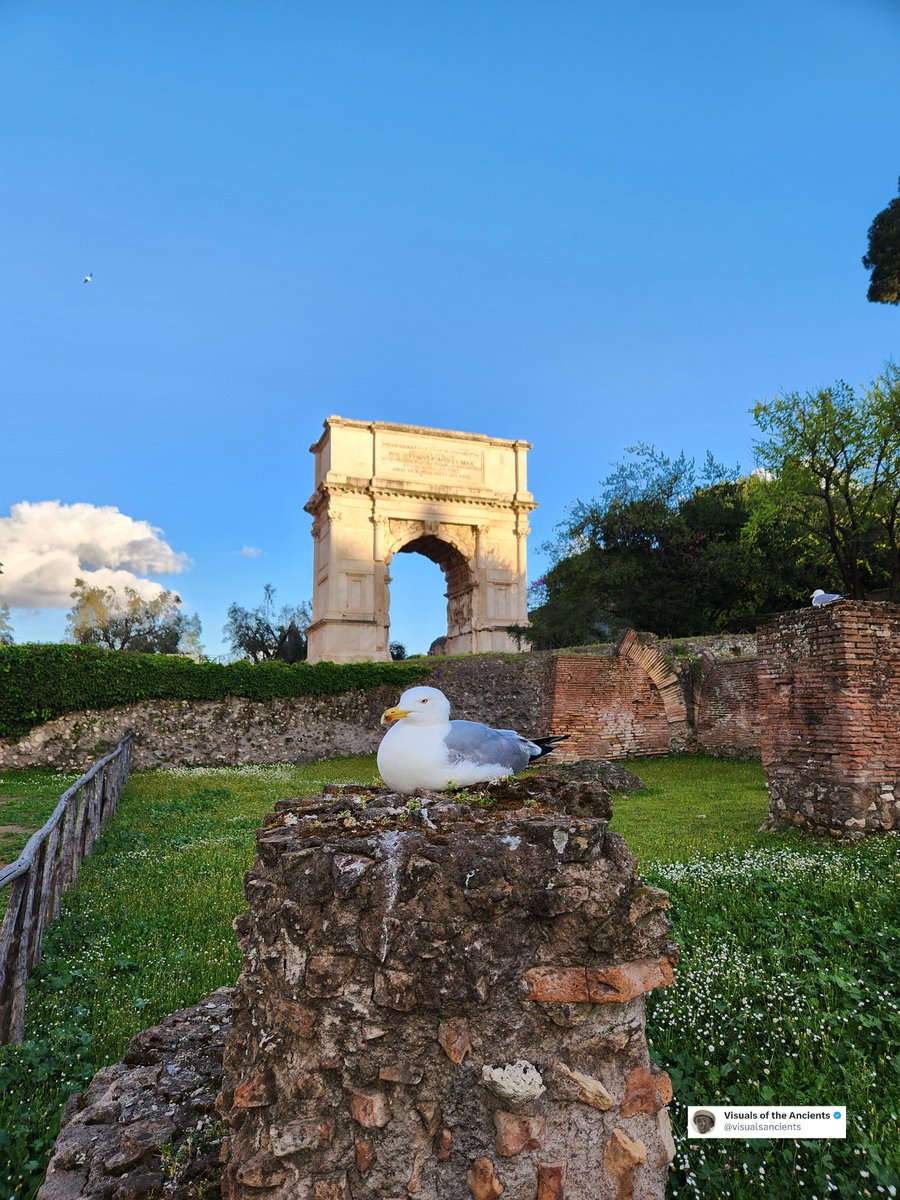
# 1. In the Roman Forum with the Arch of Titus in the background.
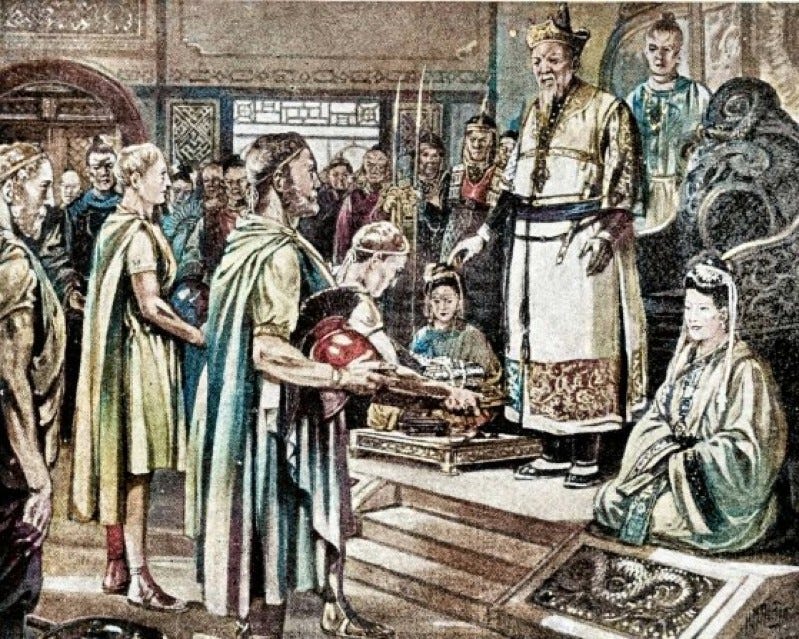
The Roman Empire and the China of the Han Dynasty were this close 🤏 to establishing direct contact with each other, at least five times.
This is a 🧵 on one of those attempts and how an act of deceit perhaps prevented one of the greatest civilizational encounters in history
1/2🧵 The Palazzo Barbarigo, in Venice's Grand Canal, was built in the 16th century. Applied in 1886, the building’s façade is made of Murano glass mosaics.
The left panel represents Emperor Charles V speaking to Titian on the scaffolding of St. Mark's Basilica.
📸 by me.
🧵1/3 The lion and the bull. Chaos and order. Power and resilience.
Here we have two civilizations locked in an eternal struggle united by the beauty of imagination and art.
📸 by me.