Detén el ransomware antes de que afecte a tu negocio 🛑📉.
Con Sophos Endpoint, fortalece la protección de tus equipos sin añadir complejidad ni requerir un equipo de TI gigantesco.
+ info x DM
#Ciberseguridad#PyMEs
🚨 Hackers filtran en una plataforma en la Deep Web millones de registros de mexicanos. Tienen miles de BDs del @GobiernoMX
🔴 Más de 338 millones de registros
🔴 8,681 bases de datos
Pedían de rescate hace unos días al @GobiernoMX 20 millones de pesos, después subió a 50 millones y está por subir a 70 millones.
¿Qué pasará con el dinero?
- "Se donará a causas como los niños con cancer y los desaparecidos y los animales en peligro o hambre"
Statement:
- "Solo queremos un México justo libre y sin la cultura nazi de morena y sus delincuentes que ya dejaron el país en quiebra y sometido por que ellos nos quieren como Cuba o Venezuela"
‼️ Hackers Use Stolen FortiGate VPN Credentials to Access Corporate Networks & Deploy Malware
Details:https://t.co/OhZf4wMF3R
A threat actor known as “tcherber” is selling and using stolen FortiGate VPN logins to get into company networks. The same person also builds custom malware, including a stealer, a remote desktop tool, and ransomware.
The campaign shows how one weak VPN password can open the way to data theft and file encryption. The actor does not need a new Fortinet bug. Many of the logins come from guessing weak passwords, using default ones such as guest/guest and admin/admin, or reusing leaked ones.
This is the same pattern seen in the FortiBleed credential campaign that hit Fortinet devices worldwide earlier this year.
#cybersecuritynews
Google Reveals How Hackers Are Using AI Agents to Automate Real-World Cyberattacks
Details: https://t.co/q5D9pdzVIv
Hackers are no longer just asking AI chatbots for help. They now run AI agents that can scan, break in, and move through networks with very little human input.
In its latest AI Threat Tracker, published on November 16, 2026, the Google Threat Intelligence Group (GTIG) and Mandiant said AI misuse has reached a “critical inflection point” across cybercrime, spying, and influence campaigns. The findings come from Mandiant incident response cases, global tracking of threat groups, and Google’s own platform defenses.
Google says attackers are using AI to shorten attack timelines, grow their operations, and run multi-stage intrusions at machine speed.
#CybersecurityNews
NEW: Apple is working to restore its systems after an internal update caused widespread outages Tuesday, disrupting employee tools, retail operations and consumer services. https://t.co/tqiMbrpAu9
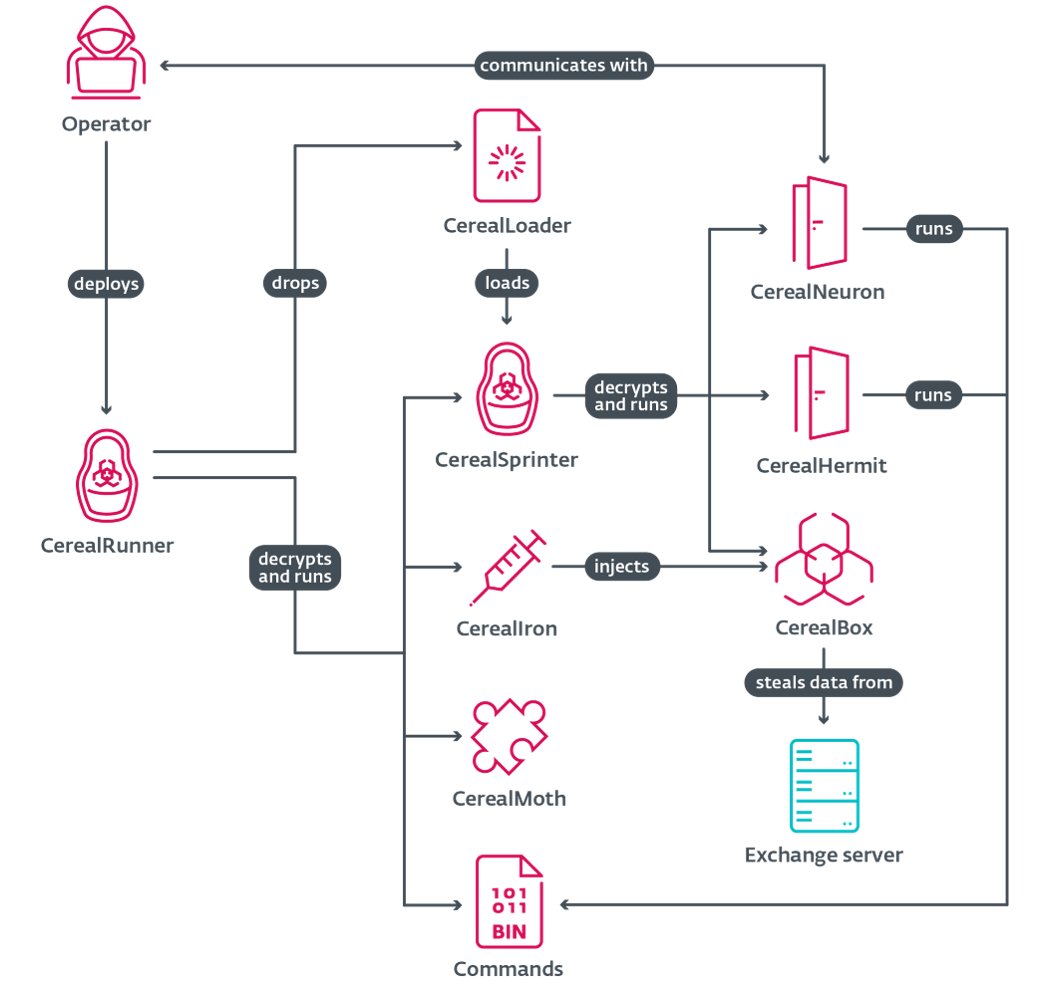
@ESETResearch descubrió un conjunto de herramientas de ciberespionaje no documentado hasta ahora, dirigido a servidores Microsoft Exchange.
Atribuido con alta confianza al grupo APT alineado con Rusia, Turla.
🔗Análisis completo: https://t.co/i4dPL0hJkb
🇲🇽 🏦 MEXICO: THREAT ACTOR CLAIMS SALE OF ALLEGED BANCOPPEL CUSTOMER DATABASE
A threat actor on an underground forum is advertising what they claim is a customer database stolen from BanCoppel, the Mexican bank linked to the Coppel retail group. The seller is taking buyers through an escrow service. No record count was given.
What the data allegedly contains:
* Full names and physical addresses
* CURP and tax identifiers
* Phone numbers
* Credit limits and Coppel credit product details
⚠️ Analyst Note:
If real, national ID numbers combined with credit details and phone numbers are ideal for identity fraud and bank-impersonation calls or SMS. BanCoppel customers should treat unexpected contact about their accounts or credit with caution and reach the bank only through official channels. The bank has not confirmed an incident that we are aware of. Unverified threat-actor claim, NOT confirmation of a breach.
#DDW #DarkWeb #DataBreach #Mexico #Banking #ThreatIntelligence
‼️ Google Patches Over 200 Android Vulnerabilities, Including Critical Zero-Click RCE Flaws
Details: https://t.co/ecAjcWBfVZ
Google has released its November 2026 Android security update, addressing more than 200 vulnerabilities across the operating system, kernel, and hardware components. Published on November 2, the bulletin includes critical remote code execution flaws that require no user interaction.
Devices with security patch level 2026-11-05 or later receive all applicable fixes. The most serious Framework issue, CVE-2026-58868, could allow remote code execution without additional execution privileges. Google lists fixes for Android 14, 15, 16, 16 QPR2, and 17.
The lack of required user interaction makes this a zero-click threat, removing the need to persuade someone to open malicious content.
#cybersecuritynews
Protege tu negocio contra bajadas de tensión y apagones.
🛡️⚡Los UPS CyberPower ofrecen la relación perfecta entre confiabilidad, ahorro de energía y protección avanzada para PyMEs.
Cotiza el modelo ideal para tu empresa hoy mismo y mantén tu operación 24/7. 💼👇
#PyME
‼️ Admin Password “123456” Led to 8.8 Million Danish CPR Data Breach
Details: https://t.co/vnQPZvyTNq
A weak administrator password is linked to a major Danish data breach that exposed information tied to about 8.8 million national identification numbers. At least three accounts at Pays, an IT company on the island of Funen, reportedly used “123456”, including an administrator account.
The case shows how poor security at a company with trusted access can place a national database at risk. Pays had permission to search Denmark’s Central Person Register, known as CPR.
#cybersecuritynews
🚨 Fallo en Windows 11 causa pantallas negras tras iniciar sesión.
Surgió a partir de las actualizaciones de agosto de 2026 e impacta entornos con Azure Virtual Desktop y FSLogix. Microsoft ya trabaja en un parche permanente. 💻👇
#Windows11#AzureVirtualDesktop#Ciberseguridad
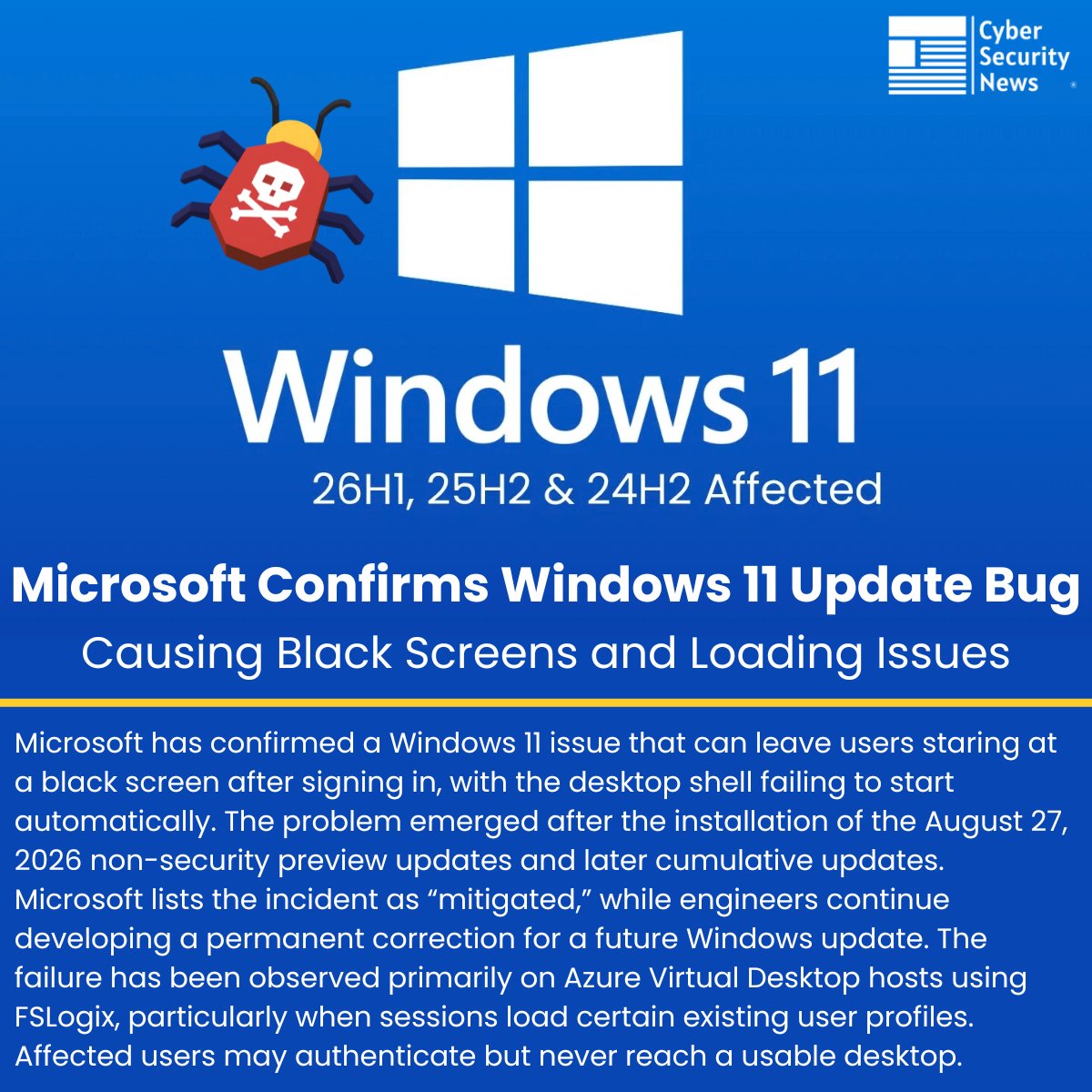
⚠️ Microsoft Confirms Windows 11 Update Bug Causing Black Screens and Loading Issues
Details: https://t.co/sHFNUwiuzK
Microsoft has confirmed a Windows 11 issue that can leave users staring at a black screen after signing in, with the desktop shell failing to start automatically.
The problem emerged after installation of the August 27, 2026 non-security preview updates and later cumulative updates.
Microsoft lists the incident as “mitigated,” while engineers continue developing a permanent correction for a future Windows update.
The failure has been observed primarily on Azure Virtual Desktop hosts using FSLogix, particularly when sessions load certain existing user profiles. Affected users may authenticate but never reach a usable desktop.
#windows11
BurpSuite is a must-know tool for hackers, pentesters, and bug bounty hunters.
In this tutorial, we’ll dive into fuzzing—injecting random data to uncover vulnerabilities like SQL injection & XXE.
https://t.co/4l7EcY2bFq
🚨 SOLARWINDS PATCHES TWO UNAUTHENTICATED RCE FLAWS IN OBSERVABILITY SELF-HOSTED — ONE RATED CVSS 9.8
SolarWinds has released Observability Self-Hosted 2026.2.3 to fix two newly disclosed remote-code-execution vulnerabilities that require no authentication.
• CVE-2026-28324 — CVSS 9.8 Critical — unauthenticated RCE caused by insufficient integrity checks
• CVE-2026-28325 — CVSS 8.8 High — unauthenticated RCE involving deserialization of untrusted data
• CVE-2026-28324 affects deployments using a non-default, non-secure configuration
• CVE-2026-28325 requires a specific communication mode
• Both flaws affect versions prior to 2026.2.3 and were reported by Kai Huang of Armadin
• Successful exploitation can allow arbitrary code execution on the underlying SolarWinds server without credentials
• SolarWinds released the fixes in version 2026.2.3 on September 22
• No confirmed in-the-wild exploitation or public PoC has been identified at this time
⚠️ Analyst Note:
The configuration prerequisites limit the exposed population, but the target is high-value. Observability servers often have broad visibility into enterprise infrastructure and can hold credentials, topology information and privileged integrations useful for lateral movement.
Organizations running SolarWinds Observability Self-Hosted should verify both the software version and whether either vulnerable non-default communication/configuration mode is enabled.
Original SolarWinds release notes:
https://t.co/Lc6c2An5nA
#SolarWinds #CVE202628324 #CVE202628325 #RCE #Vulnerability #NetworkSecurity #ThreatIntel #DDW
⚠️ ¡ATENCIÓN COMUNIDAD! ¿Qué puede hacer un ciberdelincuente con tu número de teléfono?
Spoiler: tener tu número NO significa que pueda entrar mágicamente a tu celular, leer tus #WhatsApp o acceder a tu cuenta bancaria.
Pero sí puede ser el primer paso para un ataque.
🧵 Te contamos cómo.
¡Llevar tu PyME al siguiente nivel" 🚀 Equipos de cómputo, redes y ciberseguridad pensados a la medida de tu negocio en un solo lugar. 💻⚙️
Visita nuestra nueva tienda en línea y equipa tu PyME como las grandes:
👉 https://t.co/f8DaokQTdc
#PyMEs#TecnologíadeConsumoa
🚨 Critical Chrome 0-Day Vulnerability Actively Exploited in the Wild |
Source: https://t.co/KcoTh9AsWR
Google has released an emergency Chrome security update that fixes a critical zero-day vulnerability already being exploited in real-world attacks.
The flaw, tracked as CVE-2026-85046, affects the V8 JavaScript and WebAssembly engine used by Chrome to process web content.
The company confirmed that it is aware of an exploit for the vulnerability existing in the wild. While Google did not disclose details about the attacks, affected targets, or the threat actors behind the activity, the active exploitation notice makes immediate patching important for all Chrome desktop users.
#cybersecuritynews
¿Confundido al elegir entre DAC, AOC o fibra multimodo para tus enlaces de infraestructura? 🌐
Acá te compartimos una guía visual rápida con la anatomía y evolución de los transceptores ópticos y de cobre más utilizados en data centers y redes enterprise.