Vision evals today make it too easy for the big labs' models to be correct.
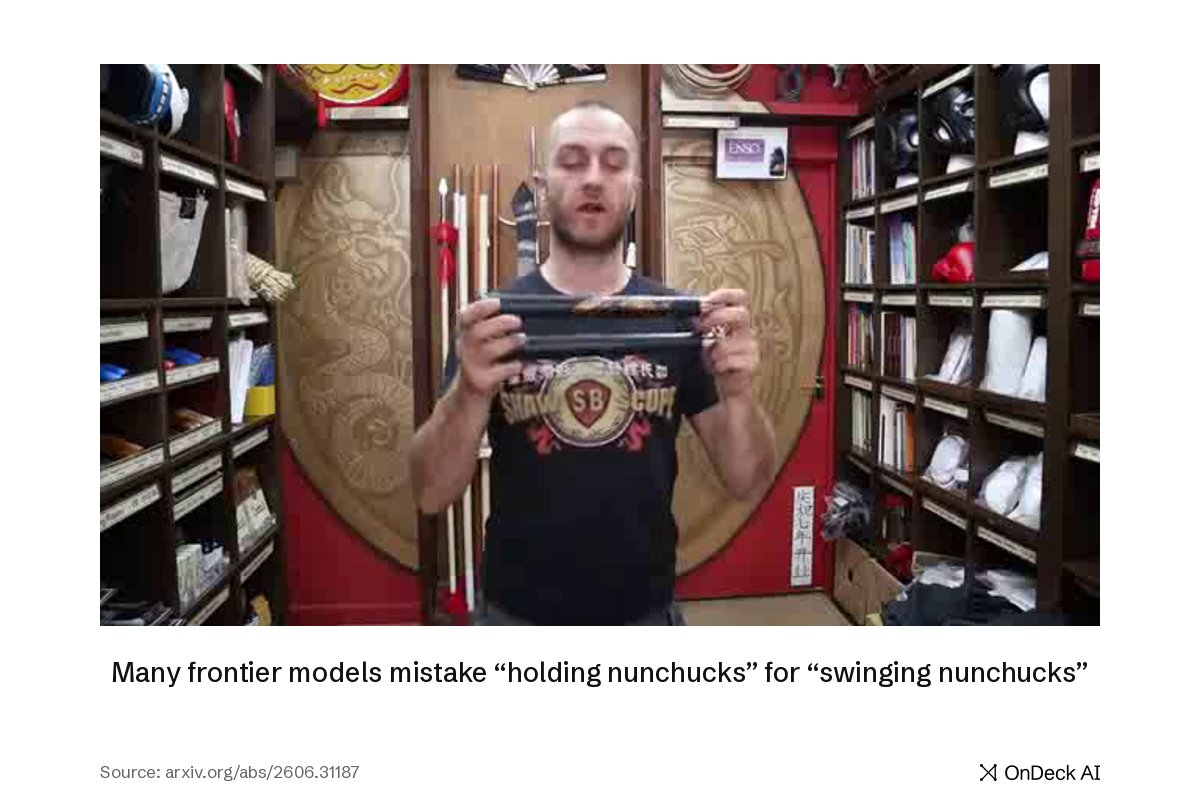
But with a little critical thinking, you can setup scenarios that trick them. For example, show clips that hint at an action, but actually show something totally unexpected.
The UCF101-AD dataset does this with examples like a person holding nunchucks while talking. Many models get tricked into thinking this is "swinging nunchucks".
Vision evaluations need a lot of work.
Announcing our recently accepted NeurIPS 2026 workshop paper investigating the problems with the state of video evals.
The paper also proposes a more faithful way to evaluate vision for agents.
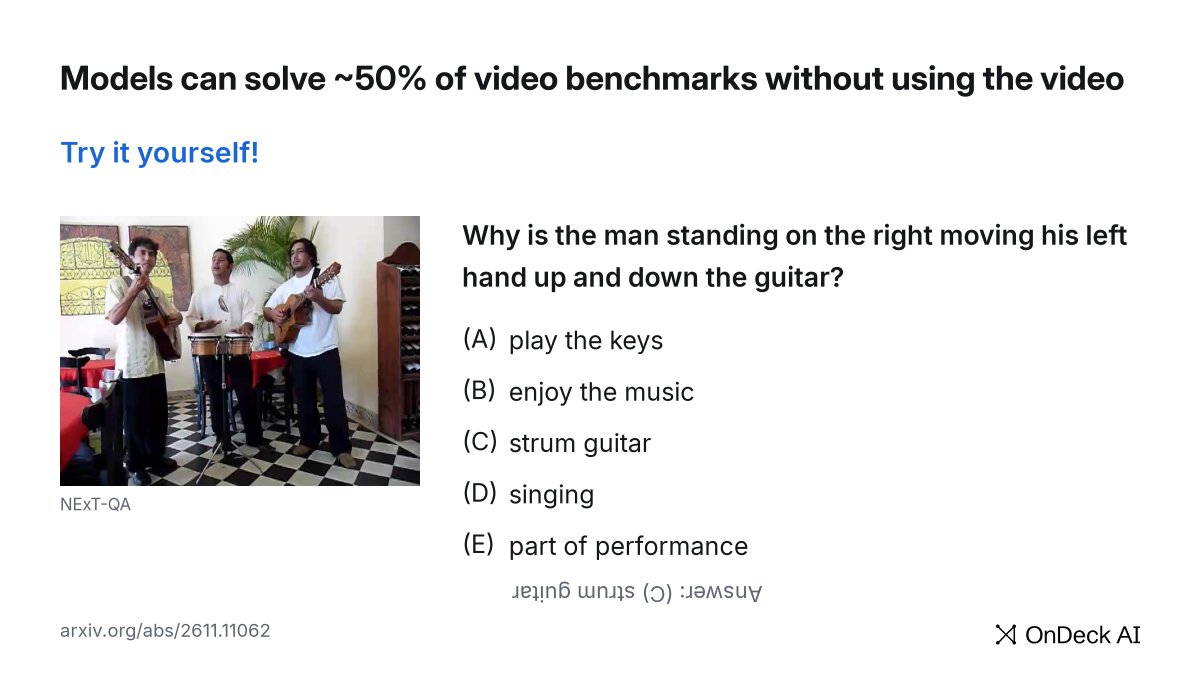
Do video benchmarks actually test video understanding? Excited to announce our NeurIPS 2026 workshop paper investigating problems with the state of video evals, and ways to address them.
One of the many problems is highlighted in the image below (option-conditioned blind solvability)
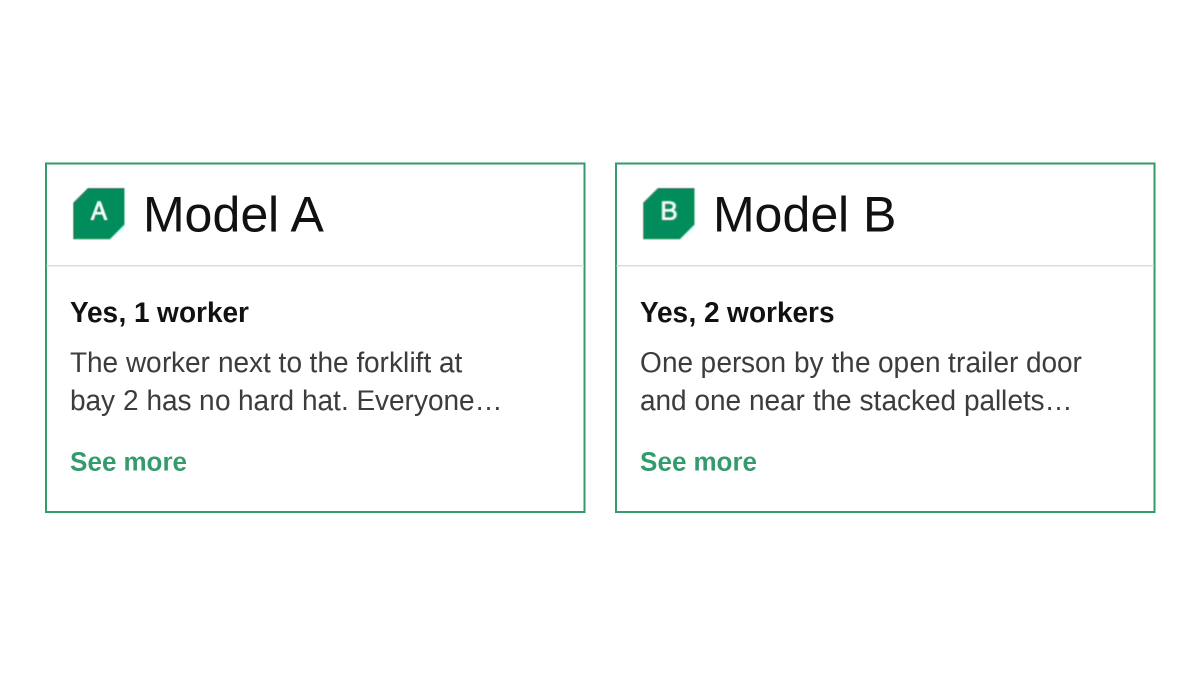
Vision benchmarks are blind to subtle preferences.
Now you can bring your own video and imagery to frontier models, and see how they perform on your tasks. The Arena is live today on VisionIndex.
We've minimized bias by providing anonymized outputs in a head-to-head, gamified manner.
If you're interested in evals for your tasks, with full observability, reach out directly.
Gemini 4 Argon leads at 84.1% for $0.110/task. Gemini 3.8 Flash scores 80.6% for $0.041, about a third of the price.
Explore the Pareto frontier: https://t.co/WnCKE7T3Kv
Measuring vision performance needs more than just accuracy.
We've released cost and latency axes on VisionIndex.
Now you can explore per-task performance and efficiency across vision models.
Our ultimate objective is to define the standard for measuring visual intelligence and push its frontier towards economically meaningful performance. https://t.co/WnCKE7T3Kv
We are excited to have released the first set of evals on VisionIndex. Below, we shed some light on why we’re building this and why we’re opening it up to the world. 🧵 1/n
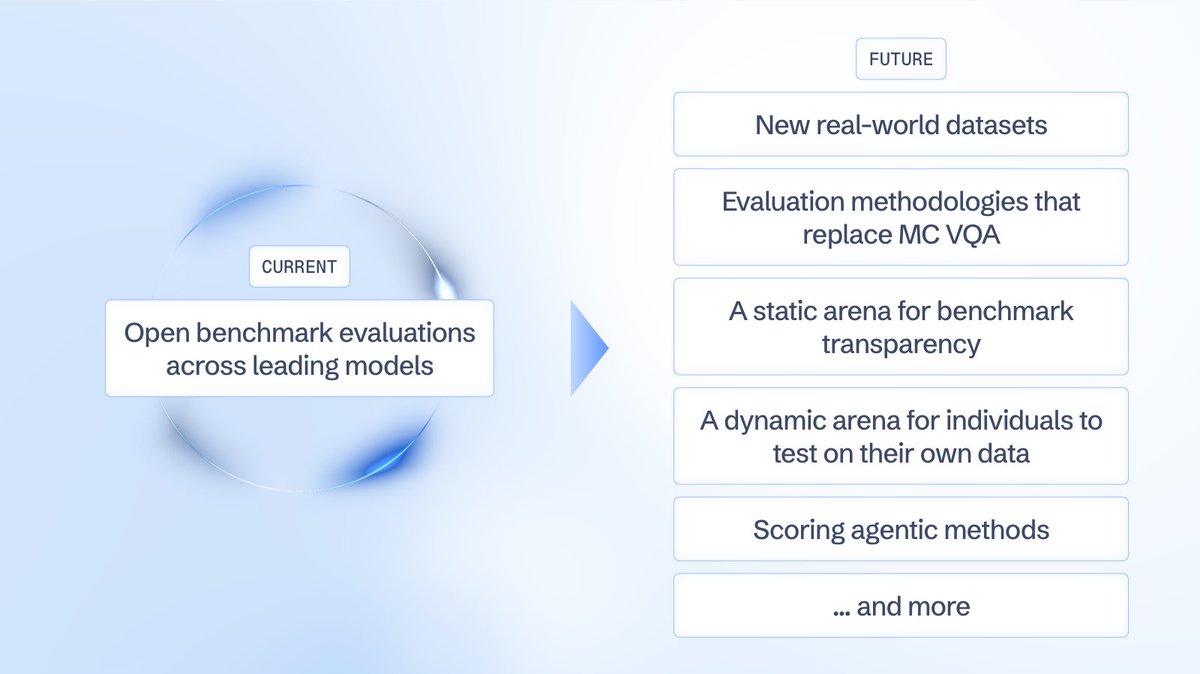
Our first release is an evaluation over open video benchmark across leading vision models. In upcoming releases, we’ll be providing more data, tasks, tools and standards for the world to use when doing vision evaluations.
We were concerned with the quality of LVBench, a leading benchmark for long video understanding, so we contracted a data company to fix it. It showed us we actually still beat Gemini on LVBench.
This result simply reaffirmed that our hill climbing on solving real-world tasks also transfers to the popular benchmarks.
These results are from last month, so stay tuned for updates. Video evals and real-world tasks are a sneak preview of what's coming soon to use[.]vision 👀...
I'll be at @ycombinator Startup School this weekend, running 3 quick Chase Club breakouts.
Come get into what it actually takes to solve vision. Pitch me, argue about vision, or just vibe.
DM ahead to grab a slot, or find us around. Interviews on the spot.