Karpathy said something you'll regret ignoring:
"Remove yourself as the bottleneck. Maximize your leverage. Put in very few tokens, and a huge amount of stuff happens on your behalf."
Loop engineering is the exact thing that does that.
In a hand-run session, the operator handles two things:
- deciding what the agent runs next
- and checking its output before the next step
Both are manual, and both decide how far the agent gets on its own without the operator.
Loop engineering moves both steps into the system.
A core operating structure surrounds the loop, and the diagram below depicts it.
- A schedule decides what to run
- Loop is the maker that produces the work
- A separate checker agent grades the output
- A file on disk holds the state they both read.
The loop runs until either done, max iterations, or an exhausted budget.
Here are some practical engineering considerations:
1) A model grading its own output justifies what it already did instead of catching where it failed.
That's why a separate checker's findings return to the maker as the next instruction. And the cycle repeats until the checker finds nothing left to fix.
2) A loop with no stop condition burns tokens, and the cost climbs fast once sub-agents and long runs add up.
That's why the exit must be set before the loop runs, not while it is running.
A simple exit could be:
↳ fix only the major issues, run one final pass, and stop after two loops, with "all tests pass and lint clean" as the rule that ends it.
3) State has to live on disk, not in context.
The model forgets everything between runs, so an MD file or a knowledge graph holds what is done and what is still open.
Each run reads it and writes back to it, which lets a loop pick up again after days.
4) The lower the verification bar, the safer the loop.
Boring, repetitive checks like a stale version string or a missing test are trivial to verify, so a loop runs them with little risk while the operator is away.
Judgment-heavy work is loopable too, but only as far as the checker can confirm the result.
Let's look at how an unattended loop fails in two ways.
1) It reports done when nothing is actually verified.
The separate checker exists to prevent it, but it merges code faster than anyone reads it, so over weeks, the team stops understanding its own codebase while every check stays green.
Green tests say the code passed the tests, not that anyone knows what shipped. Someone still has to read what the loop merges.
2) The checker keeps a running loop honest, but it only catches failures inside a run.
The harness around the loop, like the prompts, tools, and checks wrapped around the model, still drifts and breaks in production as models change.
That repair loop is usually run by hand based on observability traces.
My co-founder wrote a detailed walkthrough (with code) on making that harness repair itself, where a failing trace gets diagnosed, the fix is verified against the exact input that failed, and the failure is locked as a regression test so it cannot recur.
Read it below.
Nassim Taleb: the richest man in the Roman Empire woke up every morning pretending he was poor.
Seneca had more to lose than to gain from his wealth - so he rehearsed losing it. Every so often he'd live on bread and water as if shipwrecked, just to make the downside familiar and harmless.
That's the whole game, Taleb says: arrange your life so you have far more upside than downside - then randomness stops scaring you.
"Make more when you're right than you lose when you're wrong - that's antifragile."
"Always keep more upside than downside from random events."
"The Stoics aren't unmoved by the world - only by bad events."
~70 min, free. the oldest trick for surviving a world you can't predict ↓
A grad student with just 32 followers built one of the most important AI developer tools of 2026.
Yuxiang Lin's project exploded from 655 GitHub stars to 56,400+ and is now being used across Claude Code, Codex, Cursor, GitHub Copilot, Gemini CLI, Cline, OpenCode, and many more.
The tool turns any codebase into an interactive knowledge graph.
→ Understand massive repositories in minutes → Explore files, functions, and dependencies visually → Get AI-generated codebase tours → Predict what changes could break → Keep everything updated automatically
568 commits. 7 releases. MIT licensed. 100% open source.
A researcher focused on helping machines understand human emotions ended up building a tool that helps machines understand code.
This is what open source is all about.
Repo👇
Yann Lecun published the most heretical AI paper of the year.
He opens by arguing Magnus Carlsen isn't good at chess and only gets more unhinged from there.
The Turing Award winner and his co-authors dropped a paper demanding the AI industry abandon its biggest obsession, AGI.
Right now, everyone from Silicon Valley CEOs to politicians assumes AGI is the ultimate goal. A machine that can do everything a human can do.
LeCun argues that this entire concept is a biological illusion.
Humans do not possess "general" intelligence. We are highly specialized biological machines, tuned by evolution simply to survive in the physical world.
We only think our intelligence is "general" because we are completely blind to the millions of cognitive tasks we are incapable of comprehending.
Which brings us to the chess argument.
Magnus Carlsen is the greatest human chess player in history. But compared to a modern computer? He is fundamentally terrible.
Our belief that Carlsen is "good" at chess is pure human-centric bias. He isn't objectively good. He's just better than the rest of us, who are biologically awful at it.
LeCun says we need to stop building AI to mimic human generality.
Instead, he proposes a new North Star: SAI.
Superhuman Adaptable Intelligence.
Instead of trying to build a machine that mimics our flawed, biologically-limited brains, we need to embrace extreme specialization.
SAI is about the speed of adaptation.
It is an intelligence that can learn to exceed humans at any specific, economically important task.
More importantly, it is designed to fill the vast skill gaps where humans are fundamentally incapable.
Things like managing global energy grids in real-time. Or predicting complex molecular structures.
The entire AI industry is obsessed with building a digital reflection in our own image.
LeCun's paper is a brutal wake-up call.
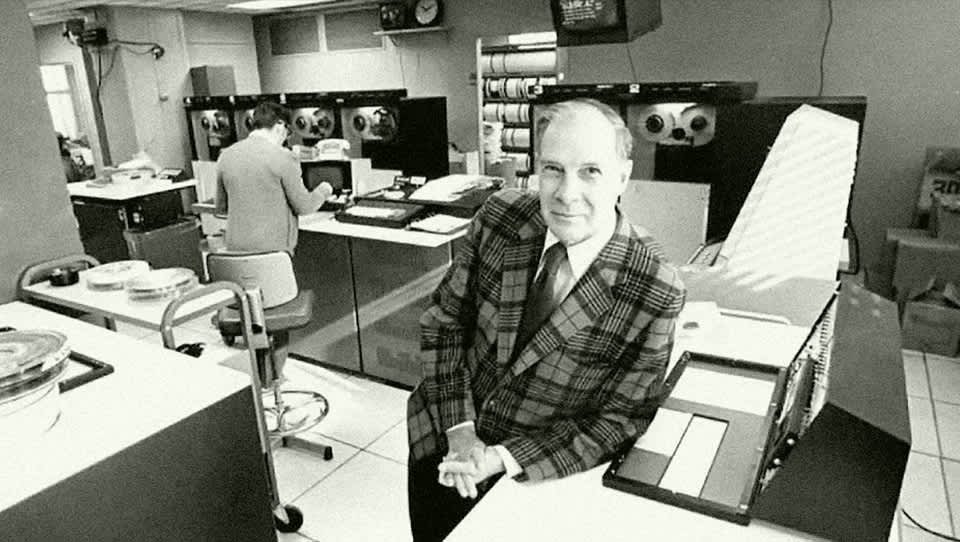
A mathematician who shared an office with Claude Shannon at Bell Labs gave one lecture in 1986 that explains why some people win Nobel Prizes and other equally smart people spend their whole lives doing forgettable work.
His name was Richard Hamming. He won the Turing Award. He invented error-correcting codes that made modern computing possible. And he spent 30 years at Bell Labs sitting in a cafeteria at lunch watching which scientists became legendary and which ones faded into nothing.
In March 1986, he walked into a Bellcore auditorium in front of 200 researchers and told them exactly what he had seen.
Here's the framework that has been quoted by every serious scientist for the last 40 years.
His opening line landed like a punch. He said most scientists he worked with at Bell Labs were just as smart as the Nobel Prize winners. Just as hardworking. Just as credentialed. And yet at the end of a 40-year career, one group had changed entire fields and the other group was forgotten by the time they retired.
He wanted to know what the difference actually was. And he said it wasn't luck. It wasn't IQ. It was a specific set of habits that almost nobody is willing to follow.
The first habit was the one that hurts the most to hear. He said most scientists deliberately avoid the most important problem in their field because the odds of failure are too high. They pick a safe adjacent problem, solve it cleanly, publish it, and move on. And because they never swing at the hard problem, they never hit it. He said if you do not work on an important problem, it is unlikely you will do important work. That is not a motivational line. That is a logical one.
The second habit was about doors. Literal doors. He noticed that the scientists at Bell Labs who kept their office doors closed got more done in the short term because they had no interruptions. But the scientists who kept their doors open got more done over a career. The open-door scientists were interrupted constantly. They also absorbed every new idea passing through the hallway. Ten years in, they were working on problems the closed-door scientists did not even know existed.
The third habit was inversion. When Bell Labs refused to give him the team of programmers he wanted, Hamming sat with the rejection for weeks. Then he flipped the question. Instead of asking for programmers to write the programs, he asked why machines could not write the programs themselves. That single inversion pushed him into the frontier of computer science. He said the pattern repeats everywhere. What looks like a defect, if you flip it correctly, becomes the exact thing that pushes you ahead of everyone else.
The fourth habit was the one that hit me the hardest. He said knowledge and productivity compound like interest. Someone who works 10 percent harder than you does not produce 10 percent more over a career. They produce twice as much. The gap doesn't add. It multiplies. And it compounds silently for years before anyone notices.
He finished the lecture with a line I have never been able to shake.
He said Pasteur's famous quote is right. Luck favors the prepared mind. But he meant it literally. You don't hope for luck. You engineer the conditions where luck can land on you. Open doors. Important problems. Inverted questions. Compounded hours. Those are not traits. Those are choices you make every single day.
The transcript has been sitting on the University of Virginia's computer science website for almost 30 years. The video is free on YouTube. Stripe Press reprinted the full lectures as a book in 2020 and Bret Victor wrote the foreword.
Hamming died in 1998. He gave his final lecture a few weeks before. He was 82.
The lecture that explains why some careers become legendary and others disappear is still free. Most people who could benefit from it will never open it.
@AppsEngineer@realPatrickJr You can do a gentler one with one tsp at night in warm milk or water before sleeping. No prep day needed. Do this 3 times a week on alternate days. This is the ayurvedic way.
Wrong turn, instant education. Tents like modern architecture, rubbish in abstract piles, and a bloke in an armchair chewing with confidence. ‘Move on!’ he orders. You do, because this farce only works if the audience keeps walking
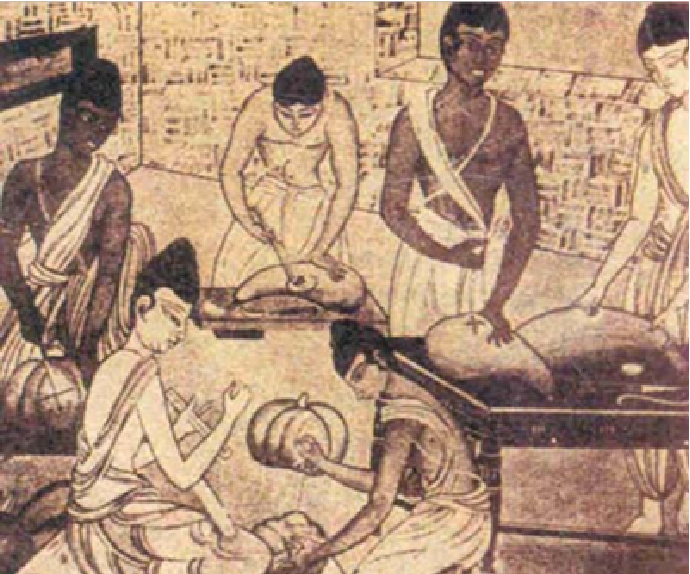
Conventional history claims that Western medicine begins with Hippocrates and Galen. This is misleading.
The final westward pulse of the Indian diaspora, which later gave rise to Greek colonisation of western Anatolia and Greece, brought medical knowledge with it. Because this knowledge was transmitted rather than organically developed, it was not fully understood or systematised, and therefore remained less sophisticated than Ayurvedic medicine. Indian medicine remained ahead of Europe until the 18th century, when East India Company surgeons learned plastic surgery and rhinoplasty, specifically the repair of damaged noses, from Indian practitioners. As Camran Nezhat notes, Indian surgery had already achieved several of the world’s medical firsts.
The Atharva Veda describes eight subdivisions of medicine, including internal medicine, head and neck surgery, toxicology, psychiatry, and paediatrics. Even Egypt’s Smith Papyrus, conventionally dated to c. 1700 BC, but likely far older, far surpassed Hippocrates in anatomical and surgical understanding.
The Sushruta Samhita detailed plastic surgery, removal of prostate glands, crushing of bladder stones, eye surgery, amputations, and the proper training of surgeons. It was more detailed and roughly four times larger than the first-century De Medicina. The Charaka Samhita’s initiation oath was probably the model for the Hippocratic oath, with its emphasis on “first, do no harm,” mirroring core Ayurvedic principles.
2026 is the GREATEST time to build a startup in 30 years
I’m 36. I’ve sold 3 startups, helped build companies that raised billions, and backed teams from seed to unicorn.
20 MEGA shifts that make this the BEST time to build in a GENERATION:
1. Hardware got smart. Download open-source AI models from HuggingFace to cheap robots and they're suddenly smart. Opens up tons of use-cases.
2. SaaS is imploding. AI can replicate $500K software for pennies. Enterprise software that took 30 engineers now requires 1 and a Claude Code subscription. Founders will go more niche and more custom and outprice incumbents.
3. Outcome-based pricing is eating subscriptions. With AI agents handling work automatically, founders can guarantee results instead of selling features. This creates a massive arbitrage opportunity to steal market share from rigid subscription models.
4. Vibe marketing is the new marketing. AI agents/tools like Lindy, Gemini and Claude Code Using agents to do personalized outreach, ads and content creation it’s getting good. This is like getting on social in 2005.
5. Social is FYP-ified. Distribution no longer requires massive followings, just content that hits. Founders can build audience from zero without ads and then convert them to owned media channels (text/email).
6. Interfaces are vanishing. Conversations are replacing dashboards across industries. This removes training barriers and means customers can use sophisticated products immediately.
7. Companies are obsessed with efficiency and cutting costs right now. Corporate budgets are getting reallocated to AI. Companies are cutting traditional software spend to make room for AI-powered alternatives. This creates fast-tracked approvals for startups delivering 10x efficiency.
8. 99% of MVPs won't need VC. Low-cost MVPs combined with creator partnerships and AI automation allow bootstrapped scaling. For most software businesses, outside funding is now unnecessary.
9. Global teams. You don’t need to hire in your own city anymore. Opens up tons of arbitrage opportunities and ways to create products unlike before.
10. Millions of creators want to get paid. If you have the right product, the right network of creators, you can hit scale insanely efficiently. Never before did this exist. Next gen founders are building startups community first, software second.
11. Prototyping is nearly instant. With Lovable, Rork etc, you can test ideas in days, not months. MVP speed is basically 1x/week. This creates room for multiple products from small companies (multipreneurship), helps get to PMF faster,
12. LLM APIs create building blocks weekly. I can’t even keep up with how many new APIs/tools coming out from LLMs weekly. Example: Nano Banana pro comes out, probably 1000 ideas built on top of that can be $5M/year businesses.
13. $1m+ revenue per employee. With the leverage of LLMs, community and agents, employees are way more efficient. It won’t be uncommon to generate $1m per employee. This will lead to a rise of "multipreneurship", small teams owning multiple products /businesses. Holding companies will be as common as startups.
14. Superniche is the new niche. Because costs to create software startups is 1/100th, you can service little niches (i call them superniches) and still have a life-changing business.
15. Mobile app ecosystem about to 10X. 2 reasons. First is, adding AI to apps make apps more useful. More useful apps, make more money. Second,
16. Compliance and boring workflows are suddenly buildable. Permits, audits, insurance, payroll edge cases, filings, RFPs. These were “too annoying” for startups before. Agents thrive on rules, checklists, and repetition. The least sexy problems now have the best unit economics.
17. Claude Code killed the “engineering bottleneck.” The constraint is no longer “can we build it,” it’s “do we understand the workflow deeply enough.” The winning founders are ex-operators who encode tribal knowledge into agents. Code is cheap. Taste + domain insight is scarce.
18. The long tail of software is now profitable. Niches that capped at $200k ARR can clear $5M with near-zero marginal cost.
19. Services are quietly becoming software. Manual agencies are one agent away from product margins.
20. if AI can replicate $500K software for $20/month, what’s your moat? distribution, customer service, brand, data etc. REALLY good time to be a world class designer/marketer.
(and even more.... but this is getting long already!)
We've entered the rarest of windows...
when multiple technological shifts collide at once, creating a brief period where small teams can build things that were previously impossible.
THE FUTURE OF BUILDING STARTUPS IS DIFFERENT.
I know this...
This unique moment won't last forever. Markets will adapt. Giants will respond. The window will close.
But right now, a founder with clear vision and bias for action can build more in six months than was previously possible in years.
(note: if you need an idea to get creative juices flowing, grab one at @ideabrowser)
The next generation of great companies is being created right now, many by founders you've never heard of.
Some by people who would never have had a shot in previous cycles.
That's the beauty of these rare windows. The playing field briefly levels, and the future belongs to those who see it clearly and move first.
It's a sacred time, don't bookmark/share this, build something in 2026, will ya?
Happy building, my friends. 2026 is yours.
Am I wrong?