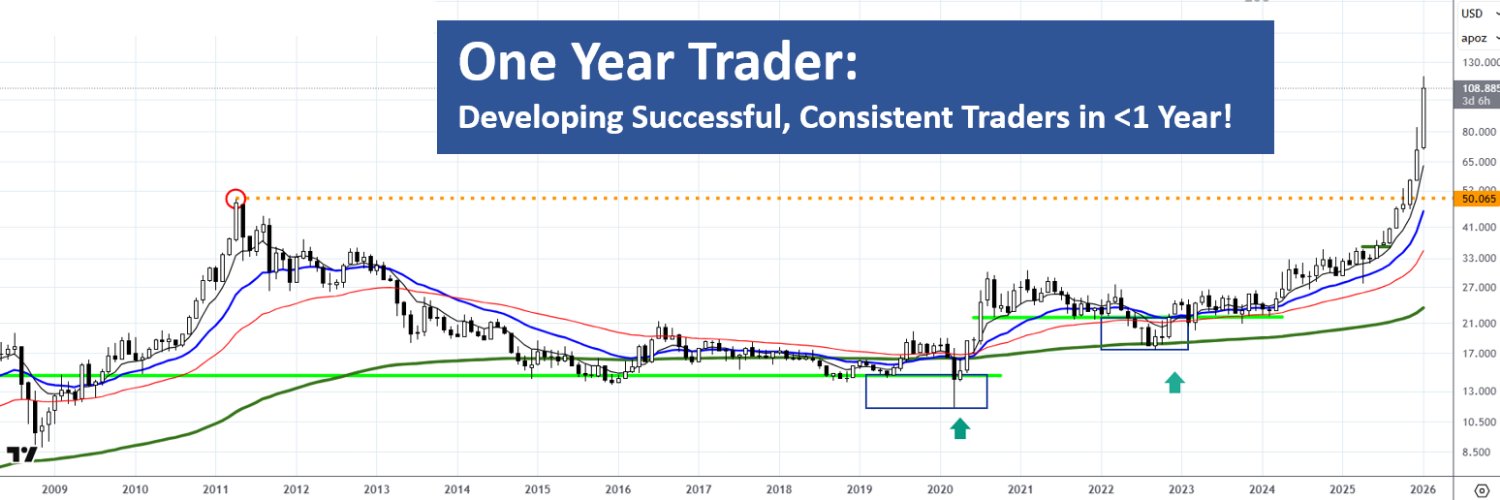
Here's the complete structure I take traders through:
✅ 5-day Workshop: Three systems with an edge, plus two live trading days
✅ 1-month Trader Simulation Bootcamp: Deliberate practice in simulation
✅ 3-month Live Markets Pro Program: Applying the systems in live markets
✅ 1-year Masters Journey Program: Refinement, consistency and community
After that, many traders stay on in Masters on a quarterly basis and retake the programs as often as they like
System, trader development and psychology, working together. If you want to know where you're starting from, take the free Tharp Trader Test at https://t.co/ZiFi1WLCJl
There's a common belief that if you trade and live long enough, you'll eventually figure out how to make money
Do you know any elite tennis player who reached the top 20 by hitting balls with friends?
Naive practice in live markets doesn't just waste time. It cements unhelpful habits and creates emotionally charged beliefs about yourself and the markets
Those beliefs take far longer to undo than they took to form. Save your time, energy and capital
I often use this metaphor with my traders
Before a race car can go fast, someone has to build the Autobahn. The surface has to be smooth and wide, the curves straightened, the roadblocks removed
Most traders buy the race car first and drive it straight onto a dirt road
The 12 Key Success Factors are the Autobahn: goals, beliefs, mental state, deliberate practice, group, trading game, Trader Strategy and more. Prepare the road and the speed follows. Skip it, and even a great system stalls
When I say "consistent trader," I mean something specific
The minimum goal is +2R per week, or +5R per month. Something you can reach even in difficult market conditions
Reach it week after week for three months, and only then work on increasing position size
With consistency, you maximize position size, not the number of Rs per week. Most traders do it backwards: they chase big R-weeks with no consistent base under them
If you’re trading without knowing your specific trader type, you’re giving up profit on almost every trade
Take the free test and uncover your strengths, blind spots, and trading psychology, then trade with a clear edge 👇
https://t.co/X31iHHrM0Q
Many of my students trade after a full workday. I understand the schedule
But going straight from a stressful meeting to your trading desk almost never puts you in a good mental state
You bring the frustration, the time pressure and the need to "make the day worth it"
Build a transition: 5–10 minutes of gratitude meditation, a walk, anything that resets your state. Your system doesn't change between 5pm and 6pm, but your execution does
Accurate Traders (Type 11) are responsible, thorough and reliable. Nobody keeps records or follows through better
Those are valuable trading skills
The challenge is that markets are abstract and solitary, and this type doesn't naturally gravitate toward either
What I've seen is that, without mentorship, Accurate Traders tend to stay on the sidelines. With a structured system and the right guidance, their discipline and record-keeping start working for them
If you’re trading without knowing your specific trader type, you’re giving up profit on almost every trade
Take the free test and uncover your strengths, blind spots, and trading psychology, then trade with a clear edge 👇
https://t.co/X31iHHrM0Q
Children learn at remarkable speed. They explore, make small mistakes, learn from them, and have fun doing it
Most adult traders do the opposite. Every mistake happens in live markets, costs real money and carries emotional weight
So they stop experimenting. They freeze. They cement bad habits
A trading simulator gives you back permission to make small mistakes in a controlled but dynamic environment. That's how skill grows fast, and it's why simulation comes before live markets on my traders' path
Socially Responsible Traders (Type 10) are purpose-driven and committed. When trading aligns with their values, they go all in
That commitment cuts both ways
I've watched this type stick with methods that weren't working because they believed in them. Putting principle over data is an expensive habit in the markets
The solution is objective system evaluation. Let the R-multiples decide, not the conviction. Once this type adds that layer, their staying power becomes a real advantage
This isn't what traders want to hear, but Van Tharp's research was clear: not every Trader Type starts from the same place
Three types show potential only with a lot of work:
✅ Type 13, Supportive Trader: Risk-averse and strongly influenced by community norms. Often better off investing through trusted managers
✅ Type 14, Artistic Trader: Markets feel too abstract and too repetitive. Needs highly simplified, externally structured systems
✅ Type 15, Fun Loving Trader: Long, solitary, methodical work feels boring. A mentor and a very simple system are non-negotiable
That's not shaming anyone. It's information that can save years and a lot of capital. Find out your type for free at https://t.co/ZiFi1WLCJl
People ask me what happens in the workshop, so here it is:
✅ Days 1–3: Three rule-based discretionary systems based on visual pattern recognition, with screenshot trade examples and simulated trades so you can see the rules in action
✅ Days 4–5: Live trading, applying the three systems in real markets
✅ Optional Crypto-Day add-on
I developed these systems during my 2-year SuperTrader program, under Van Tharp's close oversight from 2008 to 2010. I've traded them full-time since
It's intensive work, not a quick fix. Forex runs in March, Futures in September, and each workshop has a maximum of 30 seats
Facilitative Traders (Type 4) are natural organizers and strong leaders. They're the people everyone trusts to keep things running
This is an honest one: trading is solitary, and this type is wired for people. When the data feels boring, they rush through it and make hasty decisions
I always tell this type that self-awareness is the edge
Many Facilitative Traders do better leading traders, mentoring, or running a trading business than sitting alone at the screen all day. Knowing where you thrive isn't failure. It's good strategy
If you’re trading without knowing your specific trader type, you’re giving up profit on almost every trade
Take the free test and uncover your strengths, blind spots, and trading psychology, then trade with a clear edge 👇
https://t.co/X31iHHrM0Q
Most traders never plan this far, but they should
Suppose you're up +5R by Wednesday. Your next target might be +8R, with a rule that you don't give back more than -2R between 5R and 8R. Once you reach +8R, you lock in +5R
Then maybe you aim much higher. +20R. +50R. +100R
But if you reach +100R and then hit a drawdown, when do you stop?
If you don't know the answer before it happens, your emotions will decide in real time. That's what a Trader Strategy is for
Administrative Traders (Type 8) are disciplined and structured. If there's a system, they follow it, and they follow it well
That's rarer than most people think
The problem is that they can trust the rules more than the results. Sometimes they follow conventional market "rules" that simply don't work. And under pressure, perfectionism and second-guessing take over
The fix isn't less discipline. It's updating their beliefs to what actually works. Once they do, this type often becomes one of the most dependable executors in the group
Van Tharp said it plainly: "It is not the System that trades the markets, but the Trader!"
I've seen it confirmed across 30+ cohorts. Same systems, same rules, same examples, and very different results
A system with an edge is the prerequisite. You need a competitive car to win a race
But the driver decides the outcome. That's why system, trader development and psychology have to be built together, not one after another
Most of my students are successful professionals. Their beliefs got them where they are in business
Here's the hard part: some of those same beliefs hurt them in trading
"Work harder and you'll get more results." "Never accept a loss." "More effort, more output"
In trading, these beliefs drive overtrading, holding losers and forcing setups that aren't there
Beliefs act as a filter on reality. You trade through that filter, whether you know it's there or not. Check yours before the market does it for you
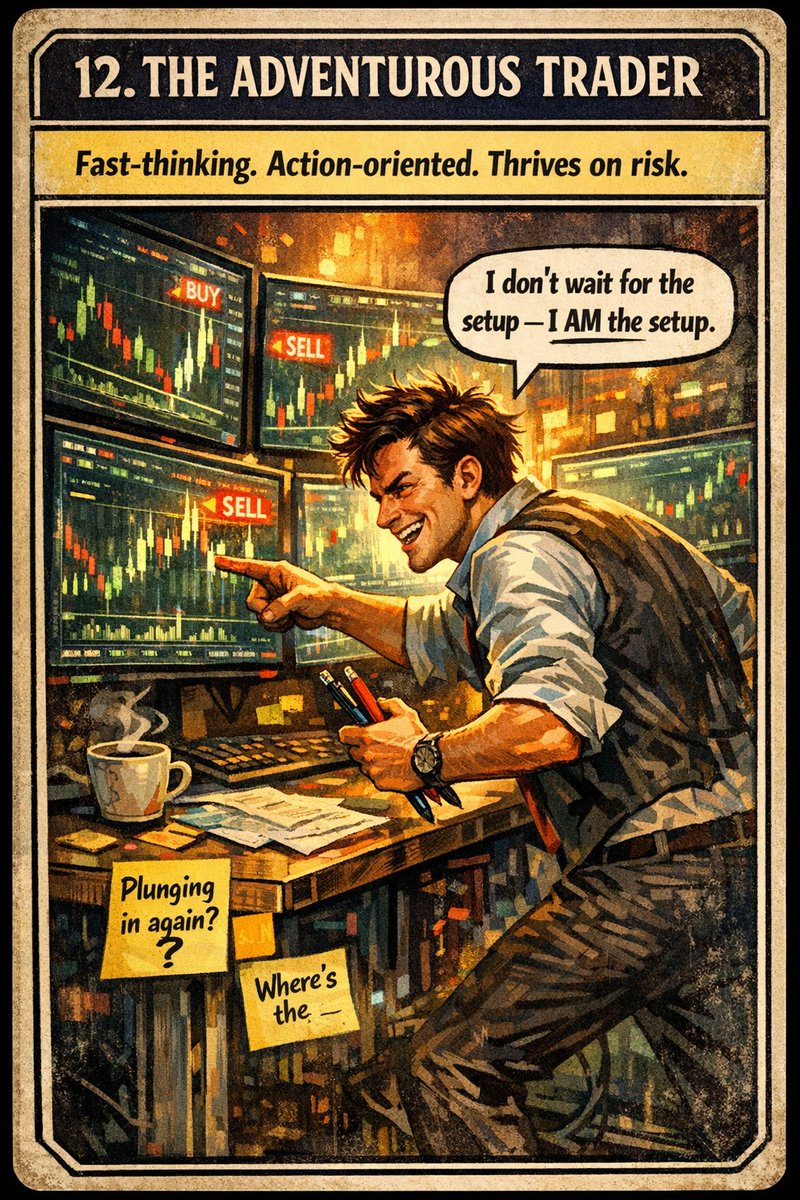
Adventurous Traders (Type 12) think fast, act decisively and thrive on risk. They're drawn to the game, and they're often good at reading it
The danger is that the thrill of action replaces the discipline of process. Plunging in replaces planning
I don't try to remove the hunger for action in this type. That would be pointless. The work is to channel it into controlled strategies with strict position sizing rules
With those rules in place, the energy becomes an edge. Without them, it becomes a drawdown
The most common pattern I see in traders is wanting too much, too fast
They want live markets before they're competent in simulation. They want bigger size before they're consistent. They want mastery before the basics
On the trader development path I give my traders, each phase has one rule: reach competence, become consistent, then move on
Going slowly and step by step gets you there faster. You understand more deeply, and you don't burn your energy on struggle and despair along the way