Are you passionate about how individuals and societies transform? Join the Psychology of Transformation PhD program @leuphana University Lüneburg (Germany) and explore psychological questions about change and sustainability, and human development.
👉 https://t.co/k0mGLLl3oa
Er wordt veel gesproken over #ADHD. Maar welke woorden verkiezen mensen met ADHD in België en Nederland?
Heb je ADHD? Deel je mening via:
https://t.co/j6bKX00ymA of scan de QR code.
Heb je geen ADHD? Deel dan dit bericht! 😉
Are you passionate about #scicomm & psychology in the context of #Sustainability? We are looking for a PhD-candidate (75%; 4 yrs) for the Hub Science project "Psychology of Transformation" @leuphana University Lüneburg! https://t.co/PzH2shAc5t
Now in press https://t.co/HWpWdKQgy7 We show that morphological processing in 7y/o relies mostly on phonological mechanisms (IFGop & STG) AND find a surprise exploratory negative correlation between language and activity in the cerebellum during morph processing. W/@DrJamesBooth
Excited to be presenting my poster later today at #INSAR2025!
It dives into the theory of the double empathy problem, with a focus on how well people with and without autism can understand each other’s thoughts when they share (or don’t share) the same neurotype. Come say hi!
Looking for new #OpenAccess books in #Psychology? AUTOMATIC IMITATION, edited by @OGenschow and @CraccoEmiel is now available in full on SpringerLink! Check it out for free below 👇
🔗https://t.co/RQsIRkevVP
Currently, I'm working on a new lecture on cogntive psychology. In this lecture, I would like to do several class demonstration/class experiments. Based on your experiences, which topics work very very well for such kind of experiments?
Mareike Westfal recently developed and validated an online version of the imitation-inhibition task. This allows even researcher with few programming experiences to assess imitative behavior online. Together with @JanCrusius@CraccoEmiel
https://t.co/hfjc0krBNf
TWO new papers @explora_gent:
'Self-Bias and Self-Related Mentalizing are Unaltered in Adolescents with Autism', Amodeo et al: https://t.co/KBobtNLInF
and: 'Intact Neural Responding to Hearing One’s Own Name in Children with Autism', El Kaddouri et al: https://t.co/tVxnNRiWCt
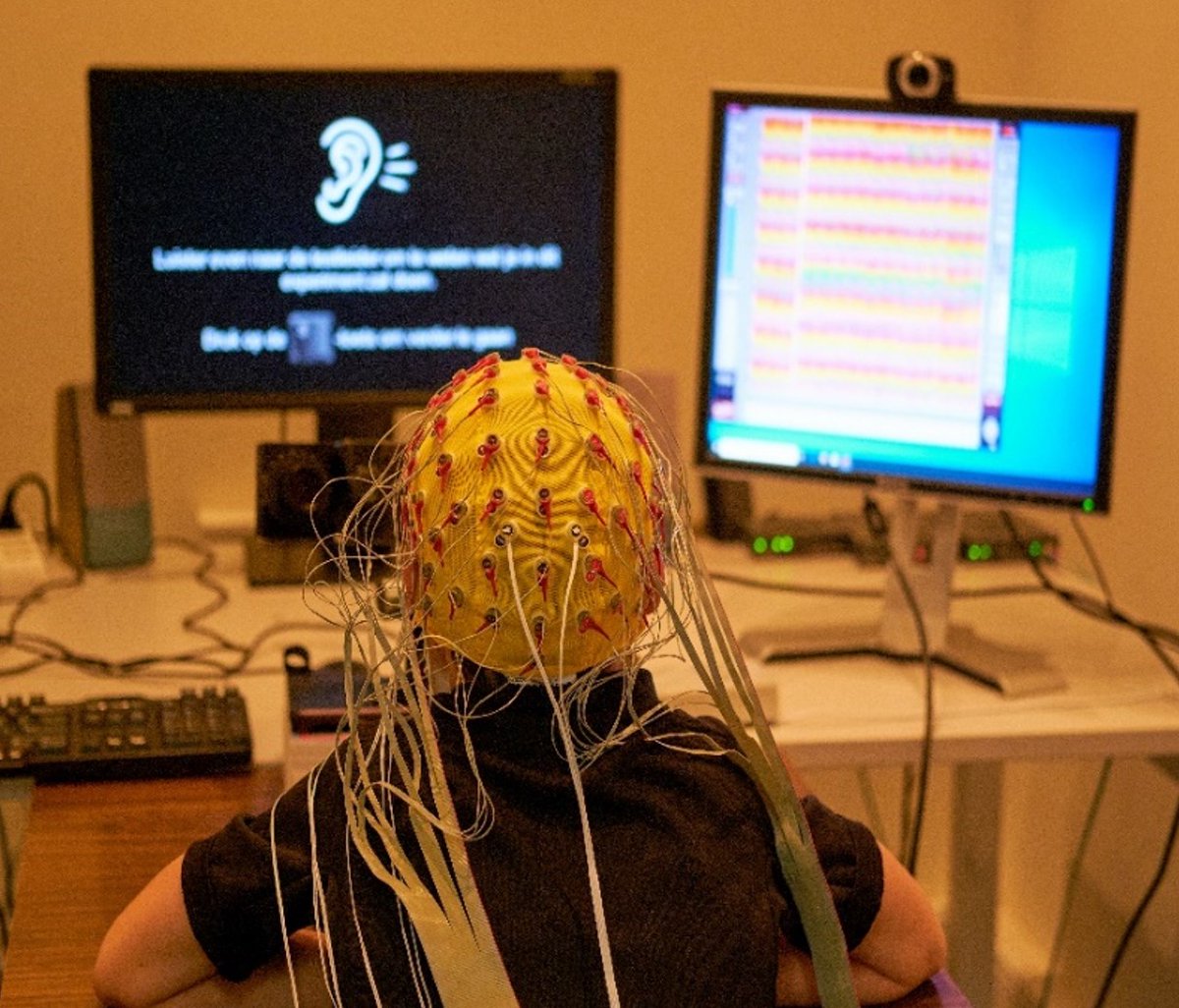
New paper out! The title says what we found 🙃: "Intact Neural Responding to Hearing One’s Own Name in Children with Autism" (ages 7-13, ERP analysis).
Read it here: https://t.co/tVxnNRioMV
(by Rachida El Kaddouri, myself, Roeljan Wiersema and Marcel Brass)
The preprint of our questionnaire study is out now! The title already gives away our main finding: “Adults with autism prefer to communicate with others who also have autism: a mixed-method study”. You can find it here: https://t.co/DfFLgSwGxy
w/ @annabelnijhof and @JRWiersema
Love being part of this (awkward Christmas photo-loving lab) in Germany! 🎄Off to the Netherlands for the holidays but looking forward to more research in 2025 @leuphana
Excited to kick off data collection for our new VR study 🙌🏻
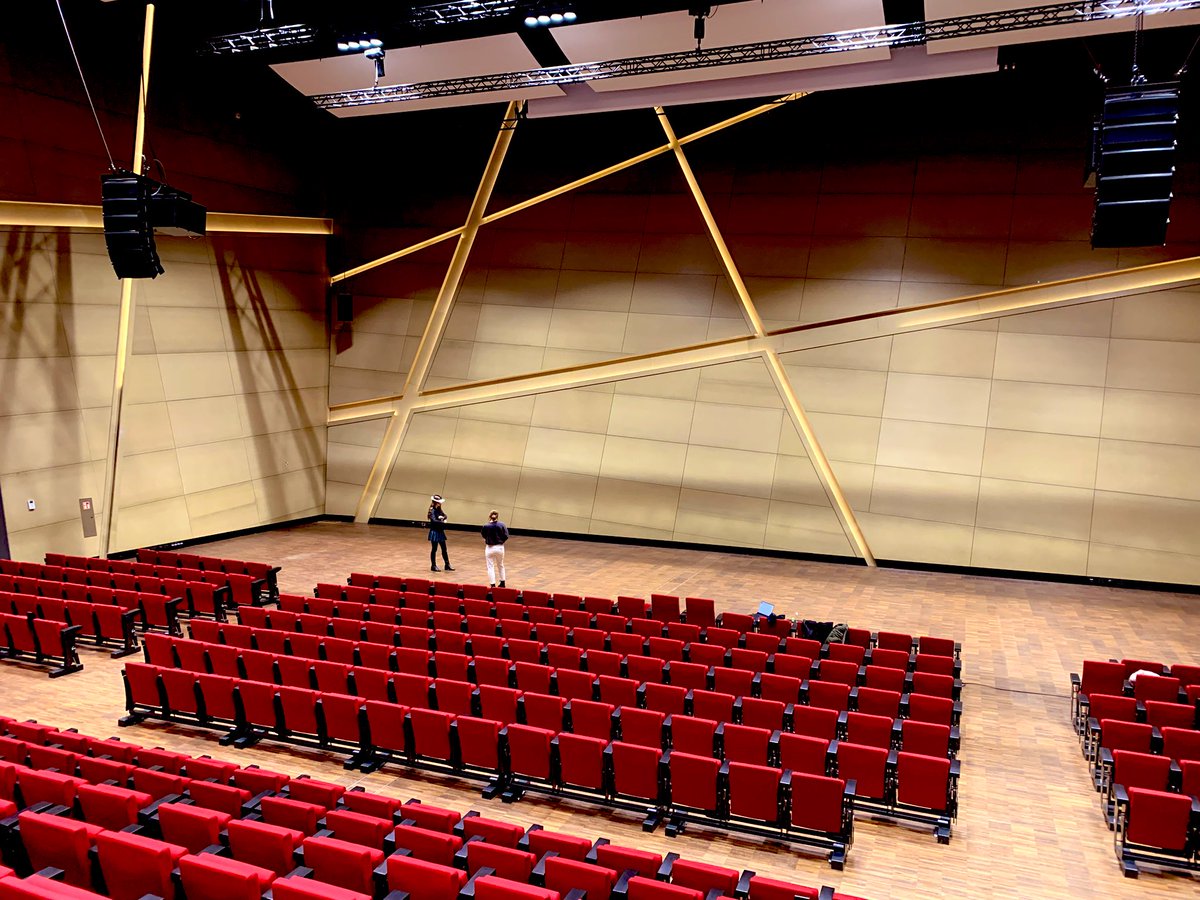
Needed a spacious, enclosed area for participants to walk freely - and found one 👀. Shoutout to our RAs @MajaPaschke@lina_bwd for making it happen!
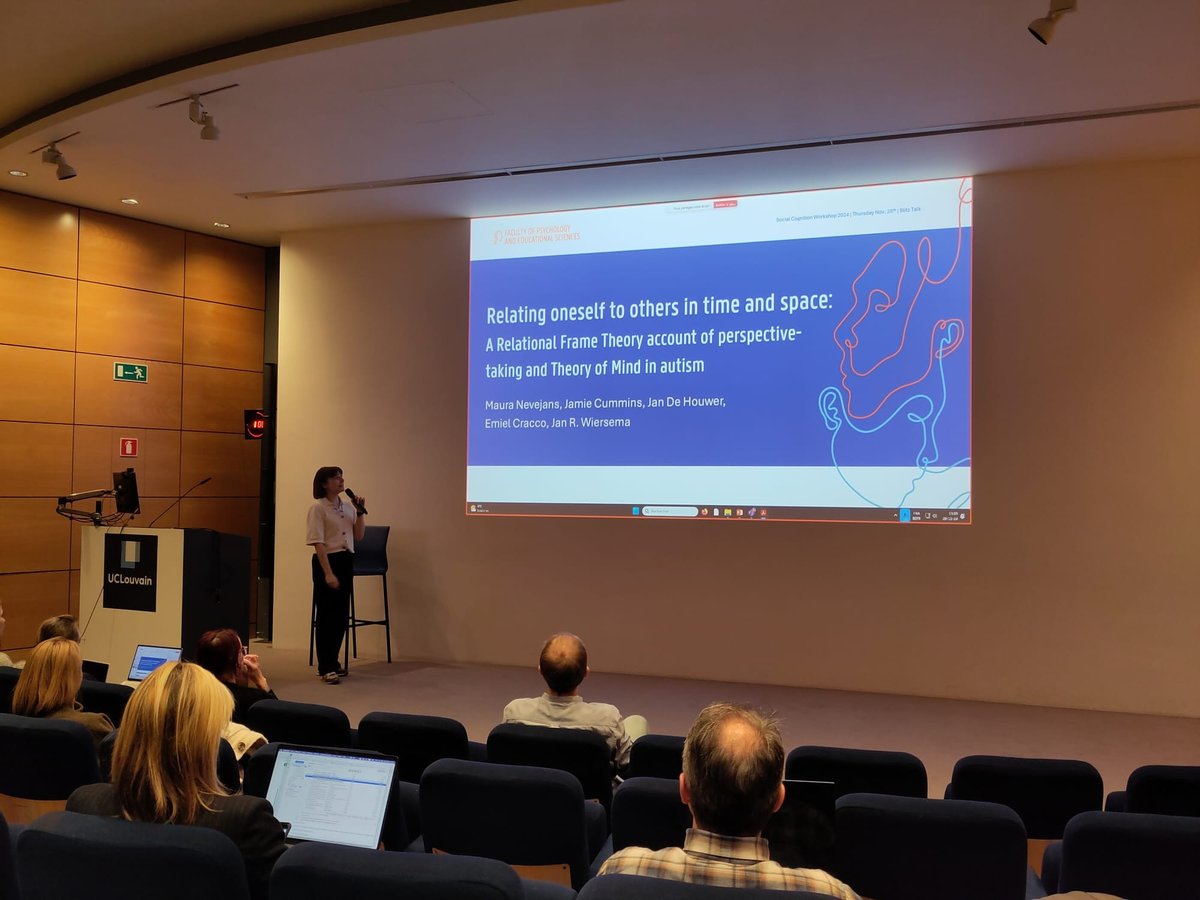
Very grateful for the opportunity to present our research at the Social Cognition Workshop as a blitz talk (and a poster)! Thank you for the interesting questions and discussions. I’m already looking forward to next year’s edition! 😄
@CraccoEmiel and I are excited that our edited book on #AutomaticImitation is now published online as open access with @SpringerPsych. The chapters cover sections on measures, processes, and consequences of diverse forms of automatic imitation. https://t.co/50yzmkEjV7 🧵
When we communicate, we often unconsciously mirror each other's movements. But how deliberate is this imitative behavior? 👯♂️
📖 Read more about it in my blog post on
Psychology Today!
https://t.co/vMu9b221BY
Children with DCD show altered perception-action mechanisms. But, does this affect their perception of biological motion? 🚨 Find out in our latest RIDD paper, the first to be published from my PhD research: https://t.co/bWUd2MLmcb
Excellent balanced review comparing habit definitions, measurements, and theoretical models across fields.
Key question: are outcomes represented in habits? I appreciate the nuanced discussion on S-R vs S:R-O vs S:O-R structures.
Crucial read for understanding habit complexity!