🚨 ALERT 🚨 From now on we will post on our old „new” profile @InMindMag
Follow us for psychological content written by real researchers for real people.
Heart rate variability for the Olympic Games 🫀 🧠simply explained - with the HRV team from @SportPsychSpoho @SpohoKoeln - thanks @InMindMagazin for the opportunity of the Olympic Mind Special Issue!
The German football team is exceeding expectations in this year's Euro's! Could their home crowd be the key factor? With an upcoming match against Denmark what do psychologists say about the home advantage? #euro2024#dfbteam#GERDEN https://t.co/ZThYTt7VrX @DFB_Team@DFB_Team_EN
How do parents support their children’s pathway to the Olympics?🏅
Enjoyed working with @noemie_lienhart and @BigSkyBoiler on this special issue contribution.
Available in German (https://t.co/2AOUixyo8I), English (https://t.co/FSQyxEMph4), and French (https://t.co/d3vhyGpugx)!
As Europe crowns its football champion at the Euro’s & with the Paris Olympics on the horizon, we're thrilled to announce our special issue on sport psychology "Olympic Mind“ https://t.co/XzkPNgabc7
Are you passionate about psychological research? The international online psychology magazine In-Mind is looking for people to join its team. Our mission is to make psychological research accessible and fun for everyone https://t.co/wO7Lxb3hD4
Join us at: https://t.co/1hpgjoLi8U
Many people believe that breakfast is the most important meal of the day. On the other hand, intermittent fasting, which often involves deliberately skipping breakfast, is becoming increasingly popular. @ChrisBrainberg explains how this fits together. https://t.co/v5Ptcgln7d
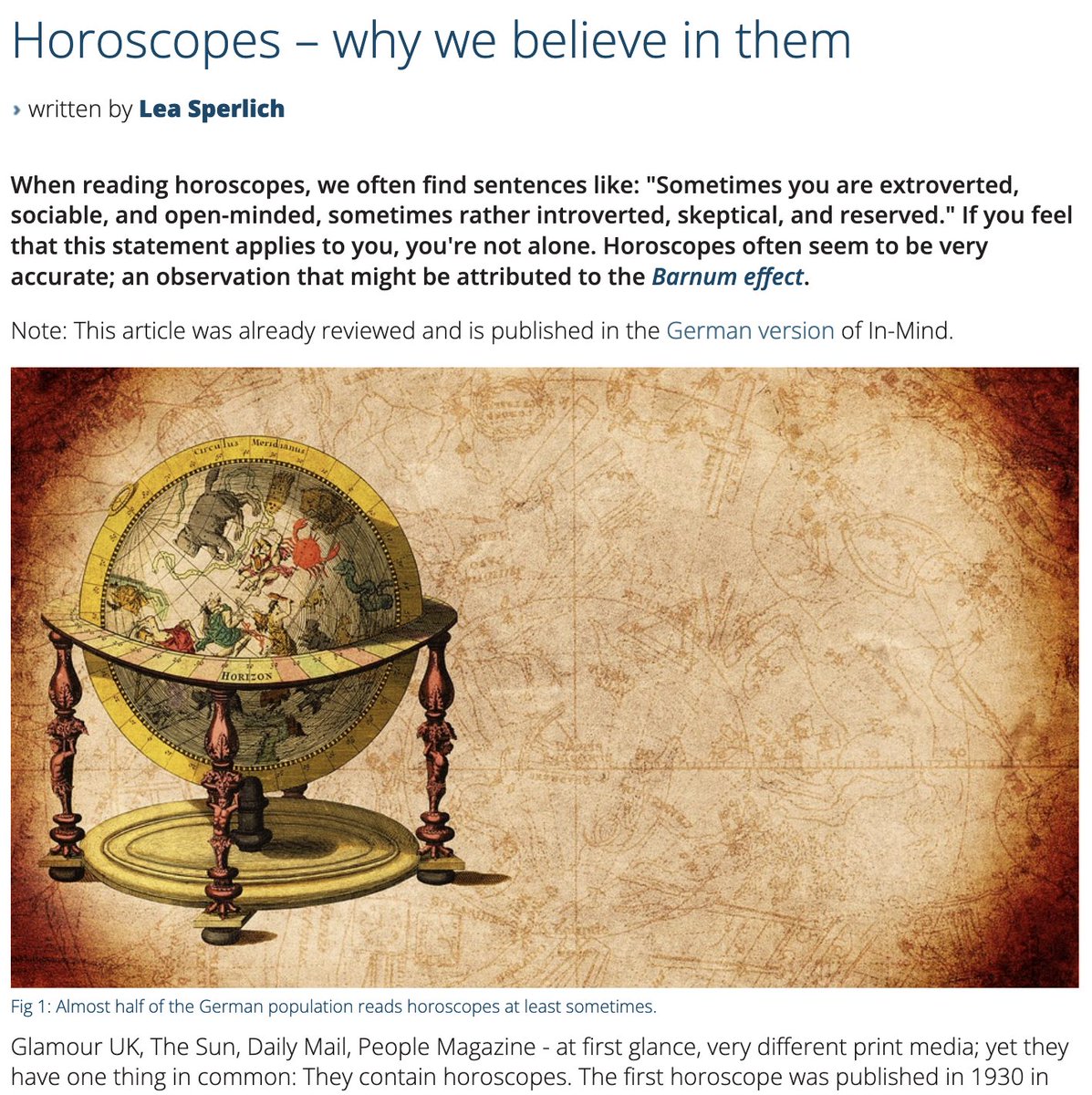
Sometimes you're outgoing and sociable, sometimes you're more introverted - if this sounds like you, you're not alone. @leaMsperlich explains why vague statements like this often seem very accurate in horoscopes https://t.co/00E2yLsw4t
Does nudging have a place in politics? In our latest In-Mind article Dr. Mario Herberz explains how decision-making contexts inevitably influence our behavior https://t.co/N6muYghewq
The myth goes that women earn less because they are worse negotiators. But this is not the case, context matters: https://t.co/5INixTtOVz
In our latest article @OomenDanna, Moritz Burmeister, Hannes Petrowsky, Yannik Escher give more insight into this
Learning styles: Why they don't exist but still persist
- It is a common myth that for optimal learning, individual learning styles (e.g., visual or auditory) should be identified and supported, but science shows no beneficial effect
https://t.co/BSu5mXpQvM
The word “cringe” is on everyone's lips. What does it mean? How can it be described? At In-Mind, Thomas Feiler and Fabian Hutmacher try to explain the phenomenon using established psychological constructs.
https://t.co/jUDDKHKkR3
Artworks can move us deeply. But does that mean our brain treats them in a special way? In our latest In-Mind blog post @SophieElschner looks at how the brain processes art and what evolutionary advantages it has to be able to like things and judge them as beautiful