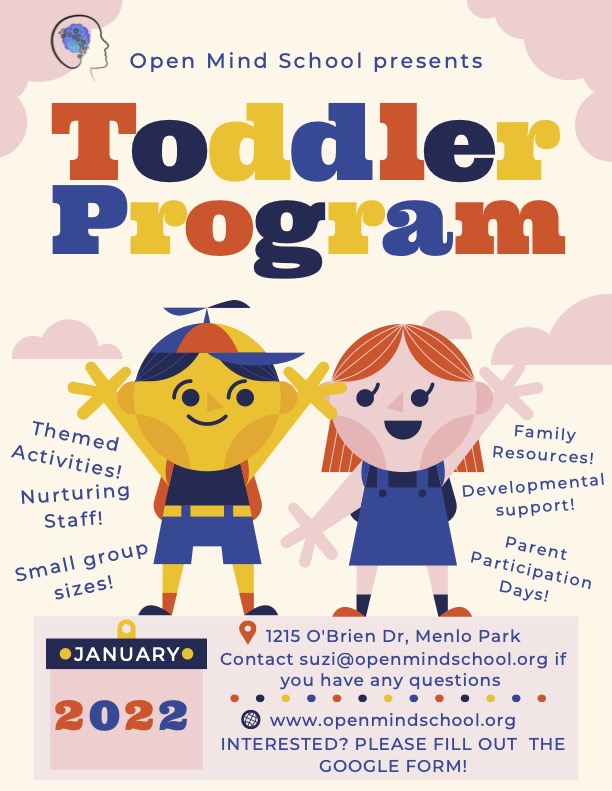
In January 2022, Open Mind School will launch our Early Learning Toddler Program! This program will focus on building strong foundational relationships to support children's development and learning.
https://t.co/GpXOSBpOzv
It’s true that the “emotional” and “rational” parts of teens’ brains develop at different paces. But that’s not necessarily a bad thing, researchers say. @stetyjohn@washingtonpost https://t.co/FqiFsiM66J
“When students are adding to the conversation, they're feeling validated that their voice matters.” See how adults and students come together to have courageous conversations at this school.
“Social-emotional learning is kind of an every-moment thing, meaning it’s in every interaction, it’s in all relationships, and so it doesn’t turn on and off depending on the setting.” There is a growing emphasis on teaching SEL lessons after school.
https://t.co/QD6eLd4C7s
As U.S. population becomes more ethnically and racially diverse, some educators like @chrisemdin@triciaebarvia & @nenagerman are reimagining & shifting conventional curricula to reflect their more diverse student bodies. @nytimes#DisruptTexts#EduColor https://t.co/Fg9VEYUNK5
Yale researchers asked more than 21,678 U.S. #HighSchool students to say how they typically felt at school, nearly 75 percent of their answers were negative. "Tired" topped the list. #edchat@educationweek https://t.co/OCxouC2HUX
“Once a person learns to decode, reading comprehension becomes more about language comprehension and focus.” Check out these 5 strategies to guide students who read fluently—but struggle to comprehend what they’re reading.
https://t.co/7ZSjjhDWAm
Facial expressions don't tell the whole story of emotion
Looking at a person's facial expression may not be the best way to detect their internal emotional feelings.
https://t.co/0me7um7KAj
"Carry out a random act of kindness, with no expectation of reward, safe in the knowledge that one day someone might do the same for you"-Princess Diana
Grateful for today! Best wishes for yours!
Smile 😁 Be Kind❤️
https://t.co/ZTxJNx9VAH
"In order to compare and contrast, the brain has to hold ideas in working memory, which can easily be overloaded. The more familiar a student is with a particular topic, the easier it is for the student to hold those ideas in his working memory"