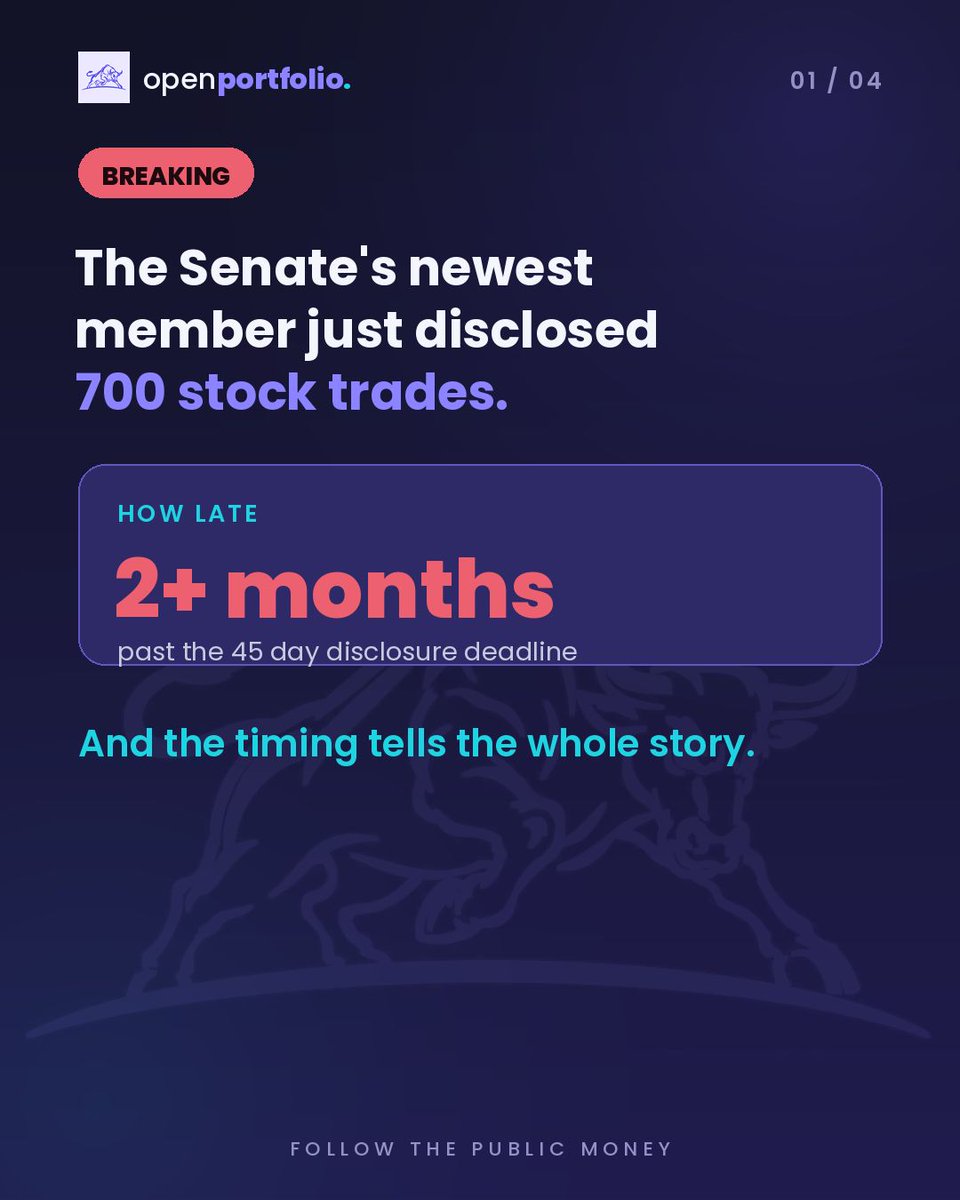
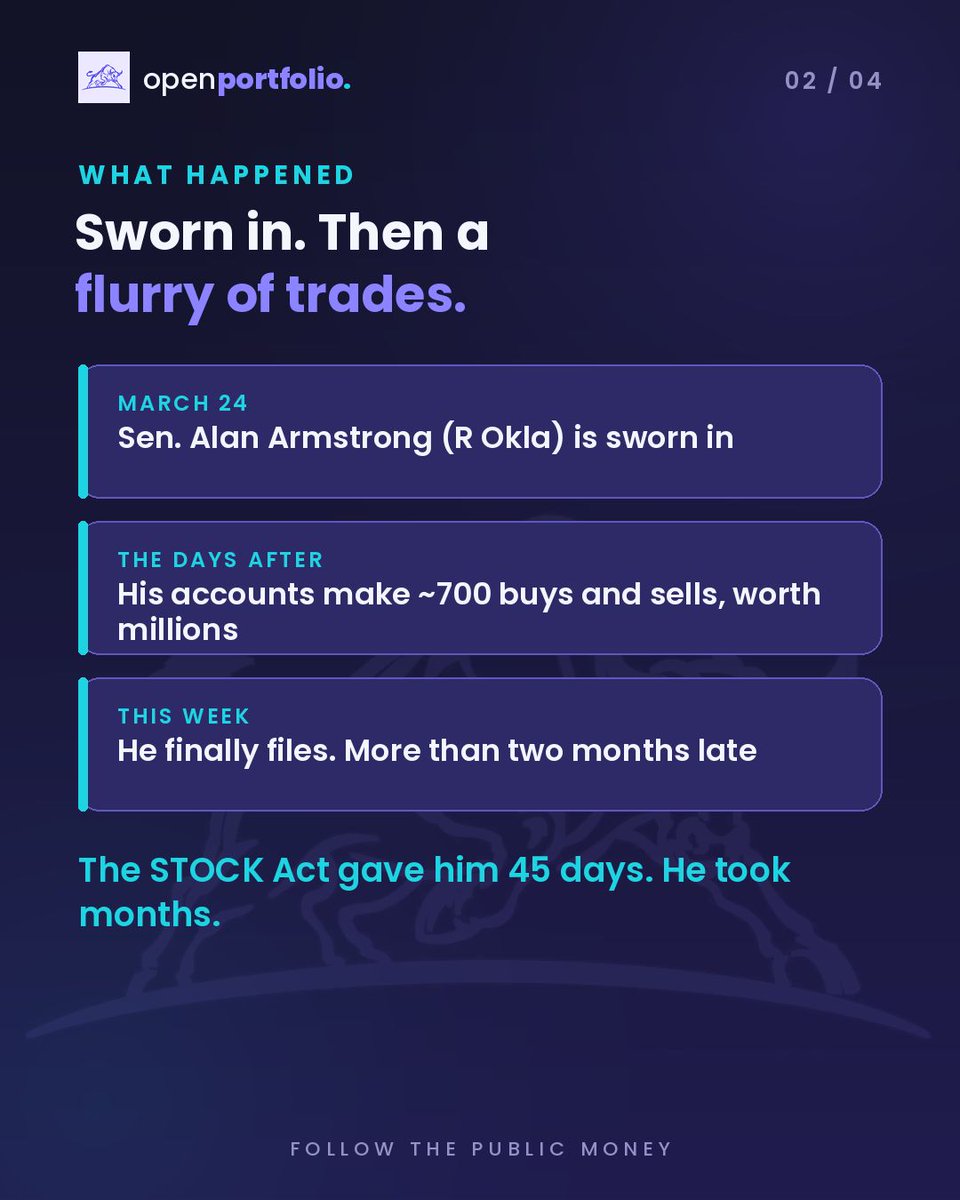
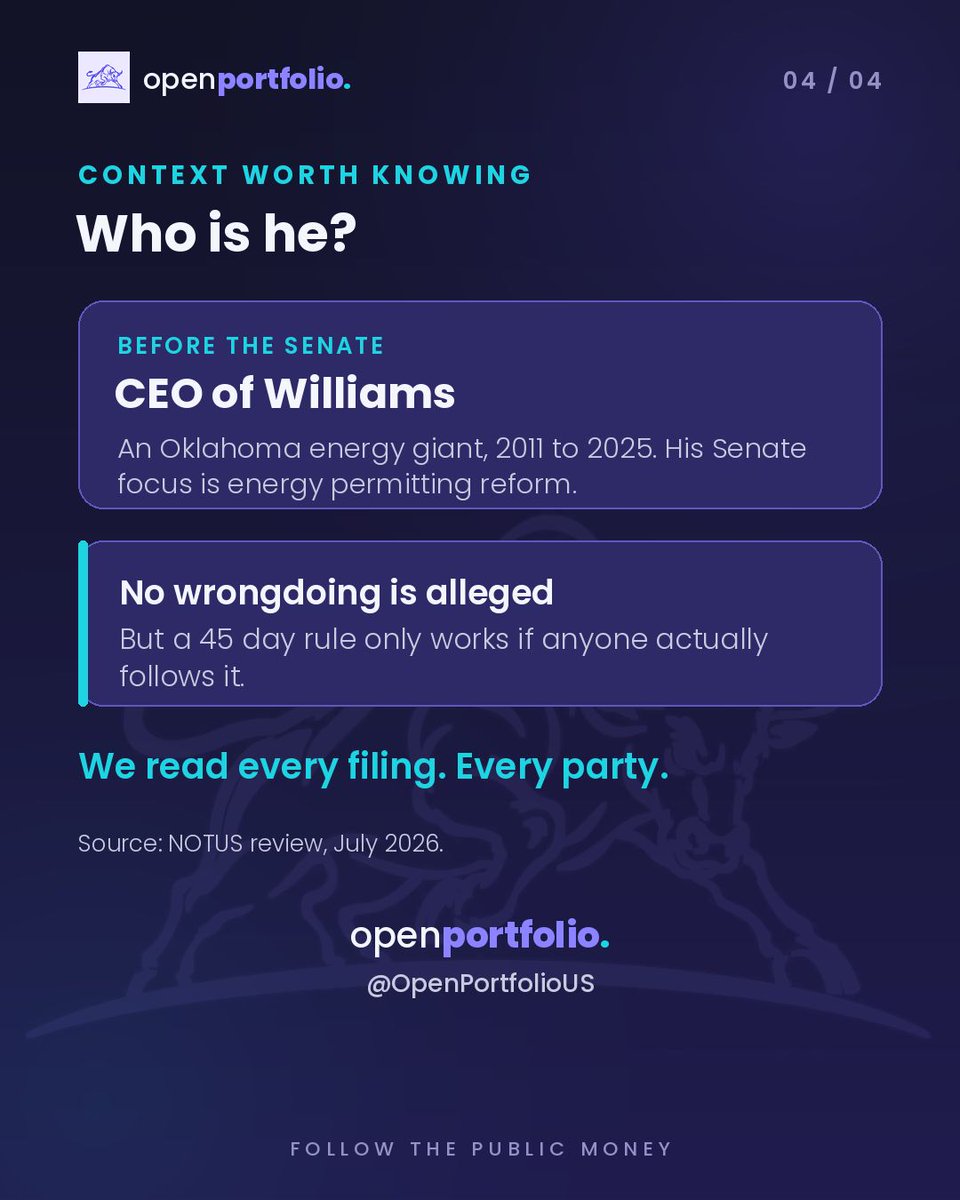
Sen. Alan Armstrong (R Okla), the newest member of the US Senate, just disclosed roughly 700 stock trades.
He filed them more than two months past the 45 day STOCK Act deadline.
Armstrong is the former CEO of energy giant Williams $WMB. No wrongdoing is alleged.
But a disclosure rule only works if anyone actually follows it. 👇
The best portfolio in Congress last year was not a millionaire's.
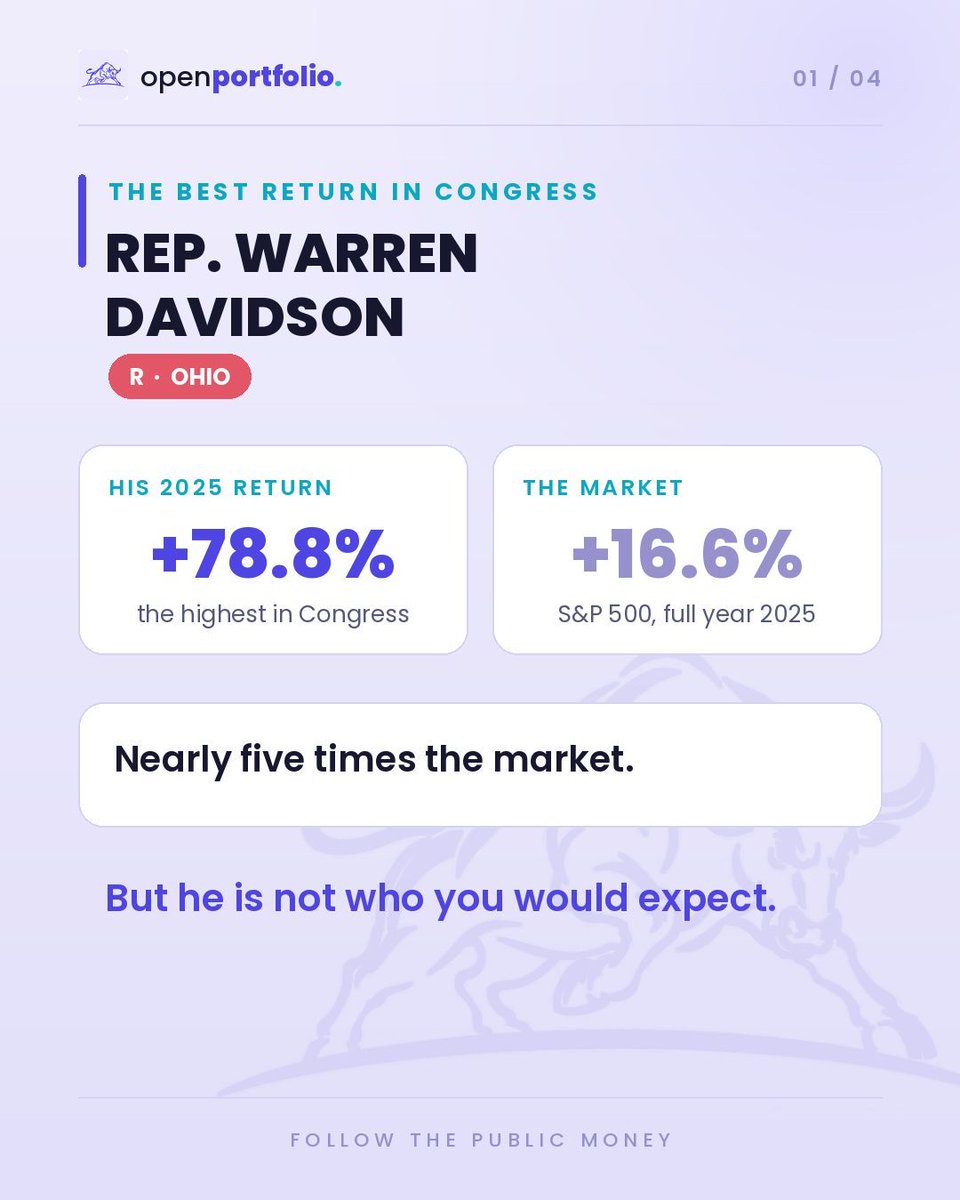
Rep. Warren Davidson (R Ohio) finished 2025 up 78.8%. The market did 16.6%.
His disclosed portfolio: roughly $323,000.
Disclosed trades: about six.
It came down to two positions. $GE and $GEV, both riding AI data center power demand.
No scandal here. Just concentration.
Per Unusual Whales.
#CongressTrading #StockMarket
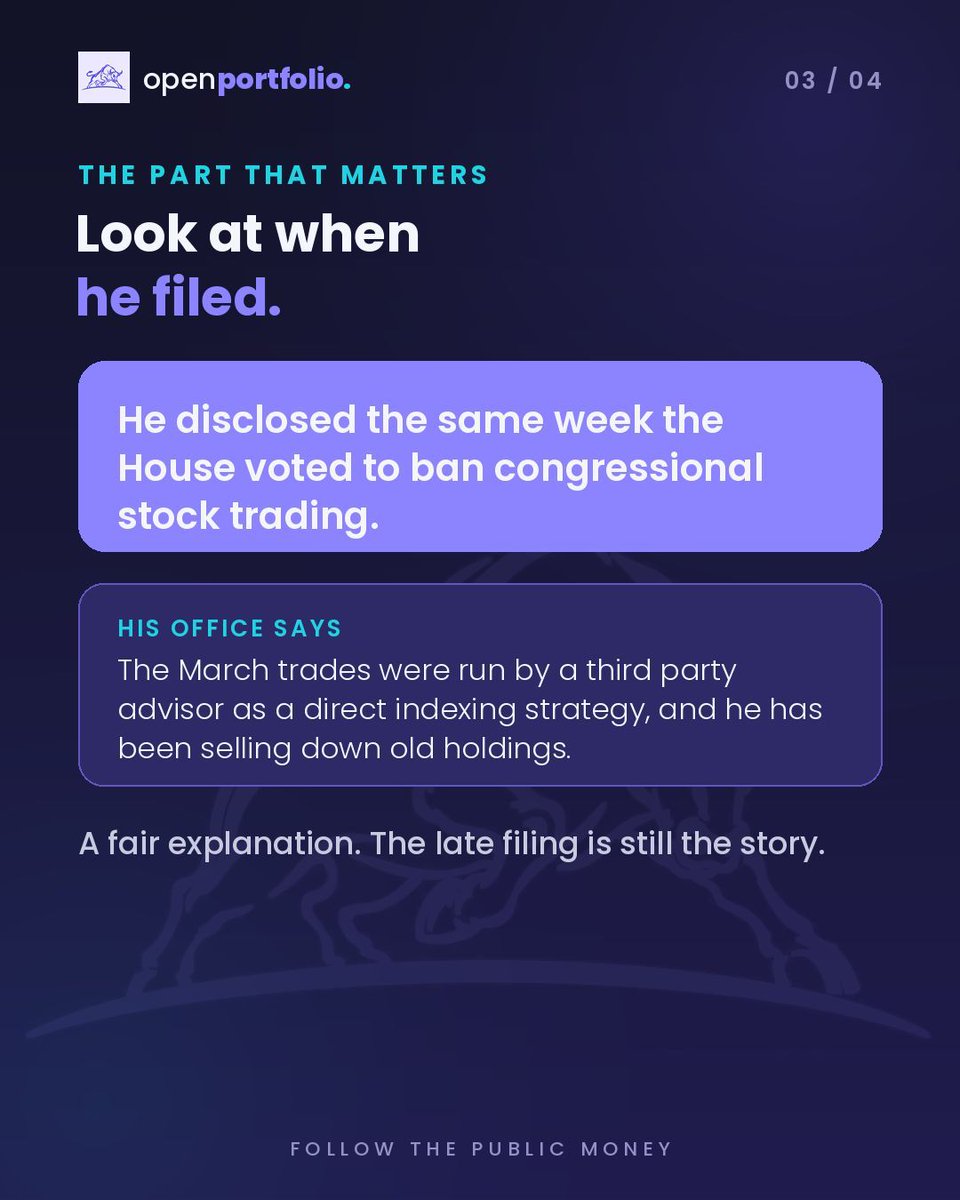
232 to 198. The House voted to restrict its own stock trading.
Members can no longer buy new stocks. They keep everything they already hold.
The catch nobody is explaining: a voter ID measure got attached to the bill, which is why only 13 Democrats backed it and why the Senate is now a wall.
Not law yet. Swipe for the breakdown.
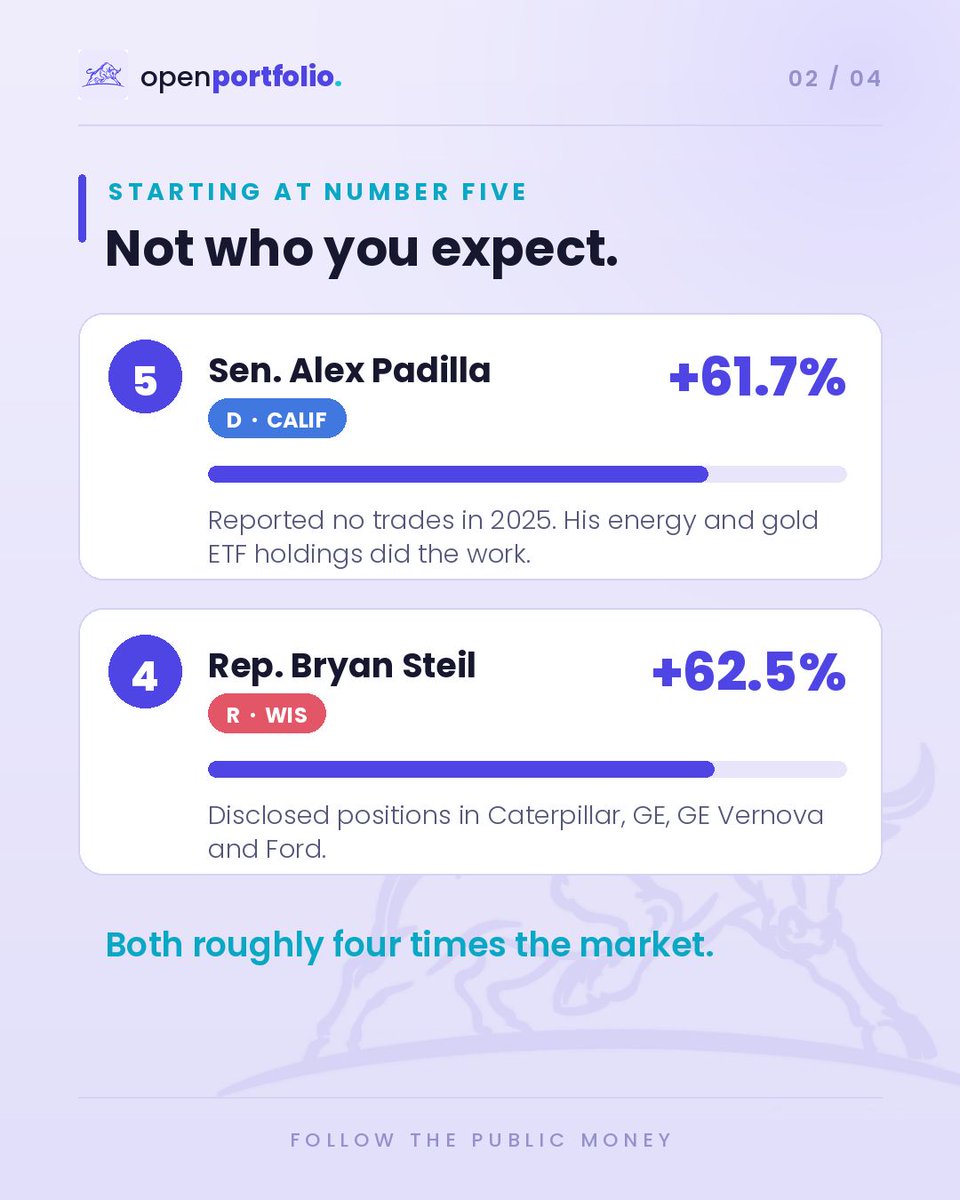
The S&P 500 returned 16.6% in 2025.
Five members of Congress more than tripled it:
5. Sen. Alex Padilla (D) +61.7%
4. Rep. Bryan Steil (R) +62.5%
3. Rep. Terri Sewell (D) +67.9%
2. Rep. Donald Norcross (D) +70.8%
1. Rep. Warren Davidson (R) +78.8%
Nancy Pelosi? 28th. +20.1%
Per Unusual Whales. All public record.
Who surprised you most? 👇
@Kalshi Every quarter Tesla reports, the biggest variable is not the cars. It is Washington. EV credits, tariffs, safety investigations. The people who set all three can hold or sell the stock while they do it.
@unusual_whales The Clarity Act ethics provision would stop federal officials from issuing or sponsoring digital assets.
It would not stop them from buying and selling them.
And it would not touch stocks at all.
Progress. Just not the kind anyone asked for.
@Kalshi Every AI headline this year has ended with money moving into a chip stock. Chips are the sector Congress regulates through export policy and buys through a brokerage account at the same time
Everyone screenshots congressional trades. Almost nobody knows how to actually read one.
So here's the 60 second version:
The form is called a PTR.
P means buy. S means sell.
The date is when they traded.
The amount is only ever a range, never an exact number.
And they get 45 days to file it.
Bookmark this. You'll read filings differently now.
@TrendSpider A 20 percent after hours move rewards whoever was already in. For a name as regulatory sensitive as SMCI, the question of who was positioned is a real one.
Rep. William Timmons bought up to $100,000 of SpaceX $SPCX on June 15. Three days after the IPO. It is the first stock trade he has disclosed in six years. He also chairs a House subcommittee on military and foreign affairs. SpaceX runs on defense contracts. All public record. Follow the public money
@Kalshi There are a hundred reasons for a gap like this and most are bigger than anything we cover. But here is one nobody has to accept: members of Congress can legally trade stocks in the industries they oversee, and you only find out 45 days later. Small lever. Fully fixable
@unusual_whales Goldman can see hedge funds pulling out of tech in real time. If members of Congress are doing the same, you will not know until the filings drop 45 days from now. Same market, one side just gets a head start on privacy.
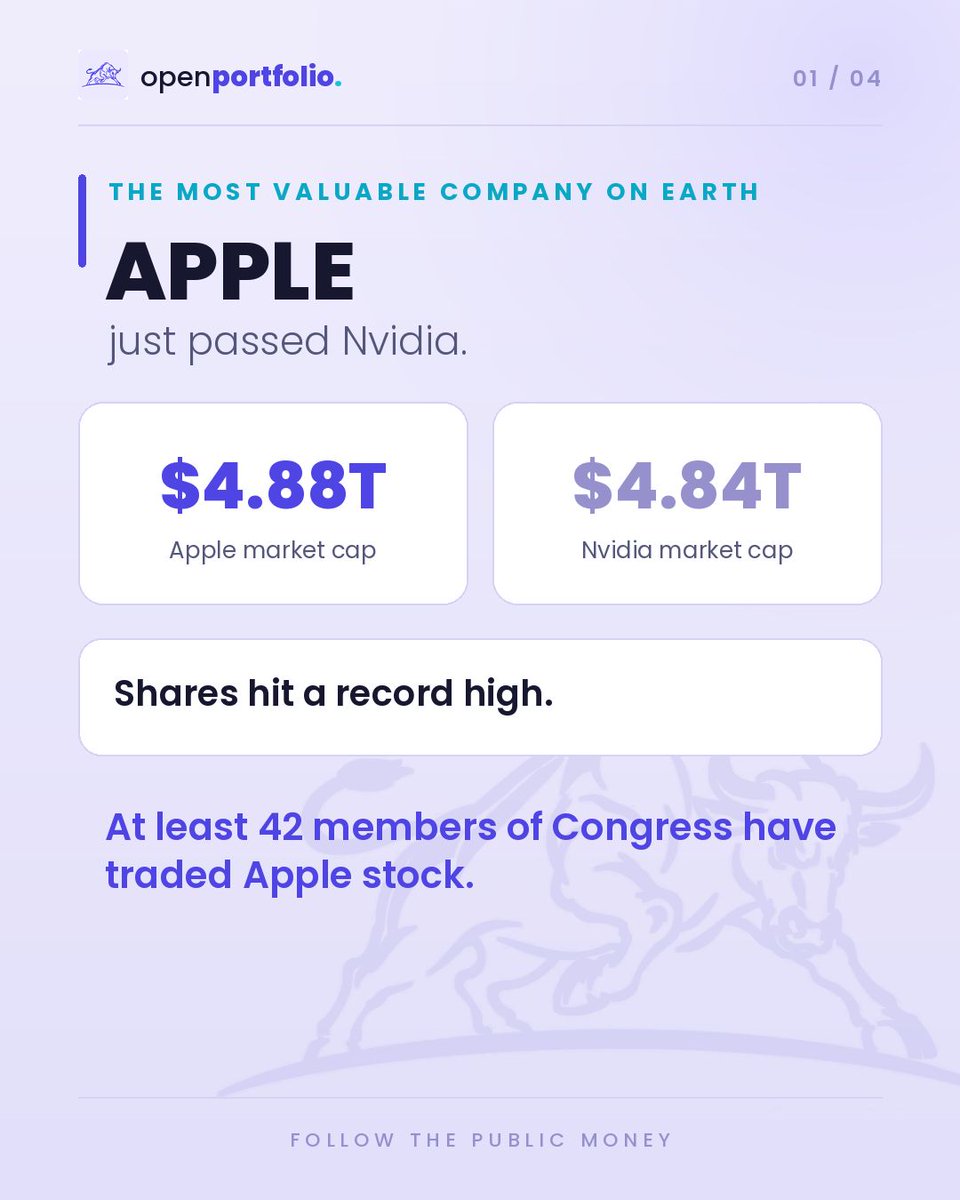
Apple just passed Nvidia as the most valuable company on earth. Shares hit a record high. At least 42 members of Congress have traded it. How much did they make? You will never find out. Congress reports holdings in ranges. One bracket is "$5 million to $25 million." That $20 million gap is legal. By design. $AAPL #CongressTrading