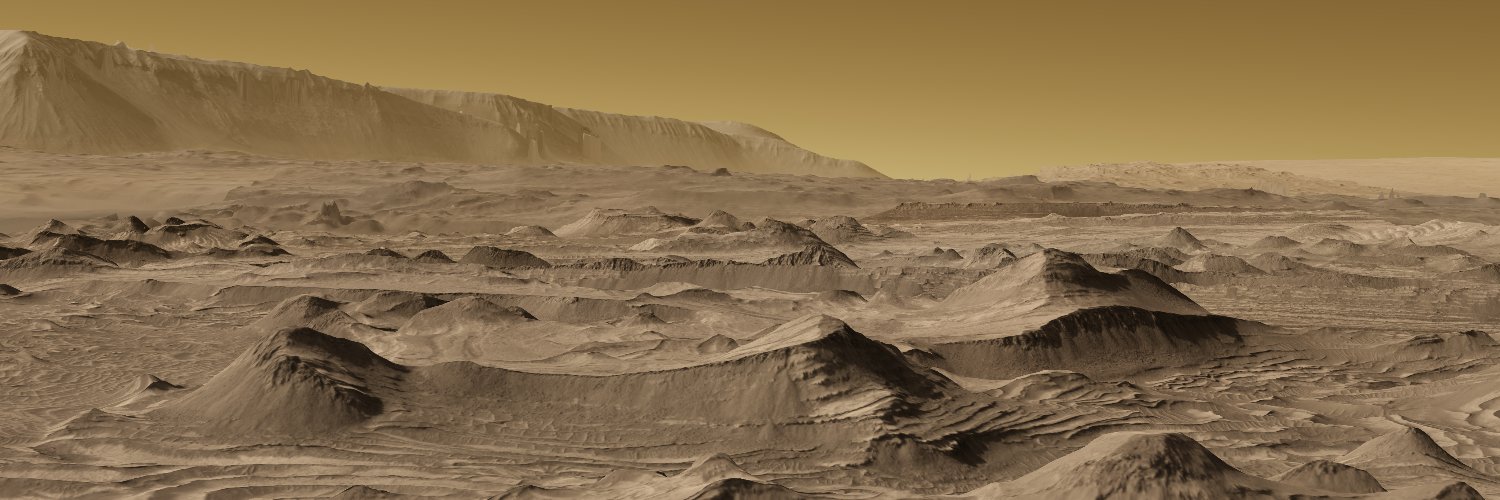
Meet Kaz Gary! 🚀 They are a PhD candidate at @OhioState and are partnering with @OpenSpaceProj
on the "Weird Worlds" project. 🪐 Their project focuses on astrobiology principles and how to identify biosignatures. Check out more Seed Grant projects at: https://t.co/PTXUvITshn
Explore the night sky using free, open-source software! 🌠
On Monday, April 28 at 3pm ET, join Ken Murphy, Planetarium Director at Southwest Minnesota State University, for an introduction to presenting night sky astronomy with OpenSpace.
🔗 Register: https://t.co/Q5GLA8ag9U
Bring breathtaking astronomical images from @NASAWebb and more into your planetarium! 🌟
Join David Weigel (@rocketcenterusa) & Micah Acinapura (@AMNH) this Thursday, March 6 at 3pm ET to learn the basics of OpenSpace’s SkyBrowser feature.
🔗 Register: https://t.co/IMNXs4zWzr
Here are possible orbits of YR4 as they approach Earth on Dec 22, 2032. You can see that the big clump of orbits miss Earth, but some do hit Earth. Latest impact probability holding steady at about 2%.
Lunar Occultation of Mars tonight! If it's clear around 9:15 pm (in NYC) and you look at the lower left part of the moon, you'll see Mars sneak behind the moon for a little more than an hour. Simulated view made with @OpenSpaceProj
📢 TODAY at 3 PM ET / 12 PM PT: Join our first OpenSpace meeting of 2025! James Hedberg @CCNYPlanetarium will offer tips and tricks to create animations and videos with OpenSpace. Details: https://t.co/ntNHdYV8Ii
Our simulation of the path for asteroid 2024 PT5, soon to be our temporarily captured two month mini-moon. (Simulated with @OpenSpaceProj with data from @NASAJPL Horizons)
This week we’re at @IPS_Planetarium conference in Berlin! Stop by our sponsorship booth or attend an OpenSpace session. 📆 Check out our full list of IPS happenings! https://t.co/KW71YbM1X5
Luana Melnek dos Anjos is sharing astronomy beyond the classroom, in unexpected places like art galleries and train cafe cars! Learn how Luana is empowering diverse voices and igniting curiosity using OpenSpace! 🌌✨
Read the blog: https://t.co/tatAlROrd4
#STEM#astronomy#NASA
Happy Solar Eclipse Day! Wishing everyone clear skies and a wonderful eclipse experience! Catch all the action on NASA’s live feed here: https://t.co/qhXyLsnzNt 🌎🌑☀️
Image created in OpenSpace.
#NASA#space#eclipse2024
Make sure you protect your eyes during the solar eclipse on April 8th! Check to make sure your eclipse glasses say ISO-12312-2. 👓☀️
Video created in OpenSpace. Image Credit: NASA/GSFC/Genna Duberstein
#NASA#space#eclipse2024
Are you curious about the eclipses for the next twenty years? Afraid of the weather reports for this one? Look no further than this @AMNH video made in collaboration with @least_evens@DesirDeion@OpenSpaceProj and me. Total solar eclipses through 2043. https://t.co/3NY9EupaFA
Get ready for the April 8th solar eclipse by familiarizing yourself with the two parts of the Moon's shadow: The umbra and penumbra! 🌑
Video created in OpenSpace. Images: NASA's Scientific Visualization Studio, NASA/Luc Viatour, NASA/Bill Ingalls
#NASA#space#eclipse2024
Video Description: A view of North America from space. The Moon’s shadow is visible as it traverses the Earth, demonstrating the path of totality of the April 8th solar eclipse. Then the path of totality is illuminated, tracing the path the Moon’s shadow took.
The April 8th total solar eclipse is almost here! 🌎🌑☀️ Will you be in the path of totality? Use NASA’s Eclipse Explorer to find the closest spot to you! https://t.co/p2HVGONbG7
Video created in OpenSpace.
#NASA#space#Eclipse2024
One day, there might be some eclipse chasers on the moon looking for the best views of Earth in shadow. Until then, we'll just have to imagine the sight. Here's one from Moretus Crater near the south pole of the moon. Simulated with @OpenSpaceProj .
A little explainer video for the April 8th total solar eclipse from @least_evens@DesirDeion myself and the communications team at @AMNH Shoutout to @OpenSpaceProj for being our go to visualization software package.
We're counting down to the total solar eclipse on April 8th! Learn how you can explore this phenomenon using OpenSpace with step-by-step instructions: https://t.co/f2tsdPCENo ☀️ #GreatAmericanEclipse