Public-private partnership using human genetics and genomics data for systematic drug target identification and prioritisation We're on Bluesky @opentargets.org
Meet PEGASUS 🧬 A new community standard for reporting predicted effector genes. Making post-GWAS predictions more FAIR, comparable, and reusable across studies.
Read the bioRxiv preprint: https://t.co/6fKOVwIJBz
#GWAS#Genomics#OpenScience
🤖 AI Club for Biomedicine: Building and Benchmarking Biological AI
Tomorrow, Cambridge
Join @AIClubBioMed as they welcome speakers Kyle Taylor (@GoogleDeepMind) and Francesco Carli (@emblebi and @OpenTargets)
No need to register, just turn up!
🔗 https://t.co/kdZKrImMXZ
Excited to share our new work. Over the past decade, single-cell genomics has transformed our ability to map cellular systems. But a major question remains:
Can we predict how perturbations reshape cellular trajectories over time?
In 2018, we first showed that it is possible to predict cellular responses to perturbations — ranging from disease signals to chemical treatments — even in unseen contexts. In 2022, we introduced CPA (MSB 2022; NeurIPS 2022), extending this idea to predict responses to unseen chemical and genetic perturbations, including their combinations.
Since then, the field of perturbation modeling has grown enormously. The community has pushed the space forward with many creative ideas and powerful models. It’s exciting to see how fast things are moving — even though many fundamental challenges remain.
One of the biggest is that cells are not static. They move through trajectories during development, immune responses, and disease. Yet most current models still predict perturbation effects within a single state, rather than how early perturbations propagate across future states and reshape downstream outcomes.
To address this, we developed PerturbGen, a trajectory-aware generative AI model that predicts how genetic perturbations reshape downstream cellular states.
Huge credit to the people who made this work possible. Thanks to co-first authors @lifeisscience_5, @Adib_m_, @Tomo_Isobe, @Amirhossein Vahidi, @delshadveghari & Anthony Rostron. Special recognition to @lifeisscience_5 and @Adib_m_ for driving this work over the finish line.
Grateful for our outstanding collaborators from @HaniffaLab, @BertieGottgens lab @GosiaTrynka and many others — a true cross-institute effort across @SCICambridge, @OpenTargets ,@sangerinstitute and @Cambridge_Uni.🎉
PerturbGen learns transcriptional dynamics across cellular trajectories. By introducing perturbations at an early source state, it can simulate how these effects propagate into future states along differentiation trajectories.
Scaling this across genes enables the creation of dynamic in silico perturbation atlases — maps of how perturbations reshape biological trajectories over time.
We explored this idea across three biological questions.
First, in a human in vivo LPS immune challenge, PerturbGen predicted that perturbing a transient IL1B signal dampens downstream inflammatory programs in myeloid cells, with pathway changes reversing signatures observed in an independent IL-1β stimulation experiment.
Second, in human hematopoiesis, PerturbGen predicted transcriptional responses to CRISPR transcription factor knockouts and enabled construction of perturbation atlases revealing lineage- and age-specific regulatory programs. These programs could also be linked to human genetics and blood diseases, including recapitulation of signatures associated with ETV6-related thrombocytopenia.
Finally, we asked whether perturbation modeling could help improve complex tissue models.
We built a dynamic perturbation atlas of human skin organoids to identify perturbations that could guideorganoid cells towardhuman fetal skin states.
PerturbGen prioritized activation of Wnt signaling via GSK3β inhibition. Experimental validation confirmed the prediction: treatment with CHIR99021 induced stromal gene programs and shifted organoid fibroblasts toward transcriptional states observed in fetal skin stroma.
Together, these results show how trajectory-aware perturbation modeling can connect gene perturbations to developmental programs, human genetics, disease mechanisms, and experimental interventions.
More broadly, we think these point toward a future where single-cell atlases become predictive systems.
As atlases expand across tissues, developmental windows, and modalities, models like PerturbGen could enable dynamic, virtual perturbation atlases— allowing us to simulate interventions, generate hypotheses, and design experiments before stepping into the lab.
Preprint
https://t.co/3peW7du2qM
Code
https://t.co/cmK0ymY5X7
Excited to see how the community builds on this work.
🔬New Perturbation Catalogue update!
With a redesigned interface, richer datasets and powerful analysis workflows, it’s now easier than ever to explore genetic perturbation data. https://t.co/Kt35DiZdXs
#Bioinformatics#FunctionalGenomics@OpenTargets
Introducing the official Open Targets Platform Model Context Protocol
In partnership with @AnthropicAI, we’ve created an MCP server to make Open Targets Platform data accessible to AI-powered tools and agents
Try it out and watch out for future releases: https://t.co/2RdiMJhLYf
🚀 Announcing the Official @OpenTargets MCP!
We've partnered with @AnthropicAI to provide AI with seamless access to high-quality genetics and target-discovery data. Open for the entire community to accelerate therapeutic development
https://t.co/bwuw9udxwV
🚀 We’re Hiring Postdocs!
Machine Learning • AI for Science • Computational Biology
Want to push the boundaries of ML and decode life at scale? Join our lab (@sangerinstitute@Cambridge_Uni ) working with computer scientists, clinicians, biologists & experimentalists to build next-gen AI for genomics, multi-omics & biological discovery.
📌 Focus areas:
• Core ML & generative modeling
• ML for genomics, spatial & single-cell data
• Foundation models for biology
• AI for women’s health (funded by @WellcomeLeap )
• AI for drug discovery (funded by @OpenTargets )
• Agentic AI for scientific reasoning
📍 Cambridge, UK
🕒 3-year fixed term | Hybrid
⏳ Deadline: 1 Feb 2026
If you’re passionate about ML + biology and want real impact on human health—apply here:
👉 https://t.co/JUmsgBebNw
🚨New preprint just dropped 🚨
https://t.co/IDc5nZ2yzG
The main output from my PhD is finally public and we’re SUPER excited about the findings! If you’re interested in what we learnt about IBD with a massive 700+ sample sc-eQTL dataset of the gut, read on!
Delighted to share the first preprint of my postdoc in the @anderson_carl lab https://t.co/KlMJmY9AAz! 🚨 A super exciting study I co-led with the very talented @Tobioinformatic. Stay tuned to discover what we learned about genetic susceptibility to complex diseases. A 🧬🧵 1/
Thrilled to share the latest preprint from my lab: https://t.co/1exqLfFHtk. Co-led by @Tobioinformatic and @Bradleyomics, supervised by myself and @IBD_MB, we generated IBDverse💫 - gaining insights into genetic susceptibility and pathology of inflammatory bowel disease (IBD).
Questions about the release? Join us today at 3pm UK time, for a walkthrough and Q&A session
It will be a chance to hear from the team about the release and ask any questions you have
https://t.co/iQm0ldxi2x
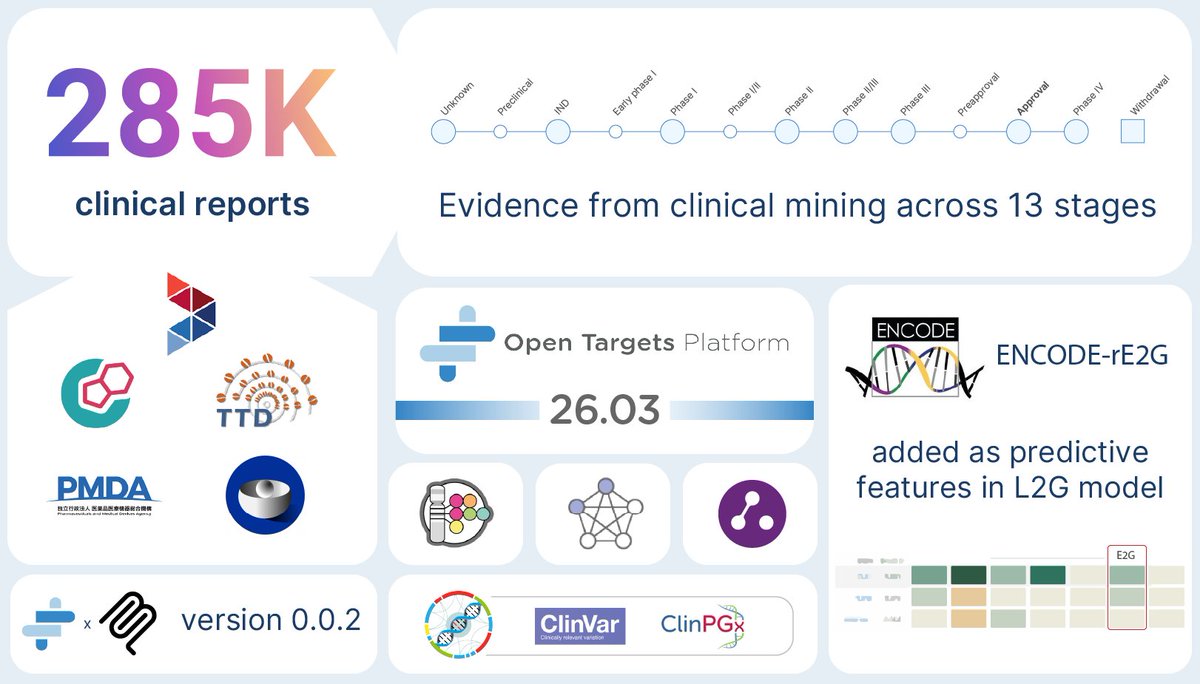
Open Targets Platform 25.06 is out now! 🌻
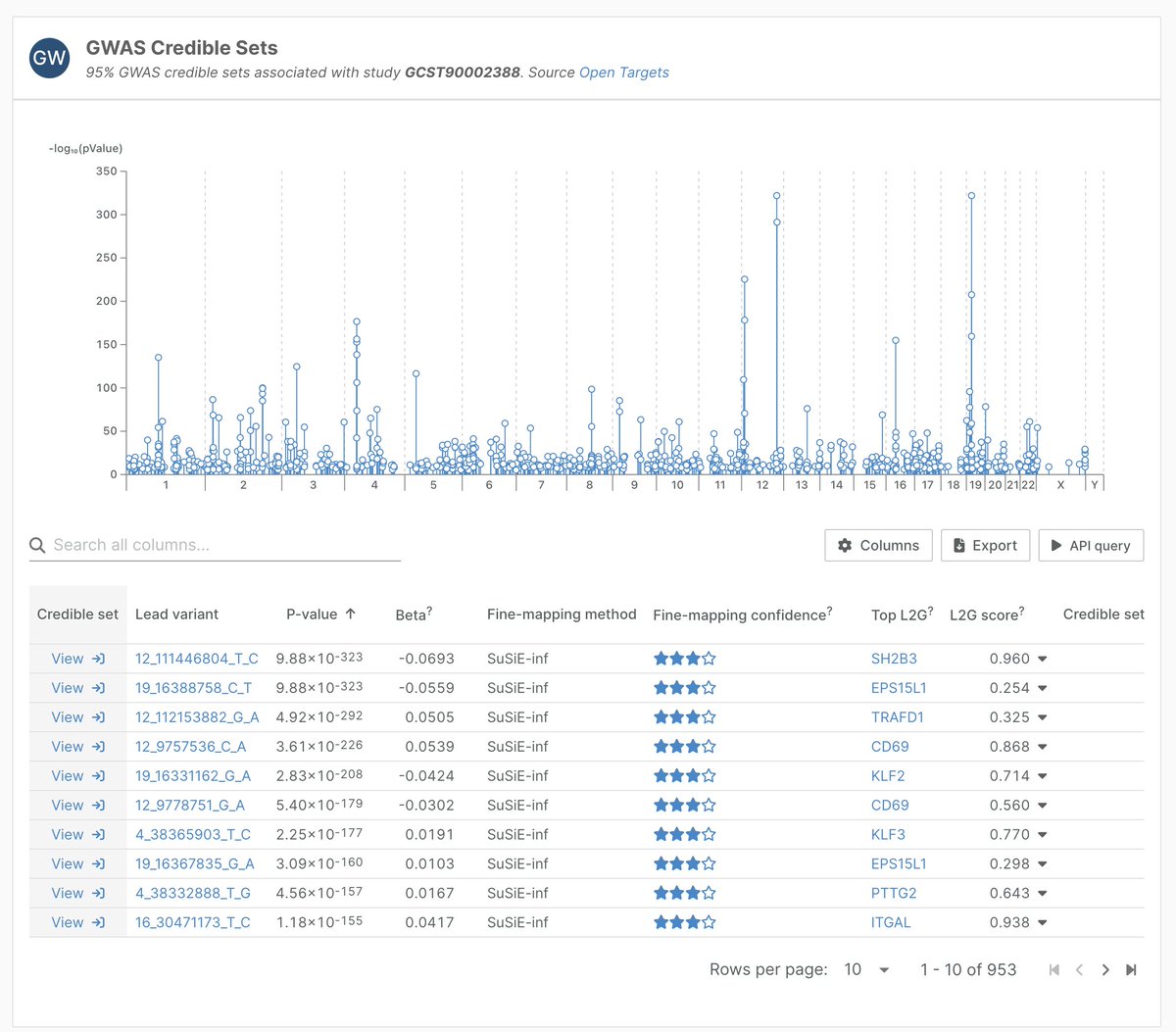
It includes 36% more GWAS credible sets (including from the VA Million Veteran Program study) and a new target interactors view to help nominate potential targets
https://t.co/RcETZo59og
We've also:
🧬made our data downloads easier to navigate
🧬updated molecular structure viewers to include AlphaMissense predictions
🧬incorporated gene burden data from the Broad CVDI Human Disease Portal
🧬added annotations on the effect of the variants on drug availability
If EMBL-EBI data resources have saved you time & effort, now is your chance to give back!
Fill in a 15-minute survey to help us:
🌍Demonstrate the real-world impact of these resources
🧠Understand your needs
🌟Secure continued funding
Closes 16 July 👉 https://t.co/ASEE7NUA1m]
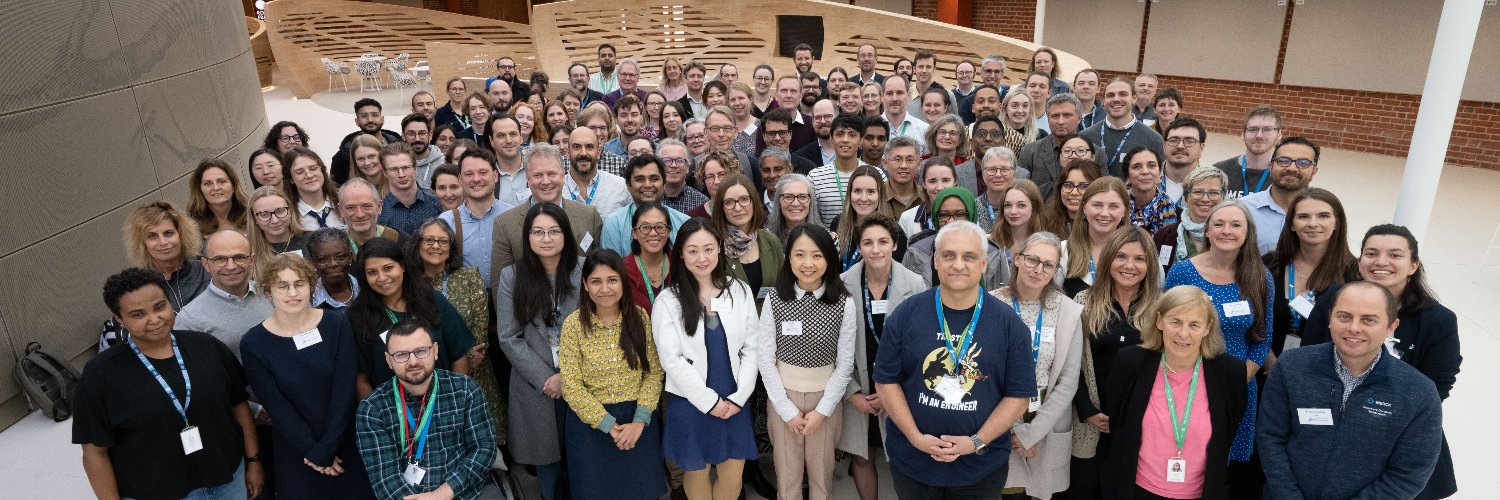
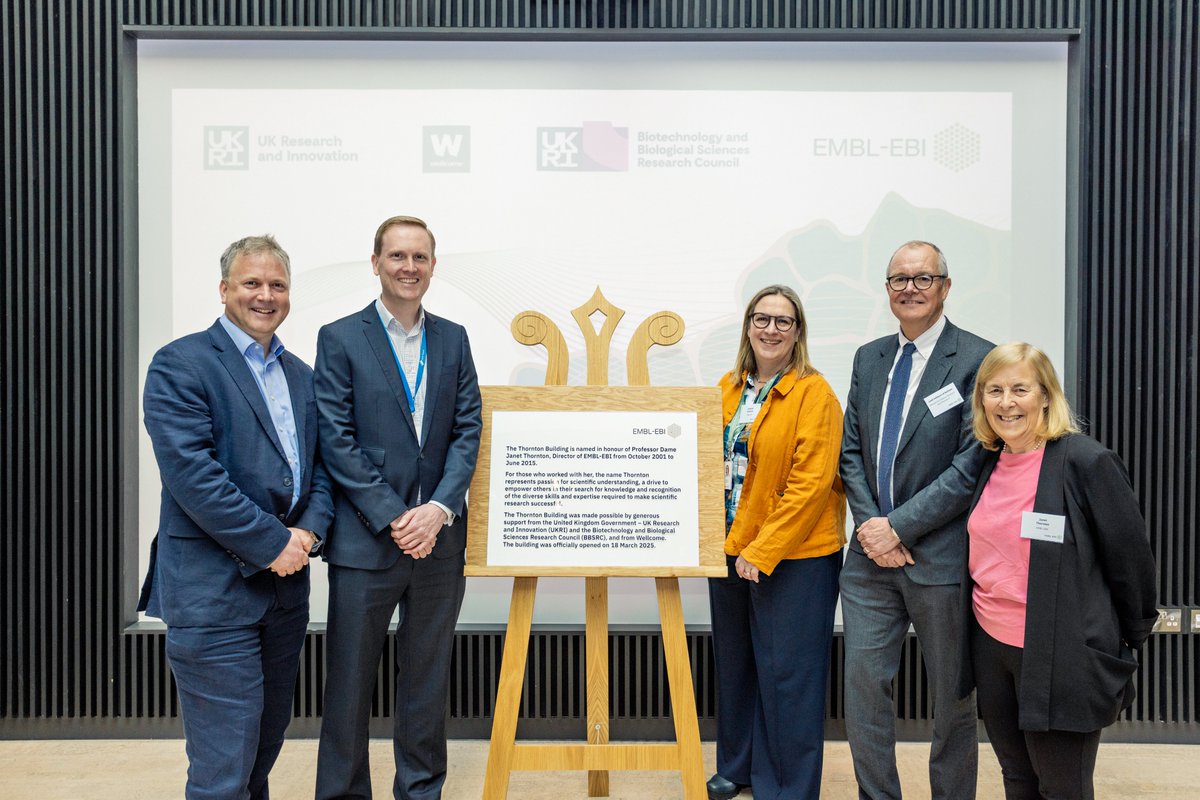
Lord Vallance and Dame Janet, together with Professor Sir Mike Stratton, founded Open Targets 11 years ago today, and we were thrilled to be able to share some of our achievements and projects with them as part of this occasion
📸 Mike Thornton/Stillvision Photography
The @emblebi Thornton Building was officially opened last week by Lord Vallance of Balham, the UK’s Minister for Science, Research and Innovation
Open Targets' new home is named for Professor Dame Janet Thornton, a pioneer in bioinformatics
Register for our webinar on 23 April!
We will introduce the capabilities and use cases of the Open Targets Platform, including our new variant, study, and credible set pages released last week 👀
https://t.co/pIueajUx5o
There are many improvements and new features in the latest @OpenTargets release. Genetics here we go 🚀
New data visualizations, accessible color pallets, and full UI refresh. Not to say, the addition of @observablehq Plot.js s, the upgrade to @vite_js v6. React Router v7 🔜
Open Targets Platform 25.03 is finally here! 🌼
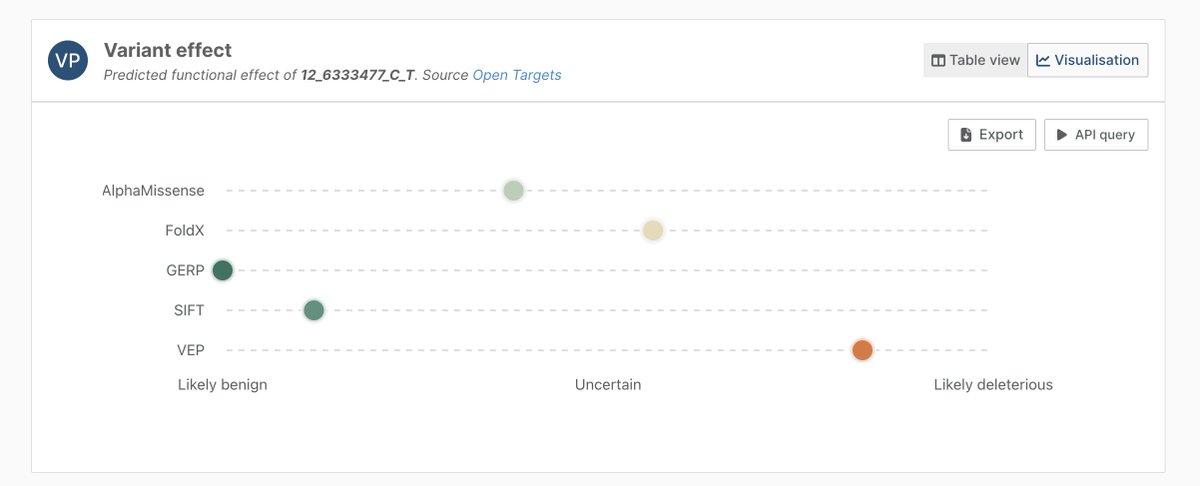
This update brings in variant, study, and credible set information, uniting the Open Targets Platform and Open Targets Genetics into a one-stop shop for human genetic and target discovery information
https://t.co/6cZoWwahWy
🧬 This release supersedes the last Open Targets Genetics release with significant updates for statistical genetic analyses and 20% more direct gene-disease associations from GWAS credible sets