I laughed at this at first but after some thought, I think all tokens should really observe the @OpenTokenRgstry listing guidelines.
https://t.co/Fa09xKjQhT
I say this because I want the @CashTokensOrg ecosystem to be taken seriously.
https://t.co/qamsMJUFJ0
I want to offer this initial draft of a list of tags for CashTokens and see what the community thinks about token tags in BCMRs.
@OpenTokenRgstry
https://t.co/ddlFctYZnm
I've added a BCH Metadata Registry service to https://t.co/bA1MkqxCvi!
You can now request that https://t.co/bA1MkqxCvi host / mirror your BCMR metadata.
For now I have just mirrored @OpenTokenRgstry ie https://t.co/DE3WH3wkR1
https://t.co/OuIbuCuVCr
PRs welcome:
https://t.co/0SvuJwAwQg
Making your own DNS-based BCMR will be part of my forthcoming comprehensive Token Pioneers tutorial on the BCMR.
Understanding the BCMR is essential for BCH CashTokens builders.
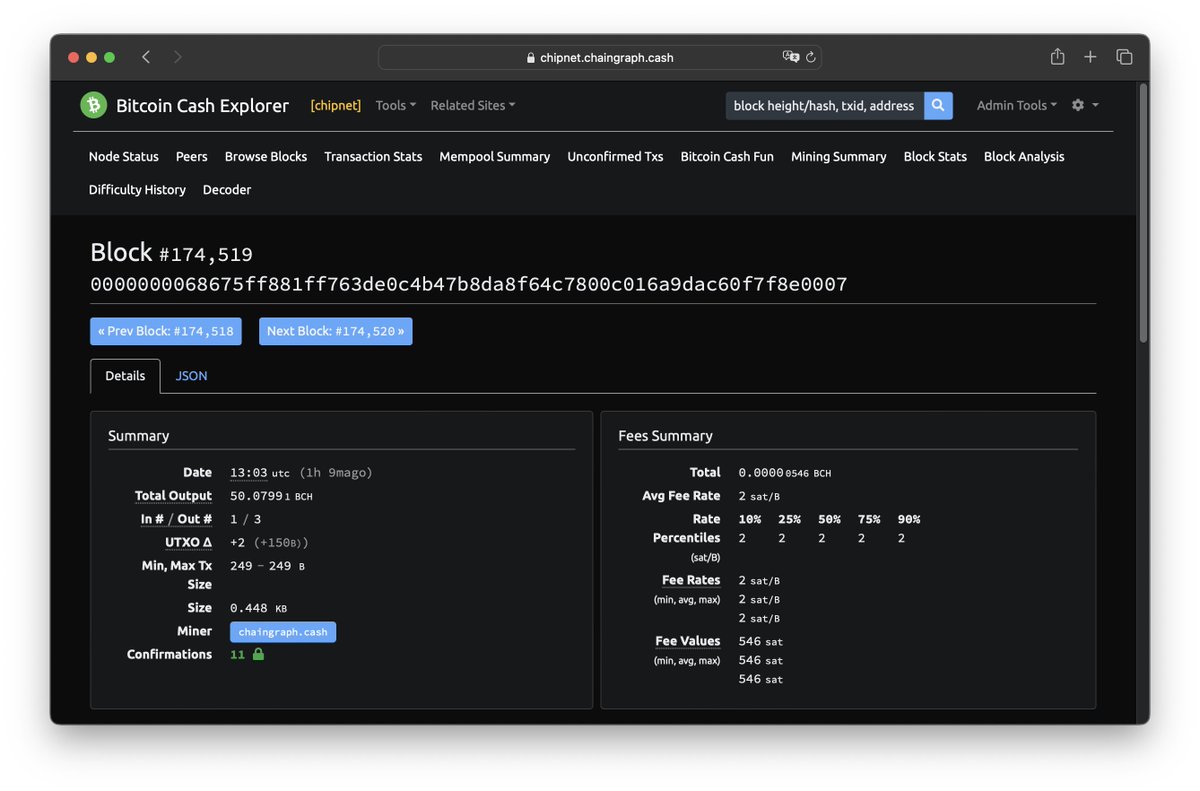
The May 2024 upgrade to Bitcoin Cash (BCH), CHIP-2023-04 Adaptive Blocksize Limit Algorithm, is now active on chipnet at block #174519 (0000000068675ff881ff763de0c4b47b8da8f64c7800c016a9dac60f7f8e0007)! 🎉
This upgrade resolves an economic vulnerability that was introduced in 2010 and led to the BCH/BTC network split in 2017.
The algorithm automatically adjusts Bitcoin Cash's block size limit to reduce infrastructure costs during periods of lower usage while enabling up to a doubling of the maximum block size per year at peak growth.
Why Limit Block Size?
The block size limit caps the technical requirements of network infrastructure, enables reliable infrastructure cost projection, and prevents attacks that increase the cost of participating in the network.
Excessively large blocks could require users and businesses to waste resources on unnecessary infrastructure, switch to cheaper and less secure validation strategies, or even to abandon running their own infrastructure and instead rely on third-party service providers – reducing the overall privacy, independence, and financial freedom of all users.
Vulnerability of Static Block Size Limits
To limit block size, most bitcoin-like networks (BCH, BTC, BSV, XEC, etc.) employ a static block size limit. For Bitcoin Cash mainnet, this limit is currently 32MB.
If a payment network is growing, usage will eventually approach any previously-established static limit. If this limit is reached before a successfully coordinated upgrade, network service degrades: transaction fees and confirmation times become less predictable as size-limited blocks become more common.
Uncorrected, market actors begin to adapt to this artificial scarcity by using alternatives to on-chain transactions: custodians, intermediaries, and competing networks. This in turn compromises the long-term economics of mining – cumulative transaction fee revenue is suppressed, and long-term network security grows to rely on continuous inflation via block subsidies.
Because static block size limits can only be changed as part of a widely coordinated network upgrade, they present a focal point for network interruption or capture by motivated attackers: rent seeking institutions, competing networks, opponents of peer-to-peer cash, etc. To make matters worse, the attackers have a significant coordination advantage – while honest network participants must achieve near-unanimous consensus to activate an upgrade, attackers must only create sufficient uncertainty among the honest participants to delay limit increases, as inaction results in degradation of the network’s functionality and long-term security.
Adaptive Block Size Limits
Adaptive block size limits resolve the economic vulnerability of static limits by automatically adjusting the maximum block size over time.
While an adaptive block size limit could still diverge from a hypothetical "ideal" size due to significant changes in the rate of technological advancement or the availability of capital, such divergences would likely remain much smaller than with static limits, and attackers are no longer afforded an advantage.
Bitcoin Cash's Adaptive Algorithm
The new algorithm is conservative and based on observed usage. In cooling-off periods of falling network usage, the limit slowly decreases to preserve the resources of infrastructure operators. On the other hand, during periods of rapid growth, the limit can increase at a rate of up to 2x per year.
---
This post is adapted from my earlier blog post about the May 2024 upgrade. You can find more information about this upgrade and Bitcoin Cash's upgrade process in that post (link in bio). Thanks for reading!
BCH Guru is now officially listed on the OpenTokenRegistry (the primary curated token list for #cashtokens!) That means the NFT collection show up as verified on CashToken wallets such as @cashonize Check out the amazing wallet here: https://t.co/ivEp1sqa57 #bitcoincash#bch
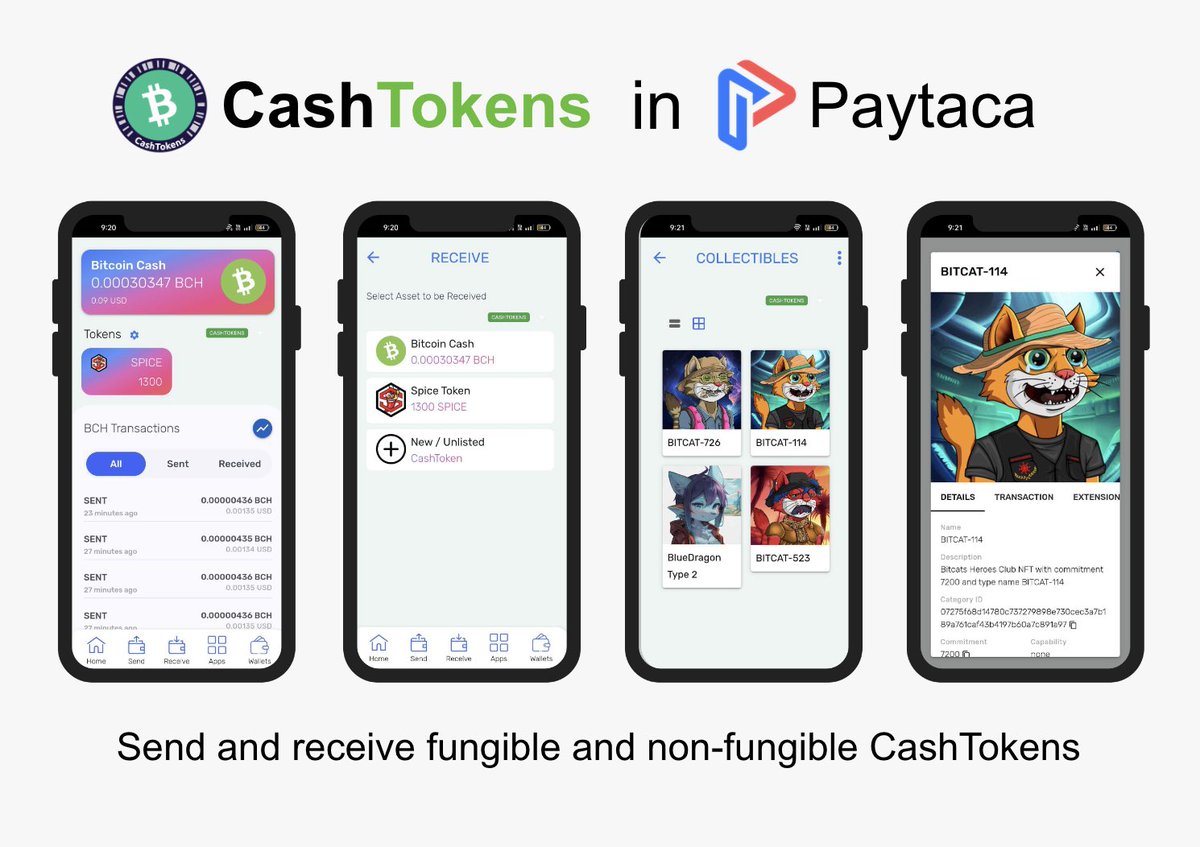
Since day 1 of #CashTokens activation in #BCH last May 15, we have built partial support for #CashTokens in our browser extension. Today we are happy to announce that our v0.16.x release now has full CashTokens support in both mobile app and browser extension. Try it now!
🚨Announcement(s)🚨
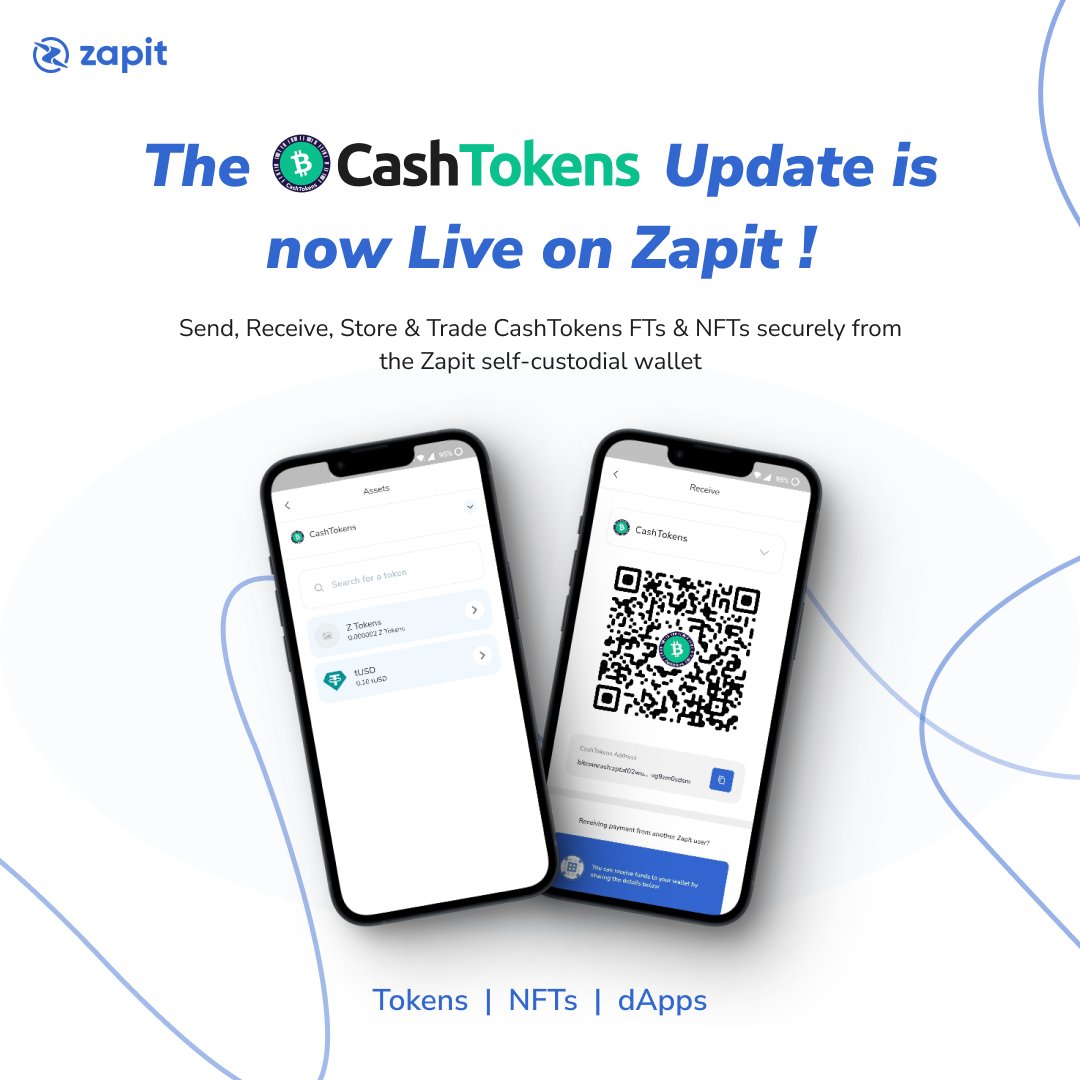
1/ Zapit v0.8 is live on Android! What’s new?
✨Support for #CashTokens, which means memecoins, FTs, NFTs, dApps & more!
✨Zapit’s public registry based on BCMR!