Debora Cahn, the creator of Netflix's The Diplomat, just confirmed something viewers caught in episode six of the new season.
In the scene, the housekeeper at the US embassy in London talks about her father, who fought in World War II. She says that during the Allied advance through Belgium, a live grenade rolled to his feet, and a soldier named Hershel Polin from Richmond, Virginia, grabbed it and threw it. It exploded next to his hand. He lost the arm. He saved her father's life.
Hersh Goldberg-Polin was born in Berkeley and grew up in Richmond, Virginia, before his family moved to Israel. On October 7, 2023, he was at the Nova festival when Hamas attacked. He lost part of his arm to a grenade while sheltering with friends, was taken hostage into Gaza, and was murdered in captivity in August 2024. He was 23.
Cahn told Mako the reference was intentional. "Yes, it's true," she said. She said his mother, Rachel Goldberg-Polin, called it a tribute, and that she loves that word. In her words, it was just a small footnote so people remember everything they went through.
A show watched by millions put his name in a story where a man from Richmond gives up his arm to save someone else's life. That is who Hersh was. Did you catch it when you watched?
Reporting by Dudi Caspi, Los Angeles, for Mako (https://t.co/7HiQnUsJIq), published November 9, 2026.
Saudi Arabia has systematically removed virtually all antisemitic content from its school textbooks. According to the Institute for Monitoring Peace & Cultural Tolerance in School Education an educational reform initiative has fundamentally changed what Saudi children are taught
Cuban’s plan relies heavily on taxing high-wage earners and incentivizing corporations to raise worker pay rather than buy back stock, boosting Social Security solvency, chipping away at the annual deficit, it leaves major revenue sources untouched such as capital gains. #Closer
@siliconvalleymm@emollick
Professor Mollick - Listening to your interview with Silicon Valley Girl . Lots of great ideas .
Thanks!! Now- time to read your book .
Marina- I’m a follower . Looking to learn from you 👍
“If it’s not uncomfortable, you’re probably not doing enough learning or thinking.”
Ethan Mollick, @emollick , Associate Professor of Management at Wharton and Co-Director of its Generative AI Labs, author of Co-Intelligence and Co-Existence
Timestamps:
0:00 Intro
0:50 How Do You Teach Ambition?
1:57 What Surgeons and Soldiers Built in His Wharton Class
3:31 Startup Ideas That Fail Every Year
7:26 Is It Still Worth Starting a Software Company?
13:24 4 Skills You Need to Use AI Well
16:10 How to Develop Taste
18:37 Why Junior Jobs Stopped Training People
20:42 "Cognitive Surrender": What to Keep Doing Yourself
22:12 What Happens to "Good Enough" Professionals
23:43 Why Experts Get the Most Out of AI
27:44 Should You Let AI Generate Your Ideas?
33:23 How to Manage AI Agents
35:14 The Biggest Mistake: Trusting Agents Too Much
36:03 Ethan's Real Agent Workflow, Step by Step
39:47 What He Can't Wait to Hand Off to AI
48:32 The Mindset That Helps When Everything Keeps Changing
49:55 Local Models: When Will They Matter?
51:08 Set Goals AI Can't Hit Yet
52:05 What Happens When AI Learns Taste?
Enjoy!
@ginamilan_@ginamilan_
Steven Miller is an embarrassment to his family & to all decent people
Concerning his comment on the S of L, organizers asked Emma Lazarus to contribute an original poem to raise money for the Statue’s pedestal
It’s part of US history as much as the Statue itself
Jon Ossoff was 16 when he finished reading John Lewis’s memoir and wrote him a letter. He asked if he could interview him, spend some time with him, anything that would let him learn from the man whose book he had just read. He didn’t expect an answer. Lewis wrote back and invited him to work in his congressional office.
There was something about that letter Lewis would have understood. He had written one himself at 17. A college near his home in Alabama had never answered his application, and Lewis wanted to challenge its segregation. He wrote to Dr. Martin Luther King Jr. without telling his parents or his teachers. King did not just write back; he sent Lewis a round-trip Greyhound ticket to Montgomery so they could talk in person.
Oh my!
The first time Lewis and Ossoff sat down for a meal, Lewis spent about an hour and a half telling him about the rabbis and Jewish activists who had marched alongside him in the South. Ossoff was a Jewish kid from Atlanta. He knew from the book what had happened to Lewis on the Edmund Pettus Bridge in Selma, where a state trooper fractured his skull during a march for voting rights. Now Lewis was telling him who had walked beside him.
The internship lasted a few months. The friendship lasted 17 years. In 2017, when Ossoff ran for Congress and lost, Lewis was there on election night. A reporter saw him sitting in a small room next to the party, looking out into the room. Later that night, Lewis came out and told the crowd how glad he was that he had answered the letter Ossoff sent him in high school.
Lewis died in July 2020, six months before Ossoff won his first Senate race. When Ossoff took the oath of office, he had copies of two old passenger lists in his jacket pocket. One recorded his great-grandfather Israel’s arrival at Ellis Island in 1911. The other recorded his great-grandmother Annie’s arrival two years later. In his hand was a book of Hebrew scripture that had belonged to Rabbi Jacob Rothschild, who led the Atlanta synagogue where Ossoff had his bar mitzvah (this is a Jewish coming-of-age milestone for a boy, usually at age 13).
In 1958, white supremacists had bombed that synagogue. Rothschild and his wife, Janice, grew close to Martin and Coretta Scott King in the years afterward. Janice lived long to see Ossoff take the oath with her late husband’s book
This week, Georgia reelected 39 year old Jon Ossoff to the United States Senate. At his victory speech in Atlanta, he thanked his wife, Alisha, and their daughters, Eva and Lila. Then he talked about a conversation he expects to have when Eva is older. He imagined her asking what he did when people were losing their health coverage and voting rights were under threat. He told the crowd what he hoped he would be able to say to her.
“The year you turned five, Georgia sent me back. Here is what we did with the time they gave us.”
Isitoshe,
After his win in Georgia, Jon Ossoff is now the prediction markets’ favorite to win the Democratic presidential nomination in 2028. He has the gift of gab and, some women are saying he is easy on the eye. But if he runs, the first test will be South Carolina, where Black voters helped turn Joe Biden’s campaign around in 2020. Ossoff will have to make his own case to those voters and when he talks about John Lewis there, he will tell them about the man who wrote back to him at 16, sat down with him over lunch, and was still in his corner the night he lost his first race.
May the day break
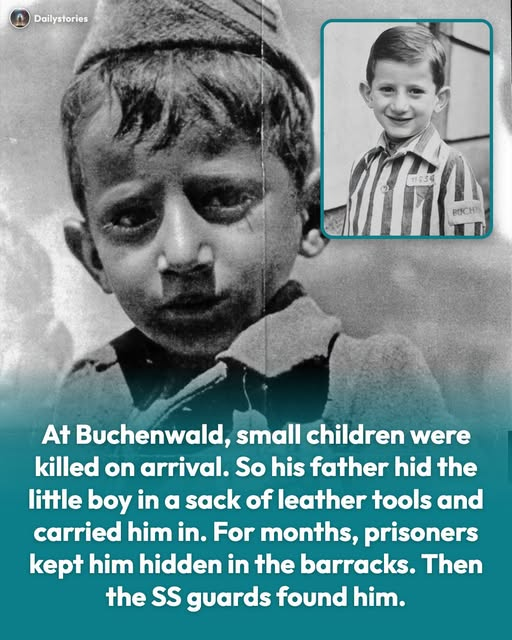
His father carried him into Buchenwald hidden in a sack.
He was 3 years old, and the SS were not supposed to know he existed.
Joseph Schleifstein was born in March 1941 in Sandomierz, Poland, while the town was under German occupation. His parents, Israel and Esther, kept him hidden in cellars and dark corners, because the Nazis took away small children who were too young to work.
Then the family was deported. His mother was sent to Bergen-Belsen. Joseph and his father were sent to Buchenwald, in Germany.
At the camp, small children and the old were sent away to be killed. So his father, a leather worker, put the little boy inside the big sack that held his tools, told him to keep absolutely quiet, and carried him in.
With the help of other prisoners, his father hid Joseph inside the camp. He spent his fourth birthday there.
According to his story, the guards did eventually find him. Instead of killing him, some of them made the little boy a kind of camp mascot. When senior Nazi officials came to inspect, he still had to disappear.
In April 1945, American soldiers liberated Buchenwald. Joseph remembered that day with joy: he no longer had to hide, there was more to eat, and the Americans gave him "lots and lots" of rides on their tanks and jeeps.
He and his father went looking for his mother. They found her alive in Dachau, and after the war the family started over in New York.
Joseph worked for AT&T for 25 years. He did not talk about Buchenwald for decades, not even to his own children. Then a film came out about a father who hides his little son in a concentration camp, Life Is Beautiful, and an archivist came across his old file. A search for the real boy began.
They found him living quietly in New York City.
I was happy to read this . It’s one thing to create the experience to deserve a low rating , it’s another thing when a group of people organize to create those ratings unfairly and undeservedly
The late Yitzhak Rabin speaks about his partnership with Arab parties and the racist arguments against it. Less than a week later, he would be assassinated.
In 1942, a drunk German officer sat at dinner and bragged about the Jewish woman he had selected from the brothel the Nazis had forced open in town. He said her name out loud. The Tunisian Arab sitting across from him stayed calm, smiled, poured more wine, and finished the meal. Then he drove the officer home, sped through the dark streets, and knocked on a door close to midnight. That night, he hid 25 people for four months. He never spoke about it again.
His name was Khaled Abdul-Wahab. He was 31 years old, a wealthy Muslim Tunisian who had studied art and architecture in New York and spoke fluent German. Nazi officers trusted him. They invited him to their dinners.
Tunisia was the only Arab country directly occupied by Nazi Germany during the war. Jewish families were pushed from their homes. More than 5,000 Jewish men were sent to forced labor camps. Yellow stars marked every chest.
That December night in the coastal town of Mahdia, Khaled listened as the officer boasted. The woman he named belonged to a family Khaled had known all his life.
He left immediately. He drove through the night. He knocked on their door at midnight.
Pack nothing. Come now.
He gathered 25 people — mothers, fathers, cousins, and children — and drove them nearly 20 miles to his family farm, hiding them inside the olive press, stables, and storage buildings.
This was not one brave act. It was four straight months of courage.
He fed them while supplies grew scarce. He kept babies quiet. He trusted his servants to stay silent. When German soldiers arrived to count Jewish families, the hidden people pinned yellow stars onto their clothes and stood motionless. When the soldiers left, the stars came off again.
One night, a drunken soldier wandered onto the farm and discovered them. An eleven-year-old girl hiding under a bed watched him laugh and threaten to kill everyone there. Then Khaled appeared. She remembered him her entire life as a guardian angel. He calmly walked the soldier outside, took away his weapon, and sent him off the property.
Nobody on that farm died.
In May 1943, British forces liberated Tunisia. All 25 people returned home alive.
Khaled went back to a quiet life. He married, raised daughters, painted, and worked in government service.
He never told anyone what he had done. Not his wife. Not his children. No one.
He died on September 4, 1997, at the age of 86. His story was buried with him.
Ten years later, his daughter Faiza was sitting in a café in Paris reading a Sunday newspaper when she came across an interview with an American historian describing a Tunisian Arab who had hidden 25 Jews in 1942.
The historian mentioned her father by name.
She was 45 years old and had never heard the story before.
She contacted the historian. One of the children saved on the farm had left behind 83 pages of testimony before her death. Every detail matched.
“I rediscovered my father,” Faiza later said.
Khaled was nominated for Israel’s highest honor given to non-Jews who saved Jewish lives. He would have been the first Arab to receive it.
The committee declined, saying he had not risked his own life enough.
Faiza answered with a line history should never forget:
“My father opened his home to Jews. They did not open theirs to us.”
Today, the 25 people Khaled saved have hundreds of descendants living across Israel, France, America, and Tunisia. The little girl hidden beneath the bed grew up, moved to Paris, and built a family of her own. None of them would exist if Khaled had stayed silent that night.
He had everything to lose. He acted anyway. Then he spent the rest of his life saying nothing about it.
The world nearly forgot him twice. Now you know his name.