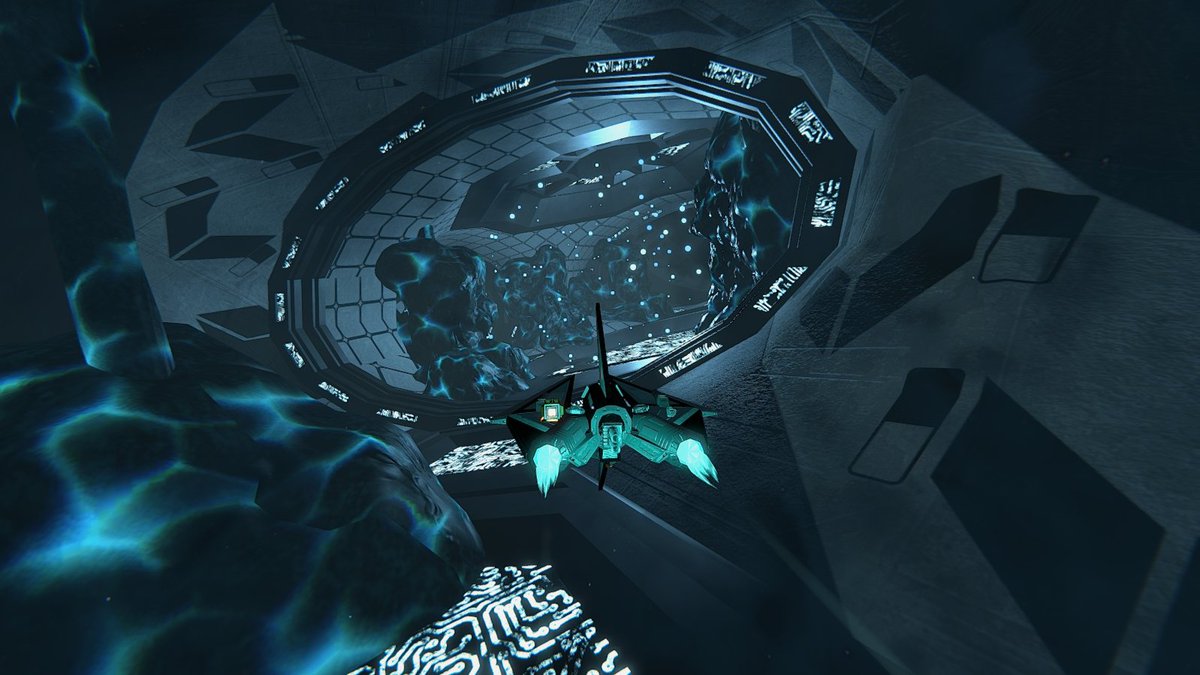
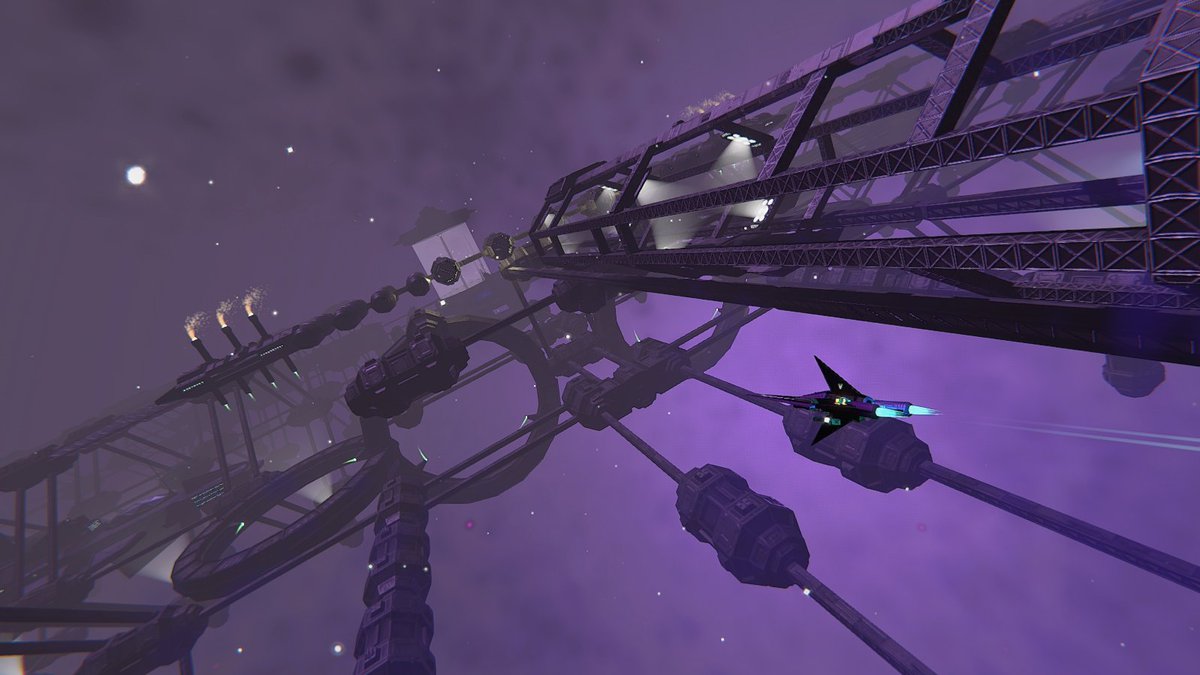
@theejankanator Live and work aboard a starship with a crew of 200, and explore a 1:1 scale Milky Way galaxy. Meet new species, conduct experiments in science labs, and experience what it would be like to live in space!
https://t.co/UpFBERwJuq
The multiplayer campaign is now playable to completion and has received its polish pass. And with that, Underspace officially enters its beta testing phase, which means it's time to get things ready for 1.0!
#underspace#gamedev#indiegame#indiedev#space
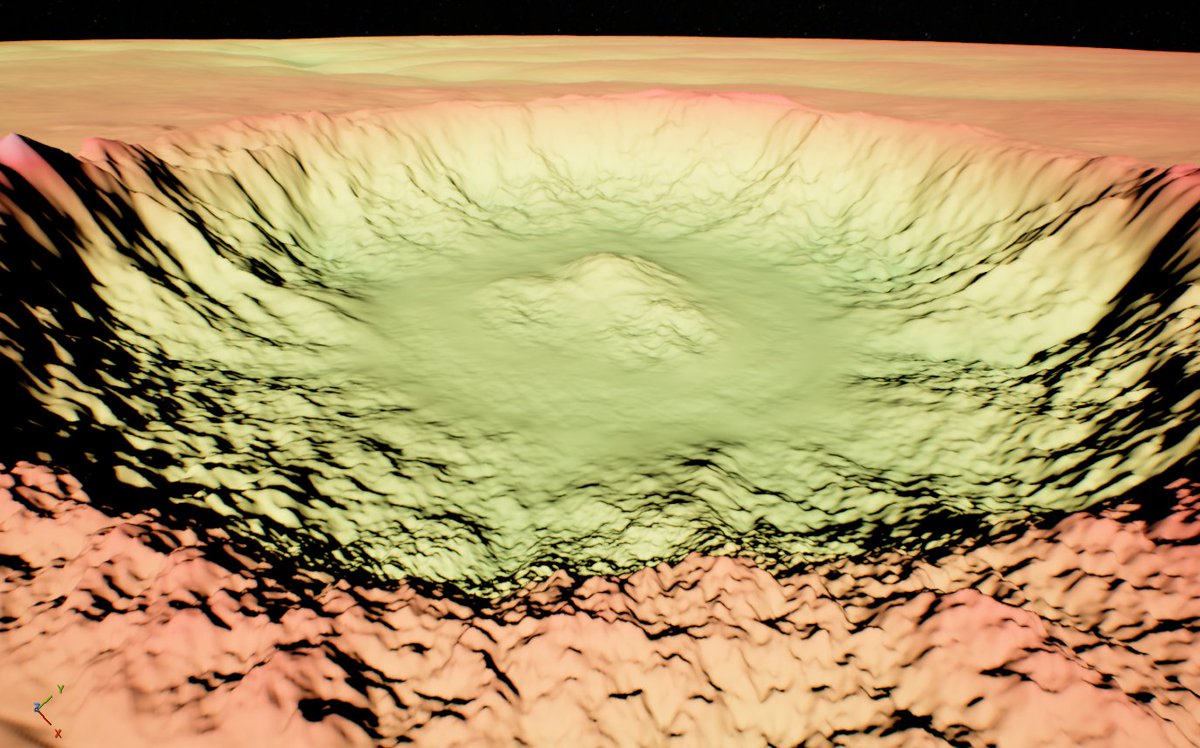
Something that's hard to get away from with space and procgen in general, is things quickly look samey. One rocky planet generally looks like any other rocky planet, because a ball of rock is a ball of rock.
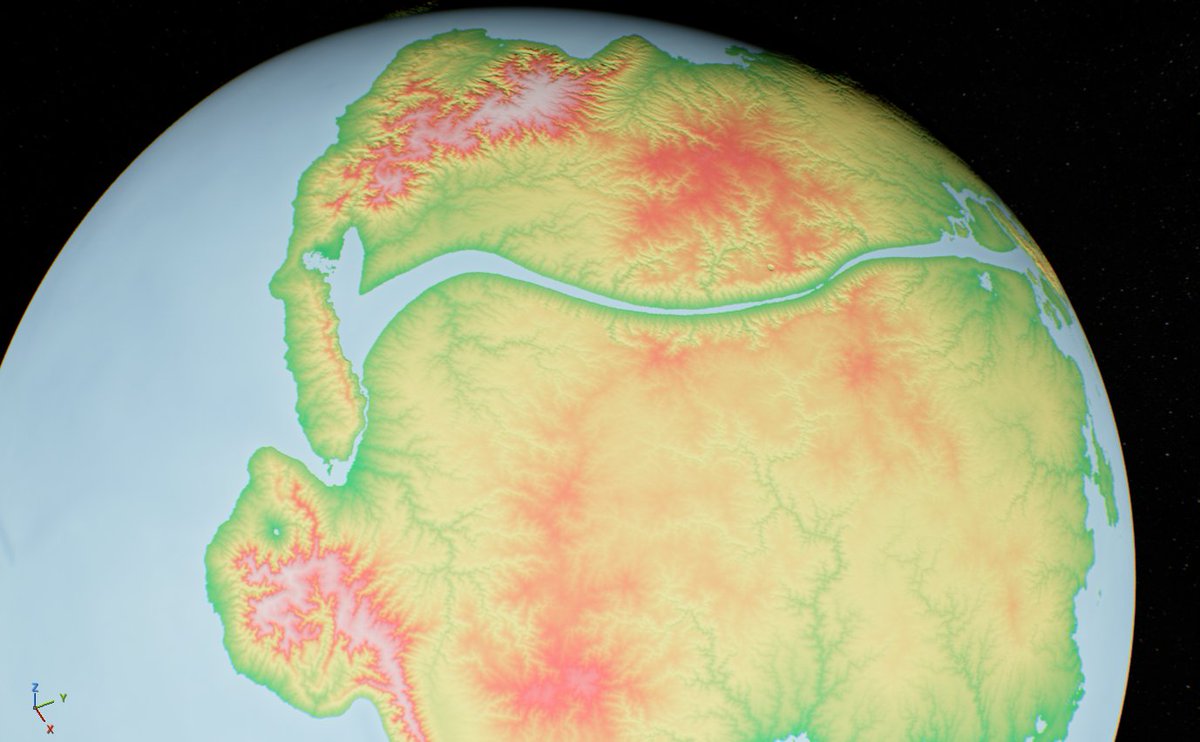
What I've been wanting from the beginning though is to give each ball of rock some character of its own, so to that end I've been working hard on making the geology of planets as dynamic as possible. I want to be surprised by unique surface features when arriving at a new planet, like interesting mountain ranges, weird flukes of geology, or epic volcanos.
It's not just random noise anymore, we're employing proper geological processes now, including erosion. Next up I need to add proper colour for the surface biomes, and then finally rivers and some rough noise to simulate forests from orbit.
Flying into a Gas Giant (Volumetric Depth Layers Test)
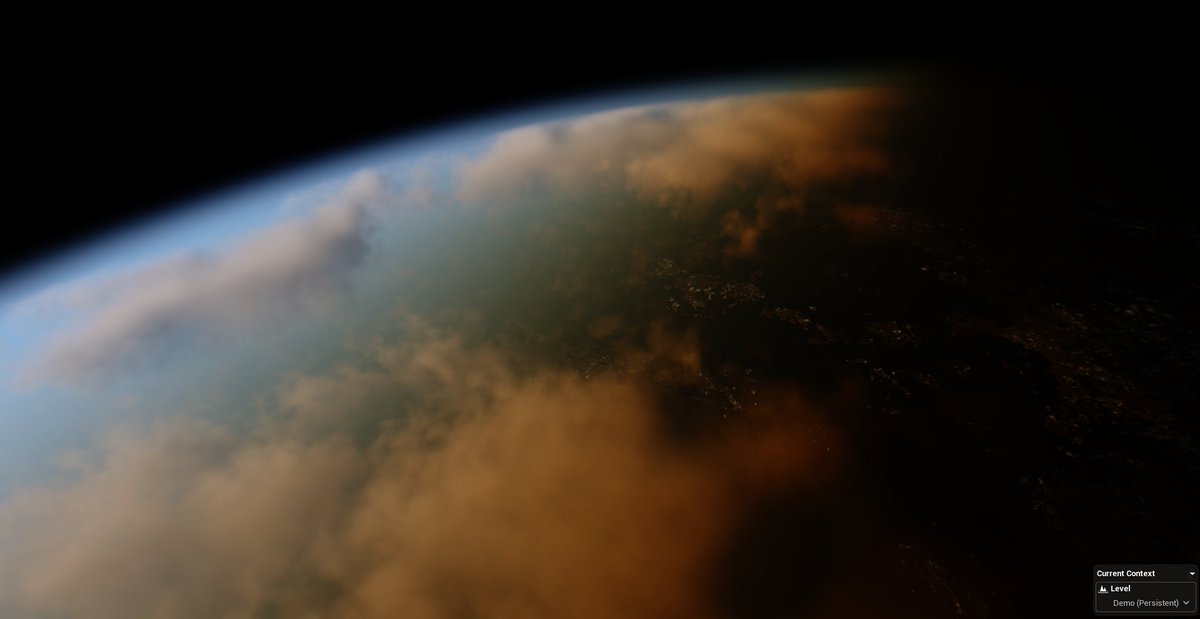
Gas giants are where you'll skim your fuel from in Starship Simulator, so we're keen for that experience to be epic every time. You'll also be able to fly down a few layers into the gas giant's atmosphere, because science! Each layer gets progressively darker and more fluid-like as you descend.
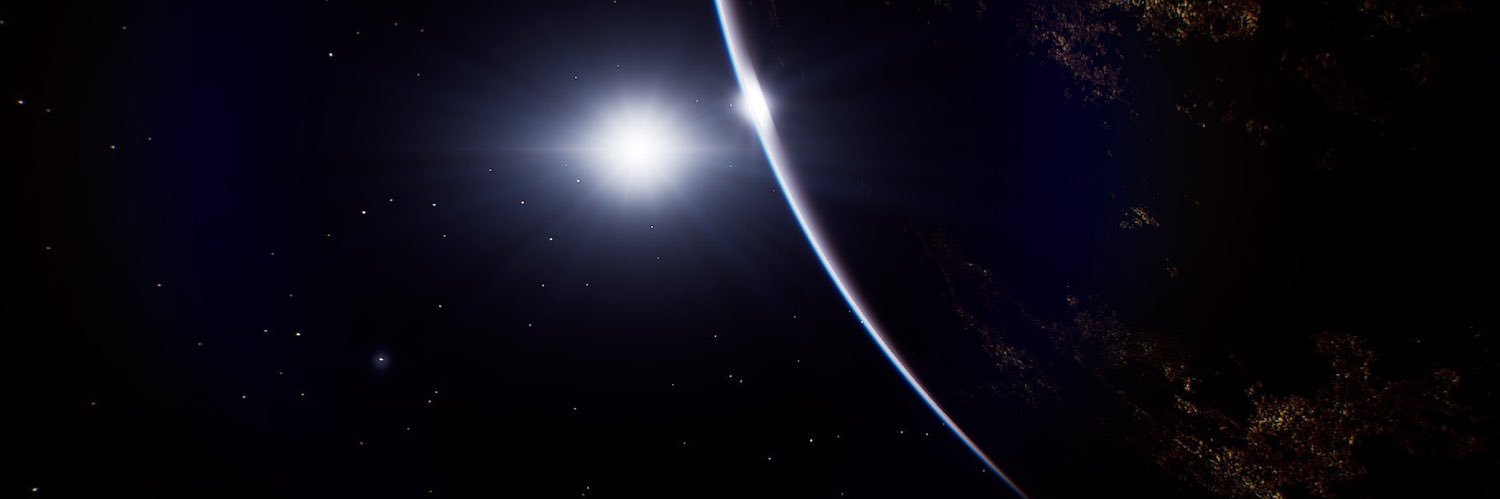
Testing our new volumetric star tech. Stars in the game are now full 3D objects, not just textured spheres. With endgame shields you will be able to fly into stars, for science or for a tactical advantage.
We're working to expand this tech to create fully volumetric gas giants, which starships will be skimming to collect gaseous fuels.
https://t.co/Lh5AEg07YR
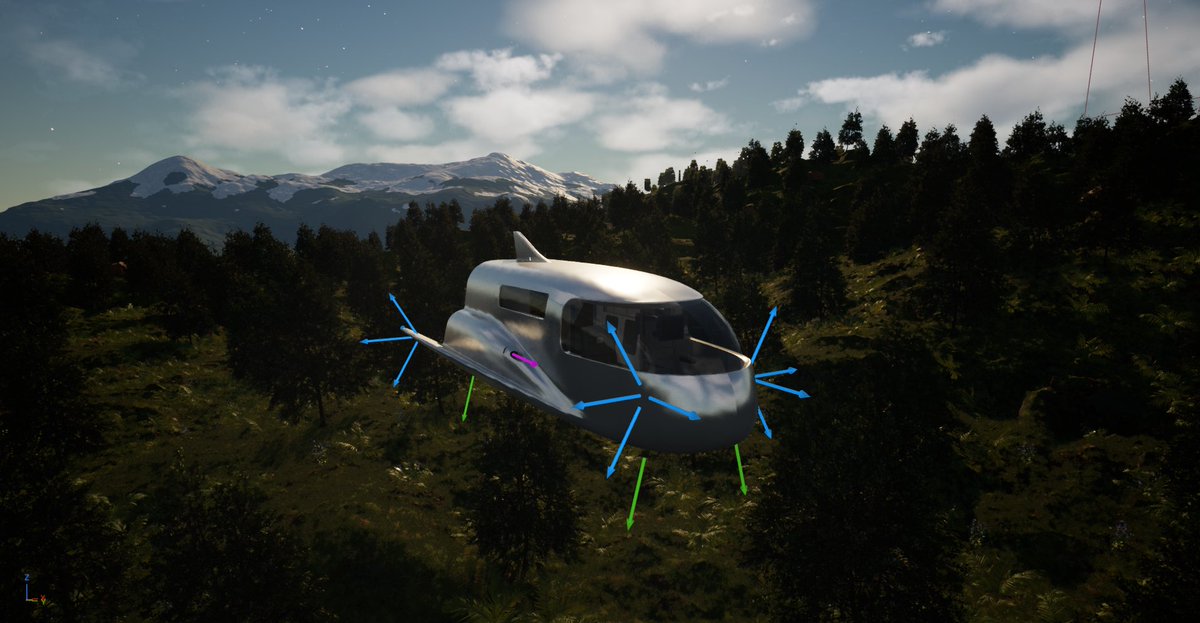
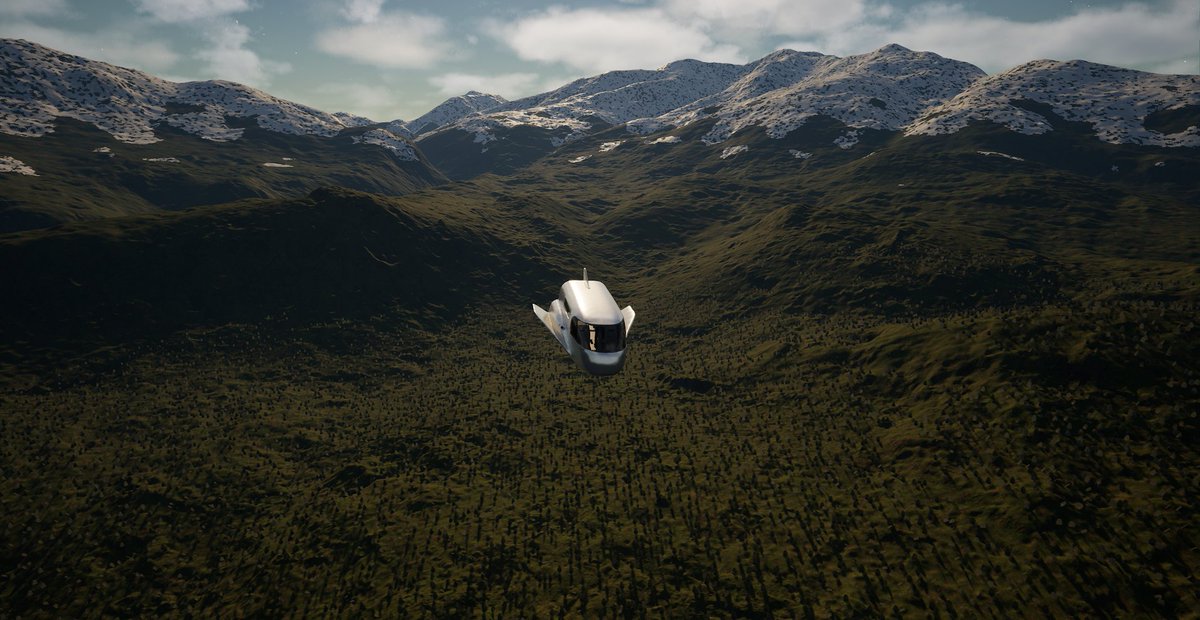
We've been working on our first Shuttle design on streams lately, so we thought it would also be a good time to also start building a proper PID flight controller for both in-space and atmospheric flight. Here's a bit of info about that:
While in space the flight model is fully newtonian, and the flight controller translates control inputs to RCS thruster firings. It does this based on thruster direction, so we can arbitrarily place thrusters around a vessel and the flight controller will handle the control mapping. It also has some autopilot functionality built in already, and is able to use the RCS thrusters autonomously to keep the vessel on target.
In-atmosphere, the Shuttle uses 4 landing thrusters in a manner very similar to a quadcopter. The handling feels a bit like flying a drone, with the addition of some main engines to provide horizontal thrust. The PID controller always tries to maintain a stable hover, so if you flip the shuttle upside down and take your hands off of the controls, it will use the landing thrusters to flip itself over and zero out its vertical velocity.
Everything is using real physics and real thrusters, so damage to a single thruster can immediately be felt in the handling. This also means every vessel will feel unique, because its handling profile is driven by its centre of mass and location of individual thrusters.
Our goal with the flight model is for it to feel meaningful and grounded in real physics, while also being approachable for non flight simmers.
To that end we'll have some flight assist modes that smooth off some of the sharper edges. We'll share more on this when the system is more fleshed out!