This 50-minute lecture by Jeff Bezos will teach you more about business than a 2-year MBA program.
Bookmark it and give it 50 minutes today, no matter what.
🚨 Anthropic just showed a 27-minute workshop on how to actually do prompts for Claude.
Taught by the people who built it.
Free. No registration. No paywall.
I've seen $300 courses that don't cover what they teach in the first 8 minutes.
Watch it and bookmark it now.
Shortly after Steve Jobs returned as the CEO of Apple in 1997, he met with Jony Ive, Apple’s Senior VP of industrial design.
Apple had 40 products on the market.
“Jony, how many things have you said no to?” Jobs asked.
Ive was confused.
“You have to understand,” Jobs said,
“There are measures of focus, and one of them is how often you say no.”
“What focus means,” Jobs taught Ive, “is saying no to something that you—with every bone in your body—think is a phenomenal idea, and you wake up thinking about it, but you say no to it because you're focusing on something else.”
Jobs walked up to a whiteboard and drew a 2 x 2 grid. On top, he wrote “Consumer” and “Professional.” Down the side, “Portable” and “Desktop.”
Four products—meet Apple’s new radically focused product line, Jobs said.
After that meeting, over the next two decades, Jobs and Ive—focused on making a few high-quality products while saying no to everything else—transformed a dying, near-bankrupt company into one of the most valuable companies in the world, worth over $2.9 trillion.
Takeaway 1:
The philosopher Marcus Aurelius pointed out that the focus of doing less “brings a double satisfaction.”
You get the satisfaction of having fewer things to do. And…you get the satisfaction of doing those fewer things at a higher level.
You get “to do less, better.”
During Steve Jobs’ first visit to Jony Ive’s design studio, he looked around, and then he said, “Fuck, you’ve not been very effective, have you?”
It was clear to Jobs that Ive was full of ideas and potential he wasn’t able to execute or fulfill under Apple’s previous leadership.
In the Jobs era of “doing less, better,” Ive was very effective.
Some products he designed include: iMac, iPod, iPhone, iPad, Apple Watch, and AirPods.
Takeaway 2:
Even though he slashed the product line down to four products, Jobs loved to have and hear ideas.
“Steve used to say to me,” Ive said, “and he used to say this a lot, ‘Hey, Jony, here’s a dopey idea.’ And sometimes they were: really dopey. Sometimes they were truly dreadful.
But sometimes they took the air from the room, and they left us both completely silent.”
It made me think of what Jerry Seinfeld identifies as the ultimate skill of the artist: “taste and discernment.”
“It’s one thing to create,” Seinfeld says. It’s one thing to have ideas.
“The other is you have to choose. ‘What are we going to do, and what are we not going to do?’” What are we going to add to the product line, and what are we not going to add?
“This is a gigantic aspect of [artistic] survival,” Seinfeld continues.
“It’s kind of unseen—what’s picked and what is discarded—but mastering that is how you stay alive.”
- - -
“Everything just got simpler. That’s been one of my mantras—focus and simplicity.” — Steve Jobs
Follow @bpoppenheimer for more content like this!
Colin Jost & Michael Che are the longest-tenured Weekend Update anchors in SNL history.
But after their first few episodes back in 2014, an NBC executive called a meeting with SNL producer, Lorne Michaels.
“Do you think Jost and Che are working?” the exec asked.
Michaels said,
"No."
"Oh," the exec said, "you know?"
Yes, Michaels said. He said he was well aware that his new Weekend Update anchors were not performing all that well.
"But it's a thing," Michaels told the exec. "People have to be bad before they can be good."
He likes to use the analogy of an ugly baby:
"All babies are ugly (unless they're your baby), but after three months, everyone says, 'What a beautiful baby.' You just have to live through that period of people not being good."
Takeaway 1:
Lorne Michaels said people are bad before they are good. And what's true of people is true of just about all creative work.
The co-founder of Pixar Ed Catmull, for instance, calls early mock-ups of Pixar movies—coincidentally—“ugly babies.”
“They are not beautiful, miniature versions of the adults they will grow up to be,” Catmull writes.
“They are truly ugly: awkward and unformed, vulnerable and incomplete. They need nurturing—in the form of time and patience—in order to grow.”
Takeaway 2:
Colin Jost and Michael Che, Lorne Michaels told the NBC exec, just needed some time to get through the period of being bad.
The record producer Rick Rubin talks about how it’s an underrated ability: the ability to sit with discomfort through that period of being bad.
Talking with his fellow multi-Grammy-winning producer Finneas O’Connell, Rubin said, “There’s a great deal of patience involved."
Because, he said, everything is bad for a while before it gets good.
Finneas agreed, saying,
“I think it’s shocking every time how bad things can be on their way to being good.
It blows my mind.
It’s like when someone’s solving a Rubik's Cube, and it looks like they’re so far from solving it right before they solve it.
When you’re in the middle of something—you listen to it, and you’re like, ‘Tomorrow, this might get amazing, but today, it’s so bad.’
The exciting thing is that it’s every time.”
“Every time,” Rubin repeats.
- - -
“You’re only as good as you’re willing to be bad…You’re never going to get good unless you’re willing to be bad.” — Randall Stutman
Follow @bpoppenheimer for more content like this!
ChatGPT’s ‘code interpreter’ is kinda wild. Watch it segment music markets based on a spreadsheet and come up with business strategies for each segment!
Congrats to @WUSTL Professor @CPhillipsPoet for winning the #PulitzerPrize !
Wash U professor Carl Phillips wins Pulitzer Prize for Poetry | STLPR (https://t.co/LfTeS67HLA)
“Growth is about excellence... when it comes to a choice between being an outperformer in a slow industry or an underperformer in a fast industry, you will do much better every time being an outperformer in the slower industry.” -MGI director Chris Bradley https://t.co/X6hfz11rJc
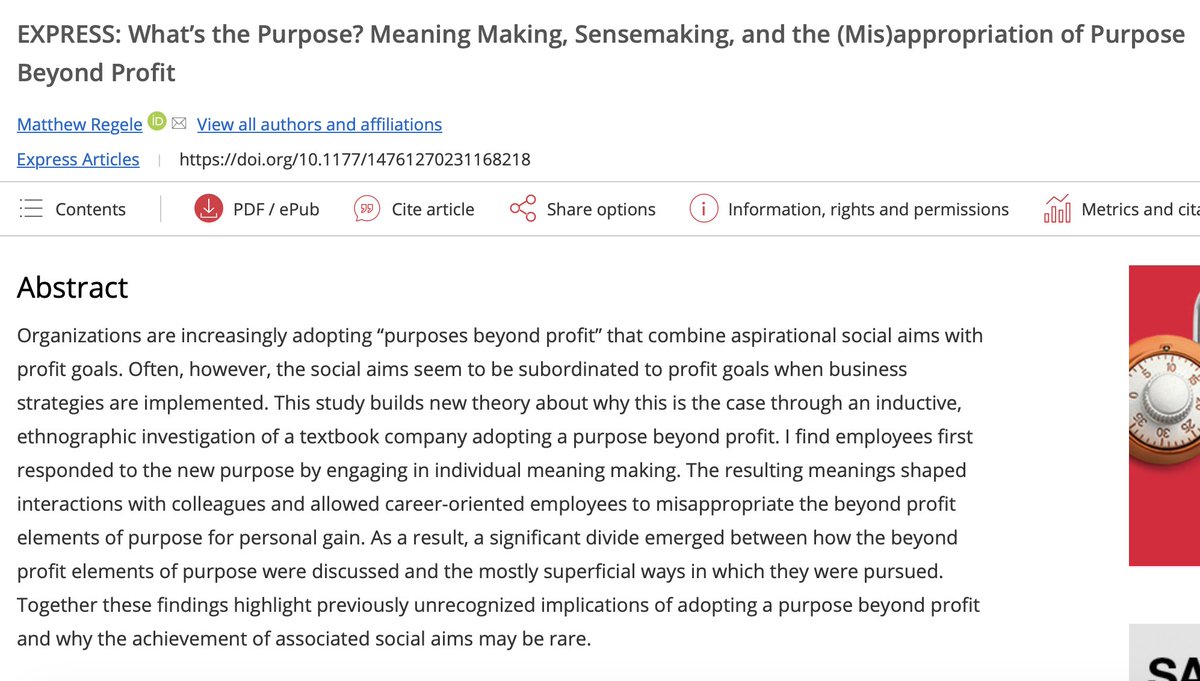
📣 New SO! Paper: "What's the Purpose? Meaning Making, Sensemaking, and the (Mis)appropriation of Purpose Beyond Profit" (👉 https://t.co/NDsFIMPN2F). Matt Regele explores how and how organizational "purposes beyond profit" are overshadowed by profit goals when put into practice
Until @Justinjpearson and @brotherjones_ are reinstated to the Tennessee legislature, I will not set foot in Tennessee, drink @JackDaniels_US, or knowingly contribute to the Tennessee economy in any way. These cars are made in TN: https://t.co/ikKiRErrfC
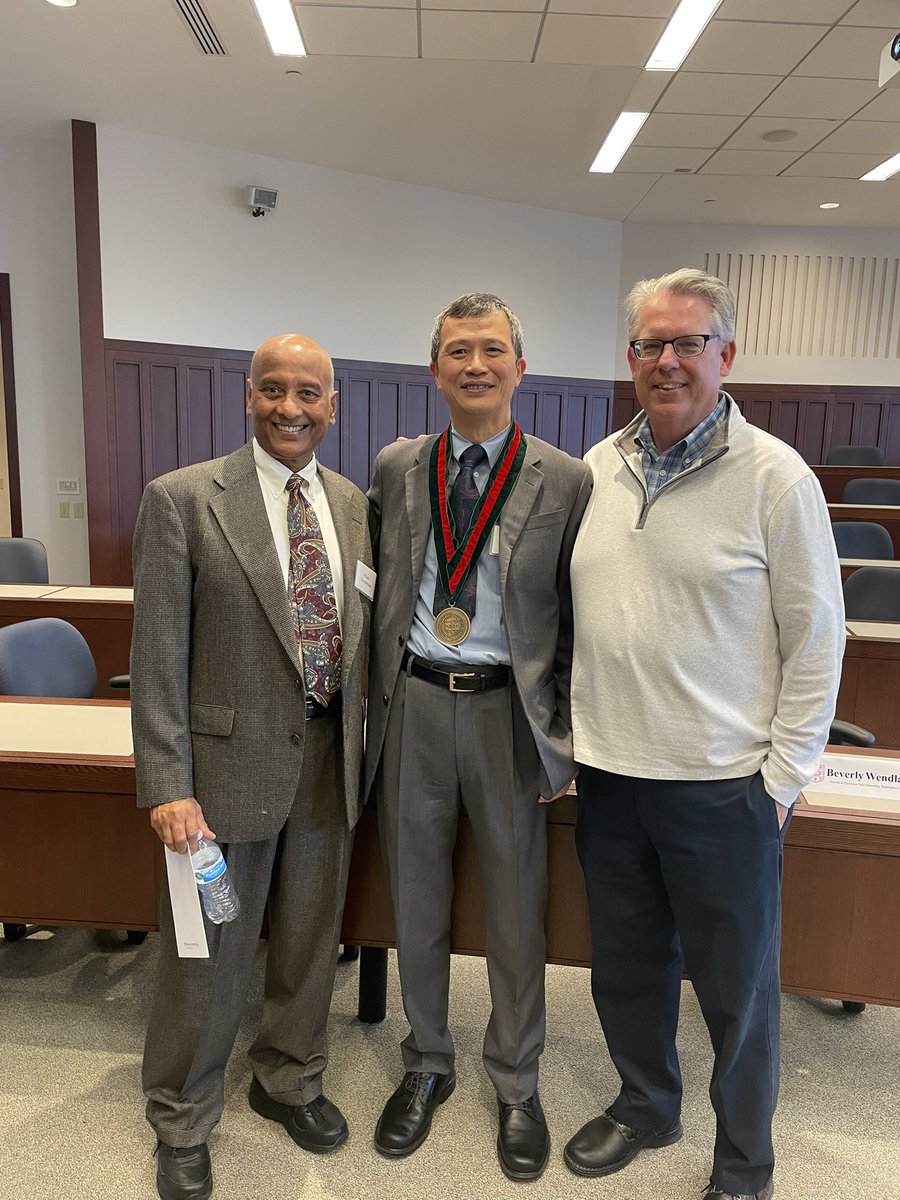
Congratulations to Tat Chan, the new Philip L. Siteman Professor of Marketing @WUSTLbusiness. Seen here with the former Chair-holder Chak Narasimhan and the great Bart Hamilton.










![bpoppenheimer's tweet photo. Shortly after Steve Jobs returned as the CEO of Apple in 1997, he met with Jony Ive, Apple’s Senior VP of industrial design.
Apple had 40 products on the market.
“Jony, how many things have you said no to?” Jobs asked.
Ive was confused.
“You have to understand,” Jobs said,
“There are measures of focus, and one of them is how often you say no.”
“What focus means,” Jobs taught Ive, “is saying no to something that you—with every bone in your body—think is a phenomenal idea, and you wake up thinking about it, but you say no to it because you're focusing on something else.”
Jobs walked up to a whiteboard and drew a 2 x 2 grid. On top, he wrote “Consumer” and “Professional.” Down the side, “Portable” and “Desktop.”
Four products—meet Apple’s new radically focused product line, Jobs said.
After that meeting, over the next two decades, Jobs and Ive—focused on making a few high-quality products while saying no to everything else—transformed a dying, near-bankrupt company into one of the most valuable companies in the world, worth over $2.9 trillion.
Takeaway 1:
The philosopher Marcus Aurelius pointed out that the focus of doing less “brings a double satisfaction.”
You get the satisfaction of having fewer things to do. And…you get the satisfaction of doing those fewer things at a higher level.
You get “to do less, better.”
During Steve Jobs’ first visit to Jony Ive’s design studio, he looked around, and then he said, “Fuck, you’ve not been very effective, have you?”
It was clear to Jobs that Ive was full of ideas and potential he wasn’t able to execute or fulfill under Apple’s previous leadership.
In the Jobs era of “doing less, better,” Ive was very effective.
Some products he designed include: iMac, iPod, iPhone, iPad, Apple Watch, and AirPods.
Takeaway 2:
Even though he slashed the product line down to four products, Jobs loved to have and hear ideas.
“Steve used to say to me,” Ive said, “and he used to say this a lot, ‘Hey, Jony, here’s a dopey idea.’ And sometimes they were: really dopey. Sometimes they were truly dreadful.
But sometimes they took the air from the room, and they left us both completely silent.”
It made me think of what Jerry Seinfeld identifies as the ultimate skill of the artist: “taste and discernment.”
“It’s one thing to create,” Seinfeld says. It’s one thing to have ideas.
“The other is you have to choose. ‘What are we going to do, and what are we not going to do?’” What are we going to add to the product line, and what are we not going to add?
“This is a gigantic aspect of [artistic] survival,” Seinfeld continues.
“It’s kind of unseen—what’s picked and what is discarded—but mastering that is how you stay alive.”
- - -
“Everything just got simpler. That’s been one of my mantras—focus and simplicity.” — Steve Jobs
Follow @bpoppenheimer for more content like this!](https://pbs.twimg.com/media/FzeinZYWYAEzlYI.jpg)