We just received official word that, for the first time, the SAT and ACT have joined forces and hired the same lobbying firm for one purpose: stopping CLT.
Think about that!! 🤯
These are deeply entrenched organizations with billion-dollar scale and nearly a century’s head start. CLT is a tiny startup with 70 employees, a bunch of homeschool moms, Hillsdale graduates, and people who believe education should still be about truth, goodness, and beauty.
WHY are they so threatened?
Instead of spending money lobbying to protect their duopoly, American families would be far better served if they focused on improving their own products: maybe stop pushing radical left-wing ideology, stop treating Western civilization as something to apologize for, maybe get back to the basics, and for crying out loud provide some decent customer service, you guys make the DMV look like the Ritz Carlton.
Competition is good. Let families decide! Friends at SAT and ACT, I know you read this, we talk to all the same people, stop playing dirty. Let the market decide.
@AndrewKolvet Good amendment.
Communists/leftists/wokes use the tactics of criticizing and infiltrating anything that doesn’t give them power to weaken, destroy, or co-opt it.
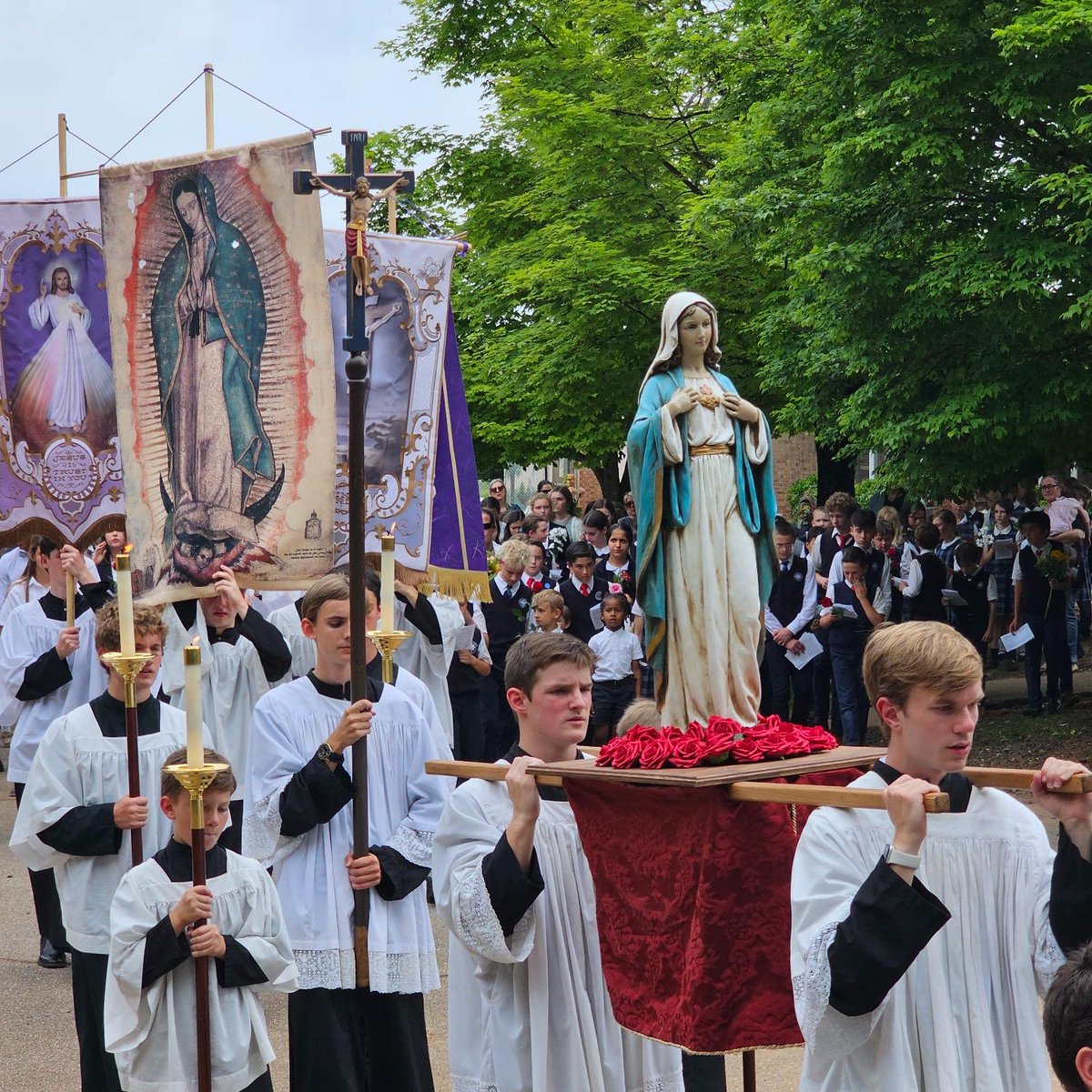
In 2015, Our Lady of the Rosary Parish and School in Greenville, South Carolina, was down to just 130 students, with enrollment continuing to decline. The parish brought in Tommy Curtain, (a Notre Dame-trained lawyer and accomplished pianist) to become the new head of school.
Ten years later, Our Lady of the Rosary is widely regarded as a national flagship Catholic school. I have met families who moved across the country just to enroll their children here. Daily Mass, classical education, and serious spiritual formation are all happening here.
One of the things I love most about it is that it is so radically simple. For centuries in the West, the local parish educated the next generation. Our Lady of the Rosary has simply returned to that model, and in doing so has revitalized both the parish and the school.
The more vibrant the school becomes, the more vibrant the parish becomes. And the more vibrant the parish becomes, the more vibrant the school becomes. It is beautiful, and it is the way God intended it.
Categories facilitate exclusion.
Categories exist to properly represent reality.
Postmodernism claims our will can produce any reality we desire. It cannot.
Reality exists prior to our will and perception. Humans use right reason to discern reality, not create it.
Men don’t belong in any women’s category.
“I don’t ever believe exclusion is the answer, I just don’t.”
Cool. So does she think Olympians shouldn't be excluded from Paralympics? 18 year olds shouldn't be excluded from 12u? Heavyweights shouldn't be excluded from featherweights?
Categories exist solely to exclude.
The communist refers to this person as the “useful idiot”. The gullible squish who foolishly supports the revolution, and only begins to understand his folly as he’s being lined up against the wall. If you think you’re safe from the commies cuz you vote blue, wake up:
Deneen projects the Hobbesian-Lockean framework onto the Founding. Hobbesian state of nature is a thought experiment about autonomous individuals escaping insecurity. One of those (statecraft propaganda) ‘intellectual theories’ Thomas Reid wryly took every opportunity to warn his students about, calling them ‘the creatures of men, which nature seldom mimics’.
The Declaration does not AT ALL ground itself in Hobbesian (or even Lockean for that matter!) ‘theory’. Instead it is predicated upon ‘the Laws of Nature and of Nature’s God’ and ‘self-evident truths’ and neither depends upon contract because both presuppose realities that already exist prior to every political arrangement.
Likewise, when the Constitution begins ‘We the People…’ it does not describe isolated individuals assembling from a pre-political condition. It presupposes an already existing civic body of families and communities capable of ordaining and establishing a constitutional order. That is not AT ALL the same anthropology because it is rooted in an entirely different moral, anthropological, ontological and metaphysical lineage.
Progressivism was the substitution of the Founding’s First Principles. For those familiar with my articles and threads, you’ll know how that substitution happened. The Founding grounds rights in antecedent reality; later philosophies relocate rights into autonomous will and still later philosophical, political and ideological movements relocate them into historical development, identity, and/or administrative power. This is not difficult folks - but sophists like Deneen et al are counting on you not knowing (and certainly not understanding) your own governance system and how it was established, nor what was intellectually and institutionally operationalized thereafter to subvert and negate it.
@ClayTravis It’s not a scientific question.
It’s a question about acceptance of reality, natural order, and natural law.
This question forces people to take a metaphysical stance they’re often unprepared to understand, accept, or defend.
It’s not a scientific question.
It’s a question about acceptance of reality, natural order, and natural law.
This question forces people to take a metaphysical stance they’re often unprepared to understand, accept, or defend.
Indiana Fever coach says she “isn’t educated enough from a scientific standpoint” to say if men should be able to play women’s sports. These people are batshit insane.
The difficulty is not acknowledging the Reformation’s influence - but in making it the constitutive lineage of the American Founding. In doing so, that obscures (and negates) the far older Classical Christian Realist tradition that operationally furnished the Founders’ ontology, epistemology and natural law jurisprudence. John Witherspoon’s enduring contribution was not simply that he was a Presbyterian minister, but that at Princeton he transmitted that Classical Realist tradition (through Scottish Common Sense Realism) to the generation that would frame the American constitutional order. That specific recognitional inheritance (not Protestantism as such) made constitutional republican self-government possible by grounding self-evident truths and rights in realities antecedent to every human authority. Recovering that lineage is no mere historical exercise. It is a pedagogical one, essential to understanding how the Constitution can be recognized, upheld and preserved by citizens of differing denominational traditions.
@thepalmerworm@PenitentColumbo Haha. It will not come to that. We have a few deeper conversations and then go back to playing cards and enjoying each other’s company.
I agree. In John 6, after preaching the difficult sermon on the Bread of Life, many disciples leave and Jesus turns to the Twelve and asks, “Will you also go away?”
That’s one of the clearest teachings I see illustrating that Revelation must be freely accepted and doesn’t confer jurisdiction upon natural theology.
https://t.co/ekZNGKeSPM video/written article putting that into the specific context of the distinction between Canadian (Crown) Parliamentary Supremacy v American Constitutional Republicanism when both the Canadian ‘Charter’ and the Declaration of Independence reference ‘God’ and yet, one operates on the architecture of God’s ‘will’, while the other operates on the architecture of God’s ‘nature’. One is statist and the other is not, yet both reference ‘God’.
I’d be careful with the phrase ‘set boundaries’. Revelation does not confer jurisdiction upon natural theology; it presupposes and perfects it. Jurisdiction is not created by an authority claiming competence. It is recognized because the nature of the thing itself determines who is competent to judge it.
That is why I’ve spent so much time distinguishing God’s will from God’s created order. Those are not the same jurisdictional foundation. If civil jurisdiction is thought to arise from God’s will alone, then whoever claims to speak for that will can also claim supreme civil authority. If civil jurisdiction is recognized from God’s intelligible created order, then civil authority is answerable to truths accessible to reason rather than to confessional assent.
That distinction lies behind two very different constitutional traditions. The former historically underlies voluntarist systems of State supremacy. The latter underlies the American doctrine of popular sovereignty, where civil authority is limited because it is answerable to an antecedent created order rather than constituting it.
The State therefore doesn’t decide what belongs to the Church, and the Church doesn’t decide what belongs to the State. The nature of each determines where its authority begins and ends.
@thepalmerworm@PenitentColumbo Agree.
Outside of and perhaps even assumed by the founding documents, would you say some form of revealed theology is needed discern, guide, and set boundaries on natural theology?
Natural theology establishes what reason can know about God, man and moral order from creation. Revealed theology teaches truths unattainable by reason alone, such as the Trinity and the Incarnation. The Declaration operates within the first domain precisely because it is establishing the civil jurisdiction of a political community composed of Christians from different traditions as well as others. That is not at all the same as denying the Trinity. For goodness sake, It is recognizing the limits and competence of civil (not ecclesial) authority.
Operationally, this is a jurisdictional issue. If civil legitimacy depends upon explicit confession of the Trinity, then the foundation of political authority is not realities accessible to all rational persons - it is dependent entirely upon confessional assent and the Founders saw exactly what that did to Britain and Europe. Nature’s God is not at all an abstract substitute for God. It is the Creator as knowable through His intelligible created order - nature; the proper jurisdiction of natural law. Despite the conflicting personal beliefs of the various Founders - the Declaration itself does not at all deny the Triune God; it establishes a civil order on truths accessible to endowed (not autonomous) reason (recta ratio), while ensuring the Church maintains jurisdiction over revealed doctrine without State interference and control .
Confusing or deliberately confounding those jurisdictions is a huge problem and debilitating illiteracy on this platform and elsewhere, but especially on here where people don’t bother to learn from the foundations on up and just repeat what they’ve seen elsewhere.
10/
Christine Jones is not attempting to recover ‘old ideas’. She is endeavouring to recover the recognitional conditions that made constitutional self-government possible in the first place.
Free institutions cannot survive if the educational formation that originally made them intelligible has been replaced by one ordered toward perpetual reconstruction. That is why her work keeps returning (not to constitutional clauses first) but to ontology, epistemology, pedagogy and language. Because long before constitutions are sabotaged politically, they are rendered unintelligible educationally. And once a people lose the capacity to recognise the realities their institutions were designed to steward, those institutions can be hollowed out while still appearing to remain exactly where they have always been.
None of the Institutions are working on this pedagogical significance. Ask yourself why not?! Then if you are able and willing, please support Christine’s work here:
https://t.co/Rk9mZSUYuW
And here:
https://t.co/PbgOIOuWmG
All financial support is needed and gratefully appreciated,
Thank you to those few who have been supporting this work.