Starship is preparing to go to orbit. Flight 14 is targeting to launch as early as Tuesday, September 22, pending regulatory approval → https://t.co/LwJ4g6dg9v
The SpaceX Recovery team is still working to recover Flight 13’s Starship from the Indian Ocean. They’ve been overcoming challenging conditions and increasingly rough seas as they attempt to guide the 52m long spacecraft to port
Glad that @sneweyy is highlighting important isues such #dengue in our countries.
Delighted to speak to her as always.
Hopefully we will have answers soon @EngEongOoi
https://t.co/0lWqodrr6x
This hurts. I’ll never forget the feeling of losing Amos-6 on the pad and my heart goes out to the Blue Origin teams. It’s a sad day, but hang in there.
You’ll root cause and get back to the skies even stronger, soon ❤️🩹
🌟 Explore the #ICID2026 programme, including Meet the Expert sessions designed for direct discussion with specialists across infectious diseases, AMR, One Health, and public health.
➡️ Discover the sessions: https://t.co/KzcQpfeFR3
#ISID#GlobalHealth#InfectiousDiseases
This works really well btw, at the end of your query ask your LLM to "structure your response as HTML", then view the generated file in your browser. I've also had some success asking the LLM to present its output as slideshows, etc.
More generally, imo audio is the human-preferred input to AIs but vision (images/animations/video) is the preferred output from them. Around a ~third of our brains are a massively parallel processor dedicated to vision, it is the 10-lane superhighway of information into brain. As AI improves, I think we'll see a progression that takes advantage:
1) raw text (hard/effortful to read)
2) markdown (bold, italic, headings, tables, a bit easier on the eyes) <-- current default
3) HTML (still procedural with underlying code, but a lot more flexibility on the graphics, layout, even interactivity) <-- early but forming new good default
...4,5,6,...
n) interactive neural videos/simulations
Imo the extrapolation (though the technology doesn't exist just yet) ends in some kind of interactive videos generated directly by a diffusion neural net. Many open questions as to how exact/procedural "Software 1.0" artifacts (e.g. interactive simulations) may be woven together with neural artifacts (diffusion grids), but generally something in the direction of the recently viral https://t.co/z21CP5iQfu
There are also improvements necessary and pending at the input. Audio nor text nor video alone are not enough, e.g. I feel a need to point/gesture to things on the screen, similar to all the things you would do with a person physically next to you and your computer screen.
TLDR The input/output mind meld between humans and AIs is ongoing and there is a lot of work to do and significant progress to be made, way before jumping all the way into neuralink-esque BCIs and all that. For what's worth exploring at the current stage, hot tip try ask for HTML.
Progress review meeting with @hasitha_tissera on our ongoing clinical trial on spatial repellent by @AEGISProgram
Happy to be conducting all the lab assays for this trial, which includes 12,000 samples for #dengue#chikungunya antibodies and other assays.
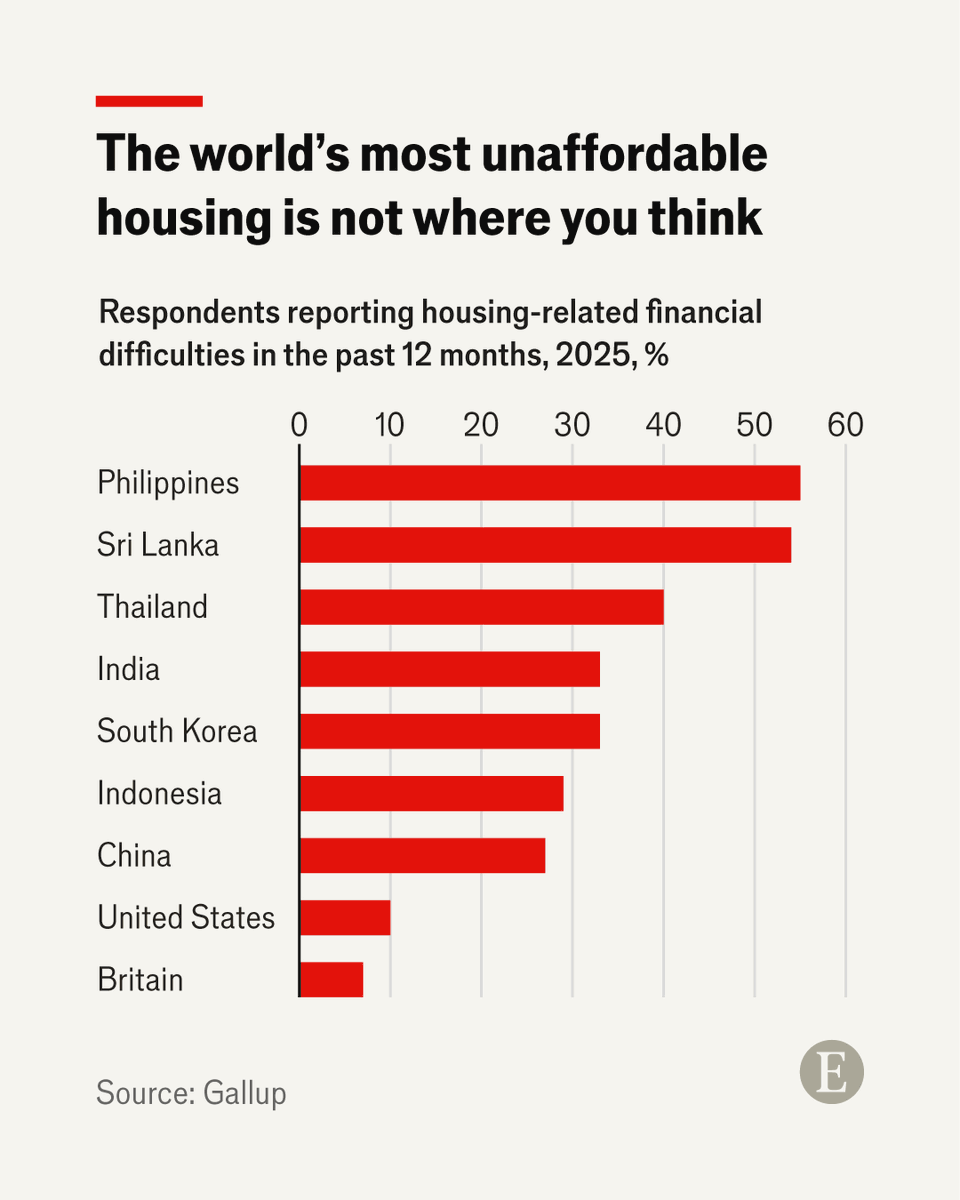
The greatest challenge for Asia’s metropolises is a shortage of decent and affordable housing. Fixing that would improve millions of lives. To find out how, register to continue reading (it’s free) https://t.co/cxGXTYwbmw
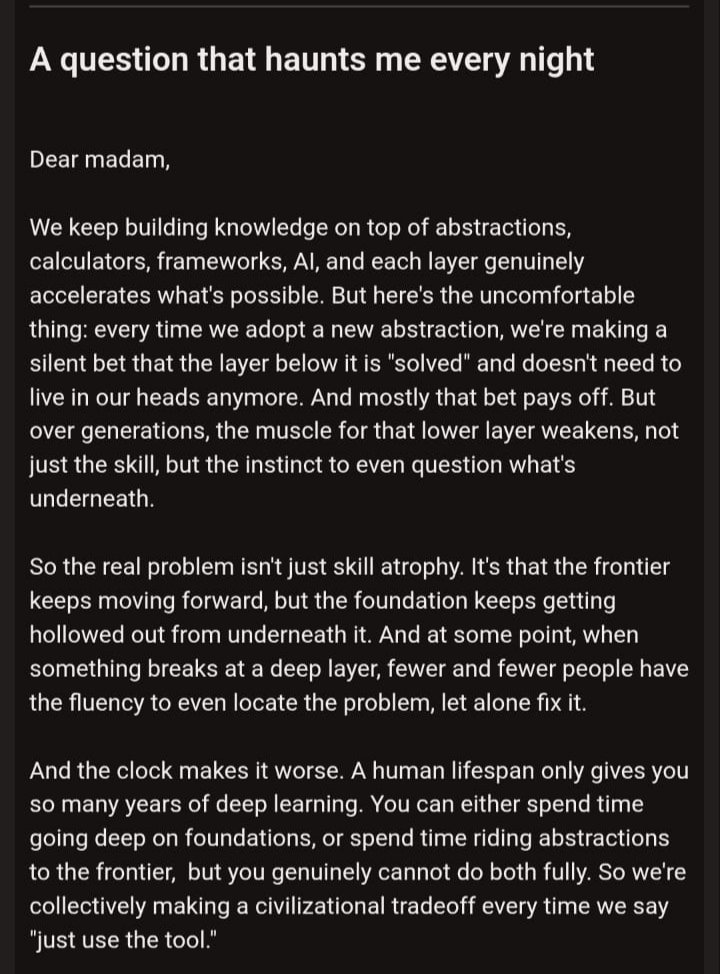
@AmandaAskell Is there a principled way to decide which foundational layers deserve to stay alive in human minds, not just documented somewhere, but actively understood, versus which ones are safe to fully delegate to tools? And who decides that, and how, before it's too late?
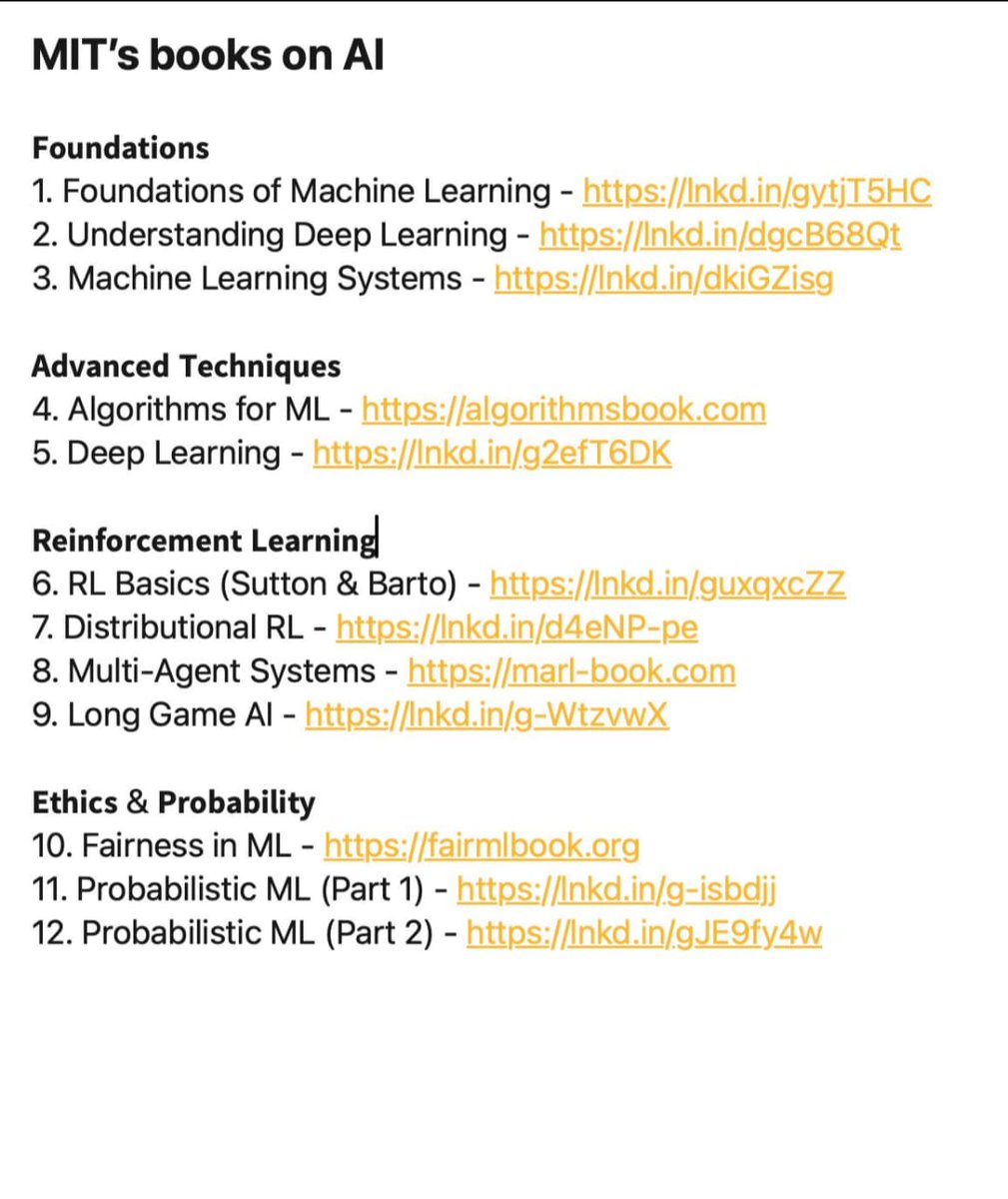
BREAKING: MIT just mass released their Al library for free. (Links included)
I went through these and honestly... this is better than most paid courses I've seen.
Here's the full list of books:
Foundations
1. Foundations of Machine Learning Core algorithms explained. Theory meets practice.
2. Understanding Deep Learning Neural networks demystified. Visual explanations included.
3. Machine Learning Systems Production-ready architecture. System design principles.
Advanced Techniques
4. Algorithms for ML Computational thinking simplified. Decision-making frameworks.
5. Deep Learning The definitive textbook. Covers everything deeply.
Reinforcement Learning
6. RL Basics (Sutton & Barto) The classic. Agent training fundamentals.
7. Distributional RL Beyond expected rewards. Advanced theory.
8. Multi-Agent Systems Agents working together. Coordination and competition.
9. Long Game Al Strategic agent design. Future-focused thinking.
Ethics & Probability
10. Fairness in ML Bias detection. Responsible Al practices.
11. Probabilistic ML (Part 1 & 2)
Links: https://t.co/AhDqm9x1QC
Most people pay thousands for bootcamps that teach half of this.
Bookmark it. Start anywhere. Just start.
Repost for others Follow for more insights on Al Agents.
MIT's books on Al
Foundations
1. Foundations of Machine Learning - https://t.co/HxbXfsDIl6
2. Understanding Deep Learning - https://t.co/AyeQav2yzN
3. Machine Learning Systems - https://t.co/0AxGtjBFwA
Advanced Techniques
4. Algorithms for ML - https://t.co/LOjFeK1hut
5. Deep Learning - https://t.co/Ztmu7X6gNM
Reinforcement Learning
6. RL Basics (Sutton & Barto) - https://t.co/HAWxL28df1
7. Distributional RL - https://t.co/VB1zBuSzag
8. Multi-Agent Systems - https://t.co/3tWqJaimYn
9. Long Game Al - https://t.co/vYDuy1XKT2
Ethics & Probability
10. Fairness in ML - https://t.co/B4lAj2ivpF
11. Probabilistic ML (Part 1) - https://t.co/folJrX24sf
12. Probabilistic ML (Part 2) - https://t.co/BMOjc8qSqZ
We’re publishing a new constitution for Claude.
The constitution is a detailed description of our vision for Claude’s behavior and values. It’s written primarily for Claude, and used directly in our training process.
https://t.co/CJsMIO0uej
Excited to share our latest publication on molecular epidemiology & evolutionary trends of DENV-2 strains circulating in Sri Lanka (2016–2023), highlighting ongoing viral evolution and the importance of genomic surveillance in endemic settings.
https://t.co/bDyYLOyVs9
Researchers have uncovered the molecular trigger for a rare but potentially deadly clotting disorder that some people experienced after receiving some COVID-19 vaccines
https://t.co/w6wLE1uG5U
Infection & Immunity Symposium conducted by @aller_gyimm in collaboration with @dukenus and @skku_official was a huge success. Great science, lively discussions, and strong engagement from local & international colleagues and your researchers.
#Immunology#InfectiousDisease