"As I grow older, I realized that criticism for its own sake is not wisdom..
...And what I choose to do is to speak with the firmness that opens my opponent's eyes, not with the arrogance that inflame their anger."
- P.L.O. Lumumba
Empire of the Kop sources have obtained footage (now widely circulated online) of video clips which appear to show David Coote indulging in a foul-mouthed rant about Jurgen Klopp in which he repeatedly used inflammatory language to defame the ex-Liverpool manager:
“In a rules-based international order, States have the right of self-defence. But self-defence must take proportionality into account, in line with global legal, diplomatic—and moral frameworks.”
Today, in Riyadh, I addressed fellow world leaders on issues surrounding the prolonged Israel-Palestine conflict. I reiterated Nigeria’s historical support for a two-state solution, which is a vision grounded in the principles of equality and mutual recognition. I also called upon world leaders to work towards exploring new paths to peace and bringing an immediate end to this conflict.
As representatives of nations that value justice, dignity, and the sanctity of human life, we have a moral obligation to collectively bring about an immediate end to this conflict, which has persisted for far too long and inflicted immeasurable suffering on countless lives.
Nigeria’s own experiences, domestically and regionally, have taught us that identity politics are no substitute for respecting the nuances of diversity. The international community, therefore, has the opportunity to bring new thinking to bear on this most relentless challenge. We need to find new pathways to peace without delay.
#PBAT @NGRPresident
Tax Reform Bills - 10 Most Frequently Asked Questions
It is not unusual for a major reform such as this to elicit keen interest from all stakeholders. This development is necessary to achieve the best outcomes that benefits all as it provides an opportunity for further engagements which is healthy for the system.
In this regard, we have collated the most frequently asked questions about the tax reform bills to better inform all stakeholders and address some misleading analyses in circulation.
Question 1
What is the whole fiscal and tax reforms all about?
Answer 1
Nigeria’s tax system has over time become complex, stifling growth and unable to generate the required revenue for development. This is largely due to lack of policy clarity and inconsistency, obsolete and ambiguous tax laws, weak and fragmented revenue administration.
The main objectives of the reform is to redesign the system to support growth by addressing current challenges such as multiplicity of taxes, ambiguous and obsolete provisions, reduce the tax burden on individuals and businesses while promoting the ease of doing business to facilitate sustainable economic growth and deliver shared prosperity for Nigerians.
The key targets include single digit number of taxes, harmonised and efficient revenue administration, increase in tax to GDP ratio, economic competitiveness, and removal of tax burden on the poor.
Question 2
How representative or inclusive was the process leading up to the various proposals?
Answer 2
The committee comprised over 80 individuals from all walks of life across the 6 geopolitical zones of Nigeria representing more than 20 government institutions, the organised private sector, trade associations, professional bodies, professional services firms, and the civil society. The composition ensures there is adequate gender balance, with people of different faiths and the youth. About 45 students were selected from 22 universities across Nigeria who support the secretariat work, conduct research and participate in committee meetings on a rotational basis.
Tailored sessions were conducted for more than 40 sectors representing over 90% of the economy and focus group engagements for people with disabilities, youths, and Nigerians in the diaspora. The committee requested inputs from all stakeholders and received memoranda from people in all the 36 states and the FCT.
Furthermore, exposure consultation sessions were organised for CFOs with over 300 companies represented, journalists, public analysts, tax consultants, and business owners. We also had engagements with the Nigeria Governors’ Forum, the Federal Executive Council, National Economic Council, finance commissioners, the Joint Tax Board, among others.
Question 3
Why is the VAT proposal generating so much controversy? Are we trying to fix what is not broken?
Answer 3
The current VAT system is fractured. The major issues include:
(i) disputes over VAT administration between some states and the federal government resulting in some landmark judgements and pending court cases. This is compounded by the fact that VAT is not stated in the 1999 Constitution thereby creating a lacuna. Our analysis shows that a central collection system is more efficient and benefits all. Once the contentious issues have been resolved, then VAT can be properly included in the constitution. The current sharing formula of FG 15%, States 50% and LGs 35% is proposed to become FG 10%, States 55% and LGs 35%.
(ii) imposition of parallel consumption taxes in some states along with VAT which increases the tax burden on the people and contributes to multiple taxation. The reform seeks the discontinuation of all consumption taxes other than VAT.
(iii) basis of distribution - the current formula for sharing VAT among states is based on 20% derivation, 50% equality and 30% population. The tax reform proposes a different model of derivation which will attribute VAT to the place of supply and consumption rather than the current model which attributes VAT to the state where it is remitted thereby favouring states with companies headquarters. Further, derivation under the new model will account for 60% of VAT distribution for better equity and to discourage any state from seeking to administer VAT as a state tax, which will not only result in much lower revenue for all tiers of government but will impose a higher burden on businesses.
The proposed derivation model is contained under S.22(12) of the Nigeria Tax Administration Bill which states that “For the purpose of attribution, any return under this section shall provide details of derivation of taxable supplies by location ...”
The controversy has arisen from the perception that the proposed formula would lead to lower revenue for some states. However, the 5% to be ceded by the FG can be set aside for equalisation transfers to cater for any shortfall to a state under the new model. This ensures that no state is worse off in the short term while significantly enhancing economic activities and revenue for all states in the medium to long term.
Watch the explainer here https://t.co/MEb6cN9iJJ
Question 4
Are the bills also seeking to merge or scrap some agencies?
Answer 4
No. The bills are seeking to merge taxes and harmonise revenue administration. The system will leverage technology for integration which will ensure seamless revenue administration with greater efficiency and less burden for people and businesses. Government agencies will be able to focus on their primary mandates rather than being distracted with revenue targets. Agencies that are currently collecting taxes and levies other than regulatory fees will therefore be funded through the budgetary process.
Question 5
One of the reform targets is to double Nigeria’s tax to GDP ratio over the next few years. Are we to expect more taxes?
Answer 5
The plan is to reduce the overall tax burden, not increase it. By simplifying the tax system, harmonising taxes and addressing impediments to investments, the reforms will boost economic activities and therefore enhance revenue generation for all tiers of government. This will ensure that we can raise tax revenue without raising tax burden, through various strategies including removal of disincentives to business formalisation, use of technology and data for intelligence, tax simplification and enhanced administrative capacity. Beyond raising revenue, curbing tax evasion also ensures that there is a level playing field for all rather than implicitly penalising compliant taxpayers and rewarding evaders.
Question 6
How will the reforms benefit businesses, large and small?
Answer 6
Businesses have consistently cited tax issues such as multiplicity of taxes and complex tax compliance requirements as major impediments to investment and competitiveness. Addressing these issues will therefore facilitate economic growth and boost the country's GDP.
Some of the proposals include reduction of corporate income tax rate from 30% to 25% over the next 2 years and elimination of earmarked taxes on companies to be replaced with a harmonised single levy at a reduced rate.
Others include elimination of minimum tax on loss-making companies and those with low margins, grant of input VAT credit to businesses on assets and services to reduce cost of investment, ability to pay taxes on foreign currency transactions in naira, WHT and VAT exemptions for small businesses and a higher threshold of N50m annual turnover for corporate income tax exemption. There will be an office of the tax ombudsman to check administrative excesses and protect vulnerable taxpayers. In addition, there tax incentives are being rationalised with clear rules to ensure certainty and provide a level playing field for all investors, while a new priority sector incentive regime will replace the current pioneer status scheme etc.
Question 7
Is it true that workers will pay more PAYE tax?
Answer 7
The current taxable income bands and rates were introduced in 2011. Due to the lack of review, the structure has resulted in “fiscal drag" where many low income earners have been pushed to the top bracket over time due to high inflation. Also, the system discourages formalisation given that the tax rate on companies is nearly double that of enterprises which also encourages arbitrage in many cases.
The proposal seeks to address these issues and simplify the system by eliminating various reliefs and allowances while adjusting the bands and rates to achieve an overall lower effective tax rate for workers. This will ensure that an individual with basic education should be able to file their tax returns without any assistance. There is a rent relief allowance to provide additional benefits for low income earners.
Individuals earning about N1.7m or less per month will pay lower PAYE tax while those earning the new minimum wage and slightly more will be fully exempted. These thresholds will result in about 98% of workers in the public and private sector paying lower taxes while the top 2% will pay slightly more in a progressive manner up to 25% for high networth individuals.
Question 8
Are there specific proposals for the ordinary Nigerian?
Answer 8
Yes. The lowest income earners accounting for about one-third of all workers will be fully exempted from tax while low and middle income earners will pay less. This is consistent with the policy philosophy of not taxing poverty. Also, self employed persons and entrepreneurs will enjoy tax exemptions available to individuals in formal employment.
The VAT reform includes a zero (0%) rate for food, education, health, and exemption for rent and public transportation. These items constitute an average of 82% of household consumption and nearly 100% for low income households which will ameliorate the rising cost of living for the masses.
In addition, there are proposed changes to the income tax laws to facilitate remote work opportunities for Nigerians in Nigeria within the global business process outsourcing. This will empower our youths to play a key role in the digital economy space.
Question 9
We have seen different recommendations and proposals in the past. What will be different this time around?
Answer 9
The Presidential Fiscal Policy and Tax Reforms Committee was set up with a broad mandate covering fiscal governance, revenue transformation and economic growth facilitation. In addition, the committee is charged with implementation rather than merely submitting a report of recommendations at the end of its assignment which has a much lower chance of success. The various proposals were co-created with inputs from Nigerians, using data and evidence to inform the recommendations.
There are measures to ensure that the reforms are institutionalised via legal framework and administrative structures including systems to curb corruption and block loopholes through technology, self service and tax agents regulation as well as planned amnesty and whistleblowing framework to sanitise the system.
Question 10
What else is being done beyond the new tax bills?
Answer 10
There are various proposals which have been implemented or are at different stages of implementation including the 2024 WHT Regulations, Executive Orders, and the 2024 National Fiscal Policy with clear principles for fair taxation, responsible borrowing and sustainable spending including frameworks for subsidy and cash transfers, ESG and Sustainable Development Goals.
More information can be found on the committee’s social media accounts, fiscalreformsng on X, LinkedIn, Instagram, Facebook, YouTube channel and website https://t.co/UqRW8UWktP. You can also reach us via email at [email protected] or via WhatsApp chat on +234 810 975 3151.
The current VAT derivation model attributes VAT to the state of remittance, usually the head office location.
Contrary to some trending misinformation, the proposed model seeks to ensure fairness by attributing VAT to the location of supply and consumption as indicated under S.22(12) of the Nigeria Tax Administration Bill which states that:
“For the purpose of attribution, any return under this section shall provide details of derivation of taxable supplies by location ...”
Watch this short video for more context https://t.co/MEb6cN8KUb or the full video here https://t.co/APUBiDwde1
Remember - "You're not entitled to your opinion, you're entitled to your *informed* opinion ..." - Harlan Ellison
For the benefit of Senator Ndume and others who might be of the mind that they do not need to study a document before speaking to it, here are some of the changes proposed in the bills:
1.Changes to the income tax laws to facilitate remote work opportunities for Nigerians in Nigeria within the global business process outsourcing. This will empower our youths to play a key role in the digital economy space.
https://t.co/L8WZesVO47 rated VAT and other incentives to promote exports in goods, services, and intellectual property.
https://t.co/kV95EHE9QW exemptions for small businesses including WHT, VAT, and 0% CIT.
4.Exemption from personal income tax for minimum wage earners and reduced tax burden for over 90% of private and public sector workers
5.VAT at 0% for food, education, health, and exemption for rent and public transportation. These items constitute an average of 82% of household consumption and nearly 100% for low-income households to ameliorate the rising cost of living for the masses.
6.Introduction of the Tax Ombudsman to advocate for improved tax system and protect vulnerable taxpayers
7.Reduction of corporate income tax rate from 30% to 25% over the next 2 years and elimination of earmarked taxes on companies to be replaced with a harmonised single levy at a reduced rate.
8.Elimination of minimum tax on loss-making companies and those with low margins
9.Grant of input VAT credit to businesses on assets and services to reduce cost of investment and improve competitiveness
10.Redesign of the personal income tax band and rates, VAT and Capital Gains Tax to be progressive while protecting the poor
11.Changes to permit the payment of taxes on foreign currency denominated transactions in naira to reduce the pressure on the exchange rate and simplify compliance for businesses.
12.Proposal to repeal over 50 nuisance taxes and levies, and harmonise the remaining taxes to a single digit
13.Equitable basis for VAT revenue sharing to ensure that states without many headquarter companies are fairly treated and recognised for their economic contributions
14.Rationalisation of tax incentives to reduce uncertainty and provide a level playing field for all investors
15.A new National Fiscal Policy to set the framework for fair taxation, responsible borrowing and sustainable spending. 3/4
Why Waziri Atiku Abubakar Should Cut President Bola Tinubu Some Slack
I supported the candidacy of Waziri Atiku Abubakar. However, the election was not stolen from him or the Nigerian public.
It would have been hard for us in the Peoples Democratic Party to win the 2023 Presidential election.
If, as a united political party, the PDP could not defeat the APC in 2019, how could we have vanquished them in 2023 when we were disunited?
We had 11,262,978 votes in 2019. By 2022, Peter Obi had left us with the 1,693,485 votes we got in the Southeast. Then the G-5 Governors departed and ended whatever hopes we had of getting 25% in their states.
Then we lost Kwankwaso with his two million votes.
If you minus Southeast, Kano, and Oyo, Benue and Rivers votes, you will see that it roughly equals the 6,984,520 votes polled by Waziri Atiku Abubakar in 2023.
We were defeated by the disunity in our party.
Let me now address some alternative policies Waziri Atiku proposed.
Waziri said he would have taken a gradual approach and would not have been as drastic as President Tinubu had been.
Given the reality of what the Tinubu administration inherited, I do not know if that would have been possible.
Have we forgotten that the Buhari administration illegally borrowed ₦50 trillion through ways and means and depleted our foreign reserves, leaving behind more debt than all past governments combined?
The Buhari regime claimed they left a foreign reserve of $37.08 billion, only for JP Morgan, our reserve bankers, to say they lied and our reserves were just $3.7 billion. The fallout of this is that Buhari's CBN Governor panicked and was arrested as he tried to flee Nigeria.
Faced with these realities, how would any responsible government carry on spending $1 billion monthly on fuel subsidy, $1.5 billion monthly defending the Naira and a further $300 million monthly subsidising electricity while servicing a total debt of almost $100 billion with 92% of our revenue as at the end of Buhari's tenure?
On February 26, 2024, Waziri said:
"President Javier Milei of Argentina was sworn into office on 10 December 2023. He inherited a worse condition than Nigeria’s. But what he did to return his country to a place where investors are ‘starting to believe’ should serve as a lesson to Nigeria’s Bola Tinubu.”
Interestingly, on Friday, September 27, 2024, The Financial Times, in a headline 'Argentina’s poverty rate soars above 50% under Javier Milei' revealed that rather than praise, the Argentine leader reforms have failed.
Poverty in Argentina is at its worst rate ever at 57%, and "136,000 jobs have been wiped out since Milei took office."
Additionally, according to the IMF, Argentina is now officially in recession as its economy has contracted by 3.5% in the last quarter and inflation hit a world record of 236.7%.
In contrast, Nigeria under Tinubu experienced two quarters of unprecedented trade surpluses, and at the end of August 2024 had a ₦14.6 trillion trade surplus and a GDP growth of almost 3%. Inflation had been tamed and minimum wage increased.
Next month, for the first time since Aguiyi-Ironsi abrogated true federalism with his Unification of Assets Decree Number 34 on May 24, 1966, Local Governments will receive their funding directly due to the Tinubu administration's judicial victory at the Supreme Court on Thursday, July 11, 2024, granting autonomy to local governments.
Our foreign reserves hit a record of $40.2 billion because we no longer indulge in the politically popular but economically unreasonable act of defending the Naira with $1.5 billion each month.
Now, imagine if President Tinubu had taken that February 26, 2024 advice from Waziri Atiku Abubakar to copy what Milei did, where would Nigeria be?
That alone shows that President Tinubu's judgment is much better than Waziri Atiku Abubakar is giving him credit for, and it should be Javier Milei who ought to learn from Nigeria's Tinubu, not vice versa!
Bola Tinubu: A President ready to risk it all for future generations
By Michael Chibuzo
This man called President Bola Ahmed Tinubu is painstakingly doing an architectural redesign of Nigeria's economic foundations. He has chosen to be the scapegoat and anyone who understands Nigeria's structural problems should be grateful that a Bola Tinubu is President of Nigeria today. This is a President who appears not to be bothered about re-election politics and moves like one ready to sacrifice his immediate personal political interests for the long-term health and survival of his dear country.
At the moment and in the foreseeable future, his attempt to solidify the foundation of this federalist state called Nigeria would bring about pains - a lot of it actually. It took us long to enter into the ditch, we must not expect to get of the ditch overnight or in four years. To cure this pain, we must finish the treatment. We must not stop halfway. The World Bank, an institution we love to hate, said this much recently. And they are very right on this.
It takes a President who is not afraid to lose elections to do the unpalatable foundation jobs required to fix Nigeria. President Bola Tinubu has continued to lay the institutional foundations that many feel are impossible or suicidal to pull off. I will enumerate some of the major ones, which justify why I so much believe in the abilities of President Bola Tinubu to succeed - it's not a blind faith.
1. Tax and Fiscal Reforms: This was one of Tinubu's earliest moves. Just like what Tinubu did when he became Lagos governor, his first major policy move was to reform the revenue and tax administration system in Nigeria. He set up the Tax and Fiscal policy Reforms committee headed by Taiwo Oyedele and in less than a year they delivered a great job, which has metamorphosed into the Economic Stabilisation Bills (ESB) currently before the NASS.
Through these bills, Tinubu wants to amend about 15 different tax, fiscal, and establishment laws to facilitate economic stability and set the country on the path for sustained inclusive growth. On Oct 3, the President forwarded four executive bills to the NASS.
These bills are the Nigeria Tax Bill, Nigeria Tax Administration Act (Amendment) bill; Nigeria Revenue Service Bill and Joint Revenue Board (Establishment ) Bill. When passed into law, these bills would among other things help to harmonize the multiple tax laws in the country with the big one being the stripping of Customs, NIMASA, Immigration, NPA and other revenue generating agencies the powers to collect revenues. Revenue collection through NRS would reduce the cost of collection drastically and increase efficiency of revenue collection by blocking many leakages and applying centralised innovations.
Customs and co would be made to focus on their core duties. FIRS would be rebranded to Nigeria Revenue Service (NRS) which would collect all taxes that should go to the federation account. Each tier of government would then get its own share. In fact Tinubu wants FG's share of VAT revenue to shrink to 10% from the current 15%. He wants the subnationals to have more revenue to finance new powers donated to them in the second schedule of the 1999 constitution (as amended). Most importantly, these tax reforms would see 90% of income earners and small businesses in Nigeria being exempted from taxes. In another clime, this would be celebrated a landmark legacy.
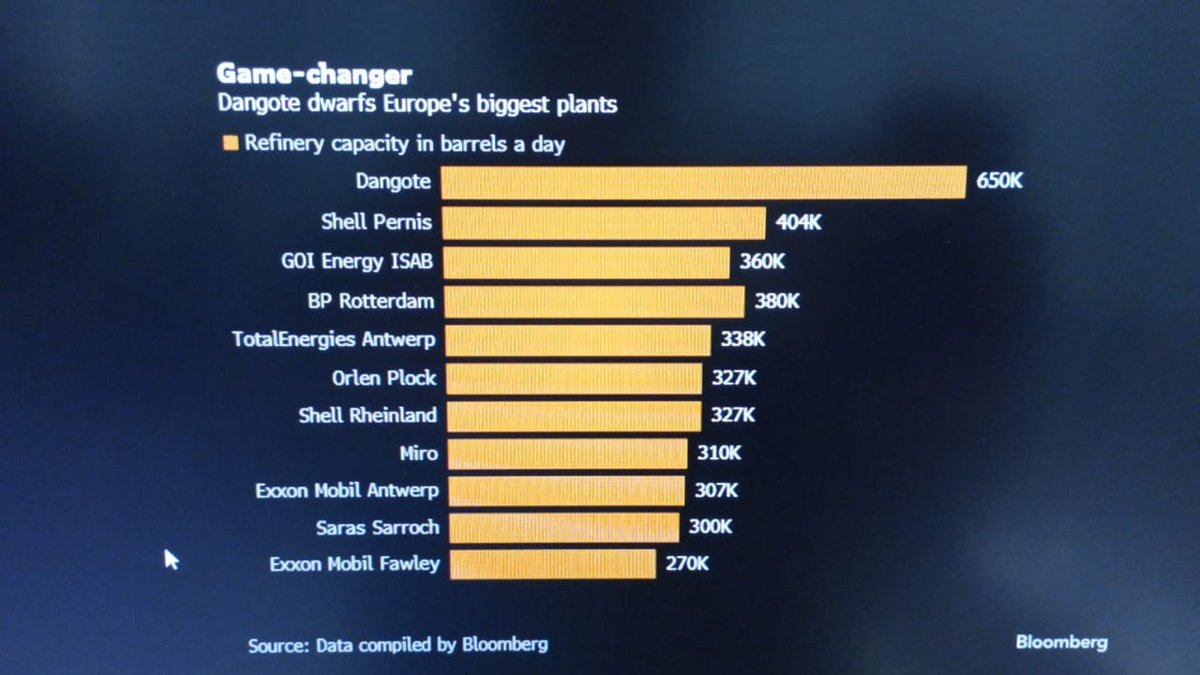
2. Full deregulation of PMS: Despite the accompanying enormous discomfort on many aspects of our economic life, President Tinubu has been focused on achieving full deregulation of the downstream oil sector. It appears that he has achieved this milestone because today, Dangote Refinery is selling PMS to any willing buyer. NNPC Ltd is no longer the sole off taker of PMS from Dangote Refinery neither are they the sole importer of the product. NNPC is selling PMS and other petroleum products at the prevailing market prices.
1/5
Due to the direct efforts of the Lagos State Government, Lagos now has the biggest refinery in Africa and a $20 billion Free Trade Zone complete with a port. They equally have a Blue and Red Line metro system, with the Green Line on the way. In addition to this, the state has been paying its workers ₦70,000 a month since February 2024 and has a BRT bus system that makes vehicular movement orderly.
They also hand five independent power projects, multiple state highways and bridges, and Nigeria's best mass housing programme.
The question to you is this: Other than dancing Gwo, Gwo, Gwo, Ngwo, what has your own state Governor achieved?
Progress will not come by focusing all your attention on Tinubu in Abuja while Lagos LCDA Chairmen outperform your Governor.
So, I ask you again, Other than dancing Gwo, Gwo, Gwo, Ngwo, what has your own state Governor achieved?
#TableShaker
From left: Vice President, Oil & Gas, Dangote Industries Limited, Devakumar Edwin; President/CE, Dangote Industries Limited, Aliko Dangote, Group Executive Director, Commercial Operations, Dangote Industries Limited, Fatima Aliko Dangote during the unveiling of the first output of the Premium Motor Spirit (PMS) product (Petrol), from the Dangote Petroleum Refinery, Lekki Lagos on Tuesday, September 3, 2024
Leaking of Official Documents:
1: Past FGs from 1960s frowned at this issue. Circulars have been issued severally warning public and civil servants leaking official documents.
2: Section 97(2) of the Criminal Code provides: “any person who, being employed in the public service, without proper authority abstracts, or makes a copy of, at document the property of his employer is GULTY of a misdemeanour and is liable to imprisonment for one year”.
3: You will be dismissed from service too. Think ooooo.
4: Then, those advising you to delete your account or deactivate or stay off Internet for 6 months are bad people. No one is invisible for ever. Those advising you are in UK, USA, Canada etc, that they know the consequences of leaking official documents in those countries. Don’t follow them like @Morris_Monye
5: Civil/public servants, how much dem go pay you to leak documents when you will lose your pensions and service year. They will still arrest you after.
@iRechargeNG Dear customer, Your payment of 10000 for BEDC 04174227811 has been received and is being processed. Please call us on 02096244444 if you do not receive value within the next 10 minutes. It is over 30 minutes now nothing yet
@iRechargehelp Dear customer, Your payment of 10000 for BEDC 04174227811 has been received and is being processed. Please call us on 02096244444 if you do not receive value within the next 10 minutes. It's 30 minutes now, nothing yet
LESSON FROM PROTEST:
FG not Tinubu should lead a Private and Public Partnership to implement “ An Emergency Education Liberalization of Northern Nigeria”.
2: we must reduce out of school children in the North.
3: we must set target for % reduction of illiteracy levels in the NORTH.
4: Implementation Strategy:
(a): President should lead the task force with a Prominent Northerner as Deputy1 and a foreigner as Deputy 2.
(b): involve UNESCO, UN, WB, former UK PM Gordon Brown, Tony Blair, Saudi Arabia Govt, UAE, Morocco and philanthropists locally and internationally.
(c): Northern business leaders such as Dangote, BUA, Dantata, Mangal, etc
(d) UN Deputy General Secretary, Amina Mohamed.
(e): Funds realized should be managed by PRIVATE Sector.
(f) : Northern Govs and LGA chairmen should submit to the committee list of their schools and enrollment figures.
(g): Organise a workshop for traditional rulers, Imams and Pastors so as to spread the gospel of schools/ education.
(h): Engage Northern celebrities, musicians and social media influencers to lead the battle against illiteracy.
(i): establishment of Skills acquisition Centers for them. Provide more equipment to our TECHNICAL COLLEGES. @NGFSecretariat@officialABAT@NGRPresident@officialSKSM@RealAARahman@NasiridrisKG@Ahmedaliyuskt@HonBago
@woye1 My question is; why do they have elected governors and Local Government area chairmen in those states in the Northern part of the country? They get elected to be helpless...
@MTN180
I really don't want to conclude you guys stole my data..
1,How do I get my data working
2, move me to broadband
I subscribed for a 30k Ruby plan for 300g but got renewed as a normal which I personally didn't opted for