The prehistoric loanword guy
@MPI_GEA
Protects early borrowings from accusations of 'chance similarity' and generally struggles with a difficult methodology.
@Ugra___ I forgot how poor linguistic reasoning is here… partly true, but with so many caveats due and different lines of evidence that the conclusions pursued on this one statement ring hollow.
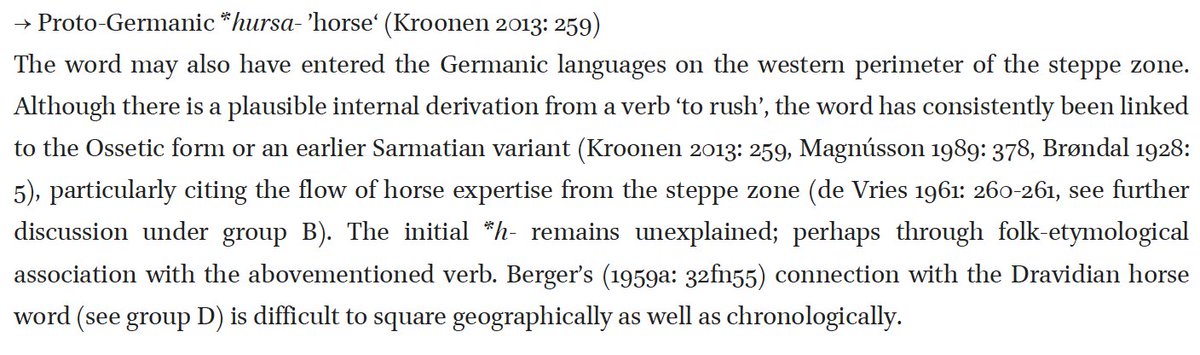
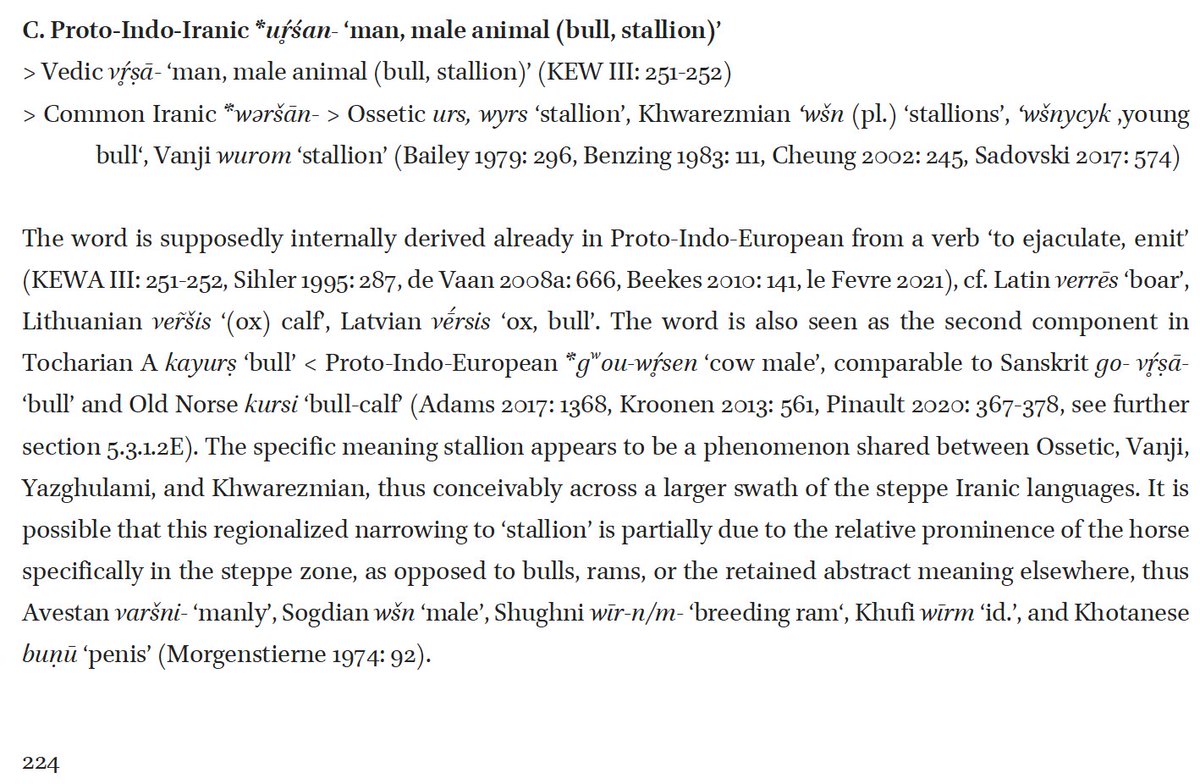
@MagnusPharao@norne_g Ja, det er en gammel hestesag - der er ikke noget der tyder på at det er et lån mellem engelsk og dansk. Det kan tages tilbage til oldgermansk (ca. 500 f.v.t.). Det er sandsynligvis lånt fra de iranske stepper før det. #EurasiaConnected
International Max Planck Research School for Modeling the Anthropocene (IMPRS-ModA) starts at MPI-GEA as a truly transdisciplinary graduate program that educates and trains a new generation of scientists! Follow https://t.co/UXBwGw6TOD to learn more!
Our book Indo-European Interfaces is out in open access 🎉📖 🥳
Download your copy here:https://t.co/zEvuHj3PhW
Edited by @baltologen, yours truly & @AndersRJorg, it’s the first volume in the book series Stockholm Studies in Indo-European Languages and Culture.
1/5
@basira_mir Congratulations, Basira!! Thank you for being so open to the archaeolinguistic perspectives - my own dissertation would not have been as rich without you! Glad to see the Kurfürst received another wreath tribute 🌿🌱🥜
Preliminary program of our Language and Culture in the Borderlands of the Eastern Silk Road Conference (September 4-7) with keynotes by Georges-Jean Pinault, Carmen Meinert, and @ImreGalambos:
https://t.co/Kx808pPBsb
@Kedarna82972844@yajnadevam Nope. These models have been tried in linguistics, and still cannot predict anything that the sum of linguists have not (far less, actually) - past and present. Keep at it, tho
@yajnadevam@Kedarna82972844 You shouldn’t talk about linguistics, that’s right. You could try to demonstrate why you believe these gaps have any bearings on a science you consistently prove not to understand
@yajnadevam@Kedarna82972844 Here again you showcase your lack of basic understanding - language dynamics is too complex for mathematical data modeling (still). You’re not the first longing to reduce it (me too), but no model can account for the tree/wave dynamic.
@Kedarna82972844@yajnadevam That’s the kicker - ‘due respect’. Human prehistory is complex, so the key is to treat expert testimony with due respect. Neither reverence or irreverence, but respect that perhaps they know something a Google search cannot provide.
@yajnadevam@Kedarna82972844 Your (and most other novices') problem is that language dynamics are defined by both tree like structures (descent) and waves (influence) - both need to be accounted for. You cannot fit everything into a simple model.
@yajnadevam@Kedarna82972844 Cool. I'll be happy to elaborate on any questions that may arise from your reading of Fortson.
Until then, do me and your followers a favor and keep quiet on historical linguistics.
Happy reading.
@yajnadevam@Kedarna82972844 No. It has been tried. Like anything else in historical linguistics, it's the sum of shared retentions and innovations and our ability to explain them that define branching.
You're welcome.
Now read a book.
@yajnadevam@Kedarna82972844 Good on you. Read a book about basic linguistic methodology if you'd like to address the questions that puzzle you. And ask questions if you cannot find the answers readily. Fun fact: there is an entire field devoted to these questions. Use it.