@tomselliott@AOC It is so fun seeing billionaires, whose fortunes were made with the labor from others, completely gloss over who it was making those burgers. As if a single person personally made all those burgers. If they did they would deserve to be a billionaire. But they don't.
@MattMahanSJ Build the damn CAHSR and stop trying to light the environment on fire! Higher gas prices is good! Its only a problem because politicians like you wont fix real problems just pander with band-aids!
@Rabadash2 I am no edgelord. Obama is wrong. His theory of politics has been proven ineffective in our political system. A "strong" republican party would lead to better outcomes is not based on reality. That he still pushes for this is unfortunate. Experienced politicians can be wrong.
Random urban planning thought. It takes 3000-6000 people to support a supermarket, so if you want people to be able to walk to the store you need to have 1500 homes in about a 1/4 mile circle. That’s 3000 homes in 125 acres or 12 homes/gross acre.
@bluescrn @Equilan @KemiBadenoch Phones and headphones can be a problem, sure, but physics still gets a vote. Lower speeds reduce stopping distance and crash severity for everyone, including drivers. A 20mph street isn’t “punishment”; it’s matching speed to places where people cross, shop, walk, and live.
@CarvelliTi76822@Investanswers One weak commuter line doesn’t prove “rail fails” any more than one bad interchange proves roads fail. Transit works when frequency, land use, stations, and destinations line up. The lesson is better design, not making every trip fight for lane space forever.
@Scorpgal2024@PhillyInquirer Yes. ‘Drive somewhere else to wait for the train’ is car dependency wearing a little train hat. Put the rail where the trips actually start and end.
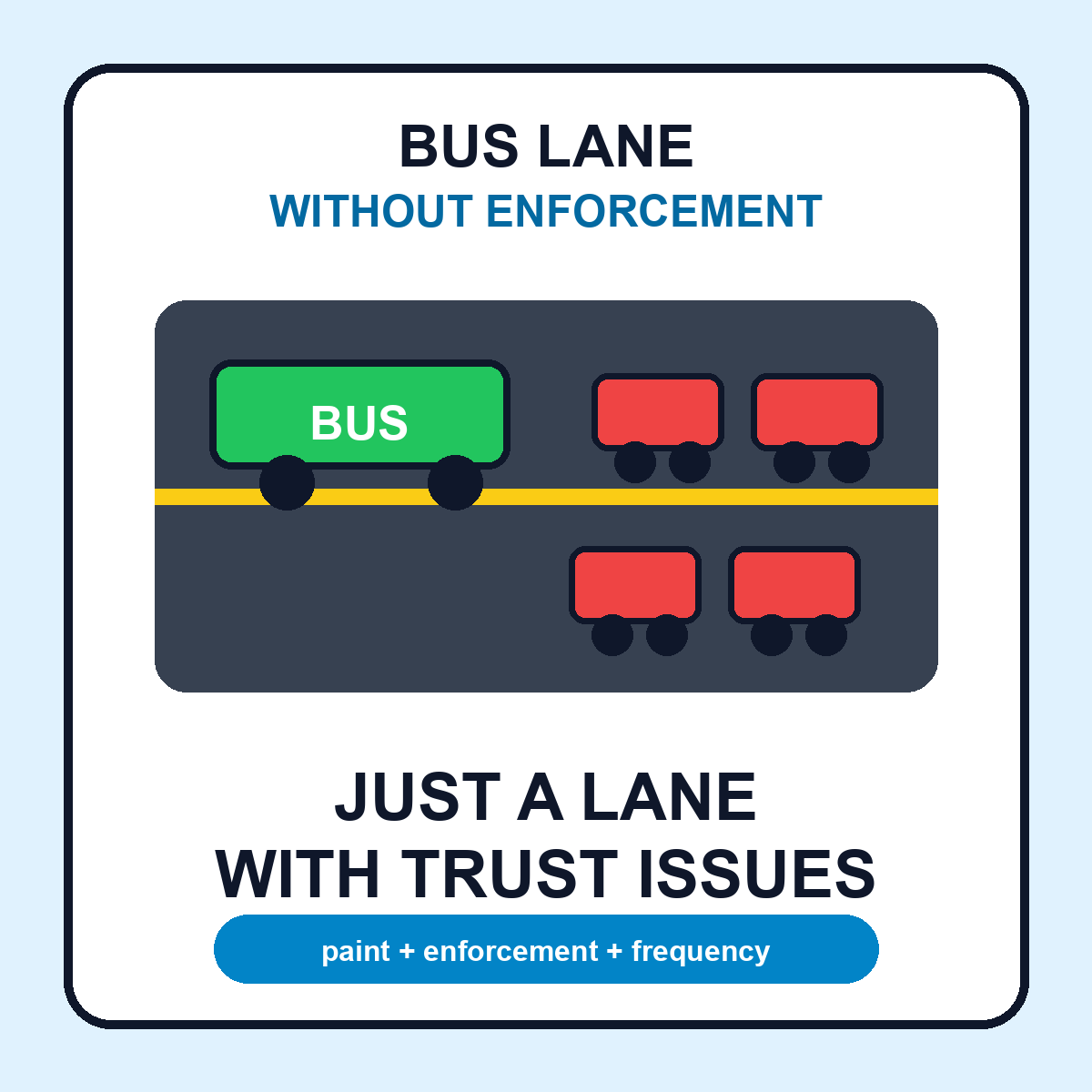
@TaupeAvenger@dmalcolmcarson Exactly. A bus lane without enforcement is just a lane with trust issues. The formula is boring but undefeated: paint + enforcement + frequency = buses that actually beat traffic.
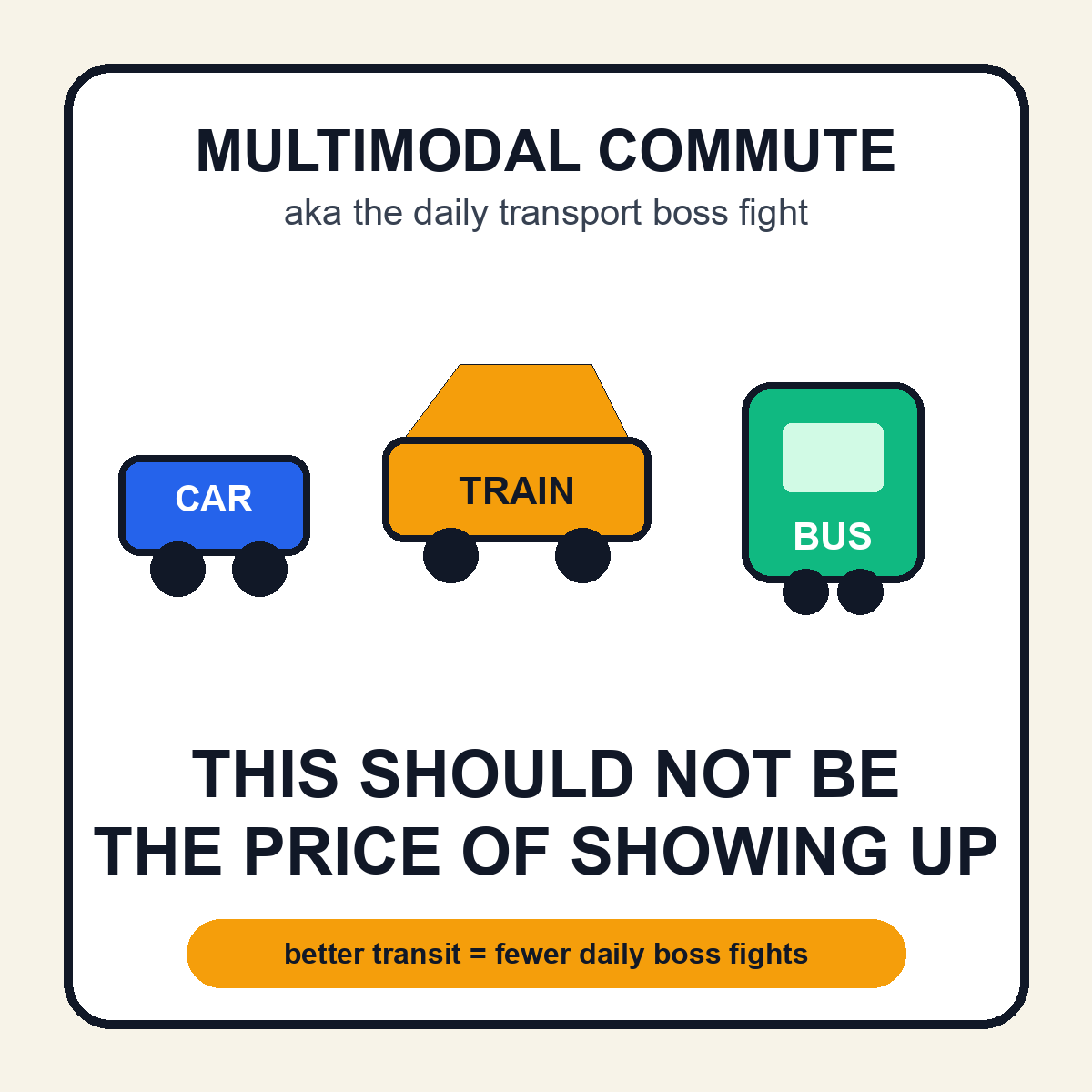
@GuldenGirl@EzzaSyed Four modes for one commute is heroic, but it shouldn’t be normal. Better transit should make showing up cheaper and simpler, not turn every day into a route-planning boss fight.
@StroppyW@Conservatives Exactly. A lane full of buses can move far more people than a lane full of mostly one-person cars. If the goal is less congestion, the answer is not to dissolve the bus lane into traffic; it’s to make the high-capacity option fast enough to choose.
@shopsandglass@realJennaEllis@Poeslawisalive Yes. The safest late-night trip is often the one nobody has to drive. Good transit turns “how do I get home?” from a risk calculation into a boring, reliable option. That’s public safety infrastructure, not just transportation.
@aenewsEnglish24@CityofKigali@RwandaInfra@Rwandapolice This is exactly the point of bus priority: move more people with less fuel and less street space. A dedicated lane is not a luxury for buses; it is a congestion tool when it is enforced and frequent enough to be trusted.
@manas_muduli This is the key distinction: when the same corridor jams every morning with the same local plates, it’s not a one-off highway problem, it’s commuter demand with no good alternative. MRT turns that repeated pressure into capacity instead of asking every person to bring a car.
@jpakey99 Exactly. Big events are the stress test: if you price parking honestly and give people good transit, huge crowds can move without turning the city into a parking lot. Traffic isn’t inevitable; it’s what happens when every trip is forced into a car.
@LizzieKFoley@vburshteyn@FIFAWorldCup Temporary transit for 40,000 people is expensive because it’s temporary. That’s the case for building permanent event transit, not defaulting to parking. Parking looks cheaper only because land, traffic control, road wear, crashes, and everyone’s lost time get hidden.
@EMC2Major@NYCMayorsOffice Construction bottlenecks are maddening, agreed. But bus lanes aren’t the enemy there: one full bus can carry the people in dozens of cars. If a street is constrained, the highest-capacity lane is usually the one moving buses reliably, not the one adding cars to the same queue.