🌙 Don’t forget! The Observable Space Open House is this Saturday, Oct 18 from 2 PM–dusk at our Adrian campus.
Free admission. Come explore, enjoy local food, and join us for a community star party! https://t.co/aUvah4s2Ao
🌙 Save the date! Our Open House will be held on Oct 18 in Adrian, Michigan. Tours, a featured food truck, and a star party to end the night. See you there: https://t.co/aUvah4s2Ao
Proud moment for the Observable Space ecosystem! 💫The PF1000 Prime Focus System, powered by our software, is a Top 10 finalist for the 2025 Coolest Thing Made in Michigan.
Vote every day, now through Oct 1 at https://t.co/qEIH53bw32
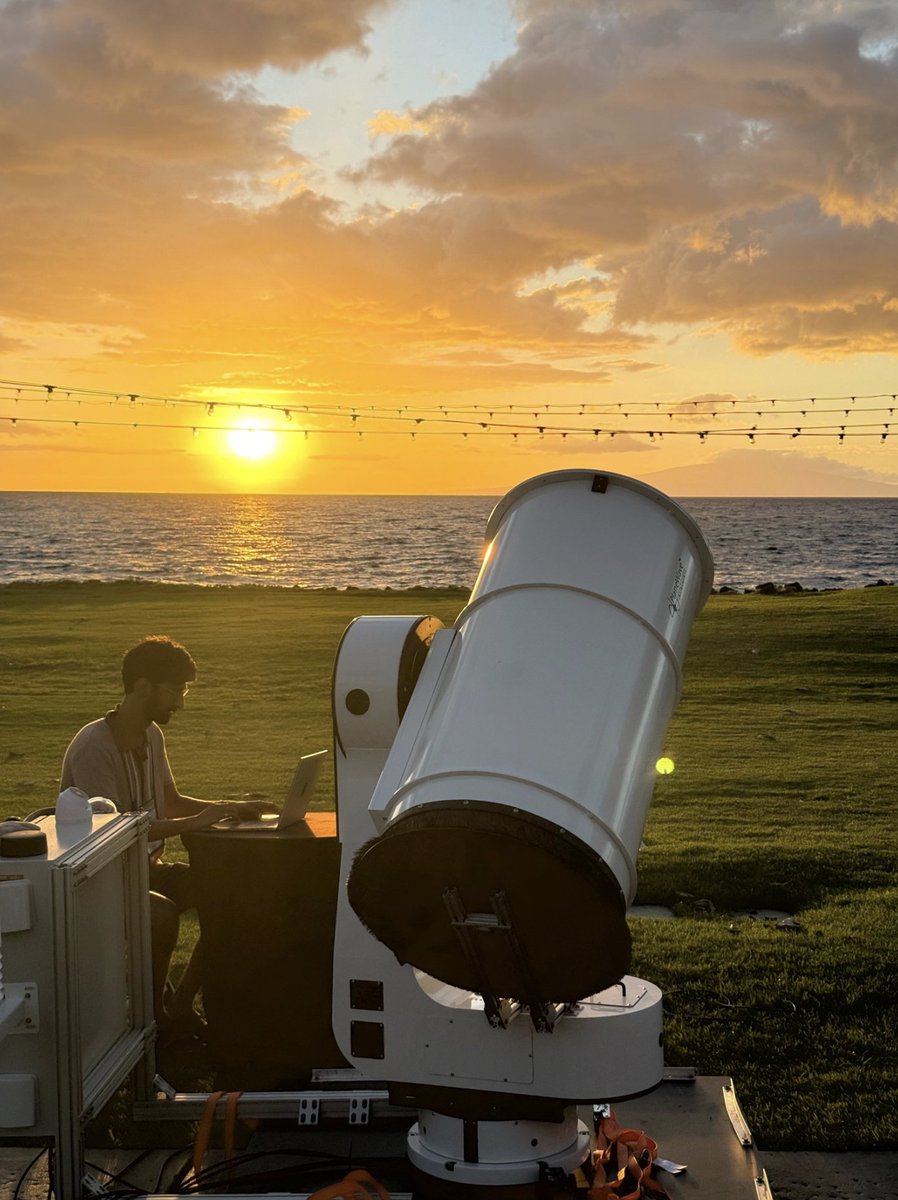
Just plug it in and observe. Our fully automated, weatherized space observation platform was at this week’s @amoscon in Maui, tracking objects within minutes of setup, even through passing clouds. Thanks to @COMSPOC for hosting!
If you watch @FallonTonight, you probably saw that our CDK400 system made an appearance!
So cool to see our product featured with @Newlab at @MichiganCentral and to see Jimmy Fallon in our own backyard.
https://t.co/orEBDlhVNM
🚀 Shoutout to @PWInstruments for their nomination in Coolest Thing Made in Michigan 2025 with the PF1000 system.
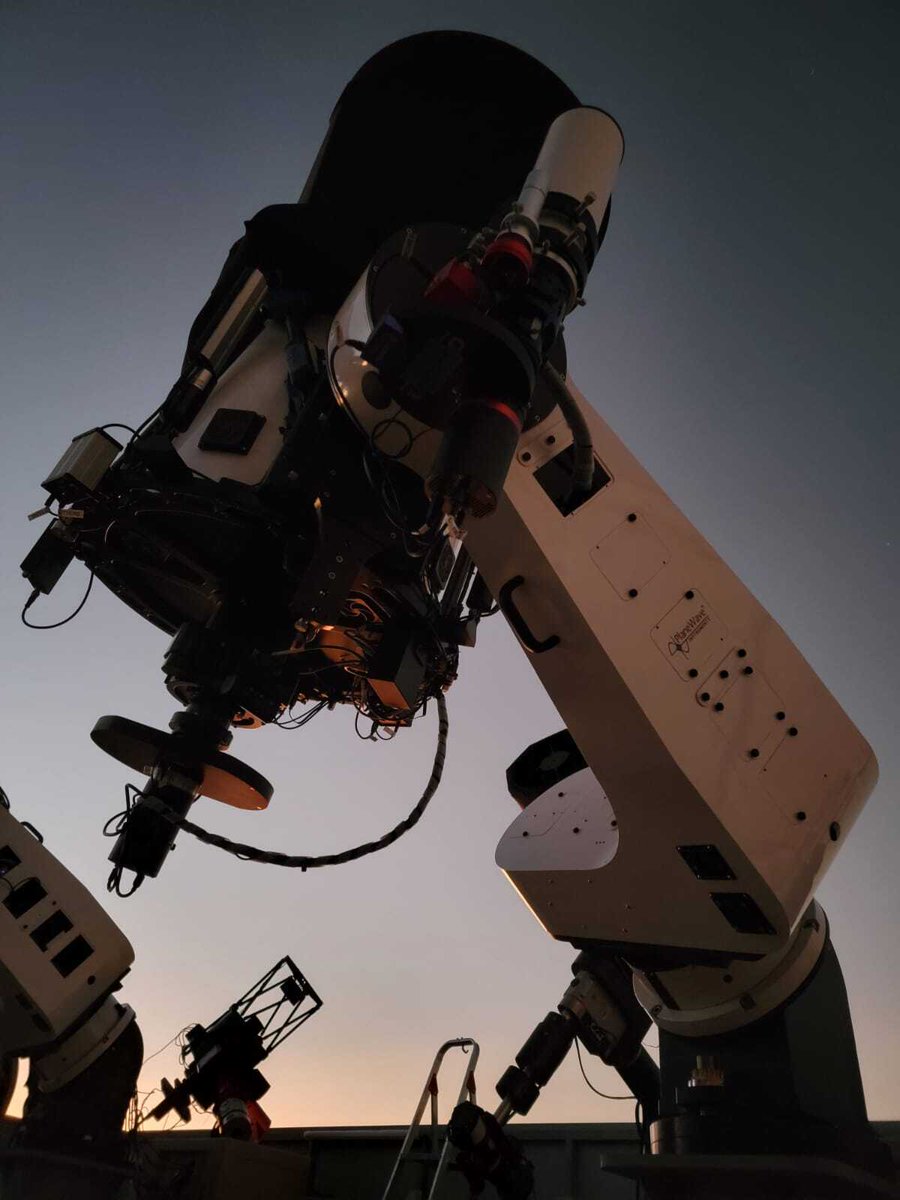
The PF1000 pairs seamlessly with OurSky software to unlock autonomous, real-time tracking across our platform. Exciting to see Michigan-built hardware making waves in space tech.
#CoolestThingMadeInMI
🚀 Our PF1000 Prime Focus System has been nominated for the Coolest Thing Made in Michigan 2025!
✅ Round 1 voting is open now through September 12. You can vote once per day! Cast your vote here 👉 https://t.co/VR6UA2Nl3j
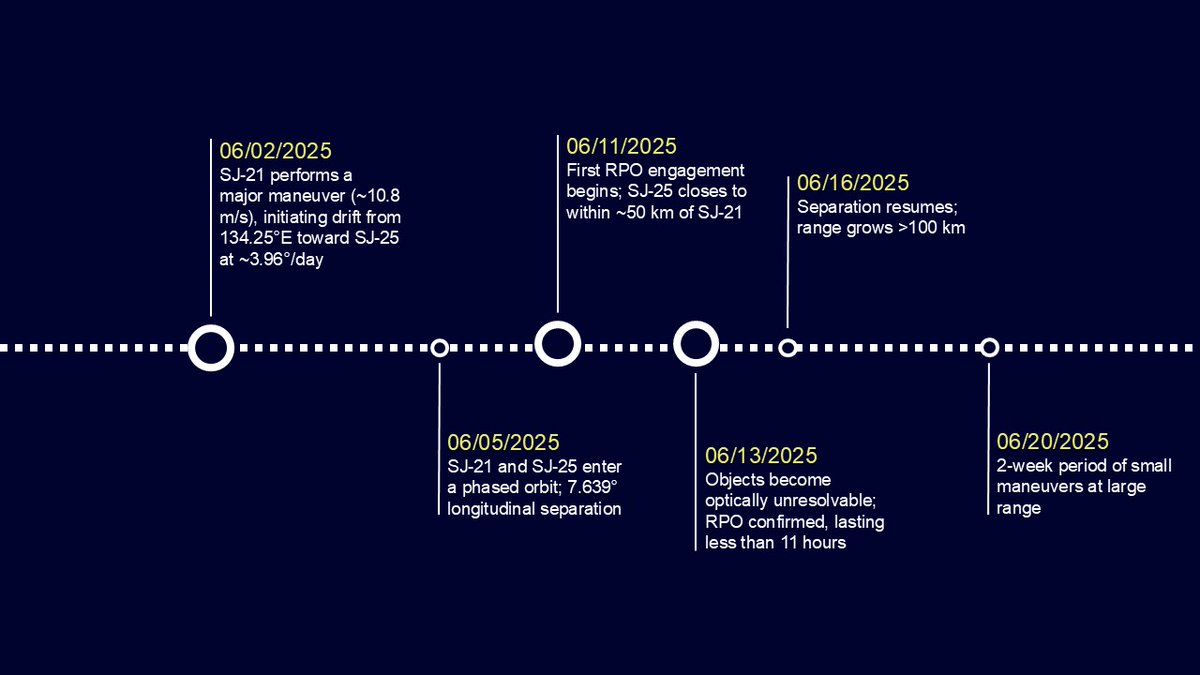
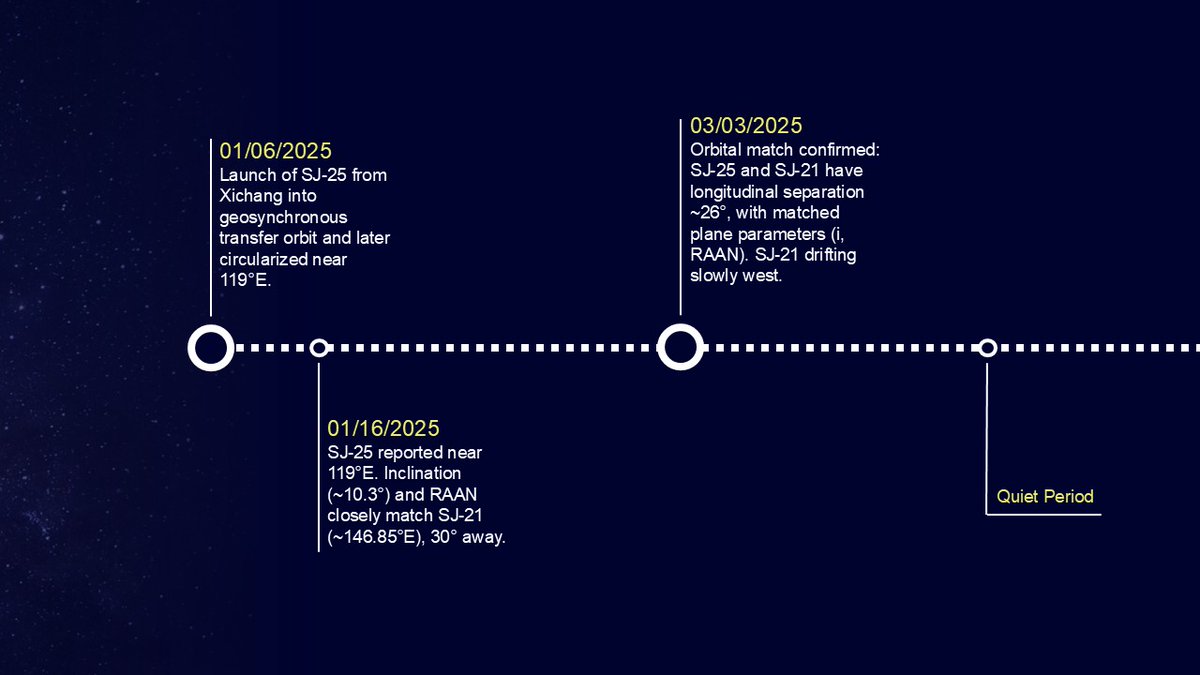
SJ-21 and SJ-25: Rendezvous and Proximity Ops Timeline (June–July 2025)
After a brief encounter in mid-June, a second campaign began later that month. On 2 July, both satellites became optically indistinguishable, suggesting docking or sustained close proximity.
As of 18 July, there’s still no optical confirmation of separation. Orbital behavior remains consistent with a docked or rigidly co-orbiting pair.
Thanks to data from @OurSkyAI, @ObservableSpace, @spacefluxHQ, and @COMSPOC’s optical network. Our Ops team—using the SSASuite—was able to resolve and track each maneuver throughout the engagement. See the timeline of relevant events below!
🛰️ Real-time tracking! The OurSky network tracked 3I/ATLAS across multiple sites, showcasing the strength of autonomous observation and the global reach of the @ObservableSpace platform.
#AutonomousObservation#3IATLAS#SpaceTech
Rare Interstellar Visitor Spotted! Meet 3I/ATLAS: captured using our CDK24 system in Chile. Tracked by multiple @PWInstruments telescopes across the @OurSkyAI network, showcasing the reach of our integrated systems.
🔭 CDK24 (Chile) + RC700 (Virginia)
#3IATLAS#AstronomyNews
🇺🇸Innovation, built right here at home.
Our hardware and software are proudly designed, manufactured, and built in the USA, advancing the future of space observation from the ground up.
#FourthOfJuly#BuiltInTheUSA#ObservableSpace#SpaceTech
Tracked here is the Geostationary Satellite SJ-17 (NORAD-ID 41838) passing by three galaxies: NGC-4762, NGC-4754, and NGC-4733, which are all members of the Virgo cluster💫
#OurSky#AI#SatelliteTracking
💫 A newly discovered interstellar object was first spotted by the ATLAS sky survey, and soon after, the neighboring OurSky telescope network picked it up too.
Take a look! 👇
#InterstellarObject#Telescope#OurSky#OurSkyNetwork
Check out @ESA’s Proba-3 and its coronagraph autonomously flying in formation 150m apart👀
These images were taken fully automatically by the OurSky network.
If you're using the #OurSky network, we want to see what you're tracking 🏷️be sure to tag us!
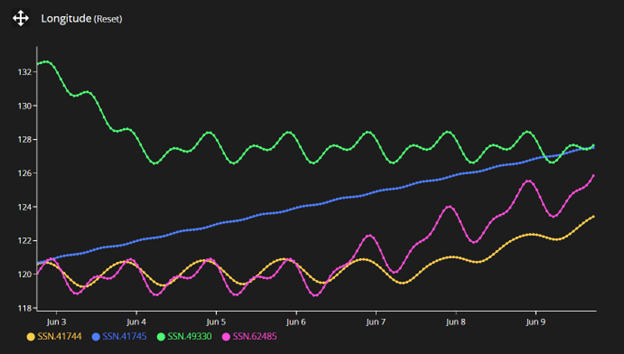
Recent observations from @OurSkyAI and @ObservableSpace, supported by COMSPOC’s optical network, reveal several significant activities in GEO between 6–8 June 2025.
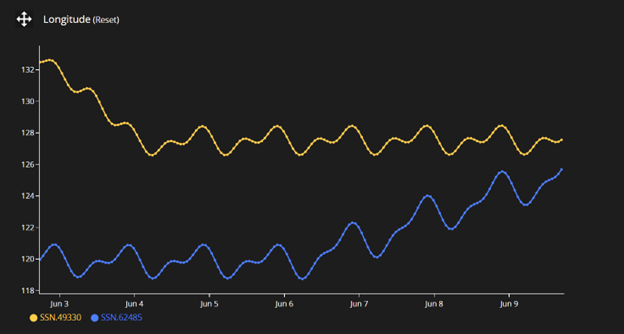
SHIJIAN-25 (SJ-25) performed four maneuvers between 6 June 01:50 UTC and 7 June 16:51 UTC, using a total delta-v of 8.29 m/s and increasing its drift rate from –0.006°/day to -1.535°/day.
USA 270 performed two maneuvers between 6 June 01:48 UTC and 7 June 14:11 UTC, expending 4.081 m/s delta-v and increasing its drift rate from 0.078°/day to 1.349°/day.
USA 271 executed two in-track maneuvers on 7 June between 02:49 UTC and 18:14 UTC, utilizing 0.945 m/s delta-v and slightly decreasing its drift rate from 0.989°/day to 0.972°/day.
As of 9 June 16:45 UTC, SJ-25 is within 2° longitude of SJ-21. USA 270 and 271 now flank SJ-21 and SJ-25 from the east and west—potentially enabling favorable sun angles depending on the timing of closest approach.
🚀 @SpaceNews_Inc covered the activity between Shijian-21 and Shijian-25 in GEO—supported by data from @ObservableSpace’s OurSky platform.
It’s a clear example of what autonomous observation can do: fast, precise insights.
🔗 https://t.co/tBlSXXbaBI
#SSA#AutonomousObservation #SpaceTech
Real-time tracking powered by our autonomous observation software. Our platform drives @ObservableSpace missions, making critical insights like this possible for partners across the space domain. Great work by @COMSPOC_OPS.
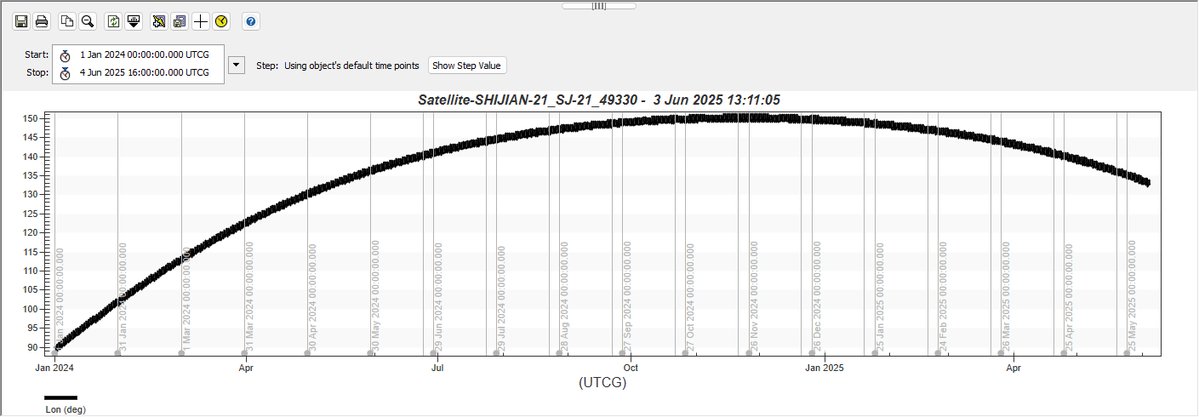
Thanks to data from @OurSkyAI and @ObservableSpace, combined with updates from COMSPOC’s own optical network, our Operations Team was able to detect a maneuver from SHIJIAN-21 (SSN.49330).
At 15:49:12 UTC on 2 June 2025, SHIJIAN-21 performed a maneuver of ~10.8 m/s delta V, initiating a drift from its previous GEO slot at 134.25 deg E. It is now drifting westward at a rate of 3.96 deg/day, increasing its drift rate from 0.2 deg/day.
Its current trajectory puts it on an accelerated path towards SHIJIAN-25 (SSN.62485). We’ll be sharing another update soon. Stay tuned!
Images of the Venus lander #Kosmos 482. Slightly slower than the tle predicts. #Reentry is predicted for next week, around the 10th of May.
More info can be found here: https://t.co/8xohvwsgy7
📷 OurSky and @PWInstruments are joining forces to create @ObservableSpace! Together, we’re building the first fully integrated hardware + software space observation ecosystem, making real-time space data more powerful and accessible.
Learn more: https://t.co/fKIaVoXb0X
🚀 Big news! @PWInstruments & @OurSkyAI merged to form Observable Space, uniting advanced telescopes and a powerful development platform to redefine space access. From spacecraft operations to lunar missions, we’re making space more accessible than ever. https://t.co/IidEIGWSQv