七年币安用户|1011损失超500万|币安Alpha做市商|币安VIP安卓版|仍相信真相值得被听见
Seven-Year Binance User|Once Lost Nearly 5 Million Due to Outages|Binance Alpha Market Maker|Binance VIP Andro
Hey, Binance's so-called “1011 Truth” blog post is nothing but a self-serving whitewash! You think shifting blame onto macro factors, market makers, and Ethereum congestion will let you off the hook? Wake up—independent data and community analysis have already stripped your black box bare. Stop dressing it up as “full system operation” and trying to distance yourselves with two “isolated incidents.” The market isn't fooled—only hard facts can counter your hollow excuses. Let's break down your lies step by step with real data and expose your so-called “truth” for what it is!
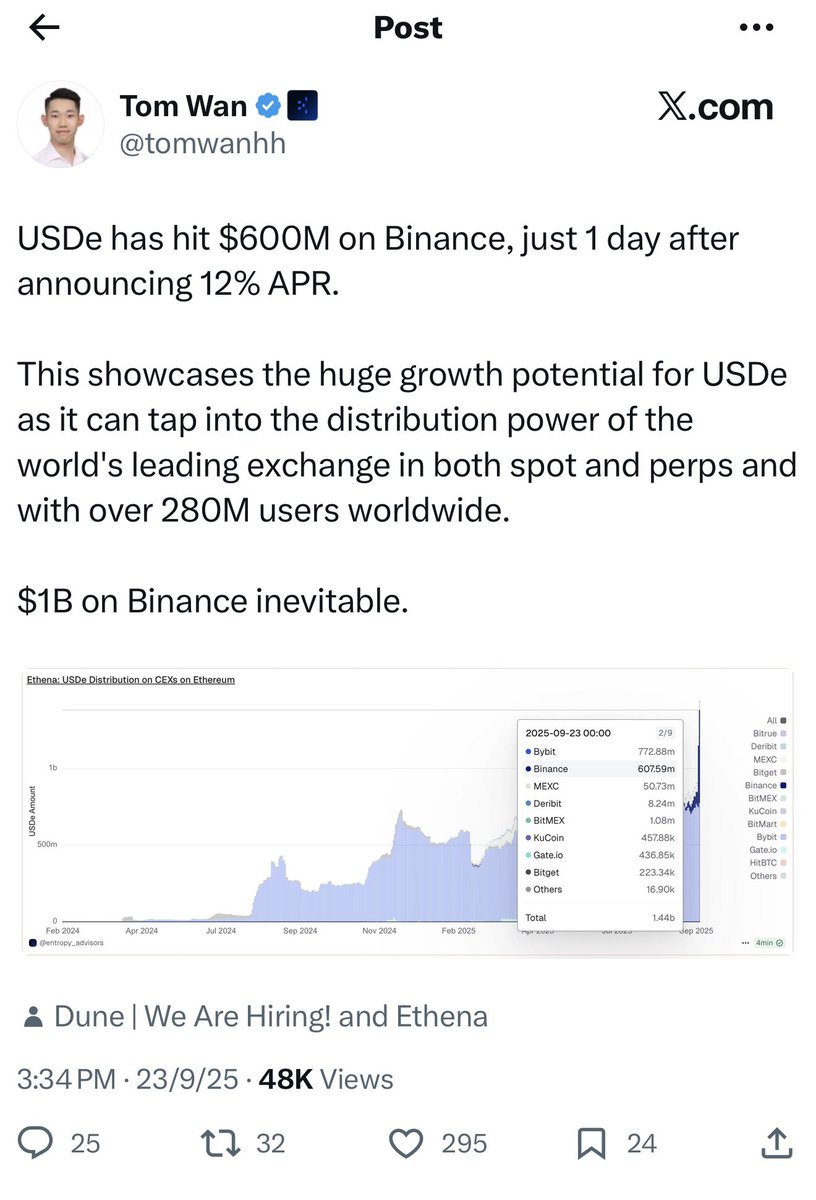
First, your core whitewashing: Claiming the flash crash was driven by macro shocks—trade war headlines crashing global markets, $15 billion in system liquidations, US stocks losing $1.5 trillion. You also say Binance's system had “zero downtime, zero failures,” with only two minor hiccups (a 33-minute delay in the transfer subsystem and deviations in three token indices), and 75% of liquidations occurred before the event. Bullshit! Independent analysis shows the collapse was triggered by Binance's own pricing black hole. USDe plummeted to $0.6567 on your platform while other exchanges held steady around $0.997—a deviation of less than 30 basis points. This “phantom price” directly triggered $19.3 billion in liquidations, purely due to your internal oracle failure, not some macro “reflexive” reaction. ATOM plummeted to $0.001 on Binance, SUI hit $0.56—these extreme wicks only happened on your platform. Other exchanges? Steady as a rock. You claim Ethereum congestion drove gas fees to 100 gwei? Actual peaks hit 450 gwei, costing users over a hundred bucks per transfer. But this just proves your risk engine failed under high load, triggering chain-reaction liquidations. Macro factors? Sure, they were triggers—but you amplified the damage tenfold!
Now let's debunk your “defense”: You claim the event didn't cause the collapse, and most deleveraging happened before the macro shock (starting at 20:50 UTC). . That's laughable! Data shows USDe, wBETH, and BNSOL depegging were the real culprits: USDe dropped below 0.93, wBETH discounted 7%, BNSOL nearly 10%—these are assets you widely accept as collateral. Their price deviations directly ignited a self-destructive feedback loop. You admit transfer delays due to database saturation (5-10x traffic), UI showing “0” balances, yet claim no funds were lost? Users report short positions liquidated while longs remained open, triggering full-position blowouts! Order execution lags and platform freezes—these “system glitches” exposed under high volatility aren't “temporary limitations,” they're design flaws. Kraken temporarily crashed, yet you still tout “superior liquidity”? Kaiko data may show good depth, but during the actual collapse, you became the biggest victim-maker.
What about compensation? You boast $328 million paid to eligible users, plus $300 million “Together Initiative” and $100 million loan fund—totaling $400 million. Sounds like a lot? Compared to total losses exceeding $19 billion, this is like sprinkling water! Hyperliquid liquidated $1.03 billion, Bybit $460 million, and you, Binance, $240 million. Yet the entire market lost over $1.9 billion due to your depegging chain reaction. Eligible users? Compensation based on logs, slow verification processes, and requiring NDA signings. Community analysis directly points out that this compensation is a PR stunt, with actual coverage pitifully low, failing to address the pain points of most retail investors. Even more infuriating: the October 12th candlestick chart update. You claim optimization, no data tampering? Yet after user feedback, you rolled it back. Doesn't this precisely prove your black-box operations and arbitrary rule changes?
Finally, transparency? Your post details root causes and timelines, yet concludes with a disclaimer: no admission of fault, reserving the right to deny compensation. Bullshit! Where's the external audit? Where are user reports? Independent investigations reveal this wasn't a “black swan” event, but a “complex system moment” driven by leverage + liquidity + collateral depegging—your monopoly amplified the risks. Binance's “truth”? Pure whitewashing! Data proves you're the root cause of 1011. Keep this double standard up, and the market will eventually dump you. Victims, wake up! Don't buy this spin. Switch to DEXs or stable platforms now!
No complexity. No accident.
10/10 was caused by irresponsible marketing campaigns by certain companies.
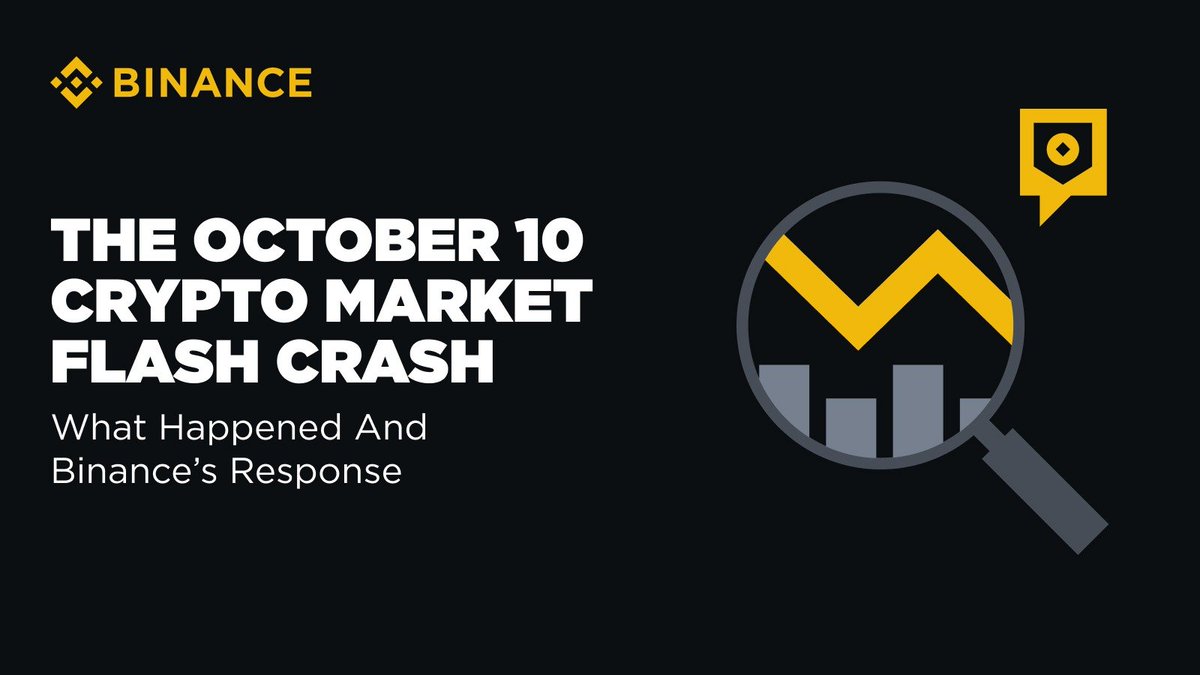
On October 10, tens of billions of dollars were liquidated. As CEO of OKX, we observed clearly that the crypto market’s microstructure fundamentally changed after that day.
Many industry participants believe the damage was more severe than the FTX collapse. Since then, there has been extensive discussion about why it happened and how to prevent a recurrence. The root causes are not difficult to identify.
⸻
What actually happened
1.Binance launched a temporary user-acquisition campaign offering 12% APY on USDe, while allowing USDe to be used as collateral with the same treatment as USDT and USDC, and without effective limits.
2.USDe is a tokenized hedge fund product.
Ethena raises capital via a so-called “stablecoin,” deploys it into index arbitrage and algorithmic trading strategies, and tokenizes the resulting fund. The token can then be deposited on exchanges to earn yield.
3.USDe is fundamentally different from products such as
BlackRock BUIDL and Franklin Templeton BENJI, which are tokenized money market funds with low-risk profiles.
USDe, by contrast, embeds hedge-fund-level risk. This difference is structural, not cosmetic.
4.Binance users were encouraged to convert USDT and USDC into USDe to earn attractive yields, without sufficient emphasis on the underlying risks. From a user’s perspective, trading with USDe appeared no different from trading with traditional stablecoins—while the actual risk profile was materially higher.
5.Risk escalated further as users:
•converted USDT/USDC into USDe,
•used USDe as collateral to borrow USDT,
•converted the borrowed USDT back into USDe,
•and repeated the cycle.
This leverage loop produced artificial APYs of 24%, 36%, and even 70%+, widely perceived as “low risk” simply because they were offered by a major platform. Systemic risk accumulated rapidly across the global crypto market.
https://t.co/IK2gW4xUOP that point, even a small market shock was sufficient to trigger a collapse.
When volatility hit, USDe depegged quickly. Cascading liquidations followed, and weaknesses in risk management around assets such as WETH and BNSOL further amplified the crash. Some tokens briefly traded near zero.
The damage to global users and companies—including OKX customers—was severe, and recovery will take time.
⸻
Why this matters
I am discussing the root cause, not assigning blame or launching an attack on Binance. Speaking openly about systemic risks is sometimes uncomfortable, but it is necessary if the industry is to mature responsibly.
I expect there may be significant misinformation and coordinated FUD directed at OKX in the near future. Even so, speaking honestly about systemic risk is the right thing to do—and we will continue to do so.
As the largest global platform, Binance has outsized influence—and corresponding responsibility—as an industry leader. Long-term trust in crypto cannot be built on short-term yield games, excessive leverage, or marketing practices that obscure risk.
The industry needs leaders who prioritize market stability, transparency, and responsible innovation—not a winner-take-all mentality where criticism is treated as hostility.
Crypto is still early.
What we choose to normalize today will determine whether this industry earns lasting trust—or repeats the same mistakes again.
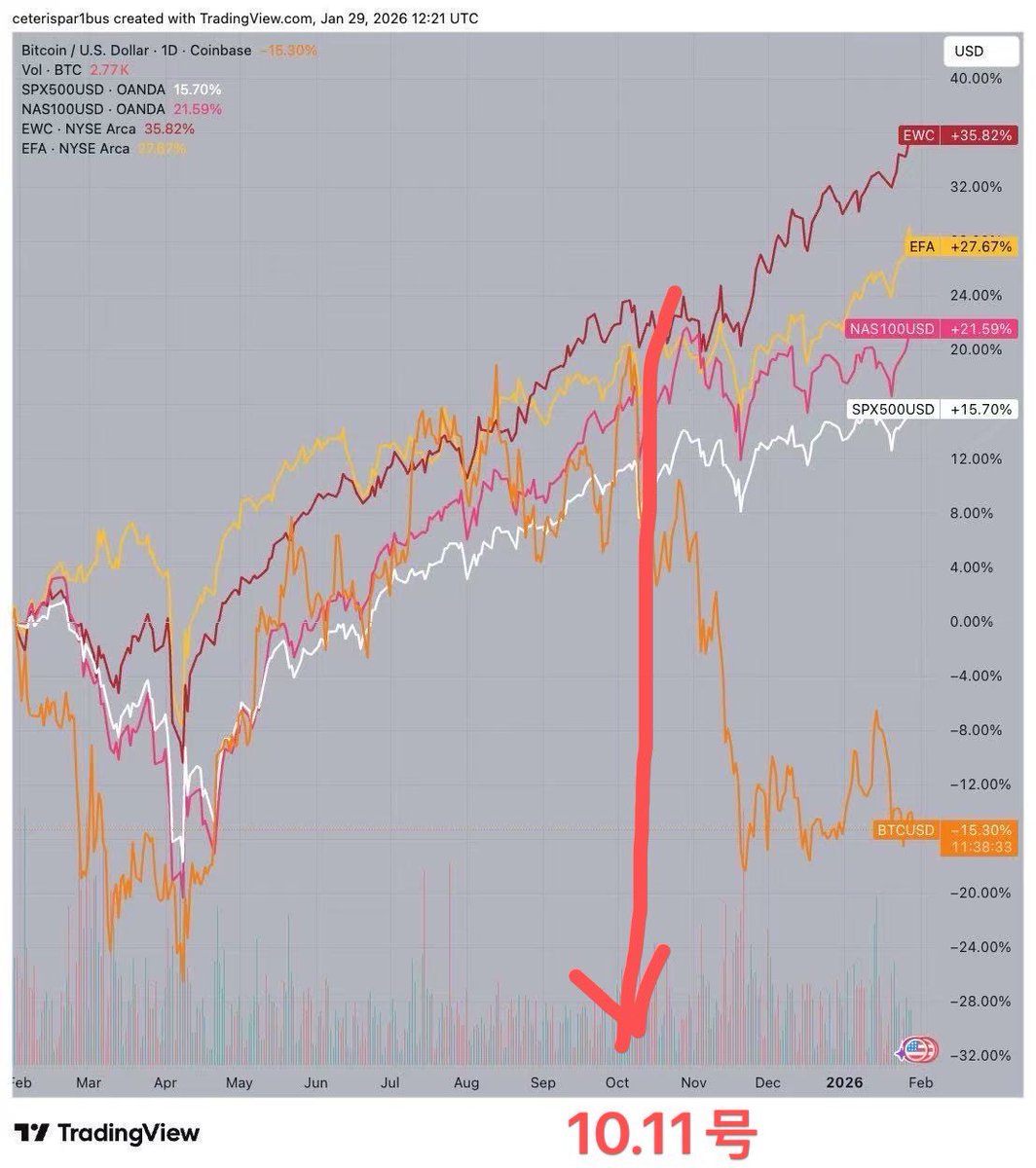
People have underestimated the impact of 10/10. The incident caused real and lasting damage to the industry.
An industry-leading company should focus on strengthening core infrastructure, building trust with global users and regulators, and protecting the long-term interests of the majority of crypto users, setting an example for others to follow. Instead, some chose to pursue short-term gains—repeatedly launching Ponzi-like schemes, amplifying a handful of “get-rich-quick” narratives, and directly or indirectly manipulating the prices of low-quality tokens, drawing millions of users into assets closely tied to them.
This has become their shortcut for attracting traffic and user attention. Legitimate criticism is then drowned out—not through facts or accountability, but via aggressive narrative control and coordinated influencer campaigns.
This approach does not build an industry.
It erodes trust—and ultimately, everyone pays the price.