@PaulNuki And now a case in Nigeria too, in addition to the ongoing and expanding epidemic in the DRC. It absolutely is not over, and intensification of efforts to control the outbreak are still needed.
There is still another 11 days to apply for this post to come and work with us on arboviruses and emerging infections! The ACF post is embedded within the @HPRUezi working with myself, @samtweed, @OutbreakJake, @tommyrampling and others.
https://t.co/34SbgcGXno
The 2026-27 El Niño event: what should UK infection services expect? - Journal of Infection (in press) https://t.co/P3fzEF6KxR Here, members of the two NIHR HPRUs have come together to think about this and provide advice, as the current El Niño grows and intensifies globally.
Sad to hear this news. Helen was a brilliant science journalist, especially in the field of emerging infectious diseases. The loss will be felt by many who work in this field, and by laypeople interested in infections. We all appreciated her accurate, balanced & timely reporting.
We are saddened by the passing of Helen Branswell, a great science journalist who covered infectious diseases. She took emerging threats seriously without sensationalizing them, helping us understand what really mattered. Her voice will be greatly missed: https://t.co/qZDCn6CQsn
Delighted UKHSA has appointed Dr Gail Carson OBE as Chief Medical Adviser and Professor Robin May as Chief Scientific Officer. I have enjoyed working with them both and know they will make tremendous contributions to the health and wellbeing of the UK.
https://t.co/qzF68cqR7j
If everything that’s going on in Israel is incomprehensible to you, watch episodes 7-8 of Fauda season 5, about 7 October 2023. It will haunt you. But it helps, just a bit, to understand the fanaticism, murder, terror, rape, and carnage that began the latest round of violence.
Current El Niño likely to be largest in at least 1,000 years & will pile extra heat into atmosphere in which temperatures already rising rapidly due to human-caused global heating. 2027 expected to “blow apart” previous records & hottest year ever recorded https://t.co/QkkZ8x4ZOq
Lassa fever outbreaks in Nigeria used to follow the dry season. Not anymore.
"Now we see cases throughout the year," says one doctor on the frontline in Ondo State.
Here's what's changing, and how health workers are responding: https://t.co/RV7MJIV1dD
MSF has lots of experience & is on the ground. It's not unusual for hotspots to move over time in Ebola epidemics, or for recovered areas to 'reginite'. Great to see some improvements, especially in Ituri, but this outbreak is not over, & concerted control efforts must continue.
“The [Ebola disease] outbreak is not shrinking, it is moving.”
While the spread is slowing down in Ituri, DRC, the outbreak is moving into underprepared areas, posing a serious risk:
https://t.co/lTNisMP1Ym
@JamesMunro5 I think I was more impressed by the crêpes and grenadine diabolo in Bayeux, but then I was only 13 or 14. I did think the depiction of the arrow in the eye thing was quite cool (again, I was only 13 or 14)
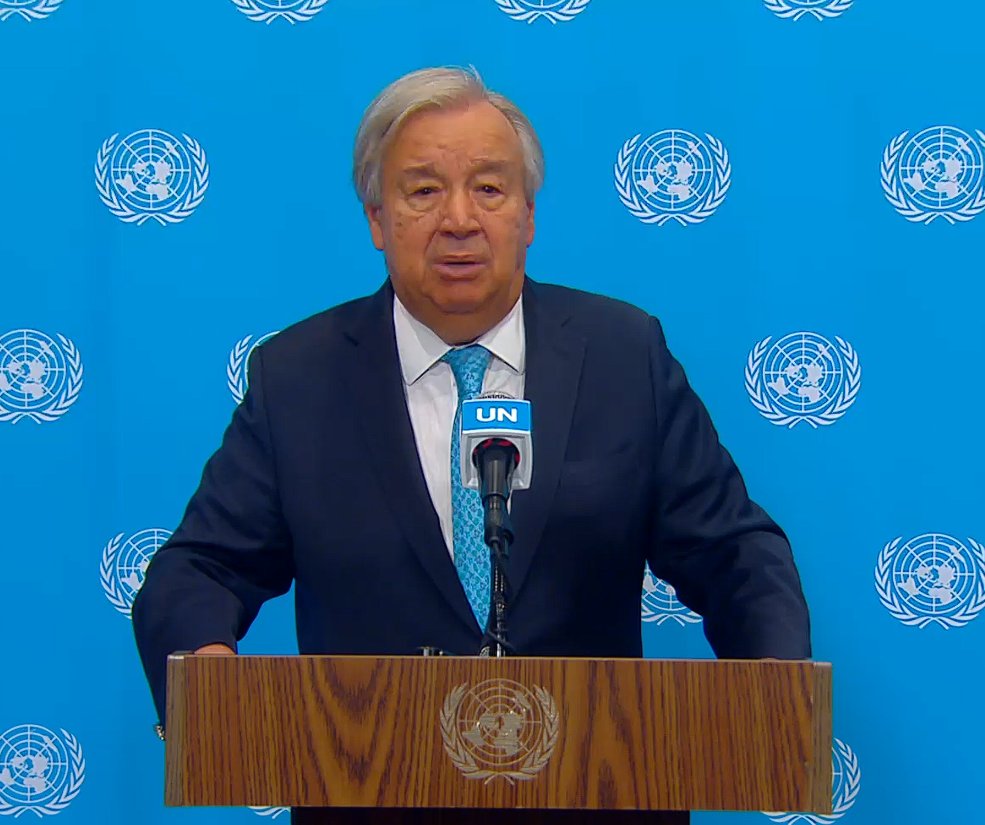
"The Ebola outbreak deserves far greater attention than it is receiving today.
The communities affected deserve far greater assistance.
And the response deserves far greater support."
- UN Secretary-General @antonioguterres tells the press
I have seen the response to the #Ebola outbreak scaling & expanding in Ituri province #DRC, with government leadership, partner collaboration, and engaged communities working together to save lives.
We need the world to come together in solidarity to support
https://t.co/JN5c4hbdAm
"...the [IHR Emergency] Committee considers the continuing rapid growth and geographic expansion of the epidemic in the DRC to be of grave concern, requiring urgent, intensified and sustained action."
To bring the Ebola outbreak under control, we must fully fund the Government-led $1.3 billion response plan and the remaining $1.1 billion humanitarian plan to meet the life-saving needs of people across the DRC.
.@AfricaCDC and @WHO today welcomed the end of the #Ebola outbreak due to Bundibugyo species in Uganda. This follows 42 consecutive days without a new confirmed case since the country’s last patient, an imported case, was discharged from care on 16 July 2026.
https://t.co/JLVWoRTd8V
We are hiring! @WHO Unit Head (P5 based in Geneva, Switzerland) Emerging Zoonoses & High Impact Epidemics
This is my former position, which I loved. Join us and work with incredible people at WHO and around the world.
https://t.co/e4qbriNLDK
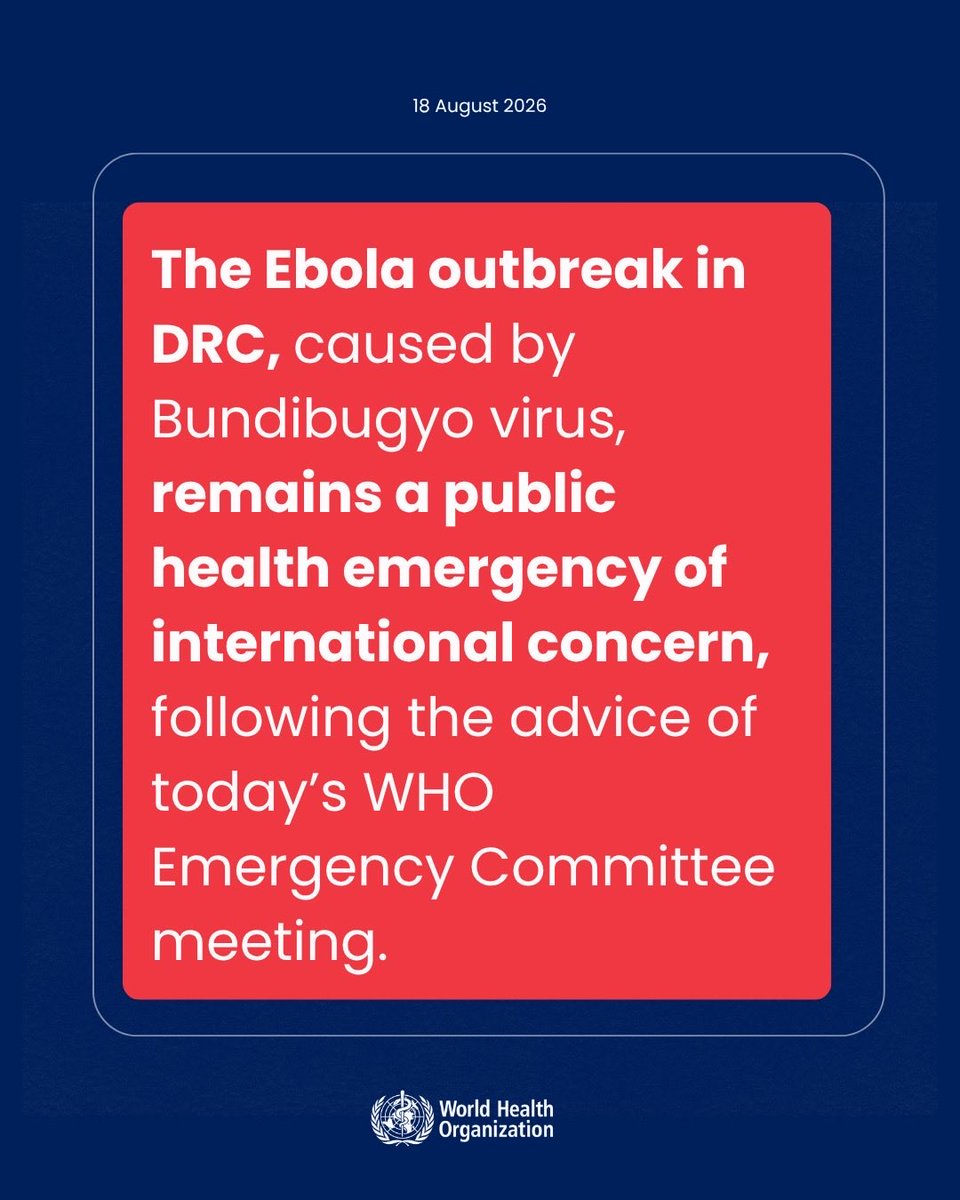
The #Ebola outbreak in #DRC remains a public health emergency of international concern, following the advice of today’s @WHO Emergency Committee meeting.
We call for the cooperation of all governments and all partners, working together as one, to scale up efforts even further, and raise the resources needed to protect communities over the coming months.
Updated recommendations to the government of DRC and other countries at risk will be issued in the coming days.