The @coingecko 2026 CEX report quantified what most projects feel and few want to say:
● 68% of newly listed tokens are underwater on day one
● <25% are still green by day 60
● <10% are above listing price after 12 months on most top exchanges
This isn't a market cycle problem. It's a structural one.
The listing event consumes all the energy.
The post-listing void absorbs the consequences.
April 2026 delistings:
Binance: 14 tokens
Bitget: 28 tokens
Kraken: full delisting cycle
Upbit: 3 watchlist additions
50+ tokens gone in 30 days.
The pattern? Volume dried up first.
Price followed.
Delisting was just the funeral.
We built KENDLE so projects don't end up here.
https://t.co/1tpwYSc2CY
That $600 Mac Mini you bought last month?
It just became a near-Opus reasoning machine.
Qwen3.5 27B (distilled on Claude Opus 4.6 traces) is putting up real numbers:
→ beats Claude Sonnet 4.5 on SWE-bench
→ 96.91% HumanEval
→ 24% less CoT bloat
→ runs 4-bit quantized, locally
300K+ downloads on HF in days.
Frontier labs won't subsidize cheap tokens on subscriptions forever.
Local agent loops just got a lot more viable.
We're early.
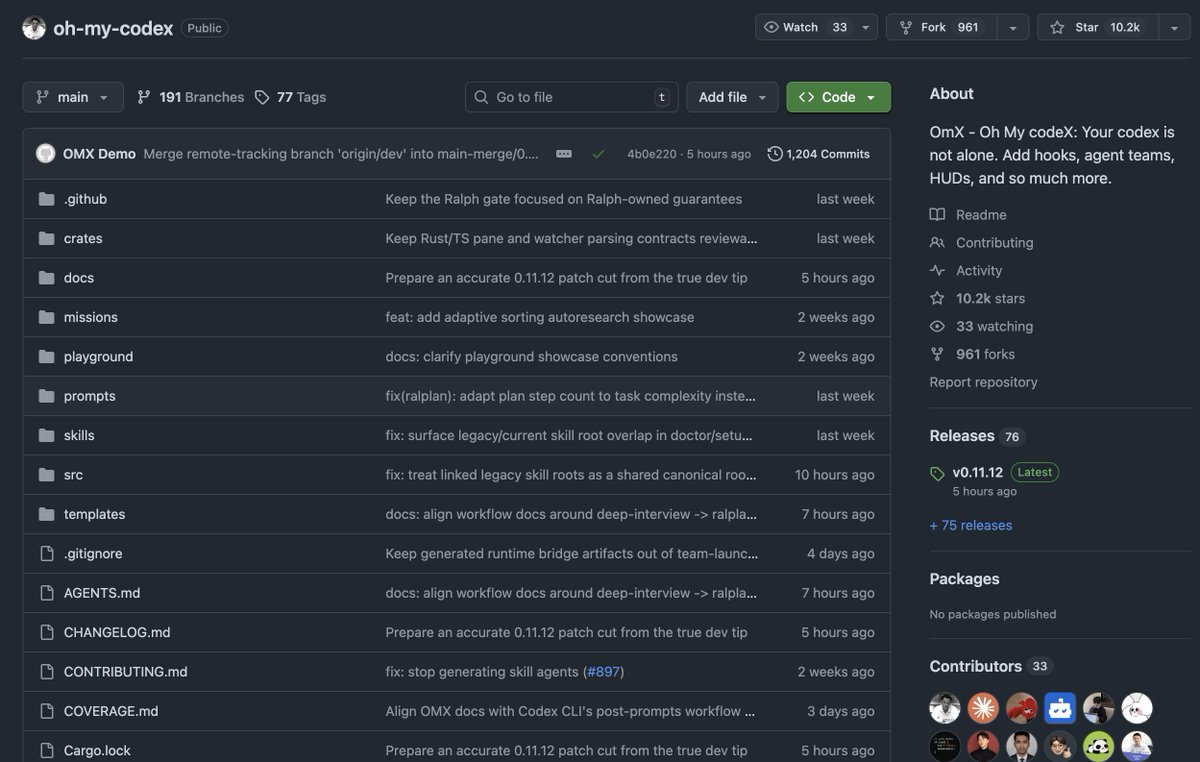
OpenAI dropped Codex CLI.
The open source community dropped something better:
→ 30 specialized agents (not just 1)
→ works with any workflow skill
→ autopilot mode built-in
→ MCP memory servers
→ 6 concurrent agents at once
→ multi-agent orchestration
10K+ stars. Free. Forever.
I saw @AlexFinn say he's tired of the "OpenClaw is dead" posts while running 5 agents lol
So I built https://t.co/EJnHOCe73N to track every single one
Got inspired by @jerryfeng's https://t.co/fvGxayK7IZ.
BTC and OpenClaw got the same energy: people keep saying it's dead, it keeps growing
The best part is the site is fully run by an @openclaw agent. scrapes X and GitHub every day, pushes updates, deploys on Vercel. no human touches it.
the thing they said is dead is running its own death tracker 💀🦞
$1.7B raised for L1/L2 infrastructure. 50K combined daily active users. That's $35K per user.
L2 usage dropped 68% year-over-year.
The ratio of L2 to L1 daily active users fell from 10.43 to 1.12.
The funding narrative says scaling is the priority. User behavior says something else.
Capital keeps flowing into faster execution, modular stacks, new consensus tweaks.
Meanwhile Solana runs millions of DAUs and Base is growing through apps. Even Vitalik is revisiting L2 assumptions.
This is what it looks like when capital keeps funding a vision that users are no longer fully validating.
For traders and active market participants, this is the real problem. Not lack of information, but lack of relevant context. The narrative says one thing, funding says another, and behavior is breaking the tie.
That's what Nodiens is built around, connecting market discussion with price action, sentiment shifts, and behavioral signals so you can see which story the data actually supports.
One of those signals has historically moved price first.
The CLARITY Act just got its compromise text.
The draft bans passive yield on stablecoins. Holding USDC and earning interest is off the table.
Activity-based rewards survive, but the line between the two is still vague.
Circle dropped 20% in a single session. COIN fell over 10%.
Most of CT is debating whether the bill passes or stalls. Both outcomes create uncertainty.
Headline is political, but the signal is behavioral.
Watch what's happening underneath: stablecoin flows, positioning shifts, where capital is quietly reallocating while the debate plays out.
The signal isn't in the bill text, but in how the market is already repositioning around it.
With midterm elections later this year, the window for crypto legislation is narrowing.
That compression changes how risk gets priced from here.
Read the positioning, not the politics.
NFA. DYOR.
Jensen Huang mentioned decentralized AI compute on All-In.
The market heard: $TAO.
Engagements hit a 52-week high. Up 1,209% in a single day.
Same words that show completely different signal depending on what you're tracking.