As someone who did this kind of genome mining work during my PhD, some thoughts on this Anthropic announcement:
First, the very simplified version of what they did is that they noticed two genes (one known, one new) sitting next to a weird repeating piece of DNA. More specifically, they described an unusual reverse transcriptase (RT) associated with a repetitive DNA array and an unknown accessory protein. This kind of process was used to understand CRISPR back in 2002 and was key to the gene editing tools we use today.
To put this into context, though, people have been finding RTs associated with CRISPR arrays since 2008, and this general kind of genome-neighborhood mining has been used to discover new biological systems for decades. The basic genome-mining strategy is well established, and there are now mature tools and published pipelines for doing much of this. There are papers that discover and experimentally validate dozens of new systems using this approach in a single study. Doing it in bacteriophage genomes is also nothing new (eg CasPhi).
Finding a weird cluster of genes and repeats is often the easy part. The hard part, and where the real discoveries come from, is figuring out what the system actually does. Eg for the bridge-RNA discovery in 2024 from @arcinstitute or the discovery of CasPhi in 2020 from @DoudnaJennifer they figured out the pieces of the system and the rules for what makes it work so it can be used.
Anthropic does not yet know what this does. They’ve shown that the repeat array produces RNAs, but not what those RNAs do, what the RT does with them, or whether the system has any of the programmable properties that make the CRISPR comparison justified.
I’m genuinely rooting for all of the frontier labs to seriously get into biological discovery, and I’m excited about what comes out of it. But announcing these very early, incremental findings with the framing of a major discovery doesn’t help. I’d much rather they set the bar high now, so that when an AI actually discovers a fundamentally new biological mechanism, everyone appreciates how big a deal it is.
QFITLIA is the 7th RNAi therapeutic approved by FDA, the 8th major approved indication, and the 6th RNAi therapeutic brought to market by the @Alnylam team!!!
AMAZING! https://t.co/q15S7v3Qrd
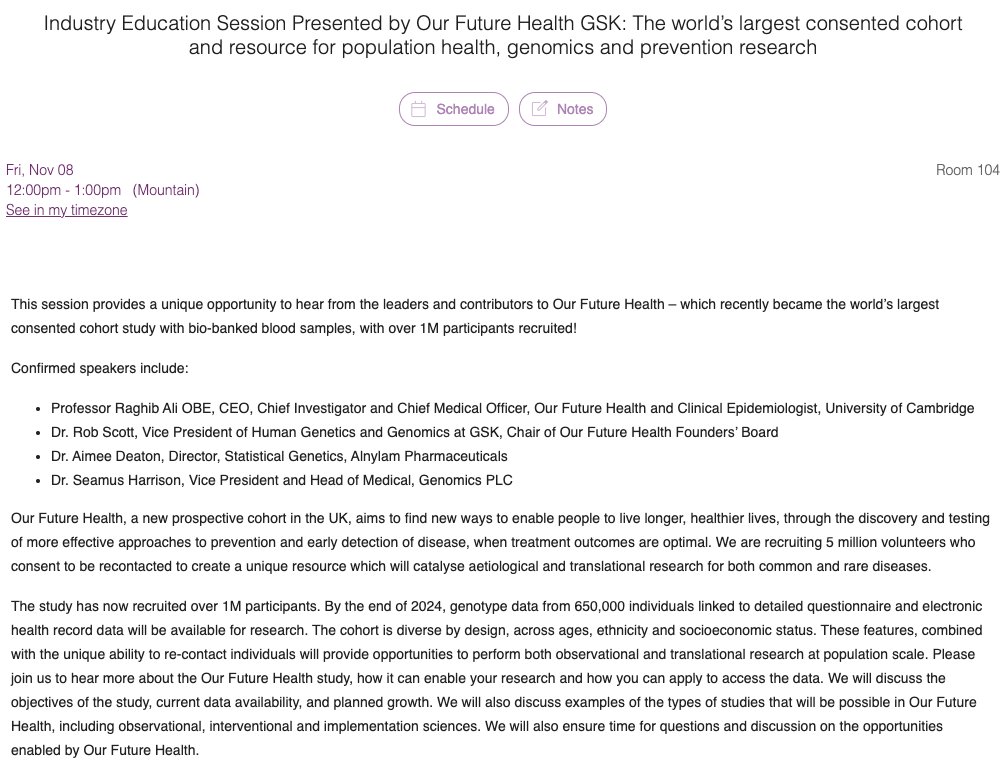
If you are at #ASHG2024, head to Room 104 for lunch today (Friday) to hear Alnylam's @AimeeDeaton and others discuss the @ukfuturehealth study, which has currently recruited 1M participants and plans to recruit 5M!
Thank you for everything, Rafa! Thank you for all the memories, for the insane tennis, for giving it your all, but mostly, for inspiring us and embodying the concept that life is all about how to get back up, that one more time! ❤️ #Greatestfighterever
Mil gracias a todos
Many thanks to all
Merci beaucoup à tous
Grazie mille à tutti
谢谢大家
شكرا لكم جميعا
תודה לכולכם
Obrigado a todos
Vielen Dank euch allen
Tack alla
Хвала свима
Gràcies a tots
Very excited to launch City Therapeutics this am!!!!
“I’m a big believer in where Alnylam is going, but RNAi is even bigger than that, and there’s a need for new pioneers in the space. City Therapeutics is my next-generation RNAi play.” https://t.co/EqT700jszO
This guy isn't slowing down...
Biotech veteran John Maraganore raises $135 million for his ‘next-generation RNAi’ startup https://t.co/LCrgTTAnJc via @ADeAngelis_bio
We are pleased to share positive topline results from our HELIOS-B Phase 3 study of vutrisiran, an investigational #RNAi therapeutic in development for the treatment of #ATTR#amyloidosis w/ cardiomyopathy. Read the press release: https://t.co/LnxVwYjj6n #RNAiTherapeutics#siRNA
Counteracting Angiotensinogen Small-Interfering RNA-Mediated Antihypertensive Effects With REVERSIR | Hypertension https://t.co/Ax35zlMy3P
A collaboration from our labs and Prof Jan Danser's group @erasmusmcintl
This needs to be taken for atleast 8-10 cycles as per oncologist! Down and right unaffordable in a country like India! Is the miracle drug only for a special few in a country with billions? Sincere request to make it available NOW with some patient access/discount program! 2/3…
Hi @Astrazeneca@Daiichisankyo, My mom who lives in India has metastatic breast cancer with liver and brain mets, rapid progression, depleting options. Calling you out here for the outrageous pricing of Enhertu in India, one cycle costing upwards of INR 5,00,000 ($6500), a🧵1/3…
A few days ago, Regeneron Genetics Center (RGC) celebrated its 10th year anniversary. To mark this occasion, let me tell you the story of RGC--a weekend read.
Disclosure: I am not disclosing any privileged information that I may have access to as an RGC employee.
The first time I heard about Regeneron was in 2018. A flood of congratulatory messages on Twitter brought my attention to the news that two prolific scientists in the GWAS field—Goncalo Abecasis (https://t.co/EP7e3eGBRc) and Jonathan Marchini (https://t.co/qyJpVVfNRy) --are leaving academia to join a biotech company called Regeneron. At that time, I was in New York, wrapping my six-month research stay at Mt. Sinai, ready to head back to Aarhus, Denmark to complete my PhD. Little did I know then that three years later, I’d be flying back to New York in the middle of a pandemic to join this same company and become a colleague of these celebrity scientists whom I’ve admired and known only through their GWAS papers, some of which considered landmark in the field.
Today, the RGC holds one of the largest sequencing facilities in the world, capable of a turnover of >1M samples per year. Yet, many corners of the human genetics academic world know little about this sequencing giant. A fact that hits me every time I hear the question “What is Regeneron Genetics Center” from some of my old friends and colleagues at the conferences, which inspired me to write this.
In 2012, Amgen made an announcement about a new acquisition which made many in the field drop their jaws (https://t.co/gxbYX0ZBlq). deCODE Genetics is an Icelandic biopharmaceutical company founded by Kari Stefansson in 1996 that “sequenced” almost the entire Icelandic population (~300,000).
deCODE is a pioneer and global leader in the genomics field and probably was the first ever large-scale genetic database to be built to achieve the [Kari’s] dream of personalized medicine. Although deCODE was phenomenally successful in the publishing game, it wasn’t in the drug development game, at least in the early days, and it almost went bankrupt in 2009 (https://t.co/4vq3NBi0u7). But it stood the test of time and rose from the ashes, proving its worth to the Pharma world when Amgen announced that it was acquiring deCODE for $415 million dollars. This was the same time when deCODE, in collaboration with Genentech, published a major discovery of a mutation in APP conferring strong protection from Alzheimer’s disease; the finding boosted the confidence of Alzheimer’s drug developers on the amyloid hypothesis and offered a human validation of the use of BACE inhibitors for the treatment of Alzheimer’s disease (https://t.co/NS2d9BhPGw).
The APP discovery, along with the PCSK9 discovery that happened just a few years earlier (https://t.co/xd9HnBXbnE), made a handful of industry leaders at the intersection of human genetics and drug development envision that disease-protective mutations in the population may not be an exception as many imagined but rather the RULE. One among such visionaries is George Yancopoulos, the co-founder and CSO of Regeneron, who went on to establish the Regeneron Genetics Center in 2013 with the goal of extracting genetic insights from large-scale exome sequencing projects and using such insights to advance Regeneron’s drug development efforts. Soon, many companies followed suit.
Almost everyone in the human genetics field knows about deCODE genetics, but only a few know that deCODE may have inspired many in the drug development field to pursue human genetics (🙇♂️ to Kari Stefansson, who I think might be the most influential person in the human genetics field) (https://t.co/VbSG24j7em).
RGC entered the sequencing race with a unique approach: sequencing through industry-academic collaboration. The idea is to collaborate with academic, government and private institutions by offering sequencing as a free service in exchange for access to the phenotypic data of the participants. The approach turned out phenomenally successful.
RGC’s first major collaboration was with Geisinger Health System (GHS), a regional healthcare provider in Pennsylvania, where RGC agreed to exome sequence 100,000 individuals, who were volunteers of a research initiative (https://t.co/84Dr4sEaGc). The New York Times covered the news with the lead, "Here comes genomics, Take 2.", subtly hinting at the earlier unsuccessful precision medicine initiative by NIH (https://t.co/m8FrdsGwvT).
The RGC-GHS collaboration was the first largest sequencing effort ever in the country. Many saw this as groundbreaking, but many also criticized it, questioning the value of such huge investments in human genetics.
In 2018, RGC published two major findings, proving that the critics couldn’t have been any more wrong.
The first one was the demonstration of the association of loss of function mutations in ANGPTL3 with protection from cardiovascular disease; this finding offered human validation, accelerating Regeneron's ongoing drug program of ANGPTL3 inhibitors for the treatment of severe hypercholesterolemia, which received FDA approval in 2021 (https://t.co/y7AYrUQ19Z).
The second one was the discovery of the association of a loss of function variant in HSD17B13 with protection from chronic liver disease (https://t.co/y7AYrUQ19Z); this discovery catalyzed a collaboration between Regeneron and Alnylam to develop an RNAi drug for the treatment of nonalcoholic steatohepatitis (NASH), which is currently in clinical development (https://t.co/hBl6n7xxBB).
Soon, RGC's collaborators expanded rapidly and samples started flooding in. Thanks to automation, the sequencing capacity grew bigger and bigger in proportion to the demand.
The largest collaborator of RGC to date is none other than the UK Biobank. RGC exome sequenced the full UK Biobank in partnership with other pharma companies and made the data freely available to the entire scientific community (https://t.co/zkXR1oYbmE).
The UK Biobank data significantly boosted the power of genetic discoveries at the RGC. See, the beauty of RGC's collaborations is that rarely any individual collaborator dataset by itself bring in a major discovery. But they make a critical contribution, by adding to the pool of genetic data the company has been building in-house over the years.
One of the biggest discoveries of RGC is the protective association between GPR75 and obesity (https://t.co/Eta9t3sM1i). UK Biobank was critical but not sufficient to make this discovery. It is the combination of the UK Biobank and in-house dataset that led to this major finding (this is where all the past collaborations of RGC mattered).
Today, ten years after its establishment, RGC has scored more than 150 collaborators from around the world building an exome sequencing database of more than 2 million humans, the largest in the world. And this dataset has borne many fruits and will continue to do so for years to come.
Some recent RGC discoveries:
* loss of function mutations in CIDEB conferring protection from liver disease (https://t.co/f5QnPzGODJ)
* loss of function mutations in INHBE conferring protection from unfavourable fat distribution and type 2 diabetes (https://t.co/ypFpgWzk0M)
* loss of function mutations in ANGPTL7 conferring protection from glaucoma (https://t.co/N2rjQICJYt)
* loss of function mutations in CHRNB2 conferring protection from smoking addiction (https://t.co/C6wPWi1MLD)
Among all of the above, the one thing that inspires me most is the company's commitment to improving the diversity in the human genetic database.
RGC has established the largest ever rare variant database of a non-European ancestry--140,000 Mexican Americans--through a collaboration with Oxford and Mexican researchers (https://t.co/gmAs0Y0ZHv).
Even more impressive is the recent Together For Change initiative to establish the largest African genomics database (n=500k) and train the next generation of African and African-American genomic scientists (https://t.co/gH7dtARHhA).
I wish RGC a happy 10th anniversary!
To learn more about RGC discoveries and collaborations, visit https://t.co/IGxAsVn0ok
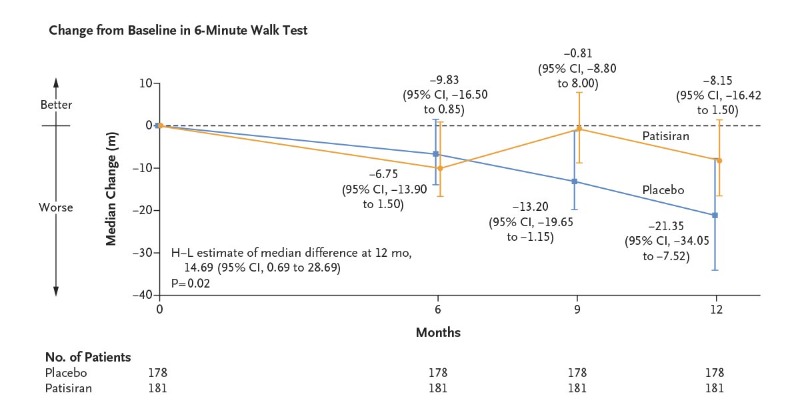
This phase 3 trial of patisiran, a small interfering RNA that targets hepatic production of the transthyretin protein, showed efficacy in treating transthyretin-mediated (ATTR) cardiac amyloidosis. Read the full APOLLO-B trial results: https://t.co/0PxG2kLGRD